Frontline Defense Journal | Objective OSINT & Military Analysis
  • Home
  • Latest Intelligence
  • Domain Of Warfare
    • Naval & Maritime
    • Air & Aerospace
    • Ground Forces & Armor
    • Unmanned & Autonomous Systems
    • Strategic Weapons
  • Regions
    • USA & Americas
    • Europe
    • Middle East
    • Asia & Pacific
  • Defense Archives
  • About Us
    • Who We Are
    • Privacy Policy
    • Terms Of Use
No Result
View All Result
  • Home
  • Latest Intelligence
  • Domain Of Warfare
    • Naval & Maritime
    • Air & Aerospace
    • Ground Forces & Armor
    • Unmanned & Autonomous Systems
    • Strategic Weapons
  • Regions
    • USA & Americas
    • Europe
    • Middle East
    • Asia & Pacific
  • Defense Archives
  • About Us
    • Who We Are
    • Privacy Policy
    • Terms Of Use
Frontline Defense Journal | Objective OSINT & Military Analysis
No Result
View All Result
Frontline Defense Journal | Objective OSINT & Military Analysis
No Result
View All Result
Home Regions Middle East

Red Sea Blitz: Houthis Seize Strategic Islands as U.S. Deploys Advisers

September 12, 2026
Reading Time: 6 mins read
A A
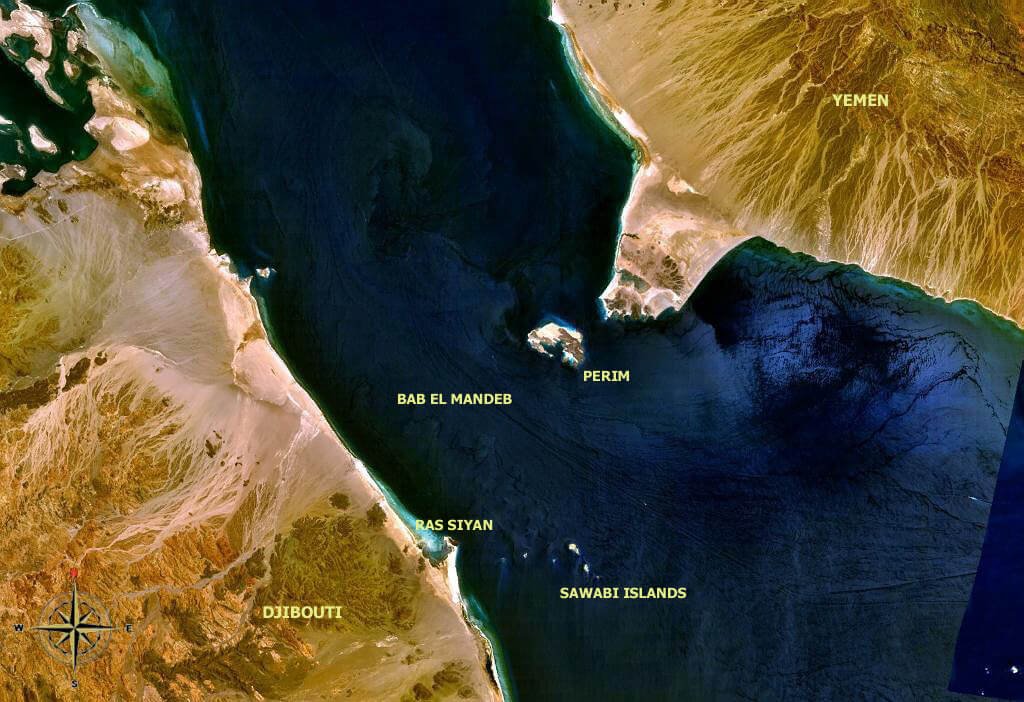
Satellite view of the Bab el-Mandeb Strait highlighting the strategic positioning of Perim and Hanish islands.
Share on FacebookShare On Reddit

KEY INTELLIGENCE

  • Territorial Advance: Houthi forces seized 5,400 square kilometers of territory across six western directorates in 48 hours, including the critical coastal city of Mocha and the Red Sea islands of Perim and Hanish.
  • Saudi Combat Losses: The rebel group claims to have struck 38 Saudi brigade formations and successfully intercepted and destroyed 9 unmanned aerial vehicles (UAVs) using advanced, IRGC-supplied surface-to-air systems.
  • U.S. Advisory Footprint: Up to 200 U.S. military personnel are actively embedded in Saudi Arabia, providing real-time battlefield targeting, Space Force ISR, and AWACS integration, stopping short of direct kinetic engagement.
  • Energy Market Impact: The dual threat to Hormuz and Bab el-Mandeb pushed crude oil to $109 a barrel, effectively adding an estimated $50–$100 monthly burden to average American consumers.
  • Cyber & Proxy Warfare: The IRGC claims to have captured a U.S. Navy Saildrone near Hormuz, while Anthropic threat intelligence confirms Iranian state operators are utilizing Claude AI for sophisticated, multilingual psychological operations mimicking Western institutions.

Operation “Allah is the Most Powerful”: The Houthi Coastal Blitz

The Bab el-Mandeb Strait—handling up to 15% of global maritime trade—is now actively contested. In a lightning offensive over 48 hours, IRGC-backed Houthi forces bypassed Saudi-backed Yemeni lines, capturing the strategic coastal port of Mocha.

By seizing Perim Island, sitting squarely in the middle of the 20-mile-wide Bab el-Mandeb Strait, the Houthis have dramatically altered the Red Sea kill chain. Relocating anti-ship missile batteries to these mid-strait islands eliminates crucial early-warning radar windows. A munition launched from Perim Island reduces the timeline from launch to impact to mere seconds.
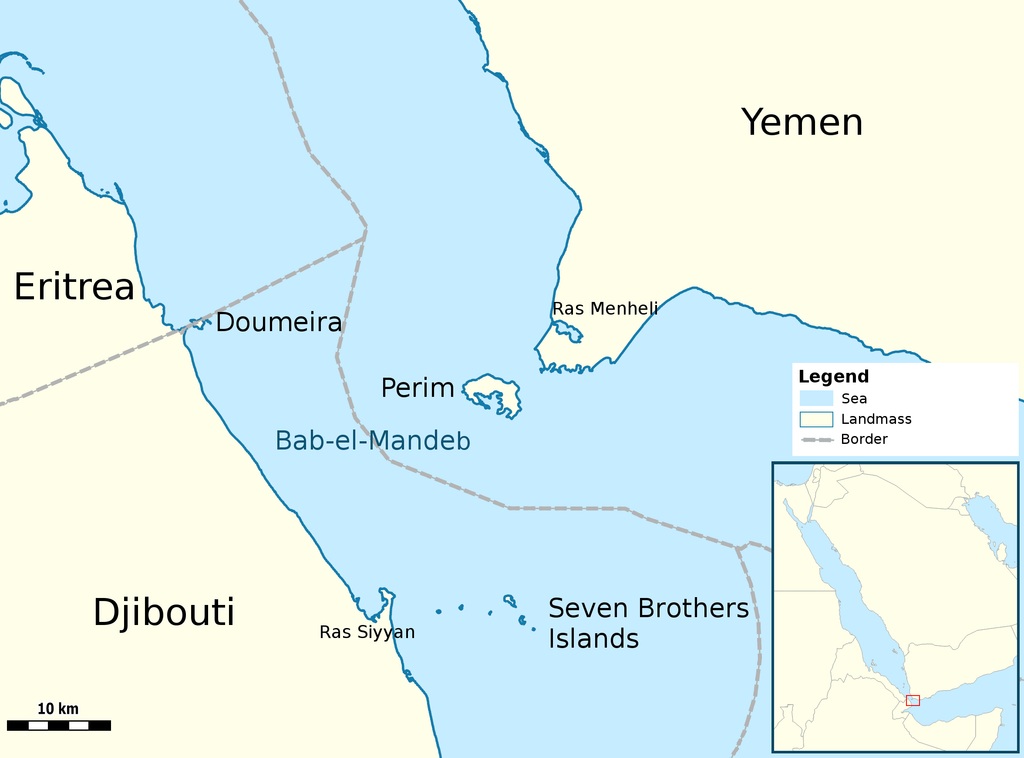
Satellite view of the Bab el-Mandeb Strait highlighting the strategic positioning of Perim and Hanish islands.
Perim Island (center), recently seized by Houthi forces, sits at the geographic center of the Bab el-Mandeb Strait, giving IRGC-aligned forces total fire control over the shipping lane.

The Saudi F-15SA Response and Air Defense Paralysis

In a desperate bid to halt the Houthi advance, the Royal Saudi Air Force (RSAF) has unleashed targeted strikes against the occupied Mocha port. Saudi forces are heavily utilizing the F-15SA (Saudi Advanced), a highly capable twin-seat strike fighter comparable to the U.S. F-15EX.
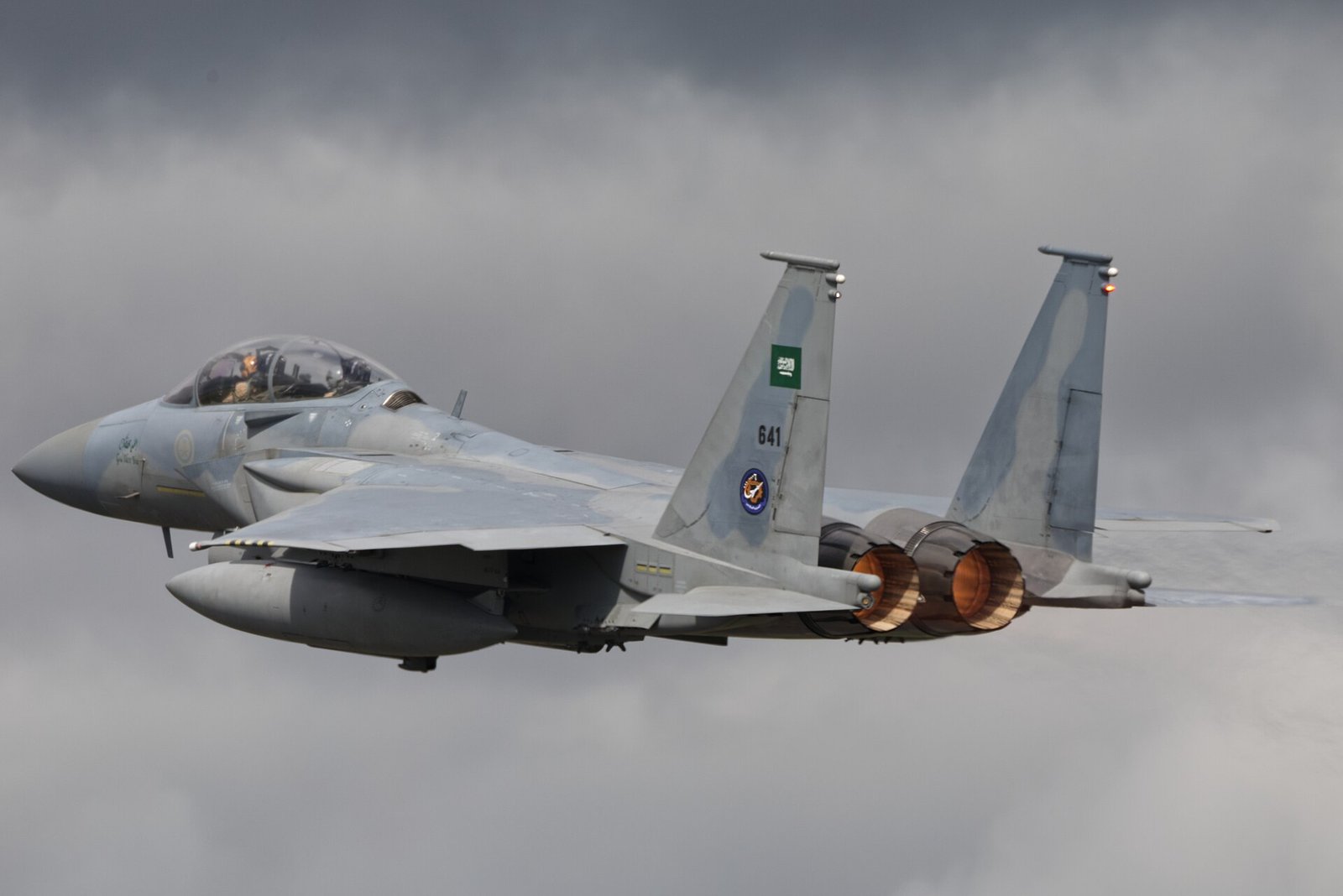
RSAF Boeing F-15SA Eagle
RSAF Boeing F-15SA Eagle. Image by: Ronnie Macdonald

Equipped with the AN/APG-82 AESA radar and advanced fly-by-wire avionics, the F-15SA serves as Riyadh’s primary workhorse for complex air-to-ground interdiction. However, Houthi air defense networks—bolstered by IRGC technology transfers—have effectively denied Saudi manned aircraft low-altitude access, forcing Riyadh to rely on highly vulnerable UAVs, nine of which were recently shot down.

U.S. Targeting Cells and Denied Airstrikes

Facing a collapsing front, Saudi Crown Prince Mohammed bin Salman (MBS) placed two urgent calls to President Trump requesting immediate U.S. airstrikes. The administration declined direct kinetic action, opting instead for a force-multiplier strategy. The U.S. has established an active advisory presence, embedding roughly 200 military advisers within Saudi Arabia.

This U.S. support relies heavily on an intelligence, surveillance, and reconnaissance (ISR) umbrella. Space Force satellites, AEGIS-equipped destroyers, AWACS airborne command units, and P-8 Poseidon maritime patrol aircraft are feeding real-time targeting telemetry to Saudi F-15SA crews.

Deep Strikes, Cyber Ops, and Internal Iranian Pressures

The kinetic threat matrix is expanding rapidly. Sentinel-3 satellite imagery and NASA FIRMS thermal data confirm a Houthi strike on the East-West crude pipeline, threatening Saudi Arabia’s sole bypass route to the blockaded Strait of Hormuz.

Meanwhile, the IRGC claims its fast attack boats have struck and captured a U.S. Navy Saildrone unmanned surface vessel (USV) near Hormuz. This physical harassment is paired with severe cyber influence operations. According to Anthropic, Iranian state actors used Claude AI to generate multilingual psychological campaigns, mimicking American institutions like CSIS and RAND to obfuscate IRGC narratives.
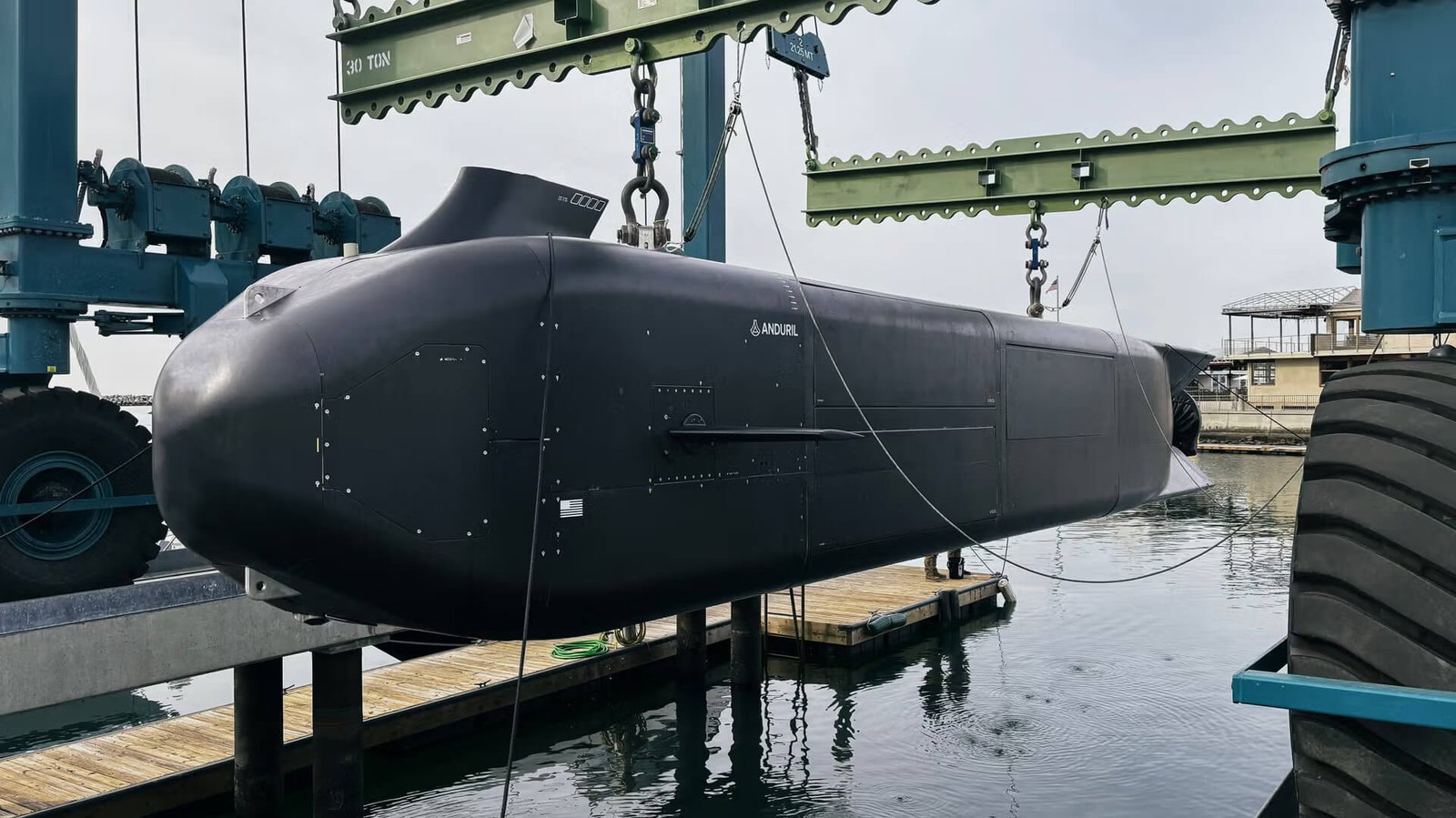
A U.S. Navy Anduril Dive-LD autonomous underwater vehicle (AUV)
A U.S. Navy Anduril Dive-LD autonomous underwater vehicle (AUV). Source: Anduril

Yet, the Iranian regime is showing internal cracks. Video leaks from inside Iran confirm deep domestic unrest, with state police forces publicly defecting and protesting a lack of pay as the regime aggressively funnels capital to the IRGC and Basij paramilitary units to sustain these multi-front proxy wars.

FINAL ASSESSMENT

The theater has fundamentally shifted to a dual-chokepoint strangulation strategy executed by the IRGC. By establishing a physical footprint on Perim Island and Mocha, Houthi forces have gained terminal fire control over the Bab el-Mandeb Strait, circumventing the need for advanced long-range targeting. Saudi Arabia is suffering an acute structural vulnerability characterized by extreme interceptor depletion and a localized denial of Yemeni airspace to manned aircraft.

The U.S. refusal to engage kinetically forces the RSAF to shoulder the strike burden via F-15SA standoff munitions, which is proving insufficient to halt ground advances. The deployment of U.S. ISR targeting advisers acts as a critical force multiplier but elevates escalation risk, placing American personnel inside a contested theater without adequate kinetic umbrella coverage.

Tags: F-15E Strike EaglesNaval Warfarestrait of hormuzus iran war

Related Posts

FLM-136 LUCAS
Middle East

Gulf Escalation: Qeshm Strike, LUCAS Drones & China Intel

September 13, 2026
A B-2 Spirit stealth bomber flying with GBU-57 MOP explosions detonating across a desert landscape below.
Middle East

Targeting Pickaxe Mountain: GBU-72 Strike on Iran Site

September 13, 2026
Houthi forces displaying mobile anti-ship and ballistic missile systems during a military parade in Sanaa.
Middle East

Mecca Defense Alliance Tested: Houthi Drone Strikes Trigger Saudi-Pakistan Pact

September 12, 2026
Next Post
Houthi forces displaying mobile anti-ship and ballistic missile systems during a military parade in Sanaa.

Mecca Defense Alliance Tested: Houthi Drone Strikes Trigger Saudi-Pakistan Pact

Leave a Reply Cancel reply

Your email address will not be published. Required fields are marked *

I agree to the Terms & Conditions and Privacy Policy.

Latest Intelligence

ASC 890 AEW&C: Ukraine’s New Aerial Radar Blinds Russia

US Navy Ohio-Class SSBN: America’s Ultimate Nuke Deterrent

Russia Strikes NATO Border Amid Ukraine Interceptor Crisis

Gulf Escalation: Qeshm Strike, LUCAS Drones & China Intel

USAF Pursues Medium-Caliber Guns to Defeat Drone Swarms

Targeting Pickaxe Mountain: GBU-72 Strike on Iran Site

Domain Of Warfare

Russia’s hybrid warfare tactics against the UK, from GRU cyberattacks to covert Akula-class subsea operations.
Europe

Russia’s Shadow War on the UK: Cyber, Sabotage & Poseidon

A member of British No. 9 Commando at Anzio equipped for a patrol with his Bren gun 5 March 1944.
Defense Archives

The Evolution of the British Army Infantry Section (WWI to 2026)

Hsiung Feng III anti-ship missile launched from a missile launchers truck
Asia & Pacific

Taiwan’s $35B Defense Hike: The Drone ‘Hellscape’ Strategy

Map of the Falkland Islands
USA & Americas

Could Argentina Retake the Falklands in 2026? A Military Analysis

Defense Archives

The Evolution of the British Army Infantry Section (WWI to 2026)

A member of British No. 9 Commando at Anzio equipped for a patrol with his Bren gun 5 March 1944.

BOTTOM LINE UP FRONT WWI & The All Arms Concept (1916-1918): Prompted by massive losses at the Somme, the British...

Read moreDetails

WWII Submachine Gun Production Costs: Economics of Infantry Firepower

A British soldier equipped with a Thompson M1928 submachine gun in November 1940

BOTTOM LINE UP FRONT American Economic Burden: The U.S. Thompson M1A1 was the most expensive SMG fielded by any major...

Read moreDetails

Operation Serval: French Expeditionary Tactics & Mobile Warfare in Mali

Northern Mali conflict Map 2013 Operation Serval

BLUF Immediate Threat Nullification: An initial assault force of 1,000+ Islamist fighters mounted in up to 300 technicals was successfully...

Read moreDetails

USMC J-Series Division: Force Restructuring for the Nuclear Battlefield

U.S. Marines conducting amphibious operations in Landing Vehicle Tracked (LVT) platforms during the late 1940s.

Bottom Line Up Front Catastrophic Force Contraction: Active-duty USMC personnel collapsed from a wartime peak of 485,000 in August 1945...

Read moreDetails

Frontline Defense is an independent, objective analysis platform. The content provided on this website, including but not limited to technical breakdowns, military hardware comparisons, defense budget reports, and open-source intelligence (OSINT) analyses, is strictly for educational, historical, and informational purposes. Frontline Defense is not affiliated with, endorsed by, or acting on behalf of any government agency, department of defense, armed forces branch, or defense contractor. All content on this site represents independent research based strictly on unclassified, publicly available data and open-source records at the time of writing. Nothing published on this website should be construed as official military guidance, defense strategy consulting, or government policy.

Follow Us

Domain Of Warfare

  • Naval & Maritime
  • Air & Aerospace
  • Ground Forces & Armor
  • Strategic Weapons
  • Unmanned & Autonomous Systems

Regions

  • USA & Americas
  • Europe
  • Middle East
  • Asia & Pacific
  • About Us
  • Privacy Policy
  • Terms Of Use

© 2026 | Fronline Defense Journal. All Rights Reserved

No Result
View All Result
  • Home
  • Latest Intelligence
  • Domain Of Warfare
    • Naval & Maritime
    • Air & Aerospace
    • Ground Forces & Armor
    • Unmanned & Autonomous Systems
    • Strategic Weapons
  • Regions
    • USA & Americas
    • Europe
    • Middle East
    • Asia & Pacific
  • Defense Archives
  • About Us
    • Who We Are
    • Privacy Policy
    • Terms Of Use

© 2026 | Fronline Defense Journal. All Rights Reserved