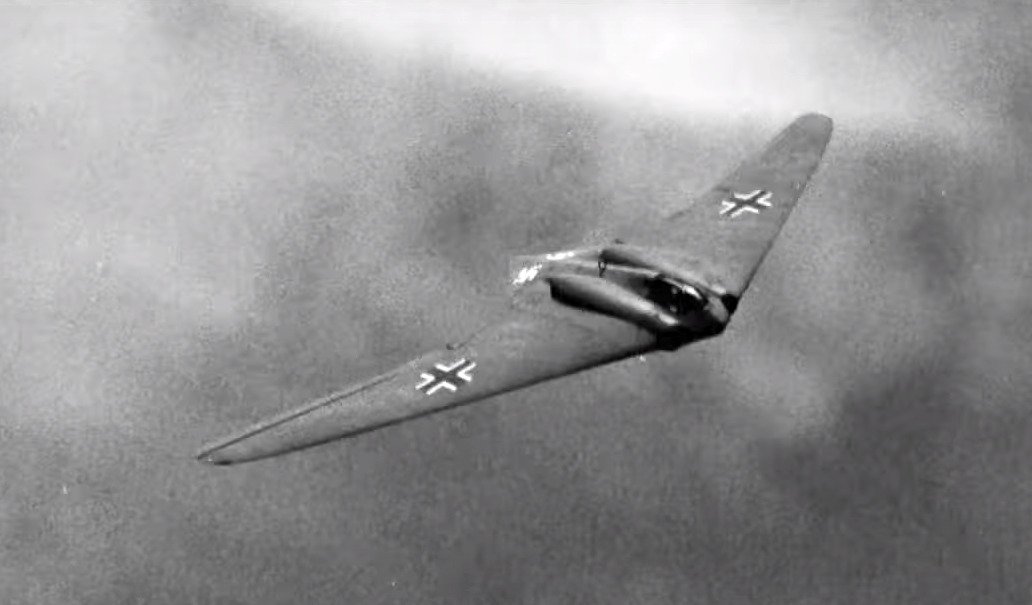
Developed during the final desperate months of World War II, the Horten Ho 229 remains one of the most visually extraordinary and aerodynamically ambitious aircraft in aviation history. Engineered by brothers Walter and Reimar Horten, this twin-jet “flying wing” was designed to meet the Luftwaffe’s demanding “3×1000” requirement: carrying a 1,000 kg bomb load over a range of 1,000 kilometers at a speed of 1,000 km/h (621 mph). Utilizing a hybrid steel-tubular frame coated in a specialized European beech plywood skin, the Ho 229 traded conventional tail surfaces for low drag and maximum lift. While postwar legends labeled the aircraft as the world’s first “stealth fighter,” modern radar testing and technical analysis reveal a far more complex reality—an aircraft decades ahead of its aerodynamic time, yet severely constrained by the technological limits of 1945.
- First Jet-Powered Flying Wing: The Ho 229 V3 prototype was the world’s first flying wing aircraft powered by twin jet engines, eliminating the conventional fuselage and tail structure to drastically reduce drag.
- Composite Wood Airframe: To bypass strategic metal shortages, the aircraft utilized a welded steel-tube center section wrapped in European beech veneer plywood, treated with fire-repellent green paint.
- Powerplant Deficits: Twin Junkers Jumo 004B-2 turbojets propelled the aircraft to an estimated 607 mph (977 km/h), but low-grade wartime alloys capped engine service life at roughly 20 hours.
- Complex Yaw Control: Lacking a vertical stabilizer, the Ho 229 relied on a complex array of wingtip spoilers, drag rudders, and dual-purpose elevons, making manual flight handling extraordinarily difficult without digital fly-by-wire systems.
- The Stealth Reality: A 2008 full-scale radar reconstruction by Northrop Grumman confirmed that while its shape offered minor radar-cross-section (RCS) reductions, the Ho 229 was not a true stealth aircraft by modern operational standards.
Airframe Architecture & Wood Composite Construction
The structural layout of the Horten Ho 229 V3 abandoned standard aviation manufacturing norms of the 1940s. At its core sat a welded chrome-molybdenum steel-tube center section housing the pilot, twin engines, and heavy nose gear. Attached to this central framework were two large delta-shaped outer wing panels constructed almost entirely of wood, giving the aircraft an expansive 557 square foot (51.8 sq m) wing area.
The outer skin was fabricated from layered sheets of thin European beech veneer bonded with synthetic adhesives. This plywood skin varied in thickness across the airframe to achieve exact aerodynamic contours while keeping the empty weight to 11,000 lbs (5,067 kg). Because the proximity of hot engine exhausts and electrical sparks posed a severe fire hazard to the wooden structure, the entire plywood exterior was coated in a specialized fire-repellent green paint.
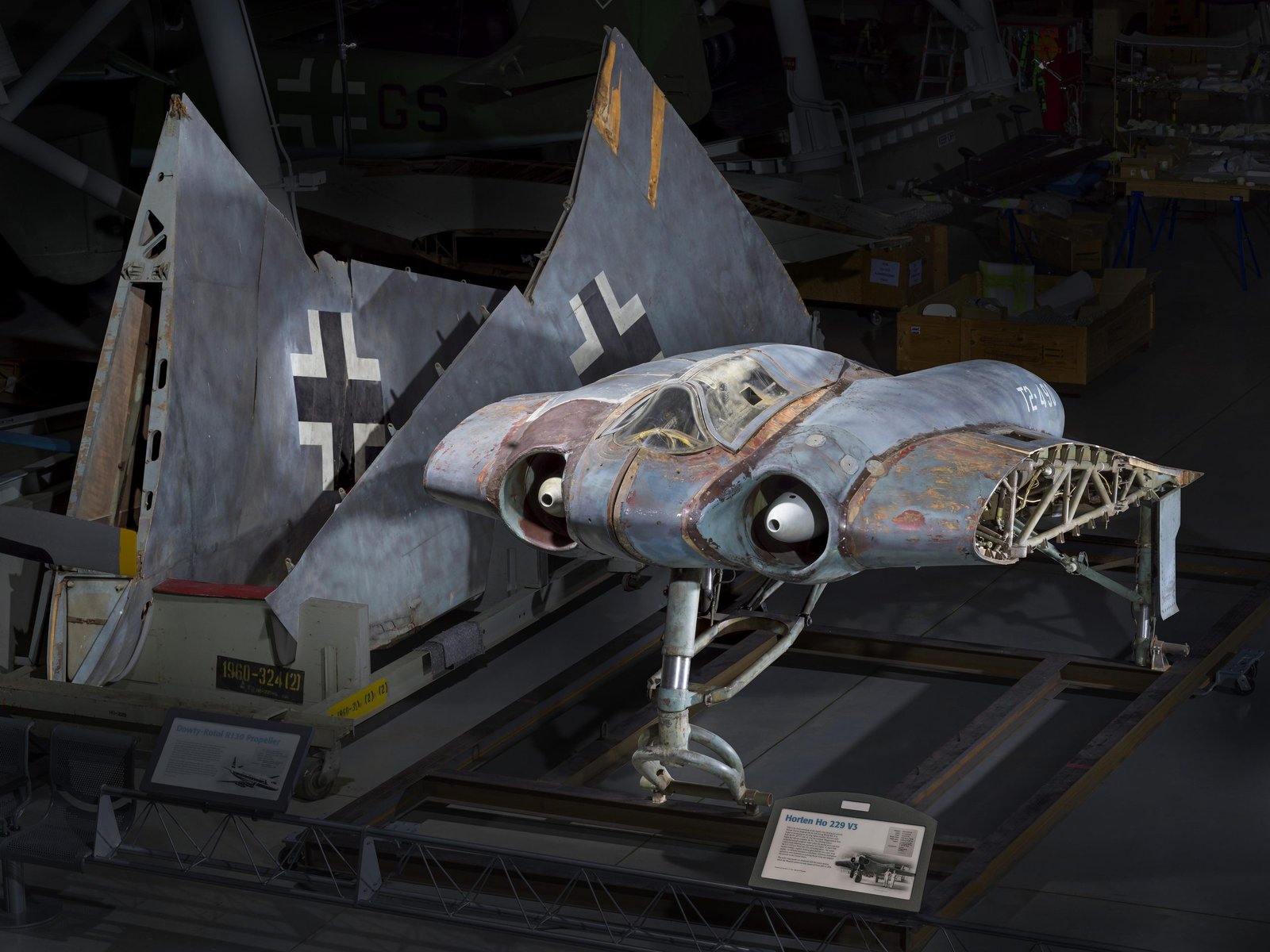
The wings incorporated a 4-degree upward dihedral angle, providing critical lateral stability during roll maneuvers. By integrating the fuselage, wings, and landing gear into a unified geometric shape, the Ho 229 achieved an extraordinarily low coefficient of drag compared to traditional contemporary fighters like the P-51 Mustang or Supermarine Spitfire.
Aerodynamics & Control Dynamics
Operating a tailless flying wing without modern flight-control computers presented immense flight-mechanics hurdles. Without a vertical stabilizer or rudder, the Ho 229 was inherently prone to sideslipping and flat spins. To counteract this instability, the Horten brothers engineered a intricate mechanical control network:
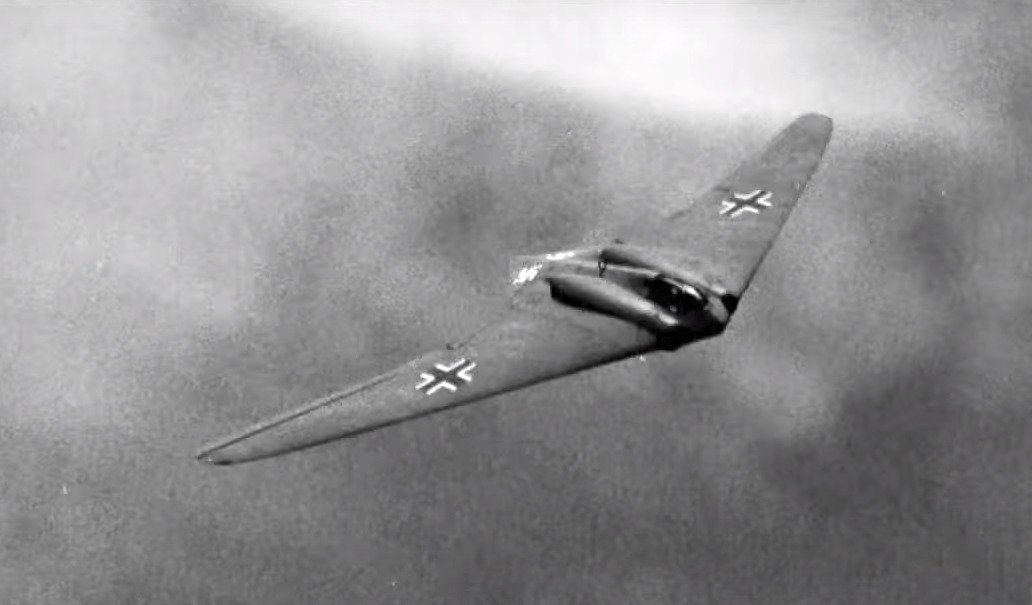
- Elevons: Positioned on the trailing edge toward the wingtips, these combined the roles of ailerons and elevators. Moving both elevons up pitched the nose skyward; moving them symmetrically downward pitched the nose down. Differential movement produced roll control.
- Spoilers: Recessed into the upper and lower surfaces near the wingtips, spoilers were deployed to disrupt airflow, generate localized drag, and decrease lift—vital for high-speed stability and landing roll-outs.
- Drag Rudders: Operating in pairs on the upper and lower wing surfaces, drag rudders provided yaw axis control. Deploying the drag rudder on the right wing created asymmetrical drag, yawing the aircraft to the right without requiring a conventional vertical tail.
Despite these mechanisms, the sheer number of manual control inputs required to maintain stability made the aircraft exceptionally difficult to fly. It would take over 50 years—and the arrival of triple-redundant digital fly-by-wire computers on platforms like the B-2 Spirit—for operational tailless flying wings to achieve stable, high-performance flight.
Propulsion & Fuel Mechanics
The Ho 229 V3 was powered by two Junkers Jumo 004B-2 axial-flow turbojets, each producing 8.9 kN (2,000 lbf) of thrust at 8,700 RPM. Air entered through streamlined nacelles hammer-fitted with metal leading-edge panels, passed through an 8-stage axial compressor, and ignited inside six combustion chambers.
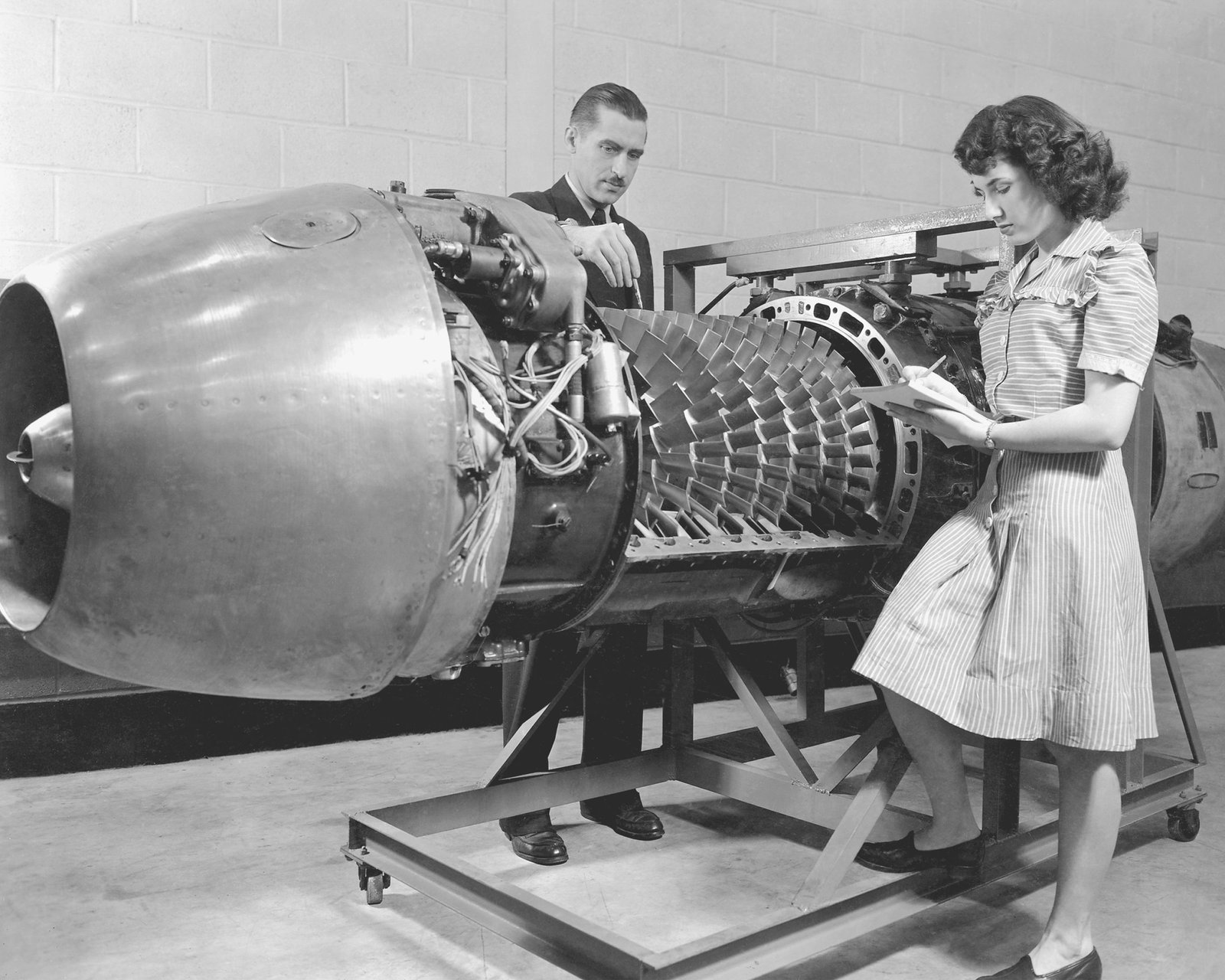
The propulsion system was severely bottlenecked by late-war materials shortages. Lacking high-grade nickel and cobalt alloys, German manufacturers were forced to use inferior heat-resistant steel in the turbine blades. Combined with high operational heat, engine service life dropped to a maximum of 20 hours before a full overhaul or replacement was required.
Fuel was supplied by eight internal aluminum tanks (four per wing) with a total capacity of 528 gallons (2,000 liters). At full throttle, the Jumo 004B consumed fuel at a staggering rate of 343 gallons per hour (1,300 L/h) using J-2 synthetic fuel, a heavy distillate derived from processed brown coal. Electric pumps located near the wing roots maintained pressure to the injectors.
Cockpit Layout & Weapons Capabilities
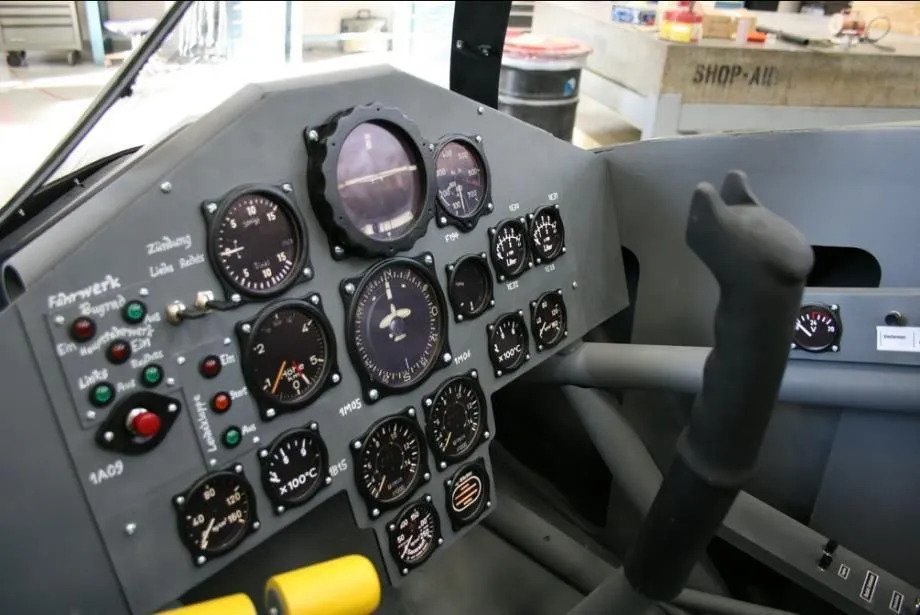
The single-seat cockpit was enclosed by a two-piece curved canopy sliding backward for entry. The lack of a vertical stabilizer provided the pilot with an unobstructed 360-degree rearward field of view. To protect the pilot during emergency bailouts at speeds over 600 mph, the Ho 229 was fitted with a primitive spring- or compressed-air-actuated ejection seat.
The instrument panel featured advanced avionics for the era, including a radio beacon direction-finder for blind navigation, oxygen flow indicators, exhaust temperature gauges, and flap/gear position lights. Flight controls included standard rudder pedals with integrated toe brakes and a heavy manual control stick.
For armament, the production specifications called for two 30 mm Rheinmetall-Borsig MK 103 or MK 108 cannons mounted in the wing roots, belt-fed with an estimated 200 rounds total. The airframe was structurally stressed to carry two 1,100 lb (500 kg) bombs on under-fuselage hardpoints. However, the V3 prototype captured by the U.S. Army in April 1945 was completely unarmed.
Takeoff, Flight Envelope, and the “Stealth” Debate
Calculated performance figures indicated that the Ho 229 V3 had an extraordinarily forgiving wing loading, allowing it to operate from short, unpaved runways of just 3,600 feet (1,100 m). With a takeoff rotation speed of 93 mph (150 km/h) and a landing speed of 97 mph (156 km/h)—assisted by a rear-deployed drogue tail-parachute—it could operate from improvised bases resilient to Allied air strikes.
Structurally, the airframe was calculated to withstand 12.6 Gs before catastrophic airframe failure, far exceeding the 7 G design threshold and the human physiological limit of the pilot.
Debunking the Stealth Legend
Four decades after the war, claims surfaced (partially propagated by Reimar Horten) that charcoal powder had been mixed into the glue layers to absorb radar waves, making the Ho 229 the first stealth fighter.
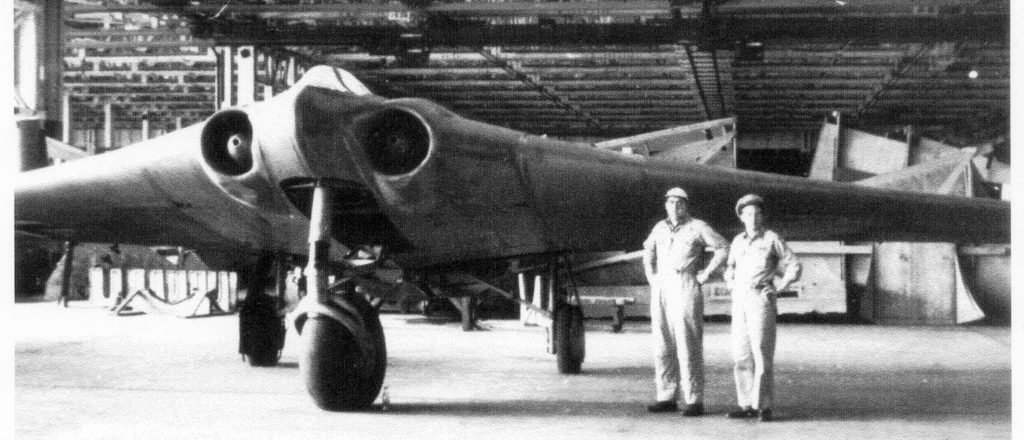
In 2008, Northrop Grumman constructed a full-scale dielectric reproduction of the Ho 229 V3 to test its radar cross-section (RCS) against 1940s-era British Chain Home radar frequencies:
- Shape Reductions: The smooth, tailless flying wing geometry provided a lower radar cross-section from the front profile compared to traditional twin-engine fighters.
- Material Performance: No trace of charcoal or radar-absorbing carbon additives was found in chemical analysis of the original V3 airframe stored at the Smithsonian Institution.
- Conclusion: Northrop Grumman’s tests confirmed that while the aircraft would have given British radar operators slightly less warning time due to its speed and blended shape, it was not a stealth aircraft by modern definitions. Its survival would have relied on high speed and altitude, not low observability.
| Parameter | Technical Specification | Operational Implication |
| Wingspan / Area | 55 ft 1 in (16.8 m) / 557 sq ft (51.8 sq m) | Generates immense lift; reduces wing loading for short-field ops |
| Max Takeoff Weight | ~20,000 lbs (8,999 kg) | Comparable to a modern empty F-16 fighter |
| Powerplant | 2x Junkers Jumo 004B-2 Turbojets (2,000 lbf each) | Top speed of 607 mph (977 km/h); high speed at cost of high fuel burn |
| Engine Service Life | ~20 hours max | Severe operational constraint caused by low-grade wartime alloys |
| Fuel Capacity / Type | 528 gal (2,000 L) / J-2 Synthetic Coal Fuel | High consumption (343 gal/hr) restricted total combat radius |
| Structural G-Limit | 12.6 G ultimate load limit | Exceptional airframe integrity well beyond pilot survival limits |
| Primary Armament | Planned: 2x 30 mm MK 103/108 cannons + 2x 1,100 lb bombs | Heavy tank- and bomber-destroying firepower (V3 prototype was unarmed) |
| Radar/Stealth Status | Blended shape RCS reduction; NO radar-absorbent materials | Debunked as true stealth; speed was its primary defense mechanism |