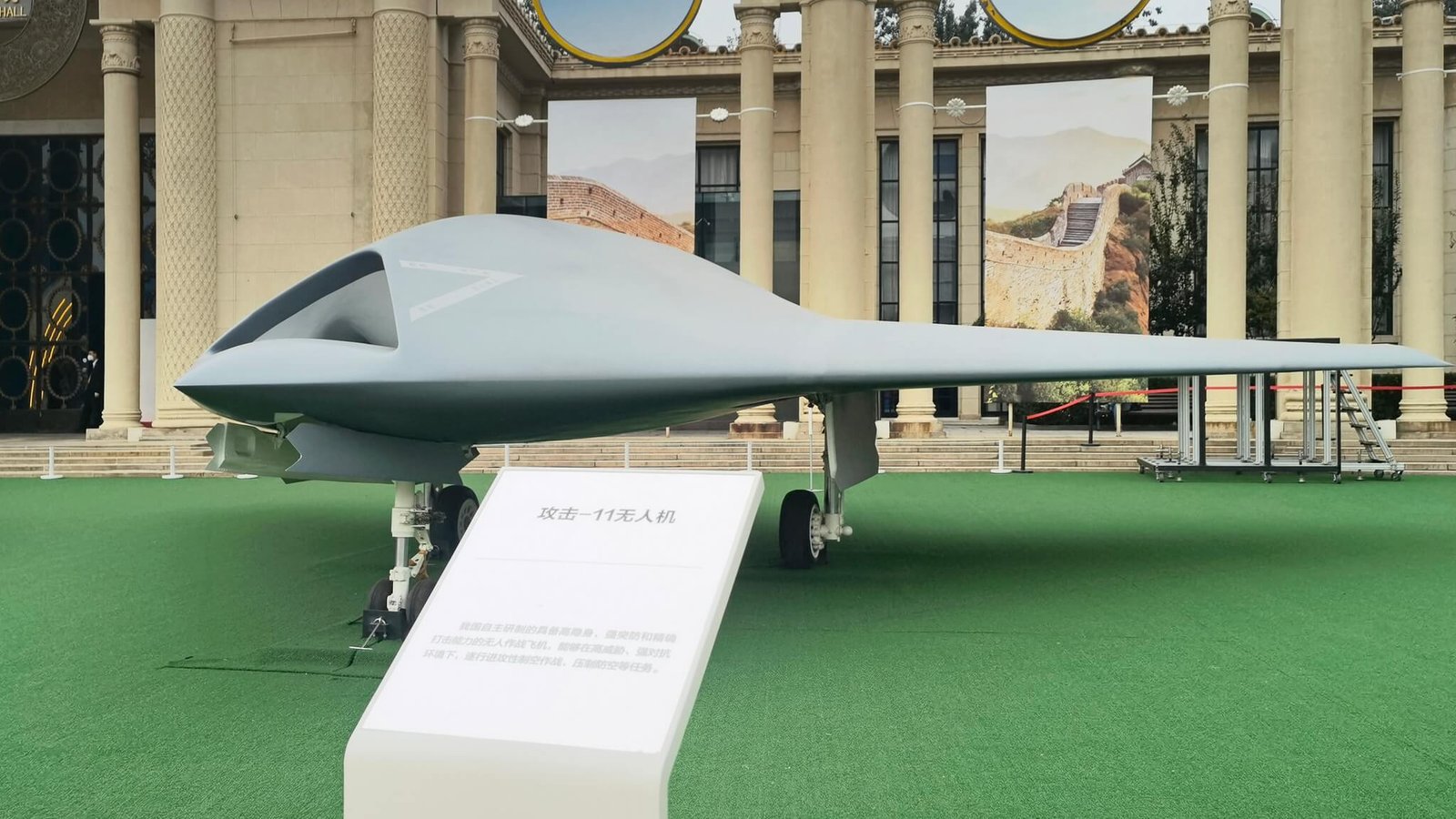
KEY INTELLIGENCE
- Aerodynamic Stealth: The 14.4-meter wingspan UCAV utilizes a tailless flying-wing configuration, eliminating vertical stabilizers to minimize radar cross-section (RCS). Yaw control is achieved via split-drag rudders, and the engine exhaust is recessed and shielded from below to mitigate infrared and radar signatures.
- Manned-Unmanned Teaming (MUM-T): PLA Air Force doctrine integrates the GJ-11 with the J-20S (two-seat variant) and J-16D electronic warfare aircraft, establishing a layered kill-chain where drones act as autonomous forward vanguards to neutralize enemy radar sites.
- Naval Catapult Integration: China is actively developing a folding-wing maritime variant—unofficially designated GJ-11J or GJ-21—for launch via the Electromagnetic Aircraft Launch System (EMALS) on the newly launched 50,000-ton Type 076 amphibious assault ship.
- High-Altitude Operational Testing: Recent satellite intelligence confirms GJ-11 deployments to Shigatse Peace Airport in Tibet (3,700m elevation) and Malan Air Base in Xinjiang, proving the airframe’s operational tolerance in extreme environments.
Tailless Aerodynamics and Stealth Penetration
Designed by the Shenyang 601 Institute and manufactured by the Hongdu Aviation Industry Group, the GJ-11 represents a mature evolution of Chinese low-observable aerospace engineering. The airframe’s tailless flying-wing geometry is optimized for broadband stealth. A conventional vertical tail provides stability but acts as a massive radar reflector. By eliminating it, Chinese engineers significantly reduced the aircraft’s RCS from multiple viewing angles.
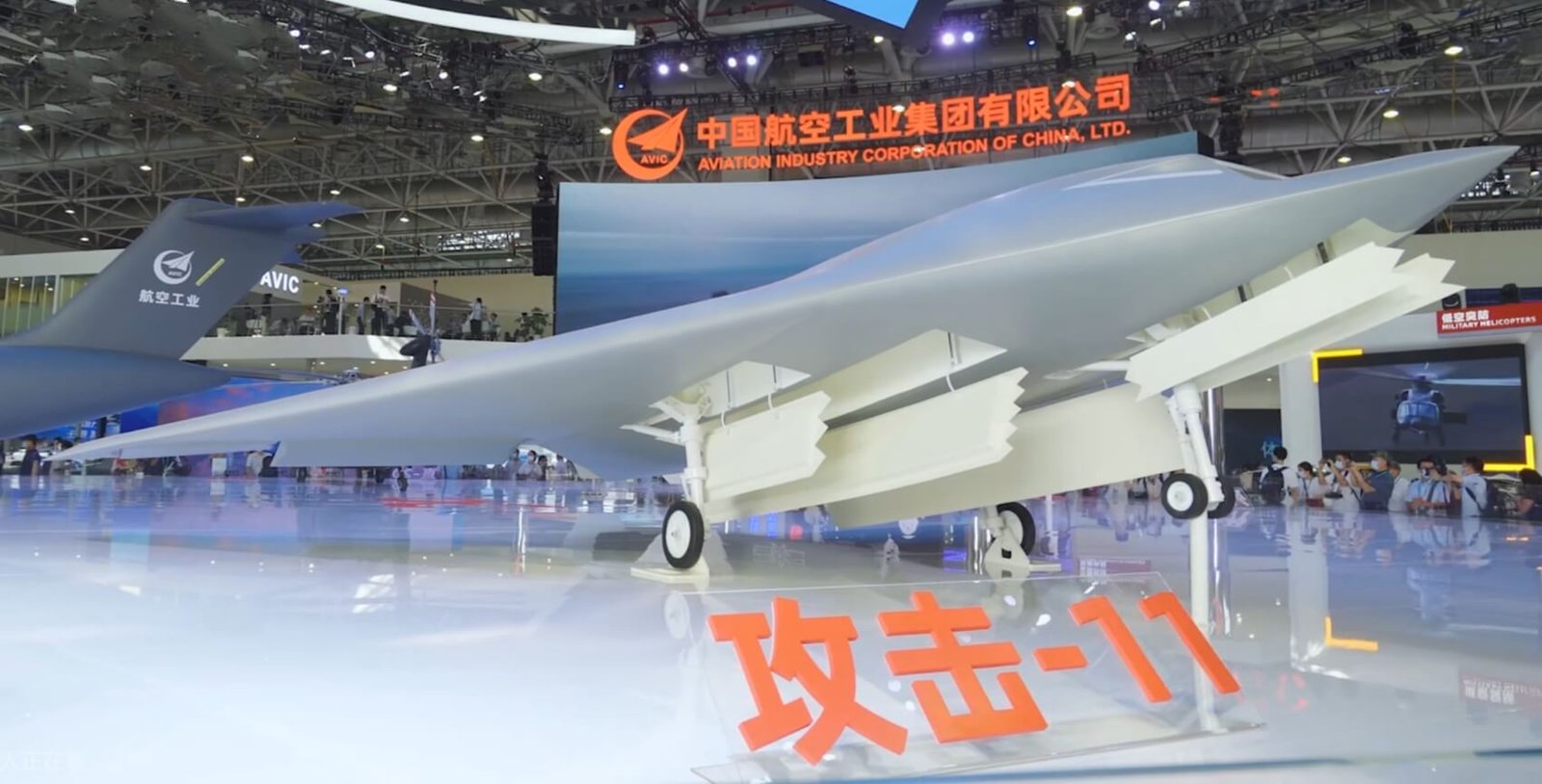
To maintain directional control without a vertical fin, the GJ-11 employs split trailing-edge surfaces on the outer wings. By opening these surfaces asymmetrically, the aircraft creates localized drag, pulling the nose into a commanded yaw. The dorsal air intake uses the fuselage to shield the compressor blades from ground-based radar emitters, while weapons are carried internally in two payload bays featuring serrated doors to control radar scattering. Following the initial 2013 demonstrator, the production model transitioned to a highly flattened, recessed exhaust nozzle, shielding high-temperature components from infrared tracking and lower-hemisphere radar detection.
SEAD Operations and Manned-Unmanned Teaming
The primary combat value of the GJ-11 lies in its role as an expendable but highly capable forward asset for the Suppression of Enemy Air Defenses (SEAD). PLA Air Force promotional material and strategic doctrine position the drone ahead of manned strike packages.
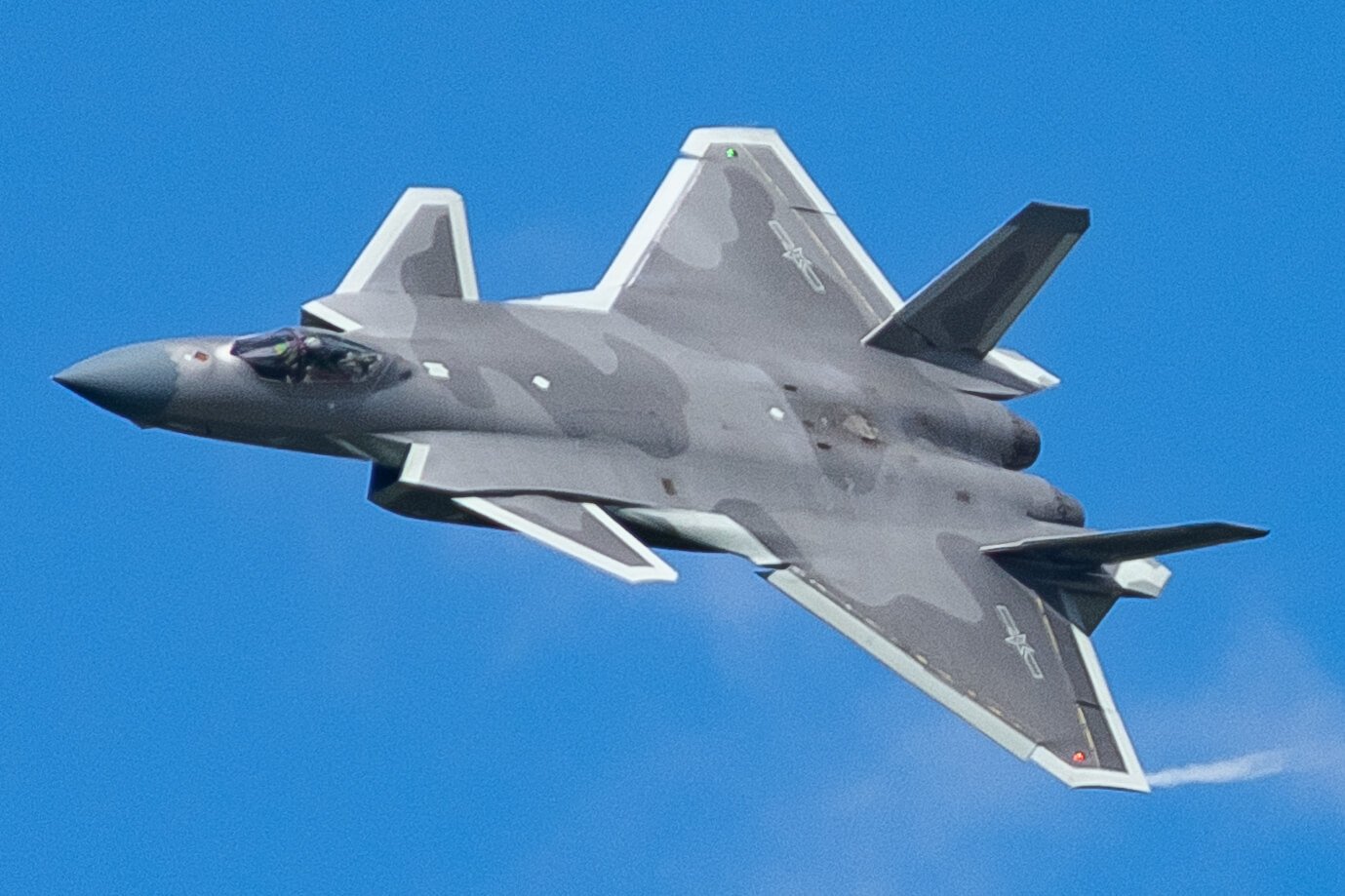
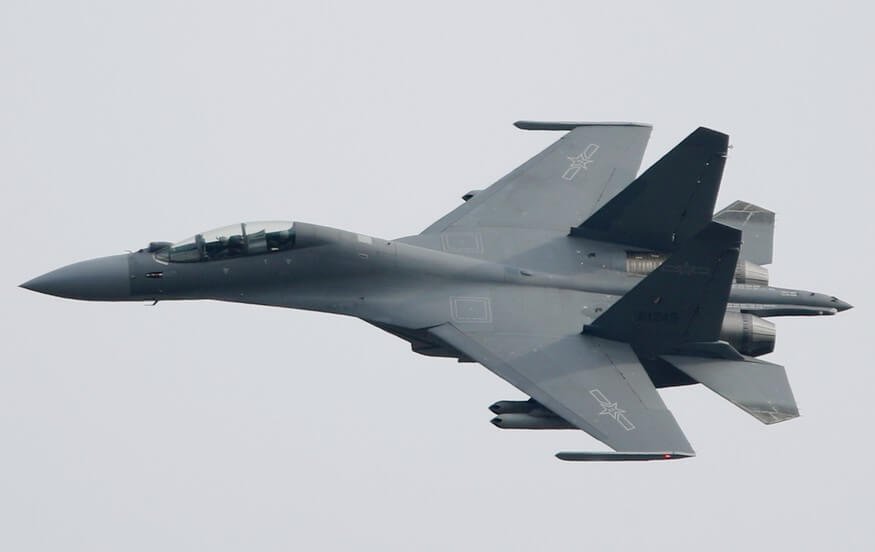
Operating in a manned-unmanned team, a rear-seat weapons systems officer in a J-20S stealth fighter coordinates the UCAVs via secure data links. A trailing J-16D aircraft provides electronic warfare support, jamming enemy tracking radars to further mask the GJ-11’s approach. If the UCAV successfully strikes early-warning radar arrays and surface-to-air missile (SAM) batteries, a corridor is opened for non-stealthy follow-on forces. The central unknown remains the drone’s level of autonomy. Should jamming or combat action sever the data link to the J-20S, the GJ-11’s capacity to dynamically identify and engage targets using onboard edge computing will dictate its ultimate combat effectiveness.
Expeditionary Strike: The Type 076 “Sichuan” Integration
The strategic geometry of the Indo-Pacific is shifting with the integration of the GJ-11 into the PLA Navy’s expeditionary fleet. Full-scale mockups of the UCAV have been observed on land-based carrier test facilities in Wuhan and on Changxing Island near Shanghai.
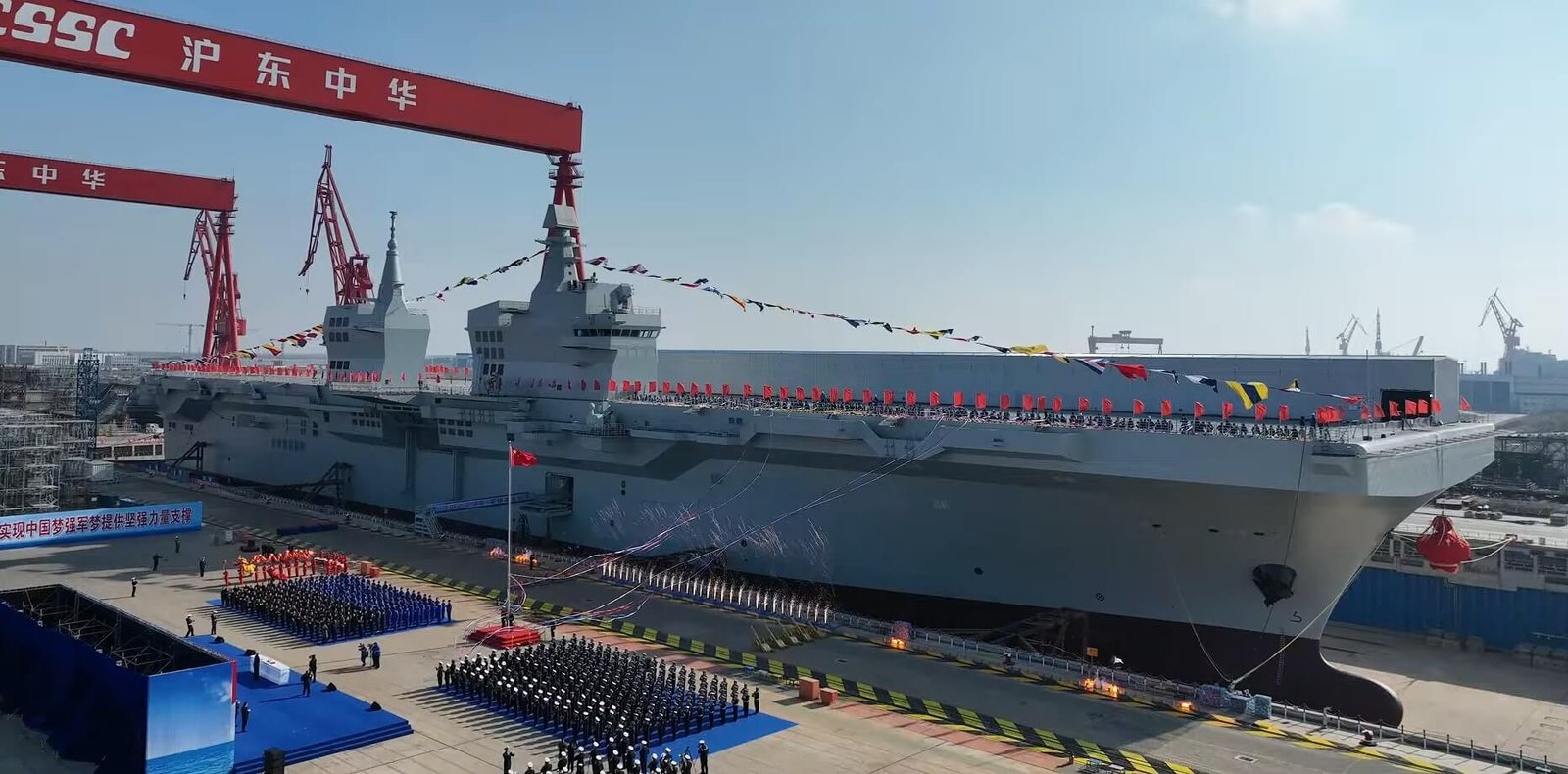
These tests directly correlate with the December 2024 launch of the Sichuan, the lead ship of the Type 076 class. Unlike earlier amphibious assault ships limited to rotary-wing operations, the 50,000-ton Type 076 features an electromagnetic catapult and arresting gear. To maximize deck and hangar space, the naval variant of the UCAV (GJ-11J/GJ-21) incorporates folding outer wing panels. Launching stealth UCAVs from amphibious platforms fundamentally alters the threat matrix, granting the PLA Navy distributed, long-range strike capabilities independent of its conventional aircraft carriers.
TECHNICAL SPECIFICATIONS: HONGDU GJ-11 SHARP SWORD
| Parameter | Specification | Strategic Implications |
| Length | 12.2 meters (40.0 ft) | Compact footprint allows for dense hangar packing |
| Wingspan | 14.4 meters (47.2 ft) | Requires folding mechanisms for naval Type 076 deployment |
| Estimated Empty Weight | 6,350 kg (13,999 lbs) | Heavy enough to require EMALS for carrier launch |
| Maximum Speed | ~1,000 km/h (621 mph) | Subsonic, emphasizing stealth over kinetic evasion |
| Operational Range | ~4,000 km (2,485 mi) | Enables deep penetration missions from coastal or naval bases |
| Payload Capacity | Up to 2,000 kg (4,400 lbs) | Accommodates heavy anti-radiation missiles and precision glide bombs |