Frontline Defense Journal | Objective OSINT & Military Analysis
  • Home
  • Latest Intelligence
  • Domain Of Warfare
    • Naval & Maritime
    • Air & Aerospace
    • Ground Forces & Armor
    • Unmanned & Autonomous Systems
    • Strategic Weapons
  • Regions
    • USA & Americas
    • Europe
    • Middle East
    • Asia & Pacific
  • Defense Archives
  • About Us
    • Who We Are
    • Privacy Policy
    • Terms Of Use
No Result
View All Result
  • Home
  • Latest Intelligence
  • Domain Of Warfare
    • Naval & Maritime
    • Air & Aerospace
    • Ground Forces & Armor
    • Unmanned & Autonomous Systems
    • Strategic Weapons
  • Regions
    • USA & Americas
    • Europe
    • Middle East
    • Asia & Pacific
  • Defense Archives
  • About Us
    • Who We Are
    • Privacy Policy
    • Terms Of Use
Frontline Defense Journal | Objective OSINT & Military Analysis
No Result
View All Result
Frontline Defense Journal | Objective OSINT & Military Analysis
No Result
View All Result
Home Domain Of Warfare Air & Aerospace

The True Speed of the SR-71 Blackbird vs. Boeing’s F-15EX Claim

September 5, 2026
Reading Time: 6 mins read
A A
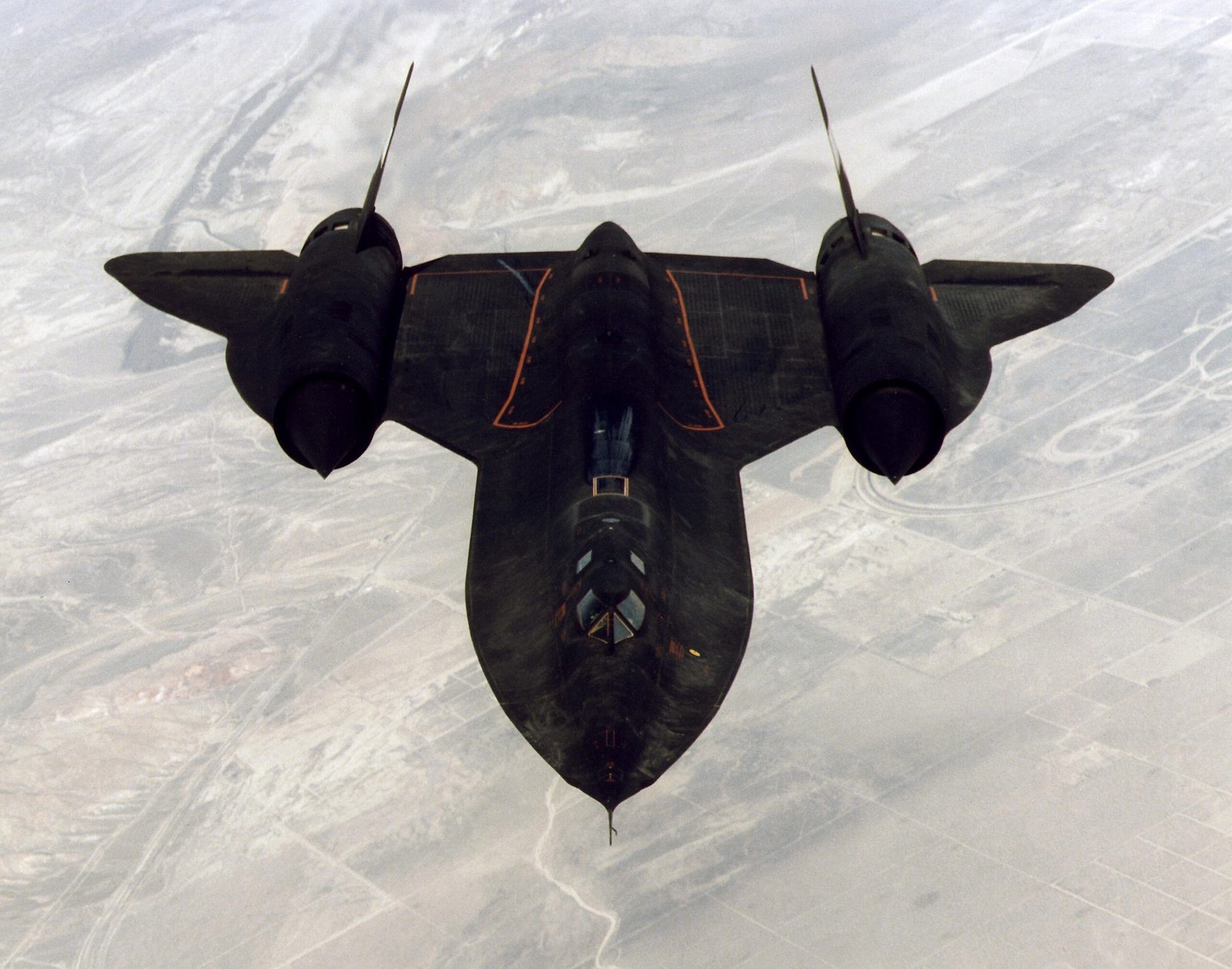
The SR-71 Blackbird utilized J58 turbo-ramjet engines to sustain speeds above Mach 3.
Share on FacebookShare On Reddit

Key Intelligence:

  • Boeing’s Retracted Claim: The F-15EX was briefly touted as capable of Mach 2.9, facilitated by its GE F110-129 engines and an emergency cockpit V-Max switch that boosts afterburner fuel flow to 104% for six minutes.
  • The Thermal Wall: The SR-71 was never power-limited; its official Mach 3.3 flight manual limit was strictly dictated by the structural and thermal thresholds of its J58 Turbo-Ramjet engines and titanium fuselage.
  • The True Peak: Multiple pilot accounts and flight logs indicate the SR-71 and A-12 routinely exceeded official limits, with the A-12 achieving a verified Mach 3.56 during a test dive.
  • Unit Economics: Adjusted for inflation, each SR-71 cost approximately $334 million on the runway, a primary reason pilots rarely risked pushing the airframe past its Mach 3.24 structural “sweet spot.”
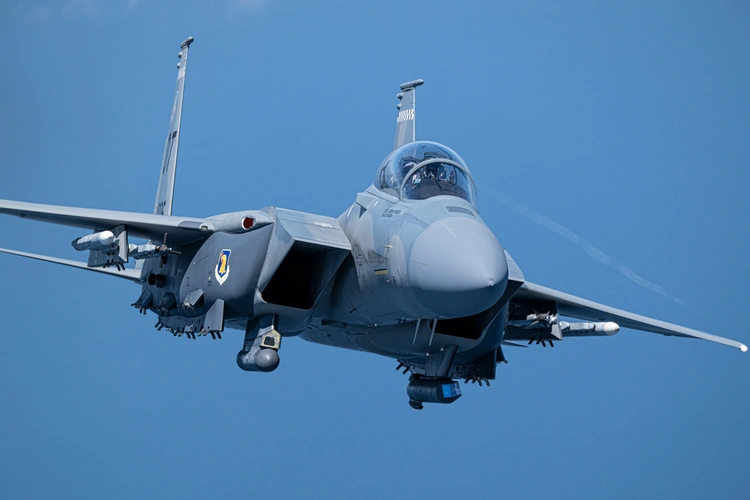
F-15EX Eagle II supersonic fighter jet during a test flight.
The F-15EX features upgraded GE F110 engines, giving it massive thrust advantages over legacy airframes.

The F-15EX Eagle II and the Mach 2.9 Controversy

Boeing’s recent assertion that the F-15EX Eagle II could hit Mach 2.9 raised eyebrows across the defense sector before the claim was quickly walked back. The F-15EX is powered by two GE F110-129 turbofan engines, which generate 11,500 lbs more thrust than the legacy F-15C’s Pratt & Whitney powerplants.

This immense thrust is paired with a V-Max switch—an emergency override located in the cockpit that acts similarly to a nitrous oxide injection. Engaging the V-Max pushes fuel flow into the afterburners to 104% capacity for a maximum of six minutes, enabling a rapid supersonic sprint. Even if capable of Mach 2.9, this extreme speed offers negligible combat utility as it virtually guarantees fuel depletion within minutes.

The SR-71 Blackbird: Thermal Limits vs. True Power

The SR-71 Blackbird holds the official title for the fastest reusable manned jet, with a recorded top speed of Mach 3.32 set in 1976. According to flight manuals, pilots were restricted to Mach 3.3, but critically, the airframe was never limited by engine power. The absolute limit was dictated by the thermal limits of the compressor inlet on the J58 turbo-ramjet engines.

Former Skunk Works director Ben Rich noted the aircraft was designed for a cruising “sweet spot” of Mach 3.24. Pilots confirm the throttle had plenty of room left at these speeds. Pushing further risked the catastrophic failure of an asset that cost $334 million per unit to put on the runway.

Operational Breaches of the Mach 3.2 Limit

Despite strict operational guidelines, extreme tactical scenarios forced pilots past the redline. During Operation El Dorado Canyon in 1986, pilot Brian Shul reportedly pushed his SR-71 to Mach 3.5 to outrun a volley of Libyan surface-to-air missiles. This represents a staggering 230 mph increase over the official top speed.

During standard operations, pilot Brad “BC” Thomas noted that the typical maximum seen was Mach 3.33 (roughly 100 mph over the stated limit). Another documented test flight by Master Sergeant Jim Goodall logged Blackbird tail 974 hitting Mach 3.43, proving the airframe routinely operated well above its disclosed envelope.

The Lockheed A-12: The Lighter, Faster Predecessor
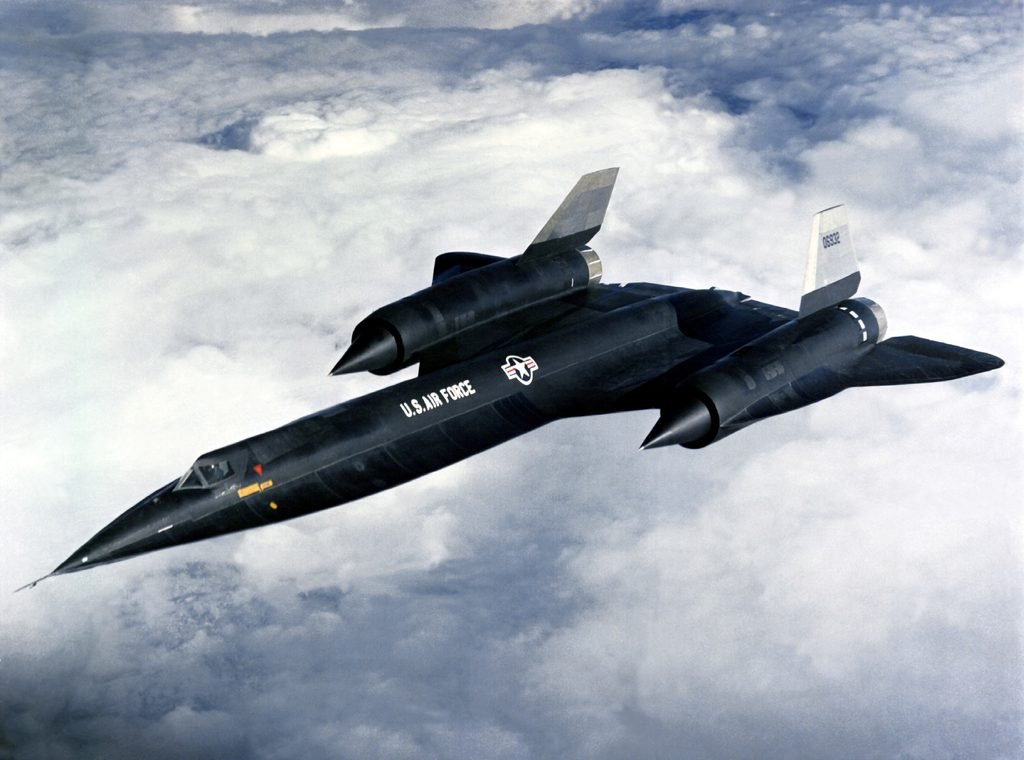
Lockheed A-12 reconnaissance aircraft in flight profile.
The Lockheed A-12 was a single-seat precursor to the SR-71, built nearly 13,000 lbs lighter.

The true king of the Archangel program is arguably the Lockheed A-12, a single-seat spy plane that was nearly 13,000 lbs lighter than the SR-71. The A-12 set its own official speed record of Mach 3.29 in 1965, but its unofficial, undocumented envelope was much higher.

During an envelope expansion test, pilot Jim Eastom struggled with warm, low-density air stalling performance at Mach 2.7. After pushing the A-12 into a shallow dive, the engines ingested a pocket of cold, dense air. The aircraft violently accelerated to Mach 3.56 for 15 seconds—more than 275 mph faster than the SR-71’s stated top speed.

PlatformOfficial Record / Stated SpeedUnofficial / Logged PeakEngine PlatformCritical Limiting Factor
F-15EX Eagle IIMach 2.5 (Stated)Mach 2.9 (Claimed/Retracted)2x GE F110-129 TurbofansFuel consumption / Airframe Drag
SR-71 BlackbirdMach 3.32 (Set in 1976)Mach 3.50 (Libya evasion, 1986)2x P&W J58 Turbo-ramjetsThermal & Structural Integrity
Lockheed A-12Mach 3.29 (Set in 1965)Mach 3.56 (Eastom test dive)2x P&W J58 Turbo-ramjetsThermal thresholds in compressor

The U.S. military’s practice of underreporting maximum tactical capabilities remains a standard operating procedure. Boeing’s quickly retracted Mach 2.9 claim for the F-15EX reflects a modern extension of the secrecy pioneered by Skunk Works decades prior. While the F-15EX relies on temporary, fuel-guzzling raw thrust via its emergency V-Max switch, the A-12 and SR-71 achieved sustained Mach 3+ dominance through unmatched thermodynamic engineering. Ultimately, raw linear speed is a diminishing asset in the modern era of hypersonic interceptors, but keeping adversaries guessing about a platform’s true escape velocity remains a vital force multiplier.


Tags: Aerospace Technologyair force

Related Posts

The Horten Ho 229 V3 German Nazi Stealth Bomber in flight 1945
Defense Archives

Horten Ho 229 Technical Breakdown: WWII’s Jet Flying Wing and the Stealth Myth

October 16, 2026
USAF The B-17F Flying Fortress
Defense Archives

B-17F Flying Fortress Technical Breakdown: Armor, Armament, and the Brutal Reality of Daylight Bombing

October 4, 2026
Rendered visualization of Boeing's tail-less sixth-generation carrier-based strike fighter concept
Air & Aerospace

US Navy Awards Boeing $20B F/A-XX Sixth-Gen Carrier Fighter Contract

October 2, 2026
Next Post
M113 armored personnel carrier of the Armed Forces

Robotic M113: Ukraine’s Khartiia Brigade Converts Cold War APCs into Unmanned Deminers

Leave a Reply Cancel reply

Your email address will not be published. Required fields are marked *

I agree to the Terms & Conditions and Privacy Policy.

Latest Intelligence

Lunar South Pole Race: US and China Target Ice Reserves

Horten Ho 229 Technical Breakdown: WWII’s Jet Flying Wing and the Stealth Myth

Russia’s Rassvet Satellite Constellation Fails: Starlink Rival Crippled

Can Iran Reverse-engineering US Navy Anduril Dive LD Autonomous Submarine

US Navy Cancels Constellation Frigate: FFG-62 Procurement Disaster

B-17F Flying Fortress Technical Breakdown: Armor, Armament, and the Brutal Reality of Daylight Bombing

Domain Of Warfare

GJ 11 Chinese Drone
Unmanned & Autonomous Systems

China’s GJ-11 Sharp Sword: The Stealth UCAV Rewriting Indo-Pacific SEAD Operations

Rendered visualization of Boeing's tail-less sixth-generation carrier-based strike fighter concept
Air & Aerospace

US Navy Awards Boeing $20B F/A-XX Sixth-Gen Carrier Fighter Contract

LPP Holding autonomous drone platform displayed at a NATO defense innovation showcase
Unmanned & Autonomous Systems

LPP Wins NATO Challenge With AI Off-Grid Airfield Denial

M142 High Mobility Artillery Rocket System (HIMARS) fires a training rocket during a live-fire exercise in Undva, Estonia, July 11, 2025. The exercise included dry-firing, equipment staging, communication systems checks, and concluded with live-fire qualifications.
Naval & Maritime

US Army Expands HIMARS Role With PrSM Anti-Ship Strike

Defense Archives

Horten Ho 229 Technical Breakdown: WWII’s Jet Flying Wing and the Stealth Myth

The Horten Ho 229 V3 German Nazi Stealth Bomber in flight 1945

Developed during the final desperate months of World War II, the Horten Ho 229 remains one of the most visually...

Read moreDetails

B-17F Flying Fortress Technical Breakdown: Armor, Armament, and the Brutal Reality of Daylight Bombing

USAF The B-17F Flying Fortress

The Boeing B-17F Flying Fortress was the blunt-force instrument of the Allied daylight strategic bombing campaign over Europe. Tasked with...

Read moreDetails

B-17 Ball Turret Technical Breakdown: Firepower, Armor, and Survival

Cutaway diagram or close-up profile of a B-17 ball turret showing the fetal position of the gunner.

BOTTOM LINE UP FRONT Advanced Fire Control: The Sperry K-4 automatic computing gunsight calculated gravity, wind speed, aircraft velocity, and...

Read moreDetails

King Tiger Technical Breakdown: Firepower, Armor, and Flaws

Panzerkampfwagen VI Ausf. B King Tiger tank with Henschel turret in a field.

BOTTOM LINE UP FRONT Unmatched Stand-off Firepower: The 88 mm KwK 43 L/71 gun achieved 100% test accuracy at 1,000...

Read moreDetails

Frontline Defense is an independent, objective analysis platform. The content provided on this website, including but not limited to technical breakdowns, military hardware comparisons, defense budget reports, and open-source intelligence (OSINT) analyses, is strictly for educational, historical, and informational purposes. Frontline Defense is not affiliated with, endorsed by, or acting on behalf of any government agency, department of defense, armed forces branch, or defense contractor. All content on this site represents independent research based strictly on unclassified, publicly available data and open-source records at the time of writing. Nothing published on this website should be construed as official military guidance, defense strategy consulting, or government policy.

Follow Us

Domain Of Warfare

  • Naval & Maritime
  • Air & Aerospace
  • Ground Forces & Armor
  • Strategic Weapons
  • Unmanned & Autonomous Systems

Regions

  • USA & Americas
  • Europe
  • Middle East
  • Asia & Pacific
  • About Us
  • Privacy Policy
  • Terms Of Use

© 2026 | Fronline Defense Journal. All Rights Reserved

No Result
View All Result
  • Home
  • Latest Intelligence
  • Domain Of Warfare
    • Naval & Maritime
    • Air & Aerospace
    • Ground Forces & Armor
    • Unmanned & Autonomous Systems
    • Strategic Weapons
  • Regions
    • USA & Americas
    • Europe
    • Middle East
    • Asia & Pacific
  • Defense Archives
  • About Us
    • Who We Are
    • Privacy Policy
    • Terms Of Use

© 2026 | Fronline Defense Journal. All Rights Reserved