KEY INTELLIGENCE
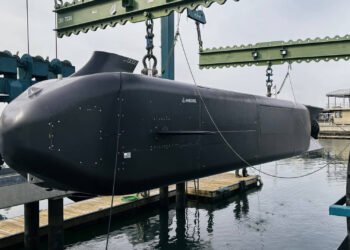
- Commercial Architecture, Not Classified Tech: The Dive-LD is an off-the-shelf platform derived from commercial sub-survey industries, heavily utilizing 3D-printed components rather than highly classified proprietary military hardware.
- Cost-Effective Scalability: Valued at roughly $2.5 million per unit—comparable to a Tomahawk cruise missile—the submarine is intentionally designed as an attritable asset to keep human operators out of high-threat environments.
- Deep-Diving Endurance: The electric-powered submersible boasts a 19-foot length, a maximum operating depth of 6,000 meters (20,000 feet), and up to 10 days of mission endurance.
- Zero Exquisite Sensor Compromise: The U.S. Navy confirms the recovered drone contained no sensitive radar or classified sonar; its payload was restricted to standard seabed mapping and counter-mine surveillance optics.
- No Self-Destruct Mechanism: The lack of a scuttling charge is an intentional design choice, preventing the costly regulatory overhead, logistics burden, and explosive safety certifications required for armed ordnance.
Information Warfare vs. Operational Reality
The IRGC‘s declaration regarding the recovered AUV perfectly aligns with Tehran’s hybrid warfare strategy, prioritizing rapid, exaggerated information operations. Iranian officials publicly labeled the system as the pinnacle of global subsurface technology delivered to the “U.S. terrorist army” in 2025. This narrative aims to project domestic strength while stoking anti-American sentiment globally.
However, U.S. Navy officials speaking to The War Zone delivered a starkly different reality. The AUV had suffered a critical malfunction more than 24 hours prior to its recovery. It was actively conducting routine regional water surveys and was an older model devoid of classified sonar or sensitive data stores.
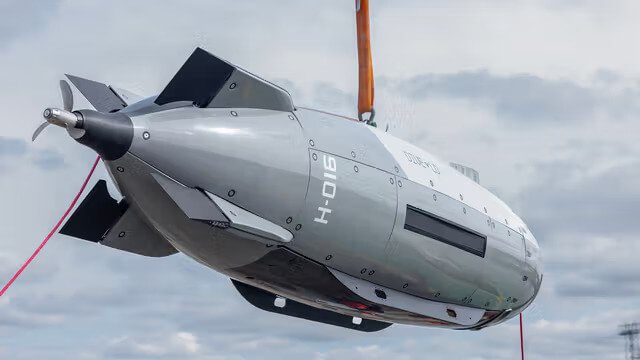
The Anduril Dive-LD: Commercial Origins
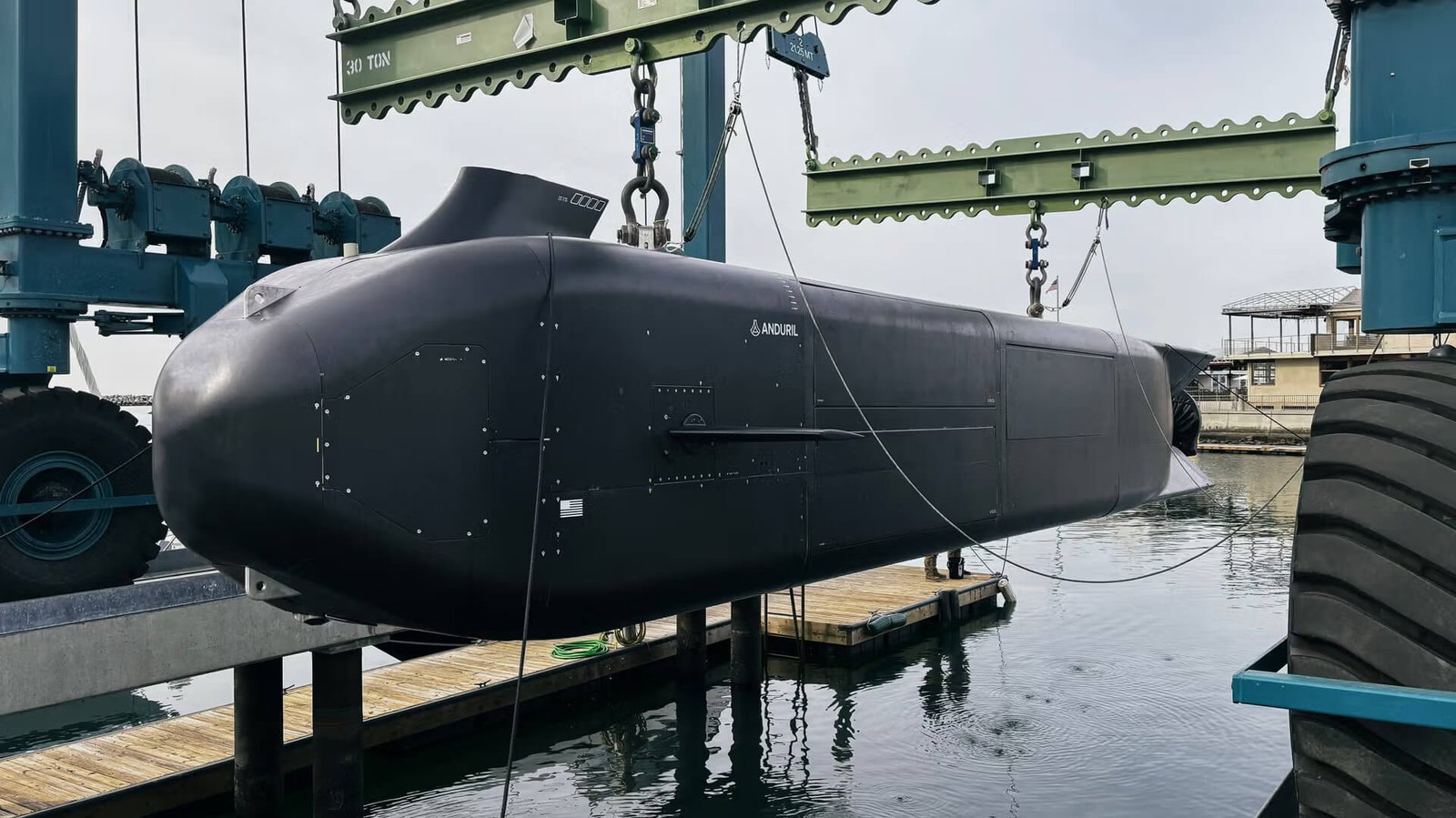
The Dive-LD is engineered by Anduril (following its 2022 acquisition of Dive Technologies), intentionally bypassing the traditional bespoke military acquisition model. Designed originally for offshore energy and sub-survey industries, the 19-foot-long, 4-foot-diameter drone prioritizes modularity and massive scaling. By heavily leveraging 3D printing and commercial parts, the platform maintains an accessible $2.5 million price point.
This exact architecture has already been sold to non-military entities, including the National Offshore Wind Research and Development Consortium. Consequently, the intelligence value Iran stands to glean is effectively limited to the medium-submersible packaging and whatever fragments they can reverse-engineer from Anduril’s offboard Lattice AI command-and-control software.
The Replicator Initiative and Attritable Warfare
The Pentagon selected the Dive-LD for its Replicator initiative in August 2024, signaling a doctrinal shift toward “attritable” unmanned systems. An attritable platform is one the military prefers to recover but expects and accepts as a combat loss during high-intensity operations. At a fraction of the cost of a single PAC-3 interceptor, these AUVs offer high-volume surveillance without the strategic sting of a lost manned submarine.
Anduril currently produces approximately 50 submarines per year, with hard plans to scale output to 200 units annually. This rapid manufacturing pace ensures the Navy can flood contested waterways like the Strait of Hormuz with persistent intelligence, surveillance, and reconnaissance (ISR) drones to detect undersea mines without risking sailors.
The Scuttling Dilemma: Why No Self-Destruct?
A common question following the IRGC recovery is why the AUV lacked a self-destruct mechanism. A battery-powered submarine cannot simply overload its power core, and introducing high explosives radically alters the platform’s logistical footprint. Installing a scuttling charge consumes a massive portion of the vehicle’s 1 cubic meter flooded payload space (which accounts for only 15% of its internal volume).
More critically, turning an unarmed COTS drone into an explosive device triggers the Navy’s stringent explosive safety certification process. The AUV would suddenly require specialized ordinance storage, routine life-cycle inspections for explosive degradation, and complex autonomous detonation logic that avoids fratricide during friendly recovery. The immense cost of these safeguards entirely defeats the purpose of procuring a cheap, disposable off-the-shelf submersible.
The following table outlines the known specifications and operational parameters of the Anduril Dive-LD AUV based on manufacturer and defense acquisition data:
| Parameter | Specification / Metric | Operational Context |
| Platform Designation | Dive-LD (Autonomous Underwater Vehicle) | Originally developed by Dive Technologies (Acquired by Anduril in 2022) |
| Unit Cost | ~$2.5 Million USD | Intentionally priced as an attritable, semi-disposable asset |
| Physical Dimensions | 19 ft (5.8m) Length x 4 ft (1.2m) Diameter | Easily deployable from seaside piers or standard oceangoing vessels |
| Maximum Operating Depth | 6,000 meters (~20,000 feet) | Provides extreme deep-water seabed mapping and surveillance |
| Mission Endurance | Up to 10 Days | Fully electric-powered sustained autonomous operations |
| Payload Capacity | 1 Cubic Meter (Flooded Compartment) | Represents roughly 15% of the total internal hull volume |
| Production Scaling | Currently 50/year (Targeting 200/year) | Selected for the Pentagon’s rapid-fielding Replicator initiative (Aug 2024) |
| Primary Mission Set | ISR, Undersea Mine Detection, Seabed Mapping | Keeps warfighters out of high-threat subsurface environments |
The IRGC’s recovery of the Dive-LD serves as a tactical propaganda victory for Tehran but a negligible strategic intelligence loss for the United States. By fielding an off-the-shelf, $2.5 million commercial derivative in the Strait of Hormuz, the U.S. Navy successfully mapped high-threat waters while completely shielding its exquisite, classified sonar and radar technologies from adversarial capture. The incident validates the core thesis of the Replicator initiative: the future of maritime ISR relies on flooding the battlespace with attritable autonomous drones where individual losses are mathematically expected, logistically irrelevant, and technically sterile.