BOTTOM LINE UP FRONT
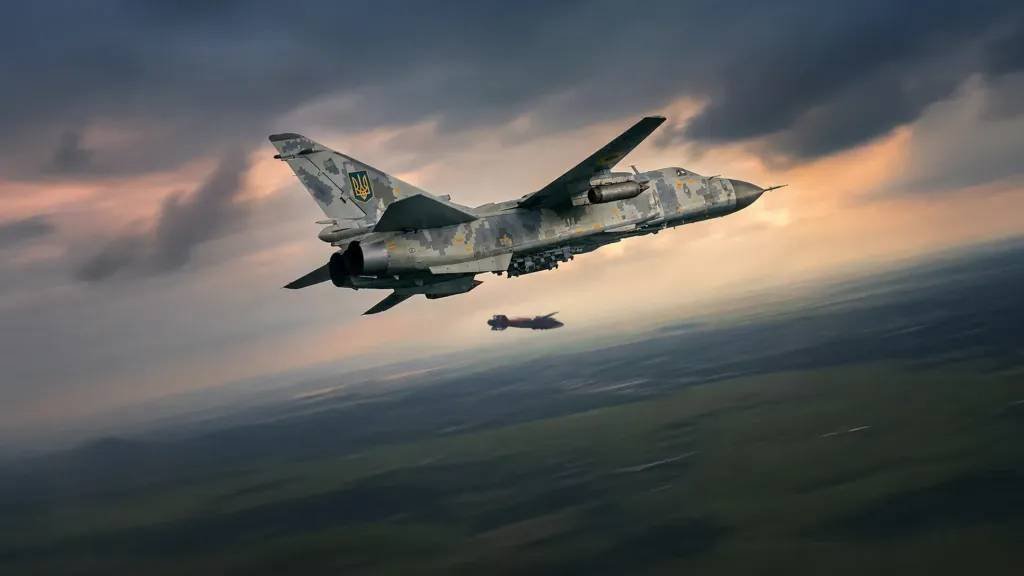
- Platform Integration: Developed over 17 months by DG Industry, the ‘Equalizer’ features a 250kg (550 lb) warhead, measures 2.7m in length, and integrates a 2.4m pop-out wing module, compatible with Su-24, Su-27, and MiG-29 platforms.
- Engagement Envelope: Operating as an unpowered, inertia-driven munition, it achieves a baseline standoff range of 40 km (25 mi), theoretically extendable to 130 km (81 mi) when released from high-altitude regimes (10,000+ m).
- Russian Overmatch Context: Russian aerospace forces currently drop an estimated 3,500 UMPK-equipped bombs monthly, overwhelming localized air defense networks and necessitating a high-volume Ukrainian counter-munitions capability.
- Force Expansion: The Equalizer is the first of eight domestic glide bomb programs, which include larger 500kg conversion kits equipped with French anti-jamming architecture to bypass Russian electronic warfare (EW) screens.
The Standoff Munitions Arms Race
The mass proliferation of ISR (Intelligence, Surveillance, Reconnaissance) drones has pushed conventional tube and rocket artillery out of immediate front-line proximity. To maintain localized fire superiority, both combatants have pivoted to standoff glide munitions. By retrofitting traditional dumb bombs with aerodynamic surfaces and guidance packages, tactical aviation can deliver massive kinetic yields while remaining safely outside the engagement envelope of short- to medium-range Surface-to-Air Missile (SAM) systems.
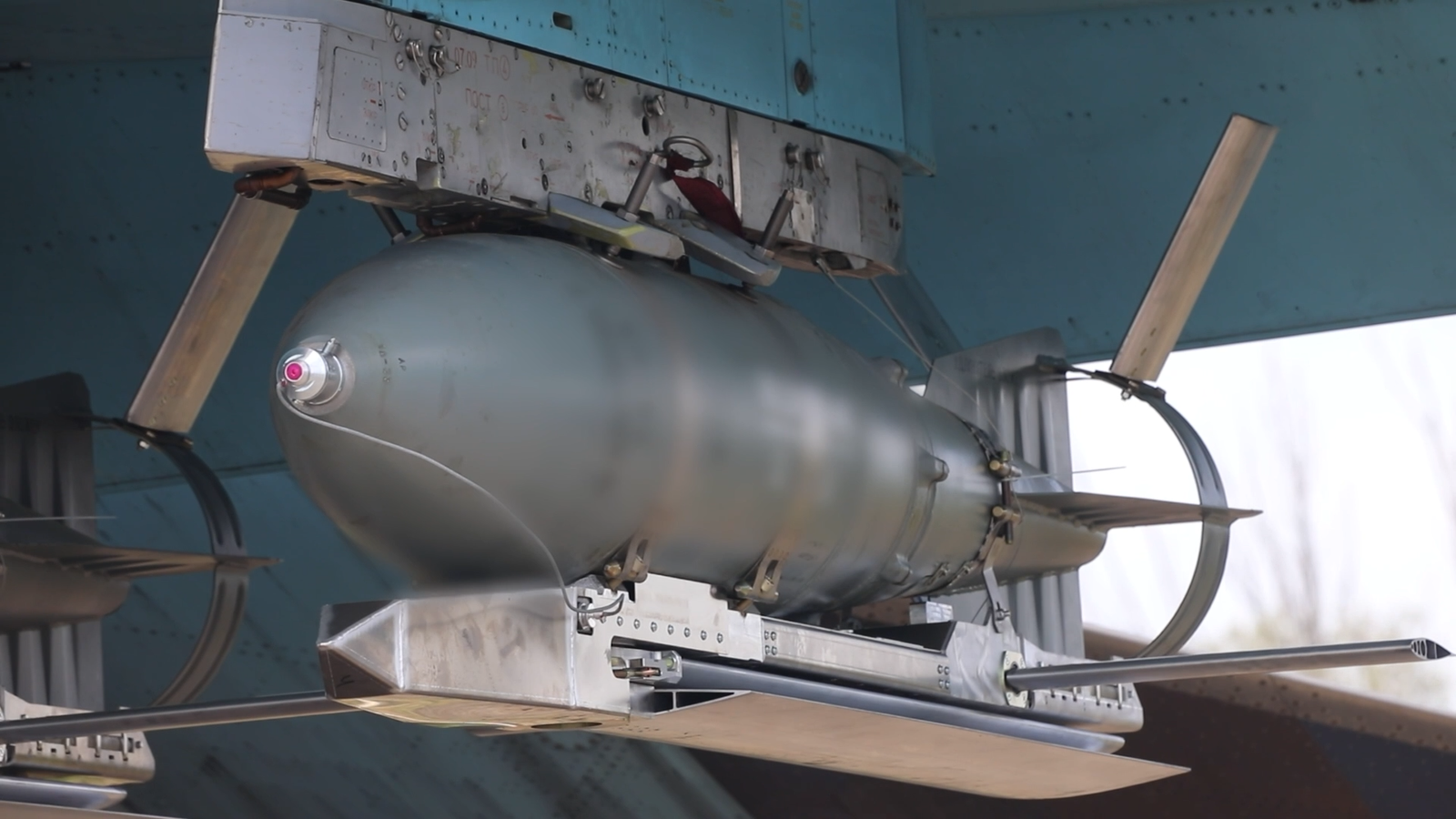
Russia seized the early initiative in this domain. Utilizing vast Soviet-era stockpiles, Moscow introduced the UMPK (Unified Gliding and Correction Module). Costing roughly $25,000 per kit, this crude but highly effective module converts standard FAB-250, FAB-500, FAB-1500, and FAB-3000 gravity bombs into precision standoff weapons with a glide range of roughly 60 km.
Russian UMPK and UMPB Dominance
Despite high failure rates and vulnerability to electronic warfare (EW) spoofing, the sheer volume of Russian deployment—averaging 100 UMPK drops per day in early 2025—has systematically dismantled hardened Ukrainian defensive lines in sectors like Avdiivka. The blast radius of a single FAB-500 UMPK guarantees a kill/severe damage zone of 100 meters.
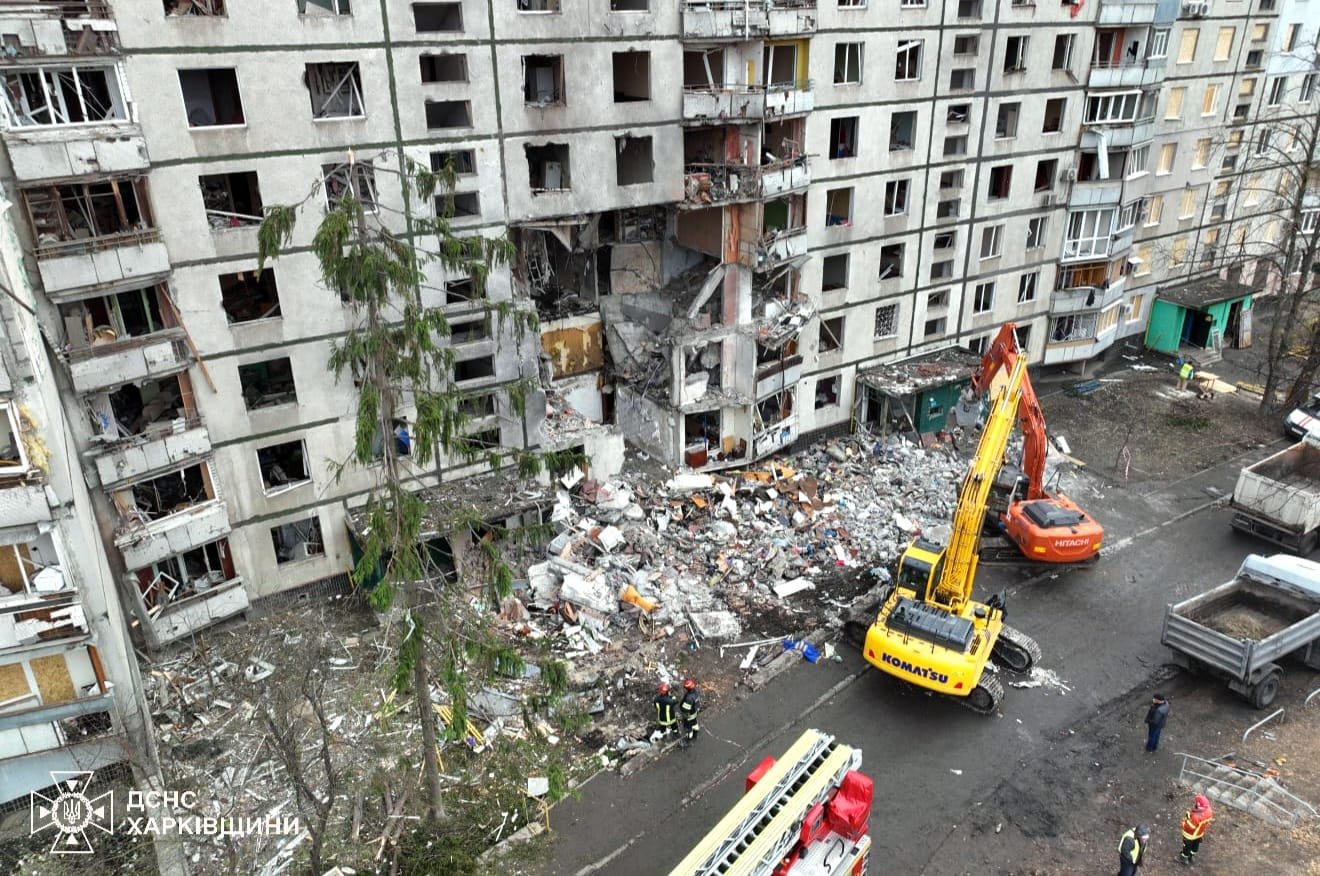
Complementing the UMPK is the more advanced UMPB module. Functioning similarly to the US Small Diameter Bomb (SDB), the UMPB features a small jet engine and robust GLONASS navigation with dedicated EW hardening. It achieves a 120 km range with a 15-meter Circular Error Probable (CEP). Production scales reportedly hit 600 units per month at an estimated unit cost of just over $40,000, presenting a continuous, deep-strike threat to Ukrainian infrastructure.
The ‘Equalizer’ System
To counter this asymmetry, Ukraine’s defense sector, spearheaded by DG Industry and the Brave 1 tech cluster, fast-tracked the Equalizer program starting in 2024. Cleared for combat in May 2026, the Equalizer acts as a high-precision conversion module engineered for a low radar cross-section. Its thin wings allow the weapon to bypass localized early warning radars more effectively than bulkier drone platforms like the Shahed-136.
The system relies entirely on kinetic inertia. Lacking an onboard propulsion unit, the bomb’s range is heavily dependent on the launch platform’s speed and altitude. While low-altitude deployment limits the range to 40 km, a high-altitude release (exceeding 10,000 meters) can theoretically extend the glide path to 130 km. However, climbing to such altitudes drastically increases the launch aircraft’s exposure to long-range Russian SAMs like the S-400 Triumf.
Operational Integration and Cost Mechanics
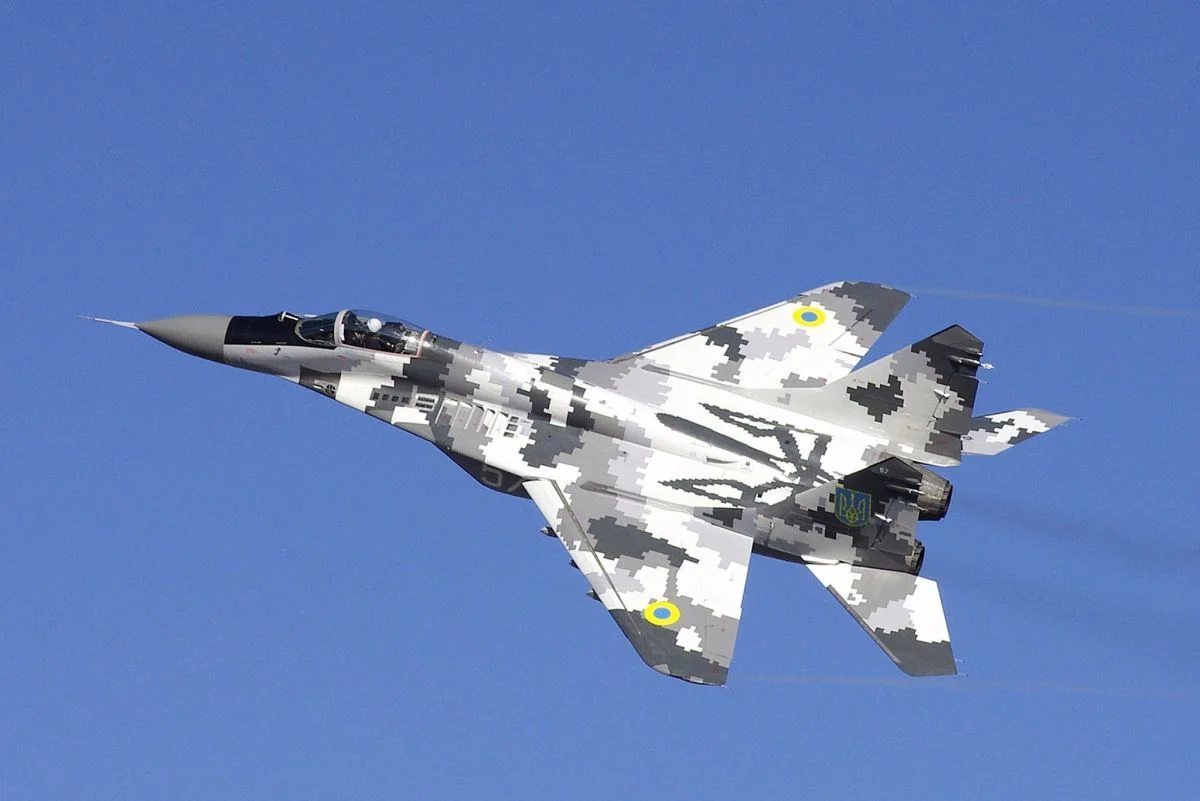
A critical advantage of the Equalizer is its rapid operational integration. The system requires less than 30 minutes to mount on standard Soviet-legacy hardpoints and has been successfully tested on Ukrainian MiG-29s in live combat against Russian trench networks in June 2026. Certification for NATO platforms, including the F-16 and Mirage 2000, is currently pending.
Economic sustainability is the program’s primary objective. Ukraine cannot perpetually rely on Western munitions like the $24,000 JDAM-ER or the $210,000 French AASM Hammer. While exact production costs for the Equalizer remain classified (estimates wildly vary between $7,000 and $81,000), localized mass production eliminates geopolitical supply chain risks and embargo threats.
Tactical Comparison: Global Glide Munitions
| Weapons System | Origin | Warhead Class | Est. Max Range | Propulsion | Est. Unit Cost |
| Equalizer | Ukraine | 250 kg (550 lb) | 40 – 130 km | Unpowered (Inertial) | Unknown |
| UMPK (FAB-500) | Russia | 500 kg (~300 kg HE) | 60 km | Unpowered (Inertial) | ~$25,000 + Bomb |
| UMPB | Russia | 250 kg | 120 km | Small Jet Engine | ~$40,000 |
| JDAM-ER | USA | 225 kg (500 lb) | 72 km | Unpowered (Inertial) | $21,000 – $24,000 |
| AASM Hammer | France | 250 kg | 70 km | Solid Rocket Motor | ~$210,000 |
| Small Diameter Bomb | USA | 110 kg (250 lb) | 110 km | Unpowered (Inertial) | ~$40,000 |
The Equalizer is a vital sovereign force multiplier, but its current iteration is a technology demonstrator acting as a stopgap. Ukraine possesses vast stockpiles of unguided FAB and OFAB series bombs; successfully pairing these with reliable, locally produced glide modules is an existential necessity. However, the Equalizer’s lack of a propulsion unit forces Ukrainian pilots into a lethal dilemma: deploy low and sacrifice range, or deploy high and risk intercept by Russian long-range air defenses. Until Ukraine scales production into the thousands per month and successfully integrates engine modules (similar to the Russian UMPB or South African Umbani), the Equalizer will provide localized tactical relief rather than a theater-wide strategic shift. The true geopolitical victory here is proof-of-concept for Ukraine’s isolated military-industrial complex.