Bottom Line Up Front
- Primary Target: Antonov An-124 cargo aircraft relaying French munitions to Poland.
- Weapon System: Commercial rotary-wing UAV modified with an 800-gram high-explosive (HE) payload.
- Secondary Incident: Mid-air collision at 400 meters between a Boeing 757 cargo liner and a second unidentified UAV.
- Tactical Execution: Proximal launch via local operatives utilizing SIM-card telemetry for remote Command & Control (C2) and real-time surveillance.
- Operational Fallout: Exposed critical gaps in rear-echelon air defense; allied air-policing (Operation Eastern Sentry) is fundamentally incapable of neutralizing smuggled, ground-launched micro-UAVs.
The Leipzig Strike: Tactical Breakdown of the Drone Assault
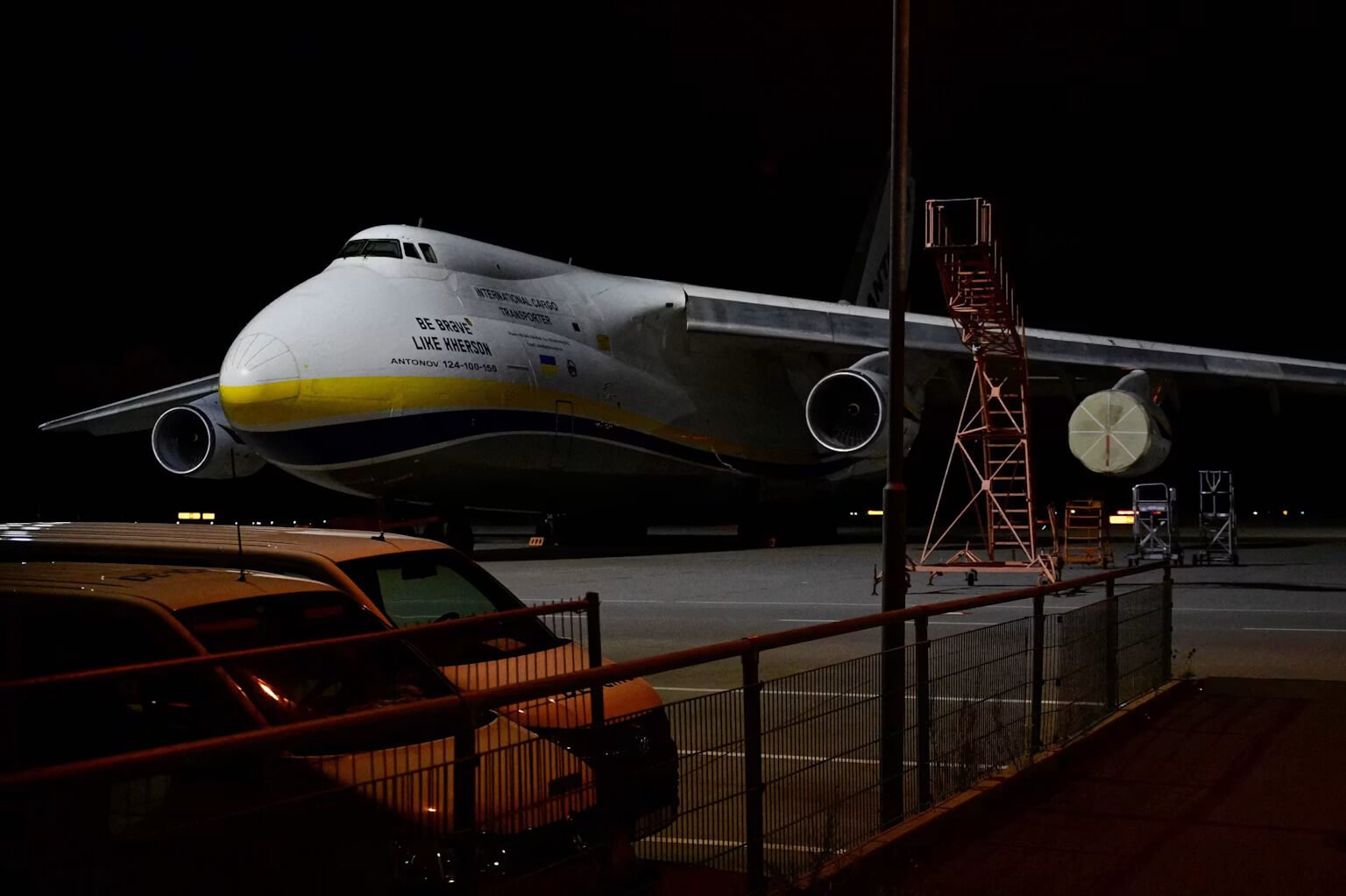
On August 4, 2026, the sanctuary of NATO’s secondary logistical hubs was definitively shattered. A modified quadcopter—roughly the size of a microwave—penetrated the security perimeter at Leipzig Airport and executed a direct kinetic strike against the wing of an Antonov An-124. The aircraft, operating out of Leipzig since the Battle of Hostomel, was loaded with inbound military hardware from France destined for southeastern Poland.
The UAV carried 800 grams of explosives specifically configured to initiate a catastrophic fuel-line ignition. In a major operational failure for the saboteurs, the munition failed to detonate upon impact. The drone deflected off the airframe, preserving the aircraft and delaying the discovery of the attack for over four hours.
Infiltration and Operational Control
Forensic analysis of the recovered UAV yielded a SIM card and localized antenna arrays, confirming the platform was remotely piloted. This points to a compartmentalized cell: a local asset likely infiltrated the immediate perimeter to launch the drone, while a remote operator—potentially located in a hostile foreign capital—assumed terminal control.
This C2 architecture allows Russian intelligence to execute deniable, real-time damage assessments. A subsequent incident further complicates the airspace security profile. Less than five hours later, at midnight on August 5, an inbound Boeing 757 freighter aborted its landing due to the airport’s sudden lockdown. Climbing through 400 meters, the 757 struck a second drone. Authorities have not recovered the debris, leaving it unclear whether the second drone was a loitering munition or an airborne surveillance asset monitoring the primary strike.

The Antonov An-124 remains the backbone of NATO’s heavy airlift operations to Ukraine, making it a high-value target for Russian GRU sabotage cells. Source: Md Shaifuzzaman Ayon
The NATO Article 5 Dilemma: Paralysis by Ambiguity
Under the strict definitions of the North Atlantic Treaty, a drone carrying an explosive payload striking an allied airfield qualifies as an “armed attack.” The geography (Germany) satisfies the territorial requirements of Article 5. Yet, Brussels remains entirely paralyzed.
NATO leadership is actively avoiding the invocation of either Article 5 or the consultative Article 4. The geopolitical calculus is simple: alliance leaders fear that treating this as a formalized act of war would hand the Kremlin a domestic propaganda victory, accelerating Russian mobilization efforts.
Furthermore, existing defensive postures like Operation Eastern Sentry—which utilizes F-16 combat air patrols to shoot down Russian drones violating Polish or Baltic airspace—are tactically useless here. Fighter interceptors cannot defend against micro-UAVs smuggled in the trunks of civilian cars and launched two kilometers from a German runway.
German Retaliation and Strategic Vulnerability
Germany’s unilateral response has been categorized by defense analysts as dangerously inadequate. Rather than executing asymmetric retaliation, Berlin ordered the closure of a Russian consulate in Bonn and a cultural center in Berlin. Expelling suspected spies and tightening visa restrictions does not degrade Russia’s kinetic operational capabilities.
Berlin holds a potent economic weapon: escalating the interdiction of Russia’s “shadow fleet” transporting sanctioned oil through the Baltic Sea. Yet, German naval and coast guard assets have largely stood down since January, hiding behind a demand for collective European Union regulatory action. By refusing to unilaterally internalize the risks of maritime interdiction, Germany signals a fatal lack of resolve, practically inviting further GRU-directed sabotage within its borders.
Leipzig Airport Sabotage Operation
| Metric / Phase | Event 1: An-124 Wing Strike | Event 2: Boeing 757 Mid-Air Collision |
| Date/Time | August 4, 2026 | August 5, 2026 (approx. 00:00) |
| Target Aircraft | Antonov An-124 (Antonov Airlines) | Boeing 757-200 Freighter |
| Mission Profile | Relay of French weapons to Polish logistics hub | Diverted civilian cargo flight |
| Threat Platform | Commercial rotary-wing UAV (Quadcopter) | Unidentified UAV (presumed surveillance/loitering) |
| Payload/Kinetic Yield | 800 grams of high-explosives (HE) | Unknown (Airframe not recovered) |
| Engagement Altitude | Ground level (parked on apron) | 400 meters (during aborted approach) |
| Outcome | Failed detonation; physical deflection off airframe | Direct mid-air strike; aircraft diverted safely |
| Strategic Assessment | Proximal launch / Remote terminal guidance | Suspected BDA (Battle Damage Assessment) overwatch |
Final Assessment: The Leipzig Airport drone strikes represent a severe escalation in Russian hybrid warfare, transitioning from disinformation and cyber-attacks to direct kinetic sabotage of NATO logistics. Germany’s refusal to trigger Article 4 and its weak diplomatic retaliation—choosing consulate closures over Baltic Sea shadow fleet interdiction—exposes a critical structural vulnerability. By waiting for “collective EU action,” Berlin signals a lack of unilateral deterrence. Expect a sharp increase in localized, proxy-driven sabotage against Western European rail and air logistical nodes, threatening the operational readiness of the Ukrainian supply chain.