BOTTOM LINE UP FRONT
- 32-Cell VLS Integration: Introduces vertical launch capability to the Polish Navy, firing over 1,000 locally produced CAMM-ER surface-to-air missiles with a 45 km range at Mach 3.
- Advanced Sonar Architecture: Combines a Thales CAPTAS-2 towed array sonar with hull-mounted systems, utilizing AI algorithms to track Russian Kilo-class and Lada-class submarines.
- High-Endurance Propulsion: Powered by four Rolls-Royce M71 diesels in a CODAD configuration, delivering 32.8 MW of power, a top speed of 28 knots, and an operational range of 17,000 km.
- Anti-Surface Strike Package: Deploys 16 stealthy Naval Strike Missiles (NSM) featuring GPS/IR guidance, low sea-skimming flight profiles, and ranges exceeding 300 km.
- Global Industrial Base: Leverages a shared UK design architecture exported to Indonesia (Baloetradewa-class) and the United Kingdom (Inspiration-class).
Warsaw Shifts Focus to Maritime Defense
Poland has heavy expenditures on its land forces and air defense networks since 2022. Land forces received priority funding. But Naval assets lagged behind modern standards. The Polish Navy relied heavily on two former US Navy Oliver Hazard Perry-class frigates commissioned in the late 1970s. These vessels lacked modern sensor suites and point-defense firepower.
Russian naval activity in the Baltic Sea forced a strategy shift. Moscow maintains surface combatants and diesel-electric submarines within striking distance of Polish ports. Polish planners required a modern surface combatant capable of independent operations, anti-submarine screening, and air defense. The Miecznik program fills this exact operational requirement. Construction of all three hulls will take roughly five years, reshaping the regional naval balance.
Technical Breakdown: Engine Layout, Sensors, and Armament
CODAD Propulsion and Endurance Metrics
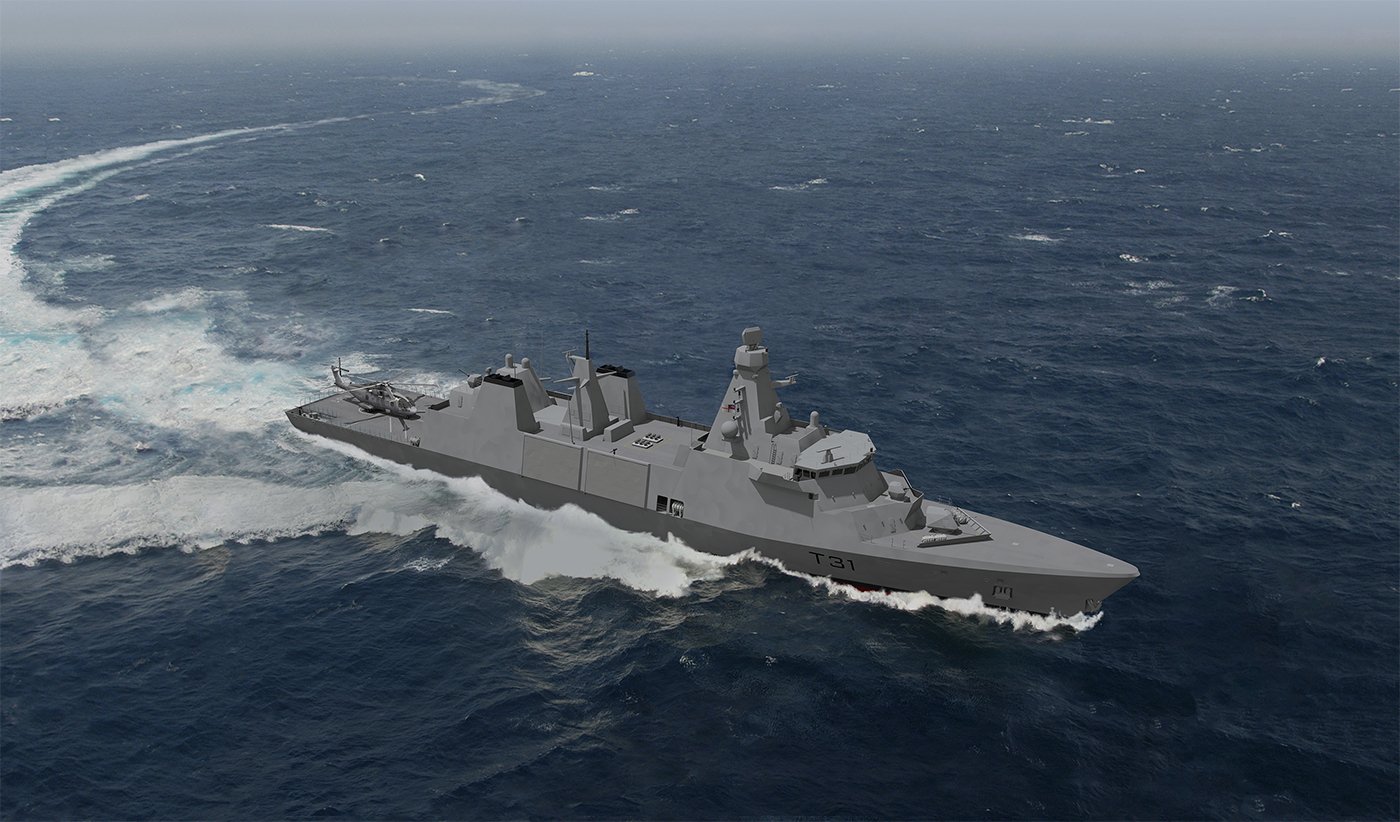
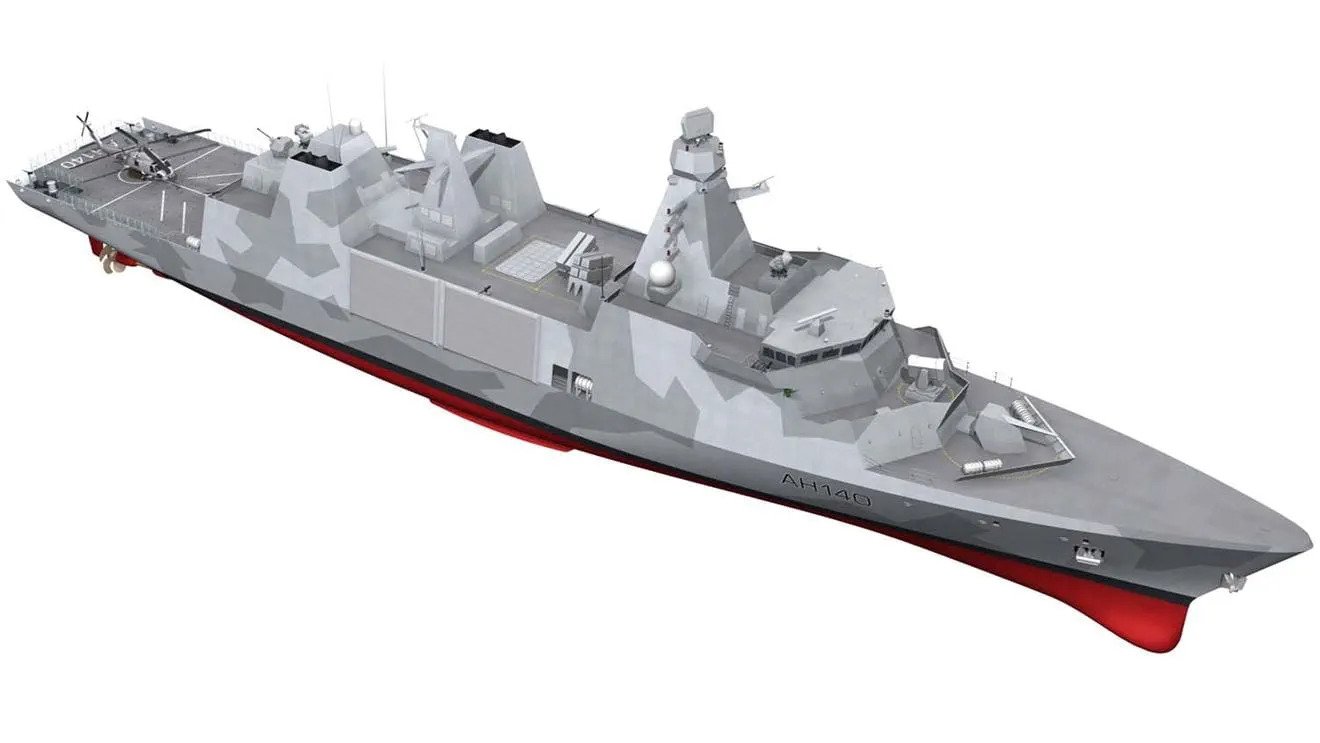
The Miecznik-class measures 138.7 meters in length with a displacement of 7,000 tons. A combined diesel and diesel (CODAD) propulsion plant powers the ship. Four Rolls-Royce M71 engines drive two propeller shafts, generating 32.8 MW total output.
Modern frigates often use gas turbines for higher speeds. Poland selected CODAD for lower lifecycle costs and fuel economy. At cruising speed, the vessel engages only two engines. This configuration lowers wear rates and maintenance downtime. The propulsion plant yields an endurance of 17,000 km at 18 knots. Range exceeds the 11,000 km limit of the US Navy Constellation-class frigate. The trade-off involves noise output. Diesel engines produce a larger acoustic signature than gas turbines, making acoustic management critical during anti-submarine operations.
Integrated Sensor and Combat Suite
Sensors tie directly into the Thales Tacticos combat management system. Primary air search relies on the Thales Sea Master 400 (SM400) radar, providing surveillance out to 400 km. Target tracking and weapon engagement are supplemented by the smaller Thales NS-50 radar.
Submarine detection relies on a dual-sonar configuration. A hull-mounted sonar provides forward coverage but suffers from blind spots directly behind the stern. To eliminate this blind zone, Poland integrated the Thales CAPTAS-2 towed array sonar. The system operates in shallow and deep waters with an active detection range of 60 km. Integrated software filters out host-ship self-noise, allowing operators to isolate contacts automatically.
Multi-Layered Firepower Infrastructure
Firepower centers on 32 Mark 41 vertical launch system cells. VLS technology eliminates the slow reload cycles of older over-deck rail launchers. Missiles fire vertically, allowing instantaneous 360-degree engagement without maneuvering the ship.
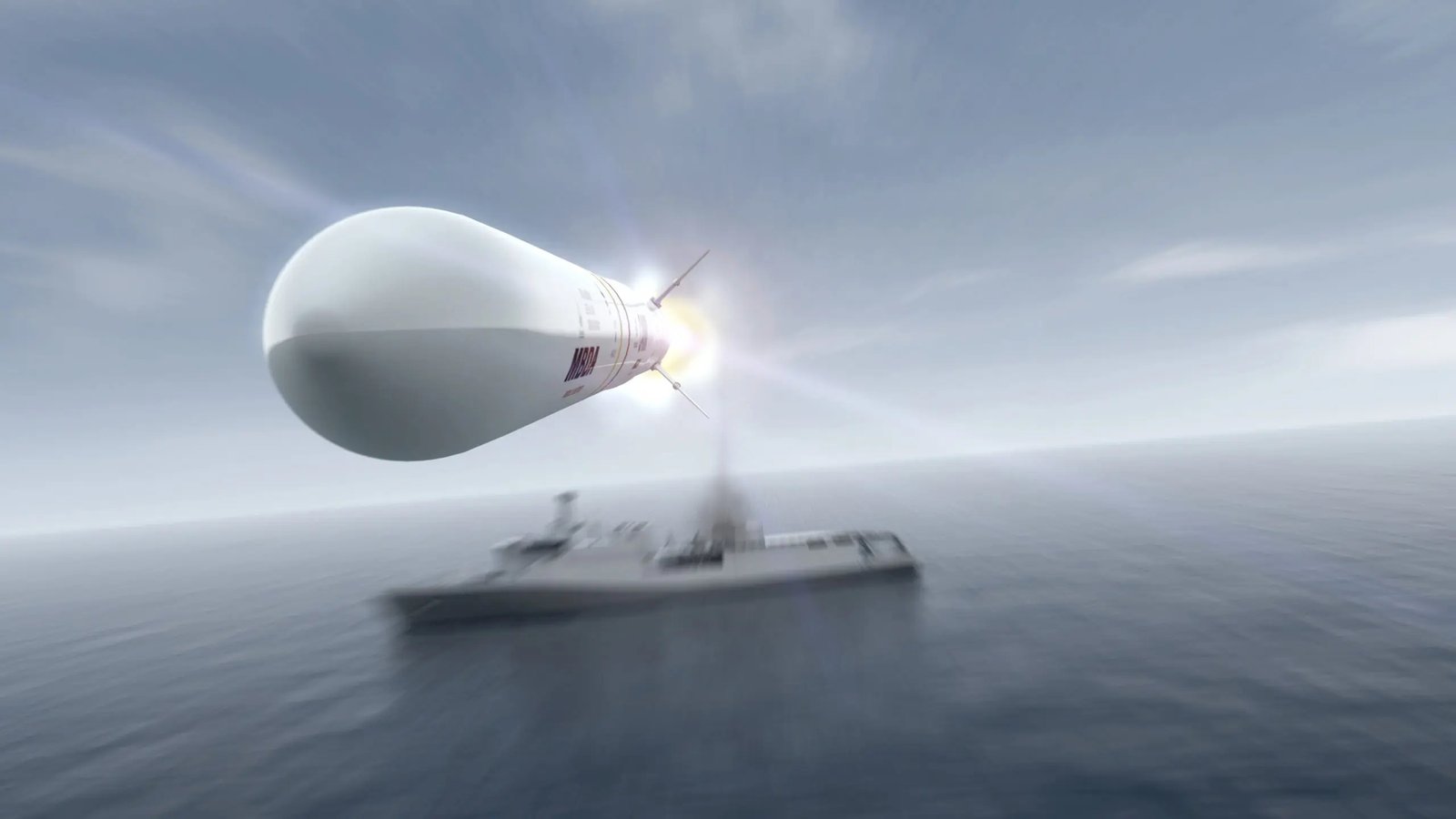
The VLS cells house the CAMM-ER (Common Anti-Air Modular Missile Extended Range). Poland negotiated local production rights for over 1,000 units. The missile uses a cold-launch system, gas-ejecting from the cell before the rocket motor ignites. This process saves up to 30 percent of internal fuel. Range reaches 45 km at speeds of Mach 3.
Surface strike capability comes from 16 Naval Strike Missiles (NSM). The 400 kg missile carries a 120 kg blast-fragmentation warhead. It flies sea-skimming profiles, using GPS and imaging infrared guidance to bypass shipboard radar defenses. Maximum range exceeds 300 km.
Gun defense uses three distinct tiers:
- Primary Gun: Leonardo 76mm/62 Oto Melara Super Rapid firing 120 rounds per minute against surface, land, and aerial targets up to 40 km away.
- Close-In Weapon System: Single-barrel Polish OSU-35K 35mm cannon firing 550 rounds per minute out to 5 km.
- Point Defense: Four ZMT Tarnow 12.7mm heavy machine guns (two manual, two remote-controlled).
Undersea warfare features twin 324mm torpedo launchers firing the MU90 Impact. The torpedo uses a 32.7 kg shaped-charge warhead designed to rupture double-hull submarines like the Russian Kilo-class. Terminal dash speed reaches 100 km/h. A stern flight deck supports 16-ton class helicopters, specifically the AW101, equipped with dipping sonar and depth charges.
UK, Poland, and Indonesia
The Arrowhead 140 hull forms the basis for three national frigate programs. Each nation customized internal layouts, electronics, and weapons packages to match operational doctrine.
The United Kingdom ordered five Inspiration-class (Type 31) frigates at £270 million per ship. The Royal Navy needed affordable hulls to replace retired Type 23 frigates and bolster overall fleet numbers. Severe fleet downsizing left Britain with only 11 frigates and destroyers in active service. The British variant focuses on general-purpose duties and carrier escort roles.
Indonesia procured two Baloetradewa-class frigates. The Indonesian hulls measure 140 meters and displace 6,000 tons. Jakarta replaced the European Thales sensor suite with Turkish equipment built by Aselsan and Havelsan. Armament includes 64 VLS cells firing Turkish Hisar and Siper surface-to-air missiles (150 km range), alongside Atmaca anti-ship missiles fitted with heavy 220 kg warheads.
| System | Polish Navy (Miecznik-Class) | Royal Navy (Inspiration-Class) | Indonesian Navy (Baloetradewa-Class) |
| Displacement | 7,000 tons | 5,700 tons | 6,000 tons |
| Overall Length | 138.7 meters | 138.7 meters | 140.0 meters |
| Propulsion Layout | CODAD (4x Rolls-Royce M71) | CODAD (4x Rolls-Royce M71) | CODAD (4x Rolls-Royce M71) |
| Total Power Output | 32.8 MW | 32.8 MW | 32.8 MW |
| Maximum Range | 17,000 km at 18 knots | 17,000 km at 18 knots | 15,000 km at 18 knots |
| Primary Radar | Thales Sea Master 400 | Thales NS110 | Aselsan 3D Smart Radar |
| Anti-Submarine Sonar | CAPTAS-2 Towed Array + Hull | Hull-mounted active/passive | Turkish Sonar Suite |
| VLS Cell Capacity | 32 Cells (Mk 41) | 32 Cells (Mk 41) | 64 Cells (Turkish Origin) |
| Primary SAM System | CAMM-ER (45 km range) | CAMM (25 km range) | Siper / Hisar (150 km range) |
| Anti-Ship Missiles | 16x NSM (300+ km range) | 8x NSM (200+ km range) | 8x Atmaca (220 km range) |
| Main Naval Gun | 76mm Oto Melara Super Rapid | 57mm Bofors Mk3 | 76mm Oto Melara Super Rapid |
| Close-In Weapon System | 1x 35mm OSU-35K | 2x 40mm Bofors Mk4 | Rheinmetal / Aselsan CIWS |
The Miecznik-class frigate provides a clear force multiplier for NATO’s eastern flank. It rectifies a long-standing structural vulnerability in Poland’s force posture, transitioning its navy from a coastal patrol force into a blue-water surface combatant branch. While CODAD propulsion introduces higher acoustic emissions compared to gas turbines, the combination of CAPTAS-2 sonar, CAMM-ER air defense, and NSM strike capabilities allows Warsaw to challenge Russian air, surface, and subsurface assets across the Baltic theater.