BOTTOM LINE UP FRONT
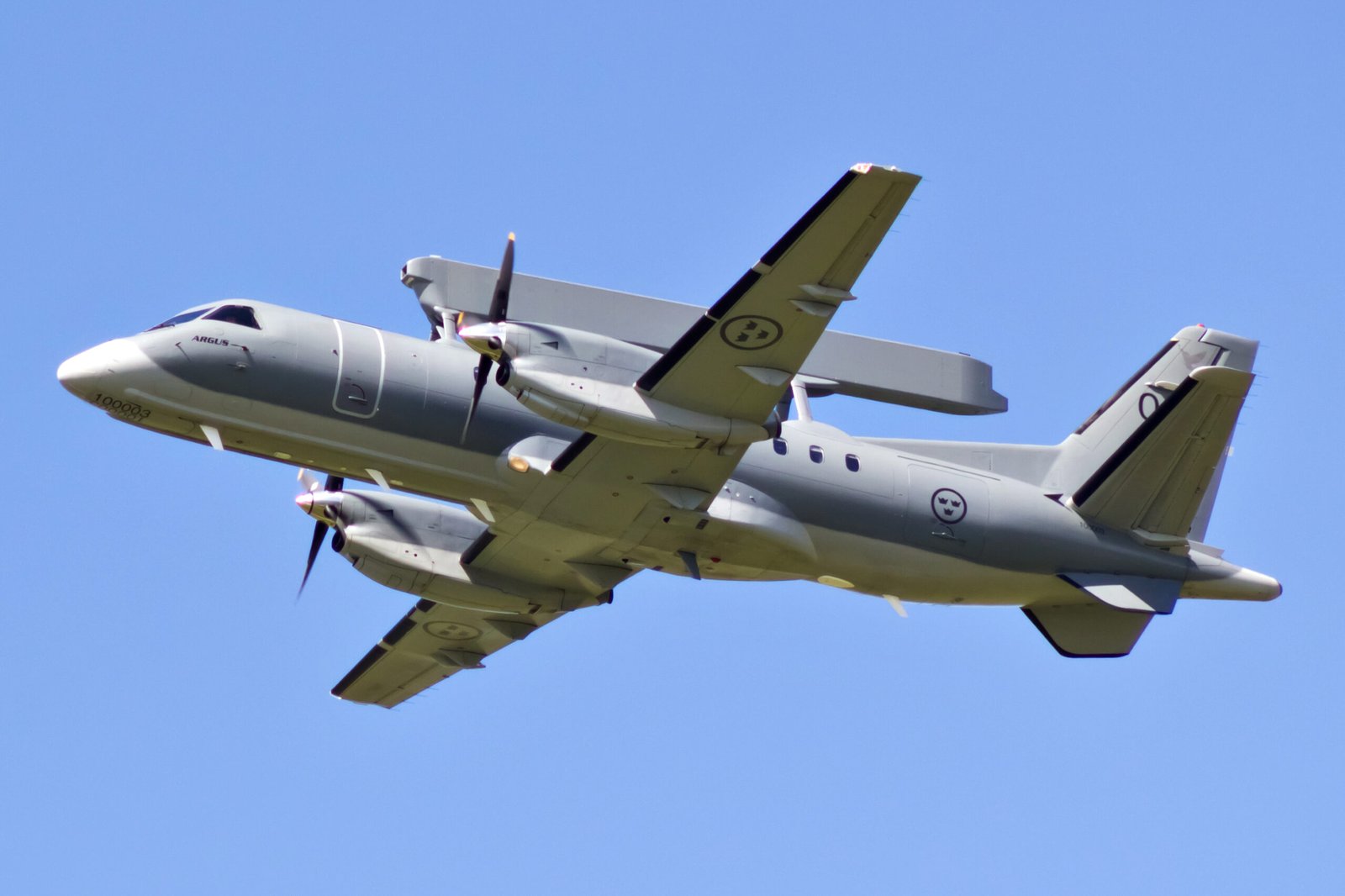
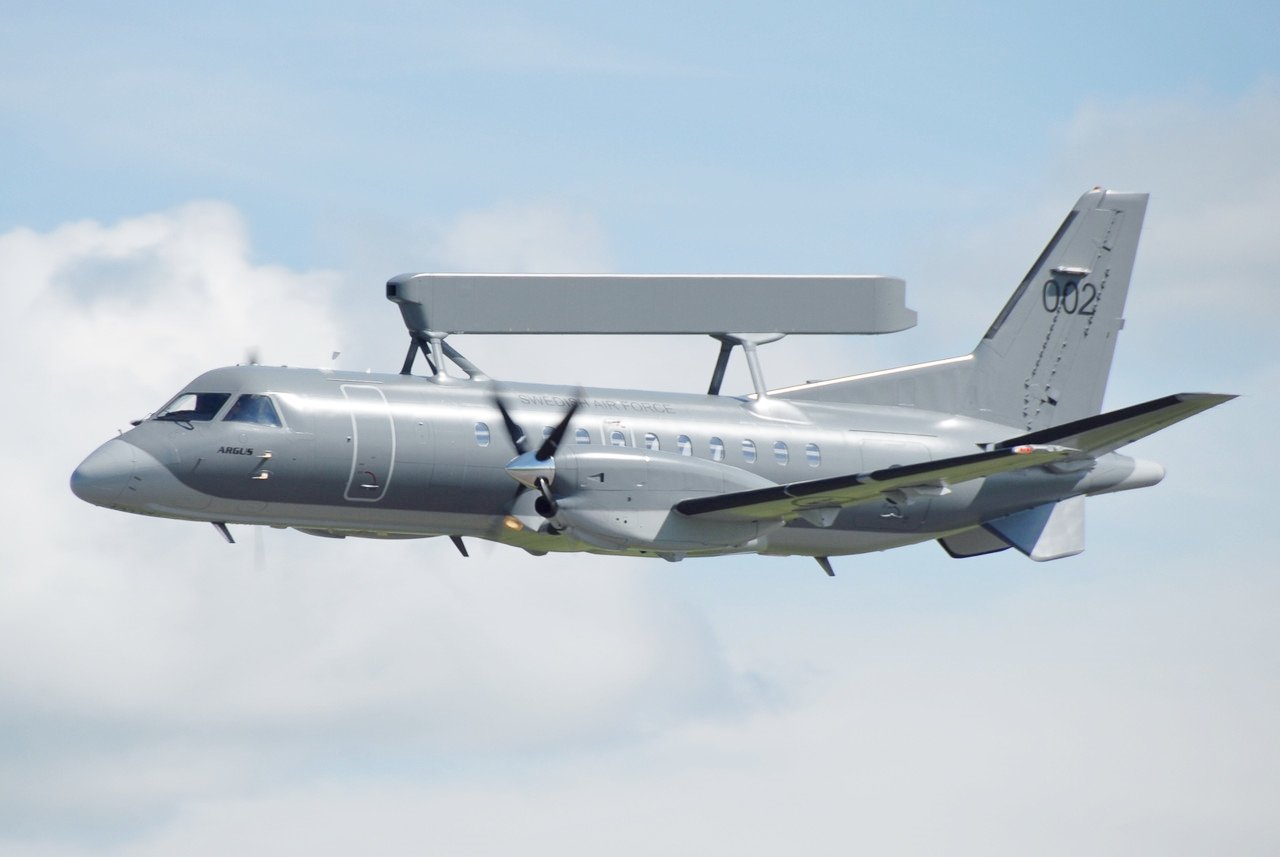
- Platform Integration: The Saab 340 AEW&C (ASC 890) operates the PS-890 Erieye AESA radar, providing all-weather, S-band detection capabilities up to 400 km.
- Operational Window: Officially confirmed by the Ministry of Defense, the aircraft has been actively flying combat missions over Ukraine for six months without Russian detection or interception.
- Russian Attrition: Deployment capitalizes on Russia’s degraded AEW&C capabilities, following the destruction of two Beriev A-50s in early 2024 and damage to a third in Belarus.
- Threat Matrix: The aircraft is actively tracking incoming barrages from Russia’s summer offensive, which saw 1,858 missiles launched between January and August 2026.
- Air Defense Degradation: Russia’s inability to target the slow-moving, high-emission ASC 890 highlights structural vulnerabilities, compounding the loss of 1,609 Russian anti-aircraft systems as of September 2026.
The Airborne Radar Advantage: Overcoming the Horizon
Ground-based radar systems are fundamentally limited by the curvature of the Earth, creating blind spots that Russian forces exploit using low-flying cruise missiles and jet-powered drones. The ASC 890 eliminates this vulnerability by putting a radar station 7,620 meters (25,000 ft) into the sky. With a loiter time of up to 7 hours and an operational range of 400 km, the aircraft provides a top-down, real-time picture of the battlespace deep into Russian-occupied territory.
This enhanced visibility serves as a direct countermeasure to Russia’s shifting aerial tactics. In July 2026 alone, Russia fired a record 474 missiles at Ukrainian targets. By deploying the ASC 890, Ukrainian operators can detect these incoming projectiles immediately post-launch, allowing ground-based interceptors and fighter jets to optimize their engagement windows.
Erieye AESA Radar Architecture
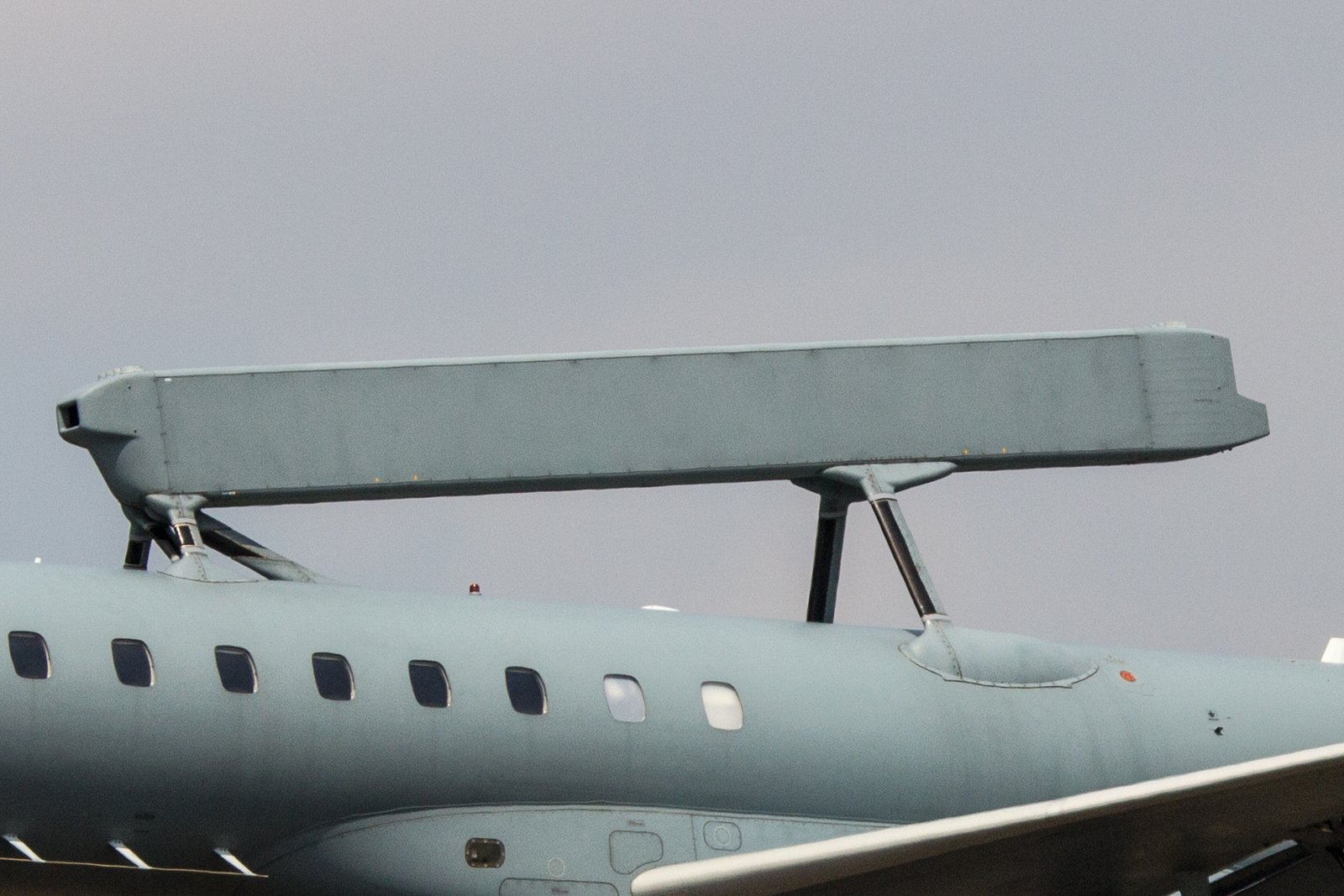
Unlike legacy airborne radars that rely on a rotating mechanical radome (such as the American AWACS or Russian A-50), the ASC 890 utilizes the PS-890 Erieye Active Electronically Scanned Array (AESA) system. Housed in a fixed rectangular dorsal fairing, the Erieye steers its radar beams electronically. This eliminates the mechanical scanning delay, delivering exceptionally fast update rates critical for tracking high-speed, low-RCS (Radar Cross Section) targets.
Erasing Russia’s Airspace Dominance
The survival of the ASC 890 is a direct indictment of Russia’s forward air defense network. AEW&C aircraft emit massive electromagnetic signatures; they are the exact opposite of stealth. Despite its large radar cross-section and sluggish top speed of 530 km/h, Russia has completely failed to engage the aircraft during its six months of active combat duty. This failure points to a severely depleted localized SAM network, heavily attrited by Ukrainian SEAD (Suppression of Enemy Air Defenses) operations.
Asymmetric AEW&C Attrition
While Ukraine gains its first dedicated AEW&C platform, Russia is losing its own. Moscow started the conflict with roughly seven operational Beriev A-50 spy planes. In early 2024, Ukraine shot down two of these irreplaceable assets (January 15 and February 23) from extreme distances, forcing the remaining Russian fleet to retreat toward the Volga River. Pulled back to avoid Ukrainian interceptors, Russia’s A-50s can no longer provide effective forward fighter coordination.
Network-Centric Warfare & NATO Integration
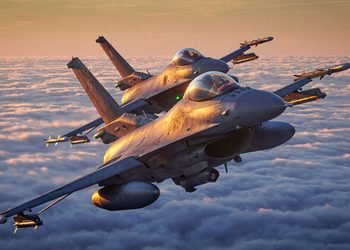
Delivered as part of Sweden’s $1.25 billion military aid package (Package 16), the ASC 890 is more than a surveillance tool—it is a flying command post. The aircraft is optimized for network-centric warfare, designed to seamlessly link with Western-made tactical aviation. As Ukraine integrates F-16s, Mirage 2000s, and eventually Swedish Gripens into its Air Force, the ASC 890 will serve as the quarterback, coordinating beyond-visual-range (BVR) ambushes and vectoring fighters toward high-value Russian targets without requiring the jets to emit their own detectable radar signatures.
| Metric | Swedish ASC 890 (S 100D) | Russian Beriev A-50U |
| Origin / Generation | Sweden (Modernized AESA) | Russia (Soviet-era upgrade) |
| Radar Architecture | PS-890 Erieye AESA (Fixed Dorsal) | Shmel-M (Rotating Mechanical Radome) |
| Max Detection Range | ~400 km | ~650 km (against large targets) |
| Service Ceiling | 7,620 m (25,000 ft) | 12,000 m (39,000 ft) |
| Maximum Speed | 530 km/h | 900 km/h |
| Endurance | 5 – 7 Hours | 9 Hours |
| Operational Status | Active in Ukraine (Uncontested) | Severely Attrited (Forced away from front lines) |
The ASC 890 is a supreme force multiplier. By overcoming the terrestrial radar horizon, Ukraine has systematically neutralized Russia’s low-altitude cruise missile penetration tactics. However, the most critical intelligence derived from this deployment is not the aircraft’s capability, but rather Russia’s structural vulnerability. An AEW&C aircraft is a massive, slow, highly luminescent electromagnetic target; the fact that the ASC 890 has operated unmolested for six months proves that Russia’s forward air defense umbrella is critically fractured. As Ukraine’s Western fighter fleet expands, the ASC 890 will transition from a defensive early-warning asset into an offensive aerial command node, firmly cementing Ukraine’s shift to NATO-standard, network-centric warfare.