Frontline Defense Journal | Objective OSINT & Military Analysis
  • Home
  • Latest Intelligence
  • Domain Of Warfare
    • Naval & Maritime
    • Air & Aerospace
    • Ground Forces & Armor
    • Unmanned & Autonomous Systems
    • Strategic Weapons
  • Regions
    • USA & Americas
    • Europe
    • Middle East
    • Asia & Pacific
  • Defense Archives
  • About Us
    • Who We Are
    • Privacy Policy
    • Terms Of Use
No Result
View All Result
  • Home
  • Latest Intelligence
  • Domain Of Warfare
    • Naval & Maritime
    • Air & Aerospace
    • Ground Forces & Armor
    • Unmanned & Autonomous Systems
    • Strategic Weapons
  • Regions
    • USA & Americas
    • Europe
    • Middle East
    • Asia & Pacific
  • Defense Archives
  • About Us
    • Who We Are
    • Privacy Policy
    • Terms Of Use
Frontline Defense Journal | Objective OSINT & Military Analysis
No Result
View All Result
Frontline Defense Journal | Objective OSINT & Military Analysis
No Result
View All Result
Home Domain Of Warfare Naval & Maritime

The Royal Navy’s Paper Tiger: The £7.6 Billion Carrier Crisis

September 22, 2026
Reading Time: 6 mins read
A A
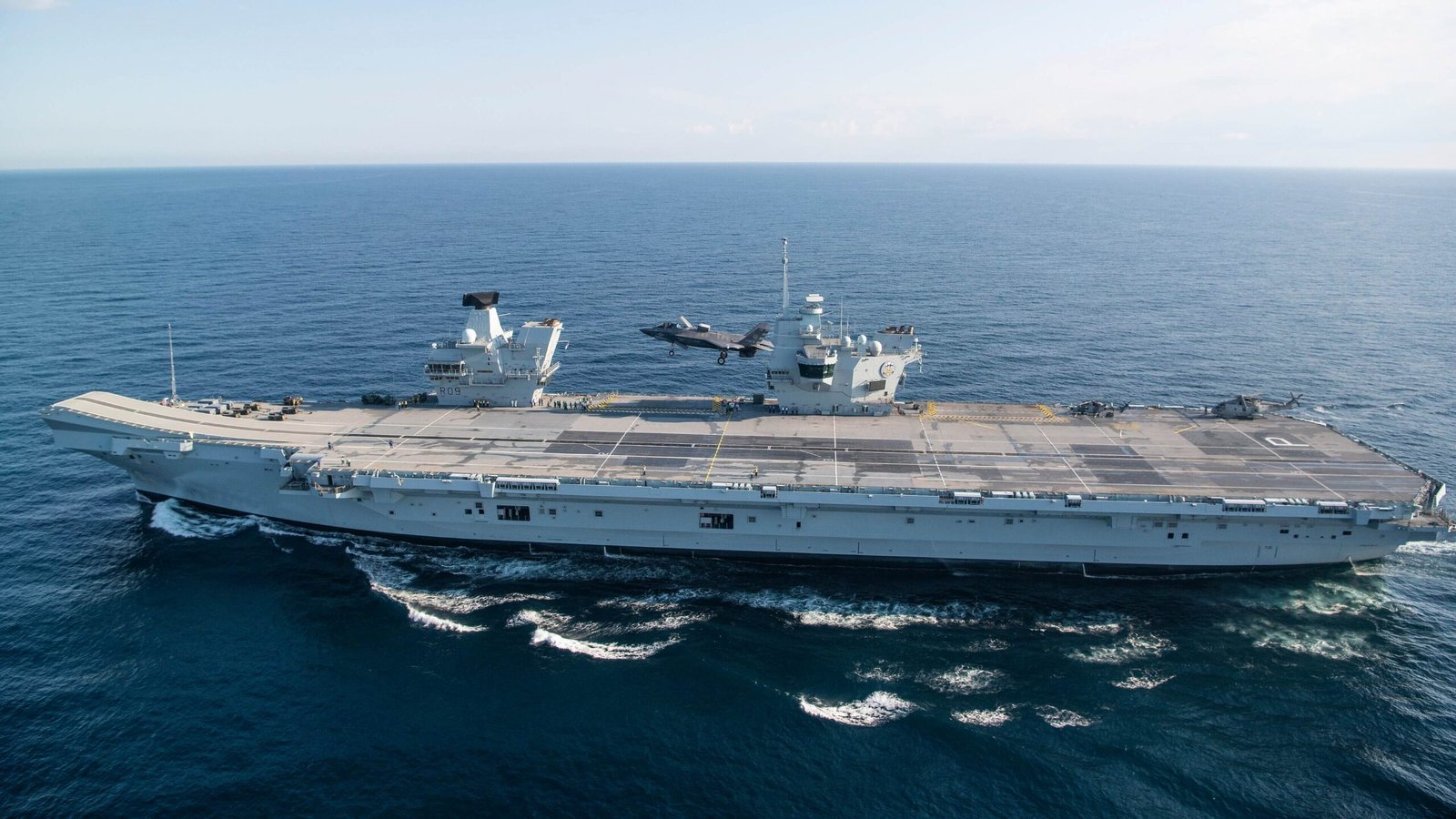
An image of HMS Prince of Wales and f35b lightining 2 taking off from it.
Share on FacebookShare On Reddit

BOTTOM LINE UP FRONT

  • The Phantom Air Wing: Despite being designed to carry up to 36 F-35B Lightning II jets, HMS Prince of Wales sailed to the Arctic with only eight F-35Bs and six helicopters.
  • The Escort Deficit: A severe shortage of operational destroyers and frigates forced the Royal Navy to deploy just two domestic escorts (HMS Duncan and HMS Somerset) alongside a tanker, requiring allied vessels like the French frigate FS Aquitaine to plug the defensive gaps.
  • The STOVL Compromise: Originally envisioned as “cats and traps” (catapult) carriers, cost-cutting forced a redesign to Short Take-Off and Vertical Landing (STOVL), committing the UK to the expensive, fragile, and US-dependent F-35B variant.
  • Manpower Drain: The two Queen Elizabeth-class carriers absorb roughly 10% of total Royal Navy manpower, cannibalizing crews from an already stretched fleet.

Operation Firecrest: A Hollow Show of Force

Aircraft carriers do not operate alone; they are the high-value core of a heavily defended Carrier Strike Group (CSG). By US Navy standards, a single Nimitz or Ford-class carrier is typically shielded by five to eight cruisers, destroyers, and nuclear attack submarines.

When HMS Prince of Wales sailed for the Arctic in July 2026, the Admiralty had to scrape the barrel to provide a defensive screen. The Royal Navy’s escort fleet had dwindled to just 11 active vessels (six Type 45 destroyers and five aging frigates)—many of which were trapped in long-term refits. The UK could only spare the destroyer HMS Duncan and the frigate HMS Somerset, alongside the RFA Tidespring tanker. To achieve a credible screen against Russian Northern Fleet assets, the UK was forced to rely on the French frigate FS Aquitaine. Dispatching just two escorts left the British home waters virtually undefended, guarded only by a handful of lightly armed offshore patrol vessels.

The Missing Air Wing and the F-35B Dependency

An aircraft carrier without aircraft is merely a very expensive target. HMS Prince of Wales was built to accommodate an air group of up to 36 fifth-generation fighters. Yet, for Operation Firecrest, she embarked a paltry eight F-35B Lightning II jets.
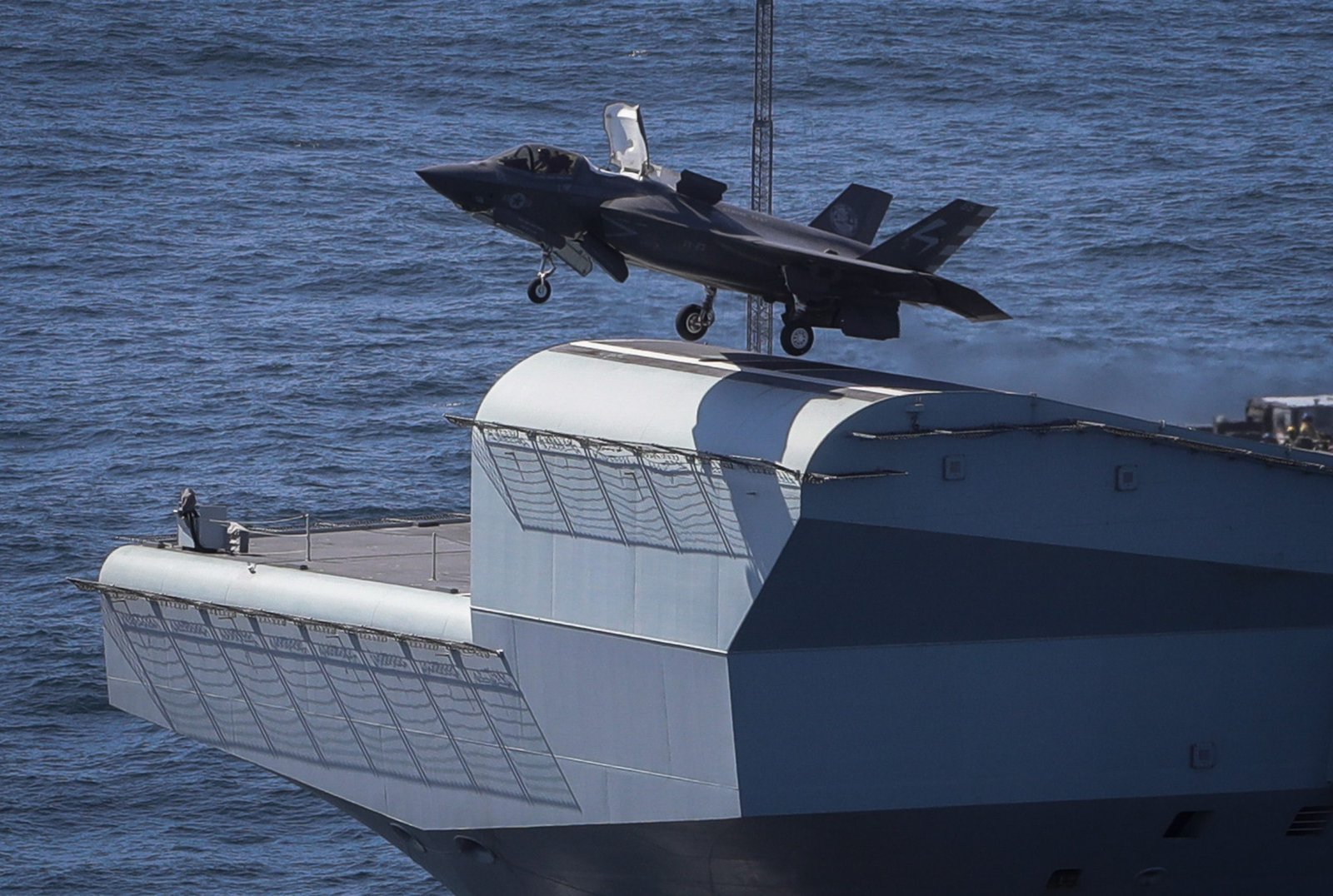
Royal Air Force F-35B Lightning II takeoff from HMS Queen Elizabeth.
The first ever F-35B Lightning II takeoff from HMS Queen Elizabeth.
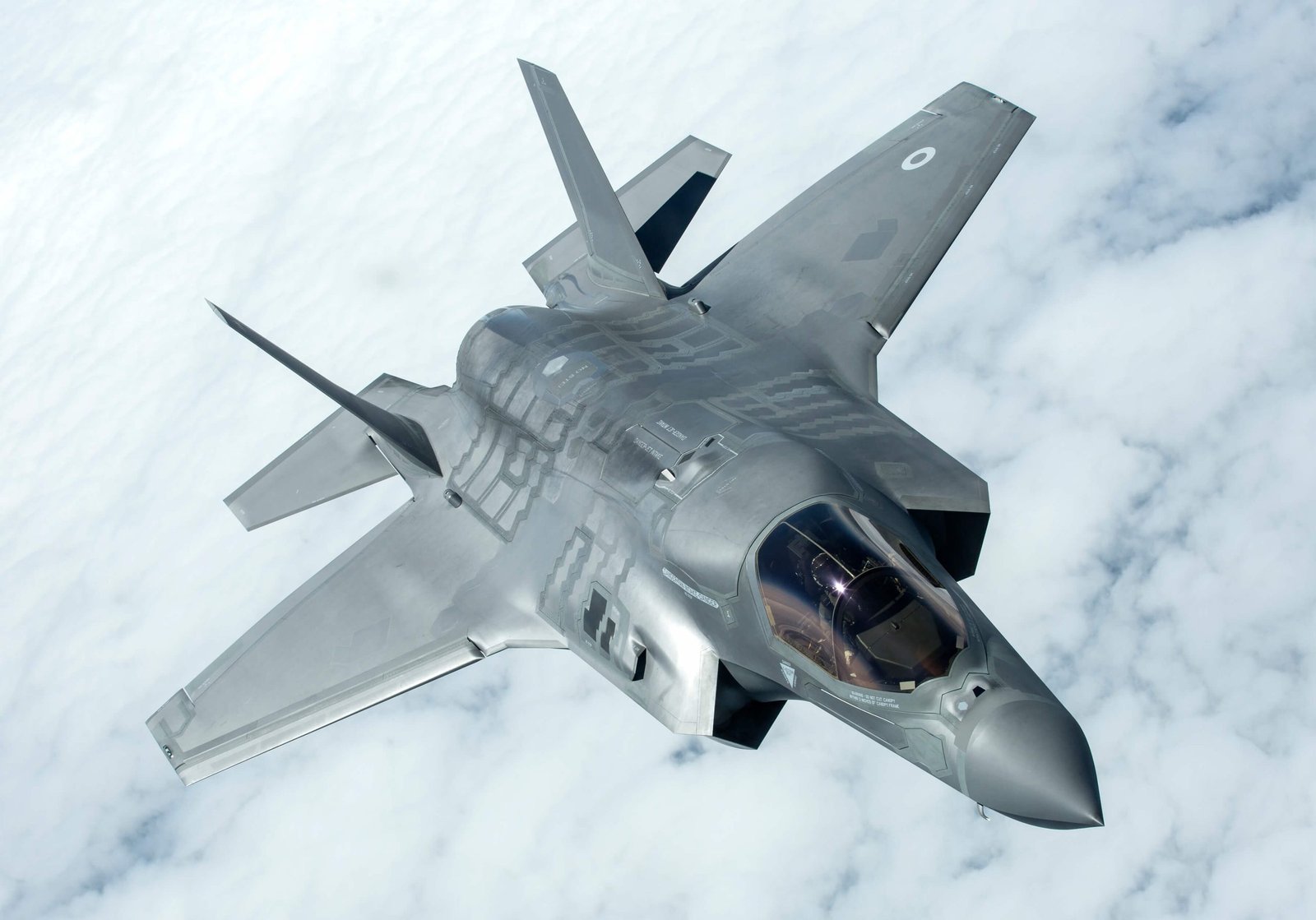
Royal Air Force F-35B in the sky
Royal Air Force F-35B Lightning II. Source: SAC Tim Laurence RAF/MOD

This embarrassing shortfall stems from the Ministry of Defence’s procurement realities. In 2026, the entire British F-35 fleet numbers just 47 aircraft, which must be shared between the Royal Air Force and the Royal Navy. The UK simply does not own enough jets to fill a single carrier’s deck, let alone two.

Furthermore, the F-35B itself presents severe operational challenges. It costs up to $35,000 per flight hour to operate, suffers from chronic spare parts shortages, and carries less fuel and weaponry than its conventional carrier-based counterpart (the F-35C). Crucially, the aircraft’s software is inextricably linked to the Pentagon; without constant US-supplied updates, the jets become non-operational, effectively giving Washington veto power over British carrier operations.

Procurement Politics: How We Got Here

The crisis traces its roots back to 2006, when Tony Blair’s government approved the carrier program at an estimated £3.9 billion. The construction was centered in Rosyth, Scotland—conveniently neighboring then-Chancellor Gordon Brown’s constituency. By the time David Cameron took office in 2010, costs had spiraled to £6.2 billion. Attempts to cancel the project were thwarted by exorbitant cancellation penalties negotiated by builders like BAE Systems.

To salvage the budget, the MoD made a fateful compromise. Instead of building the ships with catapults and arresting wires (CATOBAR) like US or French carriers—which would allow the launch of heavily armed, longer-range aircraft like the F-35C or F/A-18—the ships were downgraded to Short Take-Off and Vertical Landing (STOVL) platforms equipped with ski-jumps. This forced the retirement of the Harrier fleet and locked Britain into the expensive F-35B ecosystem, ballooning the program’s final cost to £7.6 billion.

Carrier Strike Capabilities: 1979 vs. 2026

MetricHMS Ark Royal Era (1979)HMS Prince of Wales Era (2026)
Displacement~54,000 tons~80,000 tons
Launch SystemCATOBAR (Catapults & Wires)STOVL (Ski-jump)
Typical Air Group40 (Phantoms, Buccaneers, Gannets)8 to 12 (F-35B Lightnings)
Total Escorts in Fleet55 Destroyers & Frigates11 (6 Destroyers, 5 Frigates)
Carrier Fleet StatusFully stocked, self-reliantUnder-stocked, allied-dependent

Final Assessment: The “White Elephant” Paradox

The Queen Elizabeth-class carriers represent a severe misalignment of strategic ambition and fiscal reality. By investing £7.6 billion into two massive platforms, the Ministry of Defence hollowed out the rest of the Royal Navy. Today, the UK possesses the “battleships” of the 21st century but lacks the aircraft to arm them and the escorts to defend them. When HMS Prince of Wales sailed to the Arctic with a skeletal air wing and a borrowed escort screen, it did not project strength to Moscow; it broadcasted the logistical exhaustion and systemic decline of a once-unrivaled maritime power. Until the escort fleet is rebuilt and the air wings are fully funded, Britain’s carriers remain high-profile liabilities rather than strategic assets.

Tags: f35Royal Navyuk

Related Posts

Russia’s hybrid warfare tactics against the UK, from GRU cyberattacks to covert Akula-class subsea operations.
Europe

Russia’s Shadow War on the UK: Cyber, Sabotage & Poseidon

September 13, 2026
A member of British No. 9 Commando at Anzio equipped for a patrol with his Bren gun 5 March 1944.
Defense Archives

The Evolution of the British Army Infantry Section (WWI to 2026)

September 12, 2026
Map of the Falkland Islands
USA & Americas

Could Argentina Retake the Falklands in 2026? A Military Analysis

September 11, 2026
Next Post
A U.S. Army 75th Ranger armed with a KAC LAMG having an ELCAN Specter prism sight at the upper receiver's picatinny rail.

USMC Tests KAC LMG and Anti-Drone Ammunition

Leave a Reply Cancel reply

Your email address will not be published. Required fields are marked *

I agree to the Terms & Conditions and Privacy Policy.

Latest Intelligence

US Aircraft Losses in Iran Surpass $4 Billion: Fleet Impact

A-10C Thunderbolt II Technical Breakdown: The GAU-8, Titanium Armor, and CAS Legacy

Lockheed Martin Unveils Vectis Stealth Fighter Drone

USMC Tests KAC LMG and Anti-Drone Ammunition

Japan’s ¥8.9T FY2027 Budget: ASM-3 Kai & New SSM Explained

Canadian Army Reorganization: The 1st Manoeuvre Division ORBAT

Domain Of Warfare

MQ-9 Reaper uncrewed aerial vehicle
Unmanned & Autonomous Systems

General Atomics Unveils Wildfire Drone to Replace MQ-9 Reaper

U.S. Air Force F-15EX Eagle II showcasing multiple weapon hardpoints.
Air & Aerospace

F-15EX Eagle II Drops Live Bombs: Full Tech Breakdown

The Los Angeles-class attack submarine USS Louisville (SSN 724) underway off the coast of southern California.
Naval & Maritime

US Navy Nuclear Attack Submarines: Fleet Tactical Breakdown

An advanced RSAF F-15SA Strike Eagle fighter jet equipped with precision-guided munitions
Middle East

Houthis Shoot Down Saudi F-15, Target East-West Pipeline

Defense Archives

Surviving the Nuclear Battlefield: The Rise and Fall of the U.S. Army’s Pentomic Divisions

US Army launcher vehicle based on the M139D 5-ton truck. Honest John nuclear-capable rocket artillery.

“In the search for maximum dispersion on an atomic battlefield, the Pentomic division traded the proven flexibility of combined arms...

Read moreDetails

The Evolution of the British Army Infantry Section (WWI to 2026)

A member of British No. 9 Commando at Anzio equipped for a patrol with his Bren gun 5 March 1944.

BOTTOM LINE UP FRONT WWI & The All Arms Concept (1916-1918): Prompted by massive losses at the Somme, the British...

Read moreDetails

WWII Submachine Gun Production Costs: Economics of Infantry Firepower

A British soldier equipped with a Thompson M1928 submachine gun in November 1940

BOTTOM LINE UP FRONT American Economic Burden: The U.S. Thompson M1A1 was the most expensive SMG fielded by any major...

Read moreDetails

Operation Serval: French Expeditionary Tactics & Mobile Warfare in Mali

Northern Mali conflict Map 2013 Operation Serval

BLUF Immediate Threat Nullification: An initial assault force of 1,000+ Islamist fighters mounted in up to 300 technicals was successfully...

Read moreDetails

Frontline Defense is an independent, objective analysis platform. The content provided on this website, including but not limited to technical breakdowns, military hardware comparisons, defense budget reports, and open-source intelligence (OSINT) analyses, is strictly for educational, historical, and informational purposes. Frontline Defense is not affiliated with, endorsed by, or acting on behalf of any government agency, department of defense, armed forces branch, or defense contractor. All content on this site represents independent research based strictly on unclassified, publicly available data and open-source records at the time of writing. Nothing published on this website should be construed as official military guidance, defense strategy consulting, or government policy.

Follow Us

Domain Of Warfare

  • Naval & Maritime
  • Air & Aerospace
  • Ground Forces & Armor
  • Strategic Weapons
  • Unmanned & Autonomous Systems

Regions

  • USA & Americas
  • Europe
  • Middle East
  • Asia & Pacific
  • About Us
  • Privacy Policy
  • Terms Of Use

© 2026 | Fronline Defense Journal. All Rights Reserved

No Result
View All Result
  • Home
  • Latest Intelligence
  • Domain Of Warfare
    • Naval & Maritime
    • Air & Aerospace
    • Ground Forces & Armor
    • Unmanned & Autonomous Systems
    • Strategic Weapons
  • Regions
    • USA & Americas
    • Europe
    • Middle East
    • Asia & Pacific
  • Defense Archives
  • About Us
    • Who We Are
    • Privacy Policy
    • Terms Of Use

© 2026 | Fronline Defense Journal. All Rights Reserved