
“In the search for maximum dispersion on an atomic battlefield, the Pentomic division traded the proven flexibility of combined arms for an unwieldy reliance on non-existent technology and a span of control that set commanders up for failure.”
The Threat of Obscurity and “Massive Retaliation”
When Eisenhower assumed the presidency, his primary directive was to avoid conventional conflicts like Korea while reducing defense spending. His solution was nuclear deterrence. By 1957, the U.S. Air Force—responsible for delivering strategic nuclear weapons via its bomber fleets—was receiving nearly as much funding as the Navy and Army combined.
The Eisenhower administration believed conventional warfare was dead. In the event of a Soviet incursion, the plan was to respond with high-yield nuclear weapons, leaving the Army relegated to a secondary role: occupying nuclear wastelands and restoring domestic order. Army leadership strongly disagreed, arguing that limited, conventional wars remained highly likely. However, to survive in the Pentagon’s budget battles, the Army had to adapt its doctrine to align with the Department of Defense’s fixation on nuclear combat.
Rebuilding for Armageddon: The Pentomic Structure
To survive atomic bombardment, the Army concluded that divisions must be heavily dispersed. A concentrated unit was a prime target for Soviet nuclear strikes; widely separated elements would force the enemy to waste limited atomic arsenals on small fractions of a force. In 1957, the Army officially implemented the Pentomic structure for its infantry and airborne divisions.
The traditional triangular division (three regiments containing three battalions of three companies) was dismantled. In its place, the Army established five independent “battle groups.” These battle groups directly replaced regiments and acted as self-contained units of action with their own logistics and fire support. Each infantry battle group contained:
- An HQ and HQ Company
- A mortar battery operating 107mm rifled mortars
- Five rifle companies (each with four rifle platoons and one weapons platoon)
This streamlined the division’s total bayonet strength from 27 down to 20 rifle companies, but because each company was larger, the total number of rifle platoons only dropped from 81 to 80. The burden of command was shifted across a wider, flatter hierarchy.
Firepower over Manpower
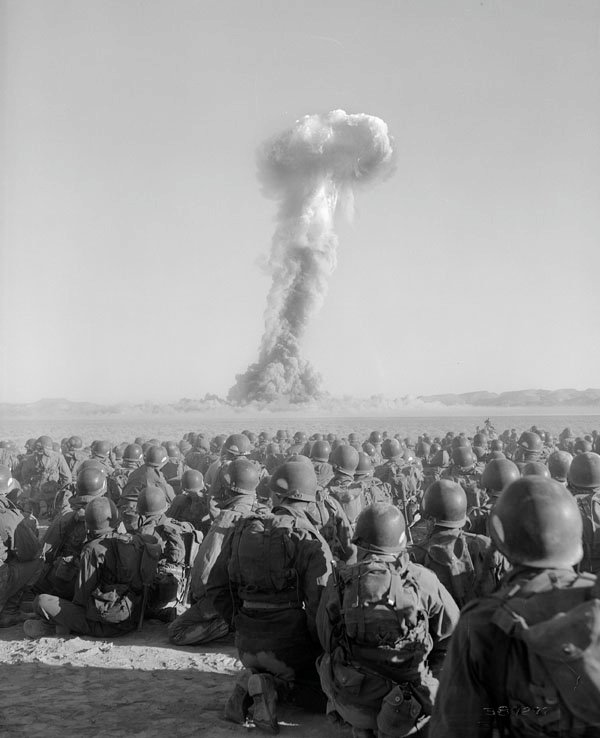
To offset the reduction in frontline troops, the Army heavily integrated tactical nuclear weapons. Tactical nukes were viewed not merely as scaled-down strategic bombs, but as the ultimate evolution of field artillery.
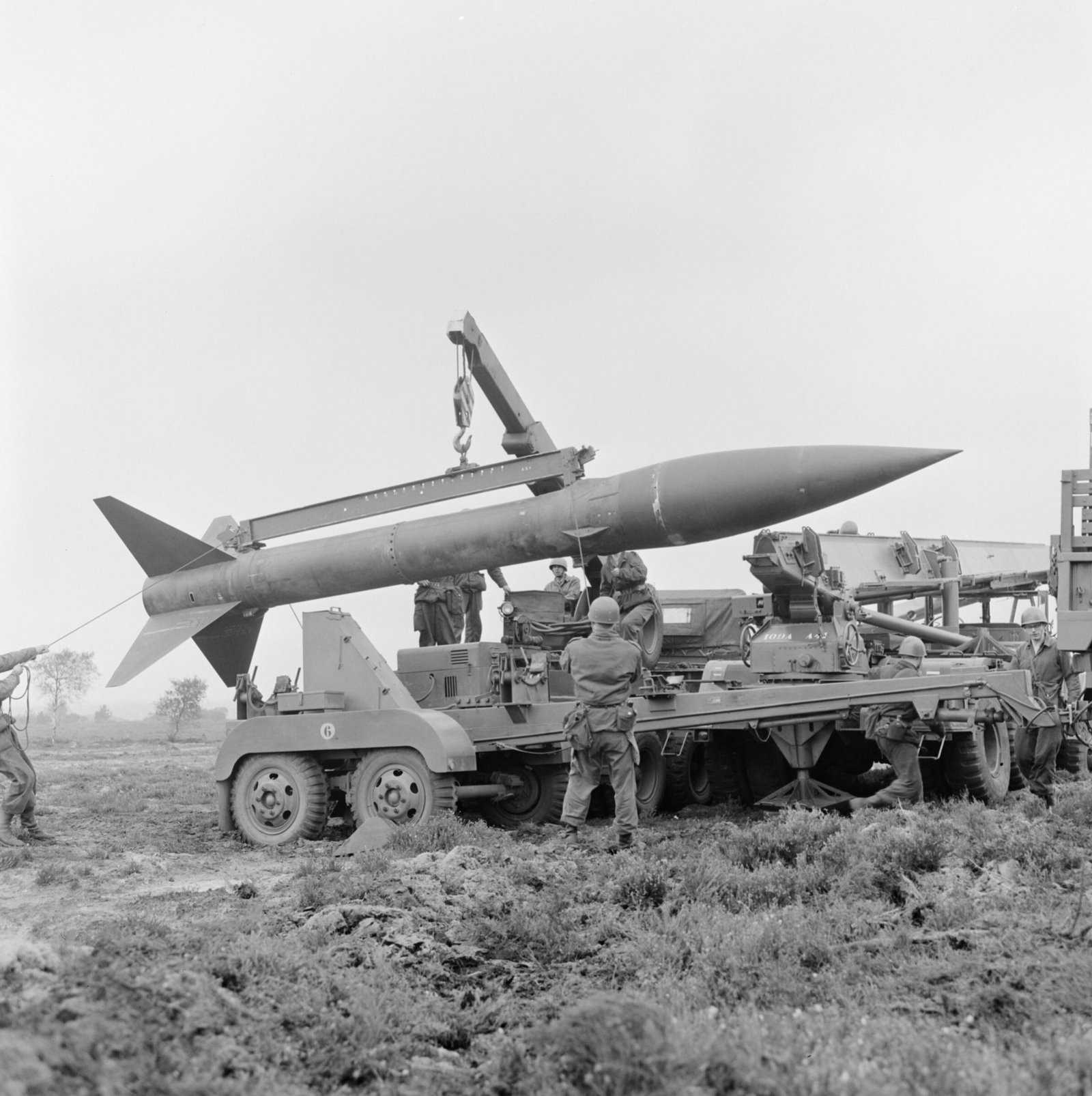
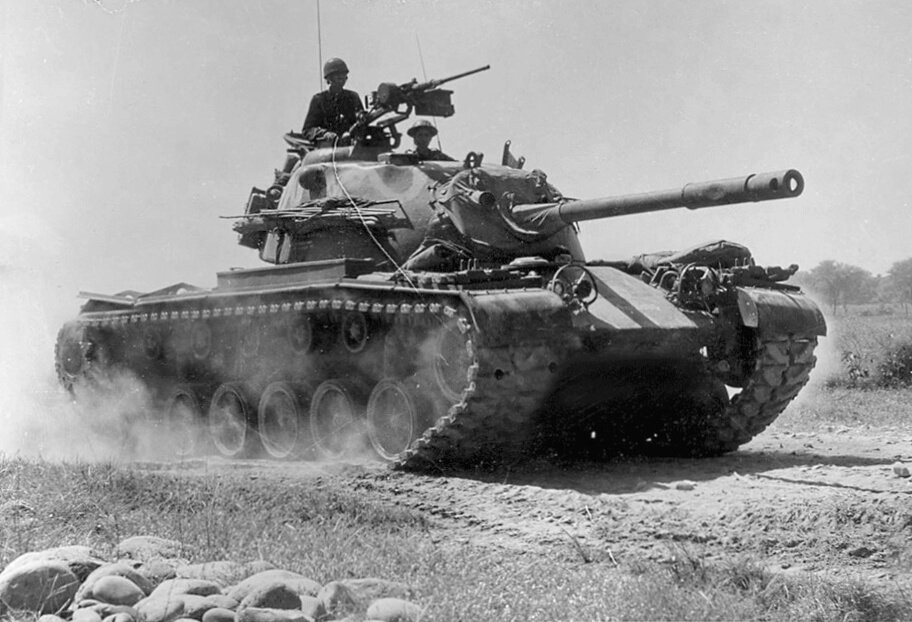
At the divisional level, airborne units were equipped with a battery of two Honest John rocket artillery pieces capable of delivering a 20-kiloton nuclear payload. Infantry divisions received even heavier support, including four 8-inch howitzers capable of firing nuclear projectiles, alongside towed 105mm howitzers. Battle groups were further reinforced by a divisional engineer company and a tank company operating M48 Pattons.
Islands of Resistance in a Nuclear Hellscape
Pentomic doctrine radically altered maneuver warfare. In defense, battle groups operated as isolated “islands of resistance.” Unlike previous doctrines requiring contiguous defensive lines and mutually supporting maneuver elements, Pentomic battle groups were intentionally separated by gaps of three to five miles.
The physical dispersion was immense. A single company was expected to defend a 2,200-meter frontage, while individual platoons were tasked with covering 730 meters each.
The concept possessed three fatal tactical flaws:
- Defeat in Detail: The massive gaps between units meant battle groups could not support each other. If the enemy slipped through the gaps, there were no hard lines of supply. Battle groups relied on tactical nuclear strikes to protect themselves, yet the primary tool for this—the Davy Crockett recoilless nuclear gun—would not see widespread adoption until the Pentomic era was already ending in the 1960s.
- Logistical Fantasy: Isolated battle groups required aerial resupply via helicopters or massive armored personnel carrier (APC) fleets to concentrate rapidly. The 1950s Army possessed neither in sufficient numbers. Divisional transportation only had enough trucks and APCs to mount a single battle group at a time.
- The Column Charge: Offensive doctrine was absurdly dangerous. Units were expected to concentrate, blow a hole in enemy lines using tactical nukes, and then pour through the radioactive breach. Flanking maneuvers were abandoned; the standard operating procedure was a direct frontal assault in column formation straight through nuclear ground zero.
| Metric | Triangular Division (Pre-1957) | Pentomic Division (1957–1963) |
| Primary Subunit | 3 Infantry Regiments | 5 Battle Groups |
| Companies per Subunit | 3 Rifle Companies per Battalion | 5 Rifle Companies per Battle Group |
| Total Rifle Companies | 27 | 20 |
| Defensive Frontage (Company) | ~800 – 1,200 meters | 2,200 meters |
| Span of Control | 3 Battalions per Regiment Commander | 5 Companies + Support per Battle Group Commander |
| Nuclear Artillery (Organic) | None | Honest John (Airborne), 8-Inch Howitzer (Infantry) |
| Offensive Doctrine | Combined Arms / Flanking | Column Assault via Nuclear Breach |
The Pentomic Division was an organizational sleight of hand. It succeeded politically—proving to the Eisenhower administration that the Army could fight on a nuclear battlefield, thereby saving its funding—but failed utterly on a tactical level.
The structure collapsed under the weight of its own impossible demands. Battle group commanders were overwhelmed by an insane span of control (commanding five maneuver companies plus armor, engineers, and artillery). Units lacked the radio range to communicate across their massive frontages and the mechanical transport required to move their dispersed troops. When John F. Kennedy assumed office, his administration adopted the “Flexible Response” doctrine, recognizing that limited, conventional conflicts were still highly likely. The Army quickly abandoned the Pentomic structure in 1963 in favor of the flexible, brigade-based ROAD (Reorganization Objective Army Divisions) structure, finally aligning its combat organization with physical reality.