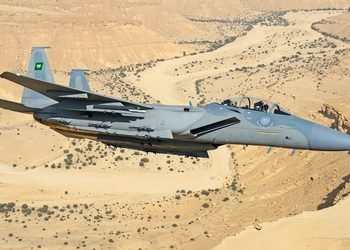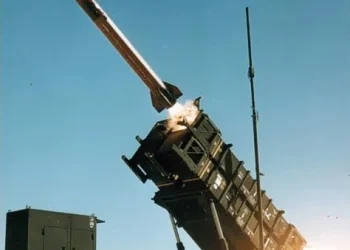
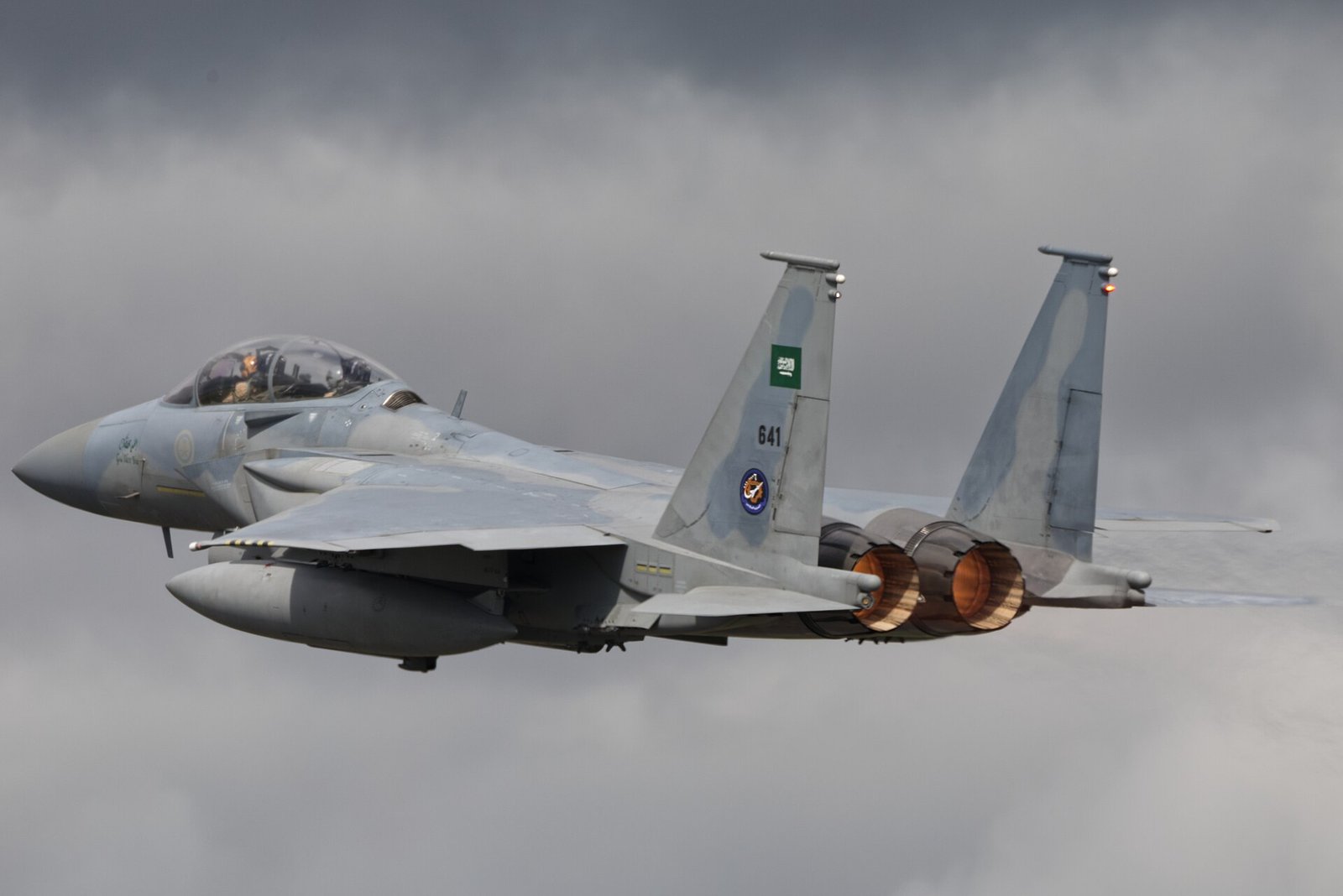
- First Manned Down: Houthi air defense units downed a Royal Saudi Air Force F-15 combat aircraft over northern Yemen using advanced surface-to-air missile systems.
- Energy Infrastructure Severed: Coordinated strikes disabled key pumping stations along the Saudi East-West Pipeline, taking 3 to 5 million barrels per day of export capacity offline for weeks.
- Maritime Chokepoint Pressure: Houthi units established tactical control along the Bab-el-Mandeb Strait following the retreat of Saudi-aligned ground proxy forces.
- Diplomatic Isolation: Direct US-Houthi talks in Oman reinforced a 2025 bilateral non-aggression understanding, leaving Riyadh without direct Western air support or naval intervention.
- Cross-Border Operations: Houthi forces launched ballistic missiles and long-range loitering munitions against Saudi Aramco assets and southern military air bases.
Air Defense Escalation: F-15 Interception over Northern Yemen
Houthi forces released video footage confirming the intercept and destruction of a Royal Saudi Air Force F15 over northern Yemen. The multirole fighter went down in controlled territory without evidence of crew ejection. Riyadh relied on F-15 platforms to conduct targeted air strikes against Houthi coastal emplacements and command nodes.
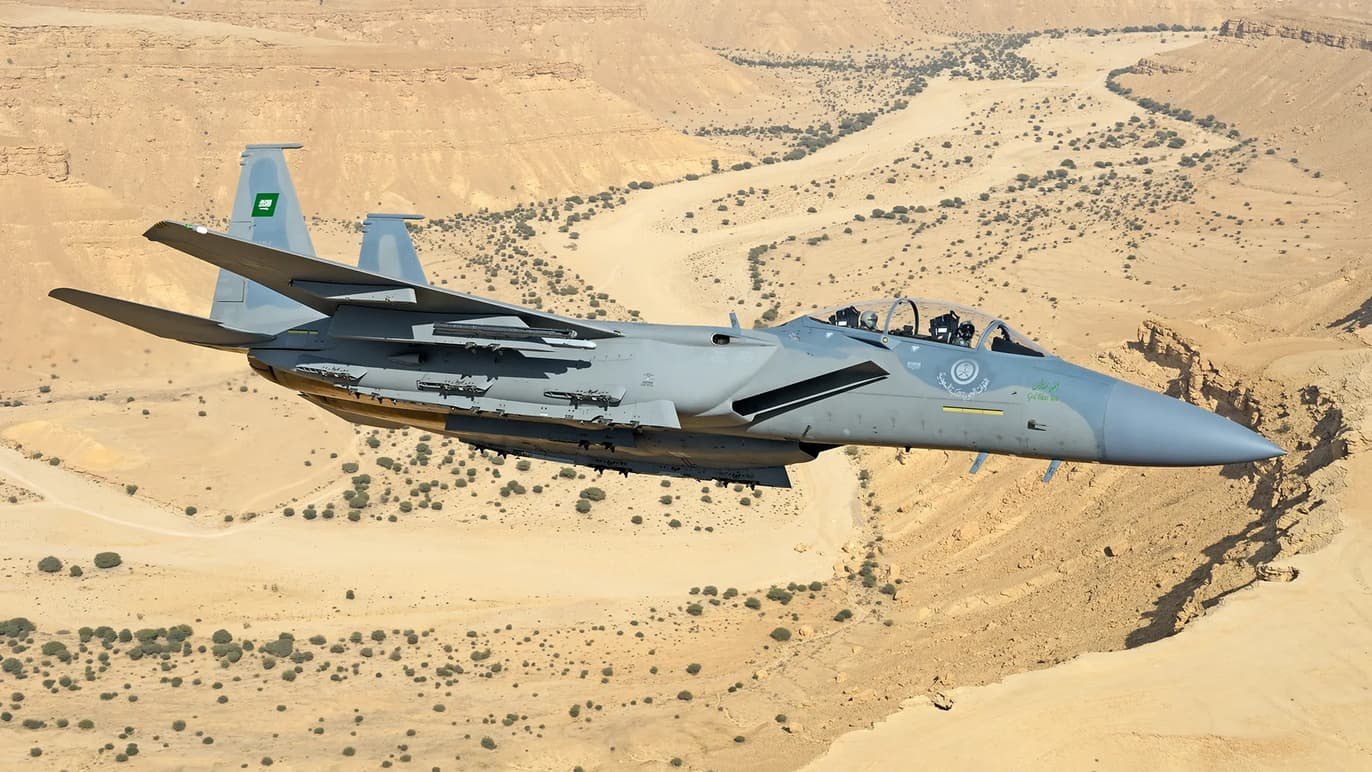
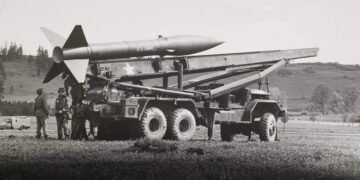
The intercept underscores the growing capability of Houthi air defense networks. The group operates an array of surface-to-air missiles, including IRGC-supplied Sayyad-2C variants, 358 loitering anti-aircraft munitions, and modified R-27 air-to-air missiles converted for ground launch. The destruction of a crewed F-15 demonstrates that mid-altitude air operations over northern Yemen now carry severe operational risks for coalition aircraft.
The East-West Pipeline
Houthi units and IRGC-aligned Iraqi militias executed synchronized attacks on Saudi Arabia’s primary internal energy corridor. Strikes focused on intermediate pumping stations along the 1,200 km East-West pipeline (Petroline). The facility allows crude transport from Eastern Province fields directly to Yanbu on the Red Sea, bypassing the Strait of Hormuz.
Damage to the pumping stations forced the shutdown of 3 to 5 million barrels per day of crude transit capacity. Repair operations will require multiple weeks due to structural damage and mechanical destruction. The loss of Petroline leaves Saudi crude exports heavily dependent on Persian Gulf maritime transit, directly exposing global supply lines to concurrent Persian Gulf and Red Sea disruptions.
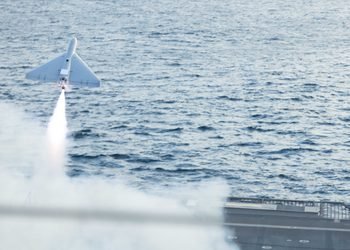
Houthi units targeted Saudi Aramco storage infrastructure and southern air bases using Quds-3 cruise missiles and Samad-3 loitering munitions. Saudi air defense units intercepted a long-range drone vectoring toward the western region, though Houthi spokesmen maintained their target list remained restricted to military installations and industrial energy nodes.
Tactical Collapse along the Red Sea Coast and US Posture
On the ground, Saudi-backed proxy formations collapsed along the western Yemeni littoral. Houthi forces advanced rapidly, securing coastal positions overlooking the Bab-el-Mandeb Strait. This territorial gain allows the group to deploy land-based anti-ship cruise missiles, radar tracking stations, and fast attack craft directly adjacent to international shipping lanes.
US diplomatic representatives met Houthi delegates in Muscat, Oman, following the coastal advance. The talks focused on preserving a 2025 non-aggression understanding. Houthi leadership reiterated commitments to refrain from targeting US naval vessels or non-Saudi commercial shipping. Washington’s posture leaves Riyadh isolated, forcing Saudi commanders to assess whether to scale back air operations or risk further aircraft losses without allied air cover.
| System | Platform Specifications | Operational Range | Strategic Impact / Threat Vector |
| Houthi “358” Surface-to-Air Missile | Hybrid loitering SAM, optical/IR sensors | 100 km operational radius | Threatens low-to-mid altitude combat aircraft and ISR drones |
| Quds-3 / Quds-4 Cruise Missile | Turbojet powered, 150 kg HE warhead | 1,350 km to 2,000 km | Precision land-attack against energy pumping stations and air bases |
| Samad-3 Loitering Munition | Internal combustion engine, 45 kg warhead | 1,500 km | Low-RCS strike platform used in saturation attacks on Aramco assets |
| RSAF F-15SA Strike Eagle | Twin-engine strike fighter, 13,300 kg payload | 3,900 km ferry range | Primary Saudi air-to-ground strike platform; now vulnerable to SAMs |
The convergence of tactical air defense victories and precision infrastructure strikes establishes a severe structural vulnerability for Saudi Arabia. Riyadh cannot rely on air power alone to secure its border or protect static industrial assets. With ground proxy forces routed from the Red Sea coast and Western allies opting for diplomatic containment, Houthi forces maintain operational initiative over both inland energy corridors and the maritime approaches to the Bab-el-Mandeb Strait.