Frontline Defense Journal | Objective OSINT & Military Analysis
  • Home
  • Latest Intelligence
  • Domain Of Warfare
    • Naval & Maritime
    • Air & Aerospace
    • Ground Forces & Armor
    • Unmanned & Autonomous Systems
    • Strategic Weapons
  • Regions
    • USA & Americas
    • Europe
    • Middle East
    • Asia & Pacific
  • Defense Archives
  • About Us
    • Who We Are
    • Privacy Policy
    • Terms Of Use
No Result
View All Result
  • Home
  • Latest Intelligence
  • Domain Of Warfare
    • Naval & Maritime
    • Air & Aerospace
    • Ground Forces & Armor
    • Unmanned & Autonomous Systems
    • Strategic Weapons
  • Regions
    • USA & Americas
    • Europe
    • Middle East
    • Asia & Pacific
  • Defense Archives
  • About Us
    • Who We Are
    • Privacy Policy
    • Terms Of Use
Frontline Defense Journal | Objective OSINT & Military Analysis
No Result
View All Result
Frontline Defense Journal | Objective OSINT & Military Analysis
No Result
View All Result
Home Domain Of Warfare Naval & Maritime

US Navy Nuclear Attack Submarines: Fleet Tactical Breakdown

September 17, 2026
Reading Time: 6 mins read
A A
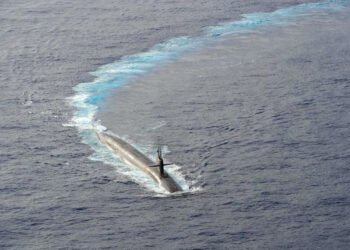
The Los Angeles-class attack submarine USS Louisville (SSN 724) underway off the coast of southern California.
Share on FacebookShare On Reddit

KEY INTELLIGENCE

  • Active Fleet Size: The US Navy currently fields 18 active Los Angeles-class, 3 Seawolf-class, and 26 active Virginia-class submarines.
  • Virginia SSGN Reclassification: In a major strategic shift in August 2026, the Navy officially reclassified 19 planned Block V and Block VI Virginia-class submarines from Attack Submarines (SSNs) to Guided-Missile Submarines (SSGNs).
  • Payload Expansion: The upcoming Block V Virginia-class will feature an 84-foot Virginia Payload Module (VPM), accommodating 40 vertical launch cells to drastically increase long-range precision strike capabilities.
  • Seawolf Fleet Status: The highly classified USS Connecticut (SSN-22) is scheduled to return to active service in September 2026 following a 43-month structural reconstruction after a 2021 seamount collision.

The Legacy Hunter: Los Angeles-Class (SSN-688)

The Los Angeles-class forms the aging but reliable backbone of the U.S. fast-attack fleet. Commissioned between 1976 and 1996, these vessels were designed specifically to screen carrier strike groups and hunt Soviet ballistic missile submarines during the Cold War. Currently, 18 active hulls remain in service out of the 62 originally completed.
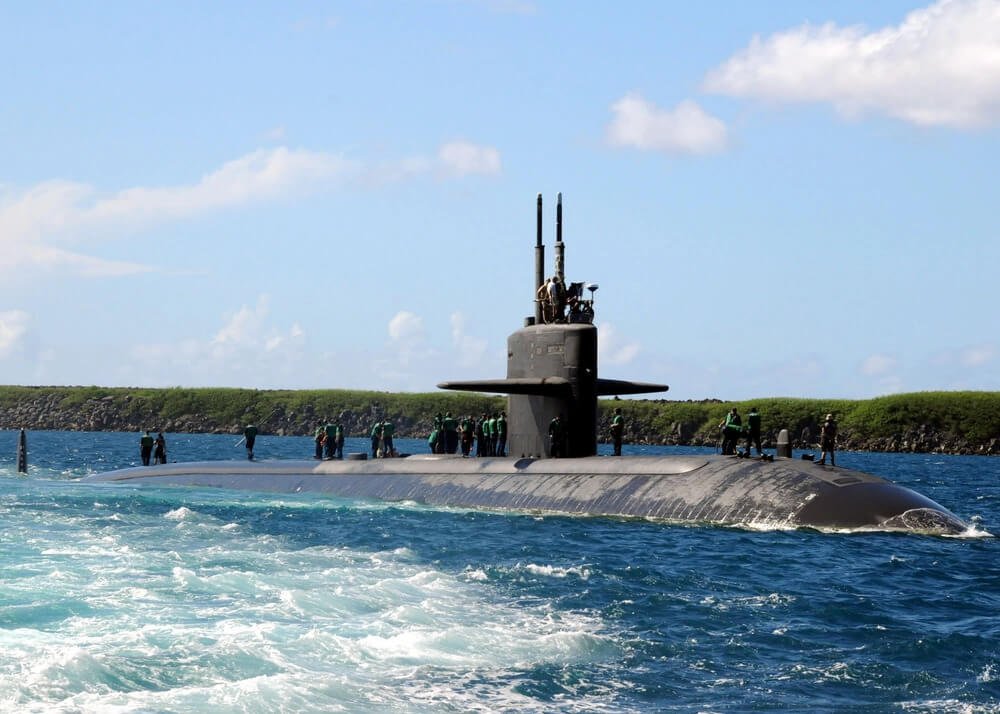
The fast-attack submarine USS Los Angeles transits near Apra Harbor, Guam after returning from an underway period. Los Angeles, the 4th naval ship to be named after the city of Los Angeles and the lead ship of her class, is on her last deployment.
A Los Angeles-class fast-attack submarine. Source: DVIDS

Measuring 362 feet in length and displacing 6,927 tons submerged, the platform is powered by a single S6G nuclear reactor generating between 150 and 165 megawatts of power output. This reactor drives two steam turbines that produce approximately 33,500 shaft horsepower, pushing the submarine to officially reported submerged speeds of over 25 knots (with true operational speeds reported to exceed 33 knots).

The Apex Predator: Seawolf-Class (SSN-21)

Conceived as the ultimate Cold War ASW platform, the Seawolf-class remains the stealthiest, fastest, and most heavily armed attack submarine ever built by the United States. Exorbitant post-Cold War program costs capped production at just three boats. Displacing 9,100 tons and spanning 353 feet, standard Seawolves utilize an advanced S6W reactor generating 220 megawatts. This massive power output yields 57,000 shaft horsepower funneled through a sophisticated pumpjet propulsor, allowing the submarine to remain acoustically silent at tactical transit speeds of 20 knots.
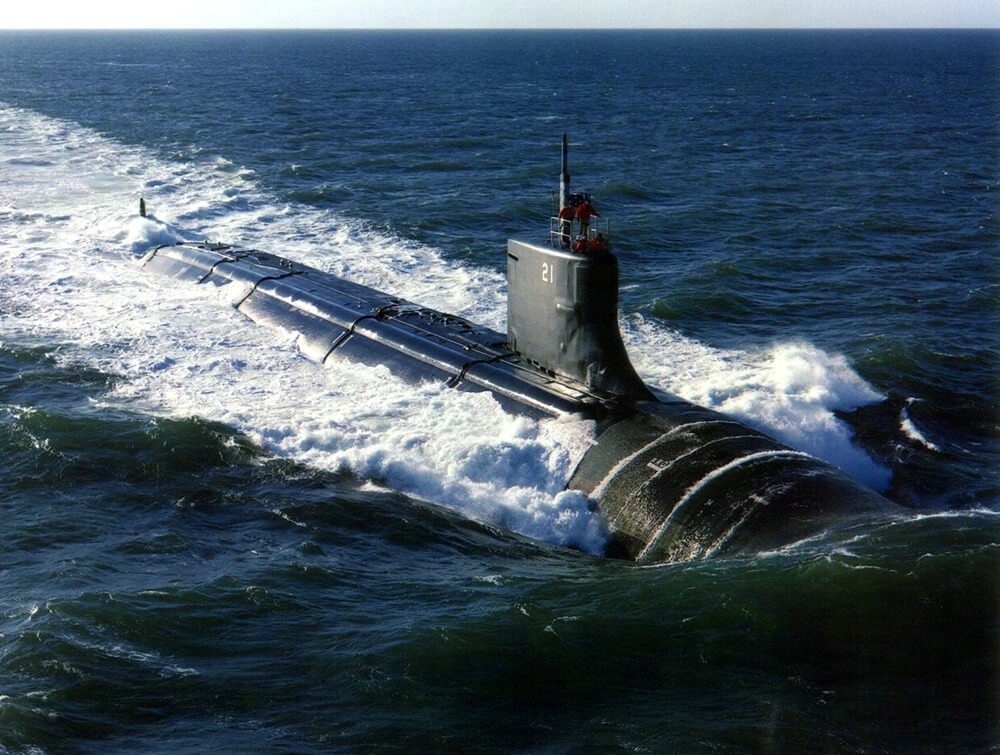
The nation's newest and most advanced attack submarine Seawolf (SSN 21) puts to sea in the Narragansett Bay operating area for her first at-sea trial operations on July 3, 1996. Sea trials include various tests of the Seawolf propulsion systems and the first underway submergence of the submarine
The Seawolf-class boasts unmatched speed, stealth, and weapons capacity. Source: DVIDS

The Seawolf-class is armed to the teeth, featuring eight torpedo tubes and an internal stowage capacity of up to 50 weapons—double that of the Los Angeles-class. The third vessel in the class, USS Jimmy Carter (SSN-23), features a highly classified 100-foot multi-mission hull extension, increasing its displacement to 12,100 tons to support special operations forces, unmanned underwater vehicles (UUVs), and complex seabed intelligence gathering.

The Multi-Domain Successor: Virginia-Class (SSN-774)

The Virginia-class was developed as a cost-effective, multi-domain successor to the Seawolf, optimized for both shallow-water littoral operations and deep-water ASW. The current fleet of 26 active vessels displaces approximately 7,900 tons and measures 377 feet in length. Powered by an S9G reactor delivering 210 megawatts and 40,000 shaft horsepower, these platforms pioneered the use of non-hull-penetrating photonic masts and modular open-architecture combat systems.
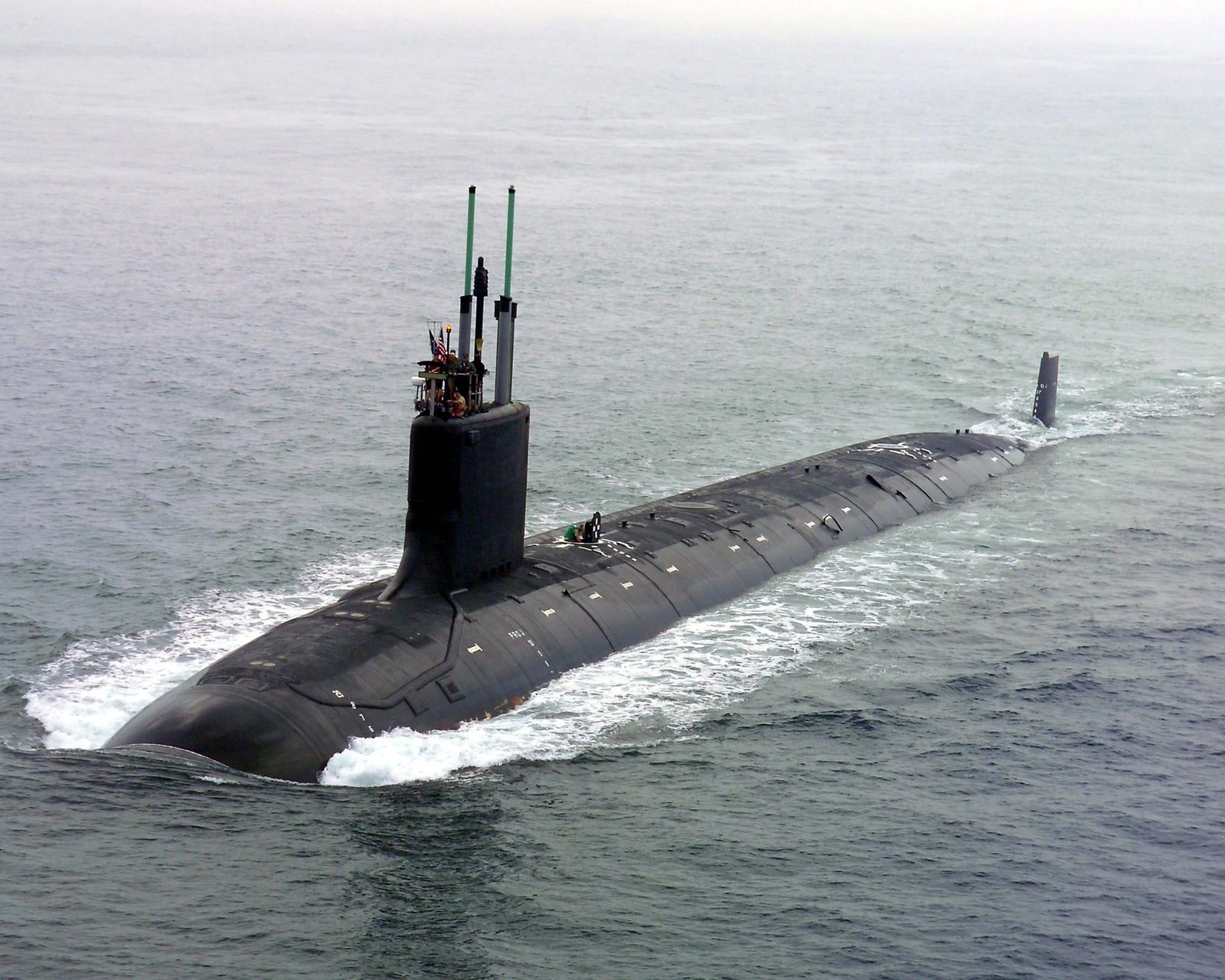
USS Virginia, the lead ship of the Navy’s modern multi-mission submarine class.. Source: U.S. Navy

The future of the Virginia-class involves a radical strategic pivot. The upcoming Block V vessels, beginning with USS Arizona in 2029, integrate the Virginia Payload Module (VPM). This 84-foot mid-body section houses four large-diameter payload tubes, increasing the submarine’s total Tomahawk cruise missile capacity from 12 to 40. Recognizing this massive evolution in long-range firepower, the Department of the Navy officially redesignated 19 planned VPM-equipped Virginias from SSNs (Attack Submarines) to SSGNs (Guided-Missile Submarines) in August 2026.

ClassActive FleetDisplacementReactor / PowerShaft HorsepowerTorpedo TubesVertical Launch Cells (VLS)
Los Angeles186,927 tons1x S6G (165 MW)33,500 shp4x 21-inch12 (Flight II/III)
Seawolf39,100 tons*1x S6W (220 MW)57,000 shp8x 26.5-inchNone (Internal Stowage)
Virginia (I-IV)267,900 tons1x S9G (210 MW)40,000 shp4x 21-inch12
Virginia (Block V)0 (Est. 2029)~10,200 tons1x S9G (210 MW)40,000 shp4x 21-inch40 (Via VPM)
Note: USS Jimmy Carter displaces 12,100 tons due to its specialized multi-mission hull extension.

The U.S. Navy’s undersea warfare posture is in the midst of a historic transition from pure hunter-killer operations toward distributed, high-volume maritime strike. The August 2026 reclassification of Block V Virginia-class boats into SSGNs confirms that tactical attack platforms must now absorb strategic land-attack responsibilities to compensate for the impending retirement of the Ohio-class guided-missile submarines. While the Seawolf remains the undisputed king of deep-water ASW and the Los Angeles-class continues to provide vital mass, the heavily armed Virginia Block V will dictate the strategic geometry of future Pacific conflicts.

Tags: Naval Warfareus navy

Related Posts

Scale model of the Arrowhead 140 guided missile frigate design
Naval & Maritime

Poland’s Miecznik-Class: How the ‘Witcher’ Frigates Will Dominate the Baltic Sea

September 16, 2026
USS Ohio Class Ballistic Missile Submarine.
Naval & Maritime

US Navy Ohio-Class SSBN: America’s Ultimate Nuke Deterrent

September 14, 2026
FLM-136 LUCAS
Middle East

Gulf Escalation: Qeshm Strike, LUCAS Drones & China Intel

September 13, 2026

Leave a Reply Cancel reply

Your email address will not be published. Required fields are marked *

I agree to the Terms & Conditions and Privacy Policy.

Latest Intelligence

Houthis Shoot Down Saudi F-15, Target East-West Pipeline

Surviving the Nuclear Battlefield: The Rise and Fall of the U.S. Army’s Pentomic Divisions

Poland’s Miecznik-Class: How the ‘Witcher’ Frigates Will Dominate the Baltic Sea

Ukraine Deploys ‘Equalizer’ Glide Bomb Against Russian UMPK

AI FireAnt Swarms Turn M2A4 Bradley Into UGV Mothership

Saudi Air Strikes Escalation as Houthis Seize Red Sea Islands

Domain Of Warfare

Saab 340 AEW&C (ASC 890) aircraft featuring the fixed rectangular Erieye AESA radar fairing on its fuselage.
Air & Aerospace

ASC 890 AEW&C: Ukraine’s New Aerial Radar Blinds Russia

USS Ohio Class Ballistic Missile Submarine.
Naval & Maritime

US Navy Ohio-Class SSBN: America’s Ultimate Nuke Deterrent

MIM-104 Patriot surface-to-air missile system launching an interceptor at night against an incoming ballistic target.
Europe

Russia Strikes NATO Border Amid Ukraine Interceptor Crisis

FLM-136 LUCAS
Middle East

Gulf Escalation: Qeshm Strike, LUCAS Drones & China Intel

Defense Archives

Surviving the Nuclear Battlefield: The Rise and Fall of the U.S. Army’s Pentomic Divisions

US Army launcher vehicle based on the M139D 5-ton truck. Honest John nuclear-capable rocket artillery.

“In the search for maximum dispersion on an atomic battlefield, the Pentomic division traded the proven flexibility of combined arms...

Read moreDetails

The Evolution of the British Army Infantry Section (WWI to 2026)

A member of British No. 9 Commando at Anzio equipped for a patrol with his Bren gun 5 March 1944.

BOTTOM LINE UP FRONT WWI & The All Arms Concept (1916-1918): Prompted by massive losses at the Somme, the British...

Read moreDetails

WWII Submachine Gun Production Costs: Economics of Infantry Firepower

A British soldier equipped with a Thompson M1928 submachine gun in November 1940

BOTTOM LINE UP FRONT American Economic Burden: The U.S. Thompson M1A1 was the most expensive SMG fielded by any major...

Read moreDetails

Operation Serval: French Expeditionary Tactics & Mobile Warfare in Mali

Northern Mali conflict Map 2013 Operation Serval

BLUF Immediate Threat Nullification: An initial assault force of 1,000+ Islamist fighters mounted in up to 300 technicals was successfully...

Read moreDetails

Frontline Defense is an independent, objective analysis platform. The content provided on this website, including but not limited to technical breakdowns, military hardware comparisons, defense budget reports, and open-source intelligence (OSINT) analyses, is strictly for educational, historical, and informational purposes. Frontline Defense is not affiliated with, endorsed by, or acting on behalf of any government agency, department of defense, armed forces branch, or defense contractor. All content on this site represents independent research based strictly on unclassified, publicly available data and open-source records at the time of writing. Nothing published on this website should be construed as official military guidance, defense strategy consulting, or government policy.

Follow Us

Domain Of Warfare

  • Naval & Maritime
  • Air & Aerospace
  • Ground Forces & Armor
  • Strategic Weapons
  • Unmanned & Autonomous Systems

Regions

  • USA & Americas
  • Europe
  • Middle East
  • Asia & Pacific
  • About Us
  • Privacy Policy
  • Terms Of Use

© 2026 | Fronline Defense Journal. All Rights Reserved

No Result
View All Result
  • Home
  • Latest Intelligence
  • Domain Of Warfare
    • Naval & Maritime
    • Air & Aerospace
    • Ground Forces & Armor
    • Unmanned & Autonomous Systems
    • Strategic Weapons
  • Regions
    • USA & Americas
    • Europe
    • Middle East
    • Asia & Pacific
  • Defense Archives
  • About Us
    • Who We Are
    • Privacy Policy
    • Terms Of Use

© 2026 | Fronline Defense Journal. All Rights Reserved