BOTTOM LINE UP FRONT
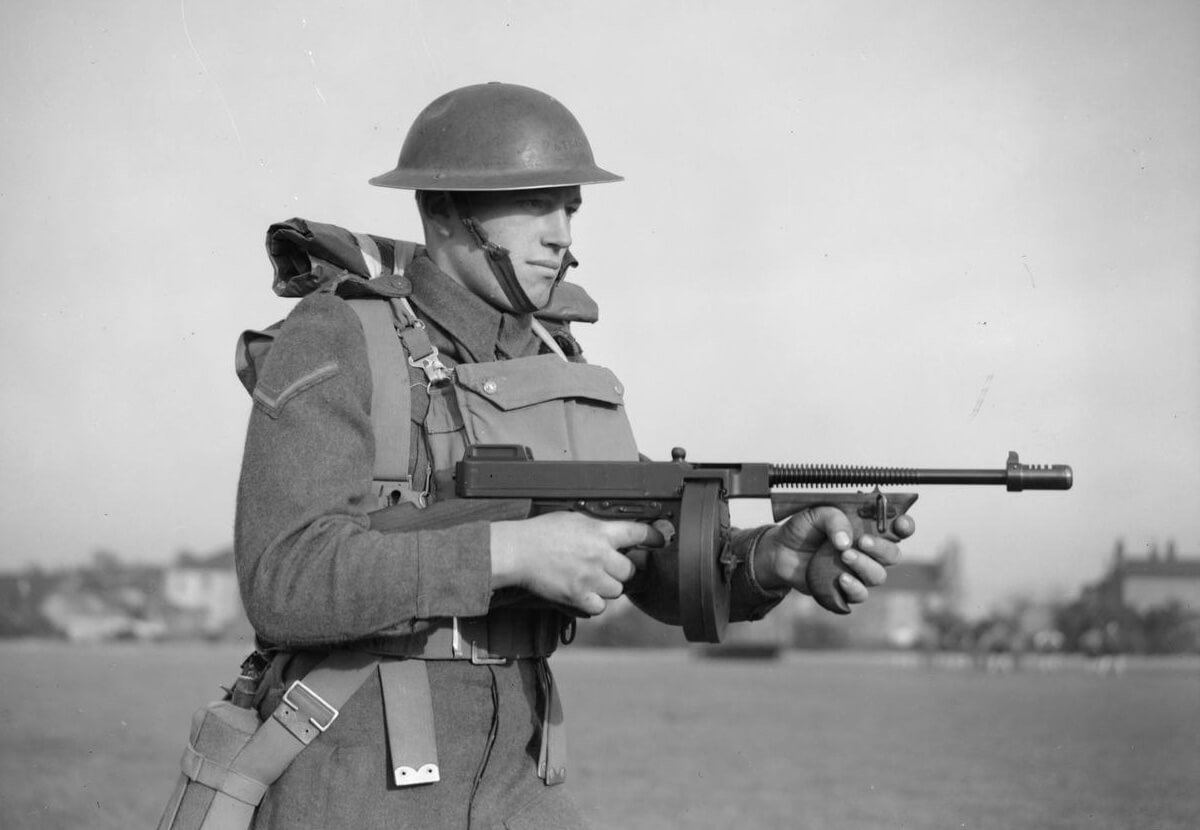
- American Economic Burden: The U.S. Thompson M1A1 was the most expensive SMG fielded by any major power in 1945 at $45 ($837 in 2026 USD). For the cost of one Thompson, Allied factories could produce four British Sten Mk IIs.
- British Industrial Austerity: Designed post-Dunkirk to mitigate severe small arms shortages, the Sten Mk II cost only £2.10 ($11 contemporary / $204 in 2026 USD). Comprising just 47 parts, it could be assembled in 5.5 man-hours.
- Soviet Doctrinal Mass: Unlike Western forces, the Red Army issued the PPSh-41 en masse to entire platoons. Costing 50 Rubles ($11.32 contemporary / $210.75 in 2026 USD), Soviet arsenals aggressively cut costs by halving recycled Mosin-Nagant rifle barrels to manufacture PPSh barrels.
- Axis Stamped Steel: The German MP 40 prioritized mass production via stamped steel and synthetic grips over machined parts. It cost 60 Reichsmarks ($24 contemporary / $446 in 2026 USD), making it slightly more expensive than the standard Kar98k bolt-action rifle.
- Japanese Tactical Neglect: Imperial Japan largely ignored SMG doctrine. The late-war Type 100/44 saw only 30,000 units produced at 60 Yen ($15 contemporary / $297 in 2026 USD) per unit.
Hollywood Myth vs. Tactical Reality
Modern media consistently overrepresents the prevalence of submachine guns on the World War II battlefield. In reality, logistical constraints, unit costs, and tactical doctrine strictly limited their distribution. In a standard U.S. 11-man infantry squad, only the squad leader was issued an SMG—typically the Thompson M1A1—while the remaining riflemen carried the M1 Garand.
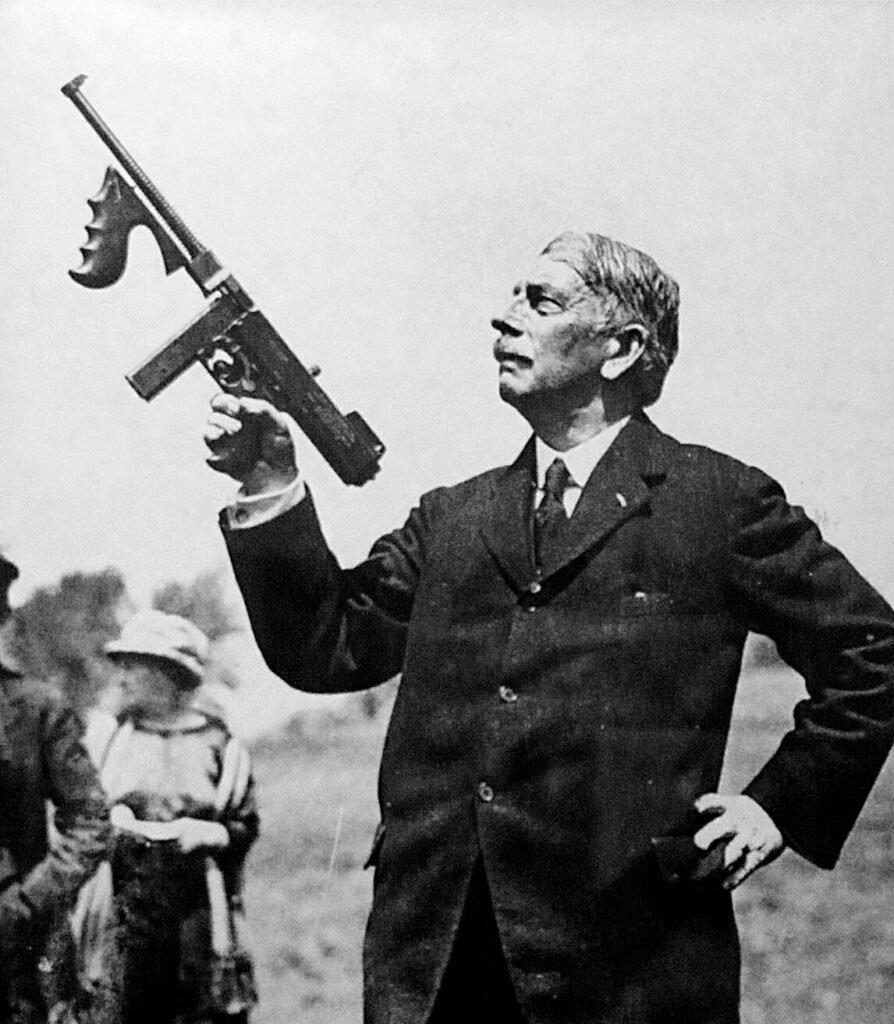
Similarly, British late-war infantry sections limited the Sten Mk II to the corporal and lance-corporal. The sole exception to this doctrine was the Soviet Union. Facing catastrophic early-war personnel losses and fighting high-intensity urban and trench warfare, the Red Army routinely equipped entire assault platoons with the PPSh-41 or PPS-43, relying on overwhelming close-quarters volume of fire rather than long-range marksmanship.
The Economics of Attrition: Sten and PPSh-41
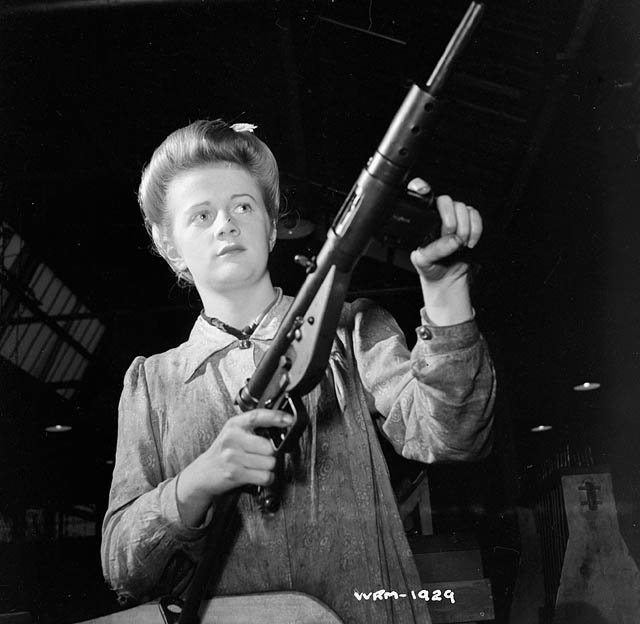
At the lowest end of the cost spectrum, British and Soviet designs reflected desperate wartime realities. The Sten Mk II emerged from the disastrous 1940 Dunkirk evacuation. Stripped of all non-essential features, it operated via a rudimentary open-bolt blowback system firing the 9x19mm Parabellum cartridge. Weighing 3.2 kg (7.1 lbs) and feeding from a 32-round box magazine, it fired at 500 rounds per minute (RPM). At $204 in modern equivalent, it was a disposable asset; three Stens could be built for the cost of one Lee-Enfield No. 4 Mk I rifle.
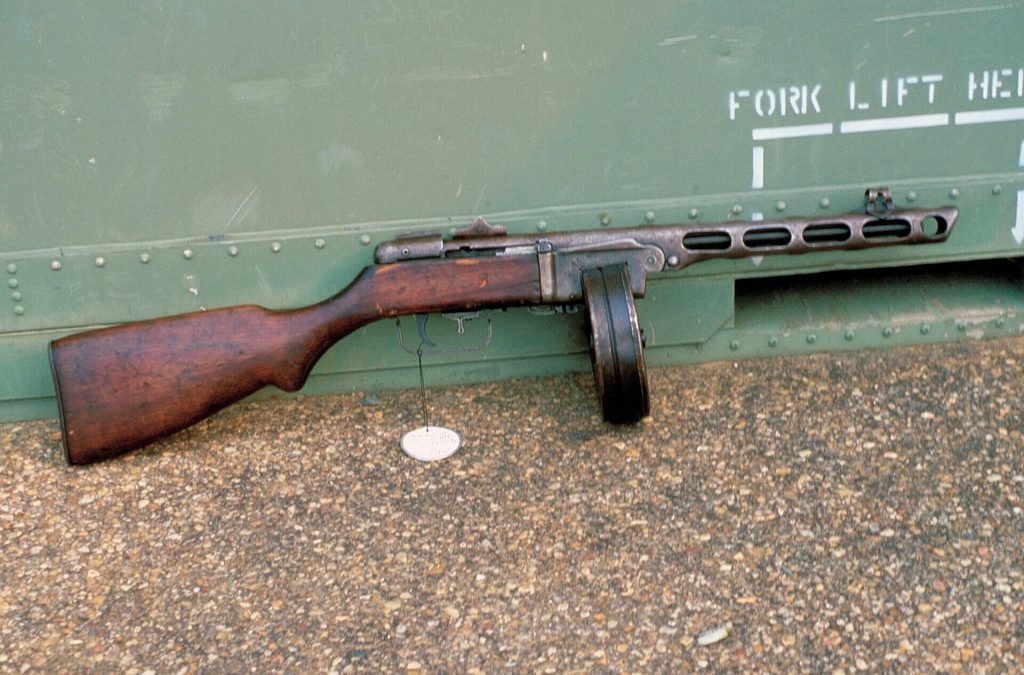
The Soviet PPSh-41 was slightly more expensive at $210.75 modern equivalent, but offered devastating firepower. Chambered in the high-velocity 7.62x25mm Tokarev, it fired at an immense 1,250 RPM. To sustain this cyclic rate, it utilized a heavy 71-round drum magazine, bringing its empty weight to 3.63 kg (8 lbs). Production was heavily optimized; Soviet factories cannibalized obsolete Mosin-Nagant rifles, slicing one barrel in half to generate two PPSh-41 barrels.
Axis Production Constraints
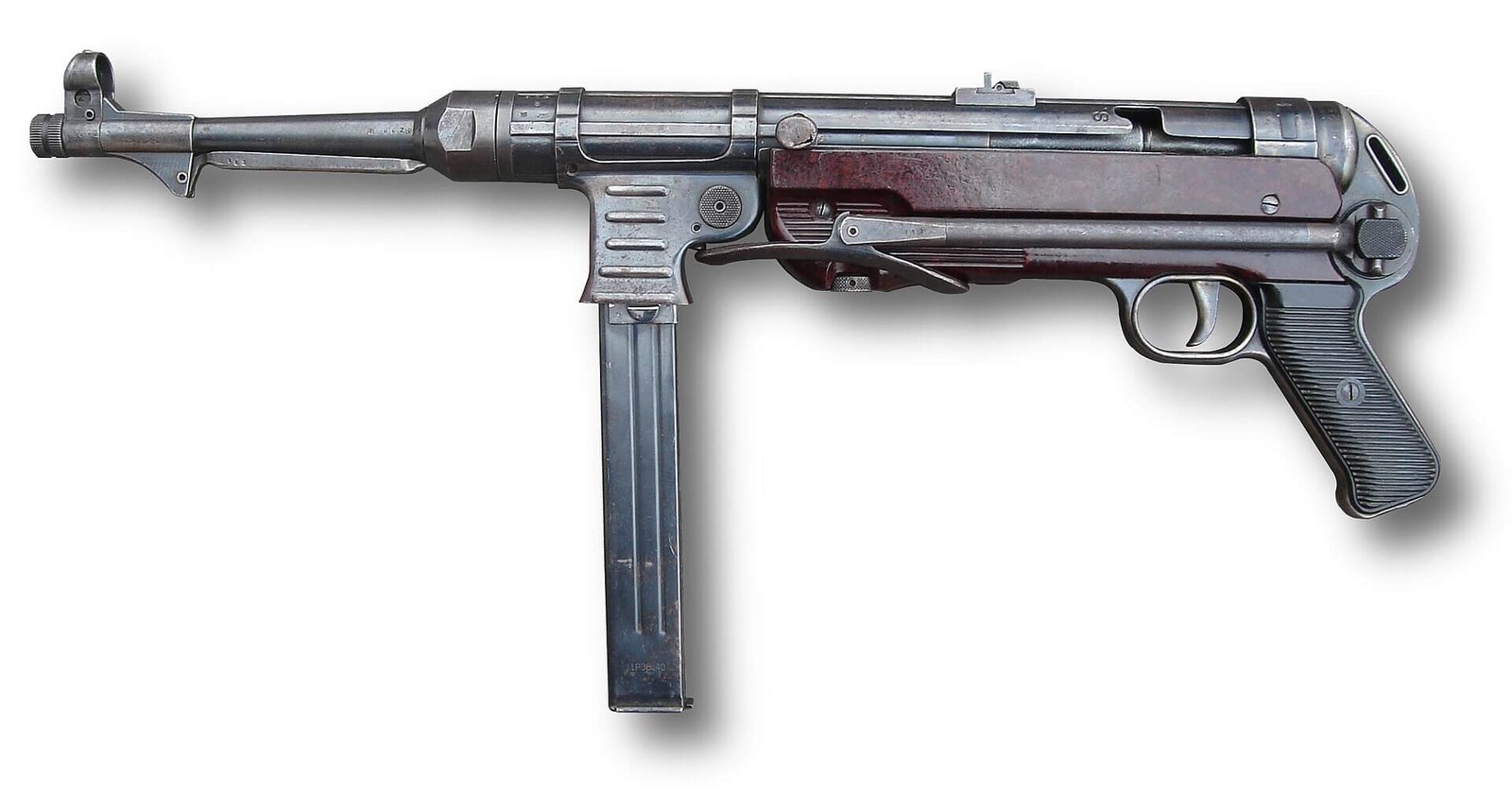
Axis manufacturing faced severe material shortages, forcing continuous simplification. The iconic German MP 40 set the early standard for industrial efficiency. Moving away from the expensive machined parts of the interwar era, it utilized stamped steel. Chambered in 9x19mm Parabellum, weighing 3.97 kg (8.75 lbs), and firing at 500-550 RPM, it cost $446 in modern equivalent. Germany produced approximately 1.1 million units.
The Italian Beretta Model 38/42, largely manufactured under German occupation for SS and Wehrmacht units, cost $372 modern equivalent. Firing the 9x19mm Parabellum from 10 to 40-round box magazines, it was a highly reliable system at 550 RPM. Conversely, Japan’s Type 100/44 was an afterthought. Chambered in 8mm Nambu, it weighed 3.8 kg and fired at 800 RPM. Produced in meager numbers (~30,000), it cost $297 modern equivalent—actually cheaper than the standard Arisaka Type 99 rifle, though rarely encountered by Allied forces.
American Industrial Might: The Premium Thompson
The United States fielded the heaviest and most expensive SMG of the war: the Thompson M1A1. Originating as a complex, machined weapon costing $209 in 1939, wartime engineering simplified the design, dropping the 1945 unit cost to $45 ($837 modern equivalent). Despite this reduction, it remained highly resource-intensive compared to the standard $666 M1 Garand.
Chambered in the heavy .45 ACP cartridge for maximum stopping power, the M1A1 weighed a massive 4.5 kg (10 lbs) empty. It operated with a cyclic rate of 700-800 RPM from a 20 or 30-round box magazine—the drum magazines of the gangster era having been discarded for combat practicality. While the U.S. produced over 1.5 million Thompsons, its exorbitant cost forced the eventual adoption of the vastly cheaper M3 “Grease Gun” to supplement armored and airborne crews.
| Weapon System | Nation | Combat Weight (Empty) | Caliber | Cyclic Rate | Total Build Volume | 1945 Unit Cost | Modern 2026 USD Eq. |
| Thompson M1A1 | United States | 4.5 kg (10 lbs) | .45 ACP | 700-800 RPM | ~1.5 Million | $45.00 | $837.00 |
| MP 40 | Nazi Germany | 3.97 kg (8.75 lbs) | 9x19mm Parabellum | 500-550 RPM | ~1.1 Million | $24.00 | $446.00 |
| Beretta M38/42 | Fascist Italy | 3.27 kg (7.2 lbs) | 9x19mm Parabellum | 550 RPM | ~500,000 | $20.00 | $372.00 |
| Type 100/44 | Imperial Japan | 3.8 kg (8.3 lbs) | 8mm Nambu | 800 RPM | ~30,000 | $15.00 | $297.00 |
| PPSh-41 | Soviet Union | 3.63 kg (8 lbs) | 7.62x25mm Tokarev | 1,250 RPM | >6.0 Million | $11.32 | $210.75 |
| Sten Mk II | Great Britain | 3.2 kg (7.1 lbs) | 9x19mm Parabellum | 500 RPM | ~2.0 Million | $11.00 | $204.00 |
The unit cost analysis of 1945 submachine guns highlights a critical divergence in wartime defense procurement. The Thompson M1A1, while tactically devastating at close range due to its .45 ACP chambering, represented an unsustainable peacetime manufacturing philosophy ill-suited for global, high-attrition warfare. Its $837 modern equivalent price tag siphoned vital manufacturing hours. Conversely, the Sten Mk II and PPSh-41 stand as masterclasses in defense economics. By relying on stamped sheet metal, crude welds, and recycled rifle barrels, the British and Soviets fielded adequate, high-volume firepower that could out-scale adversary production pipelines, proving that in total war, acceptable reliability in massive quantities always defeats expensive perfection.