BOTTOM LINE UP FRONT
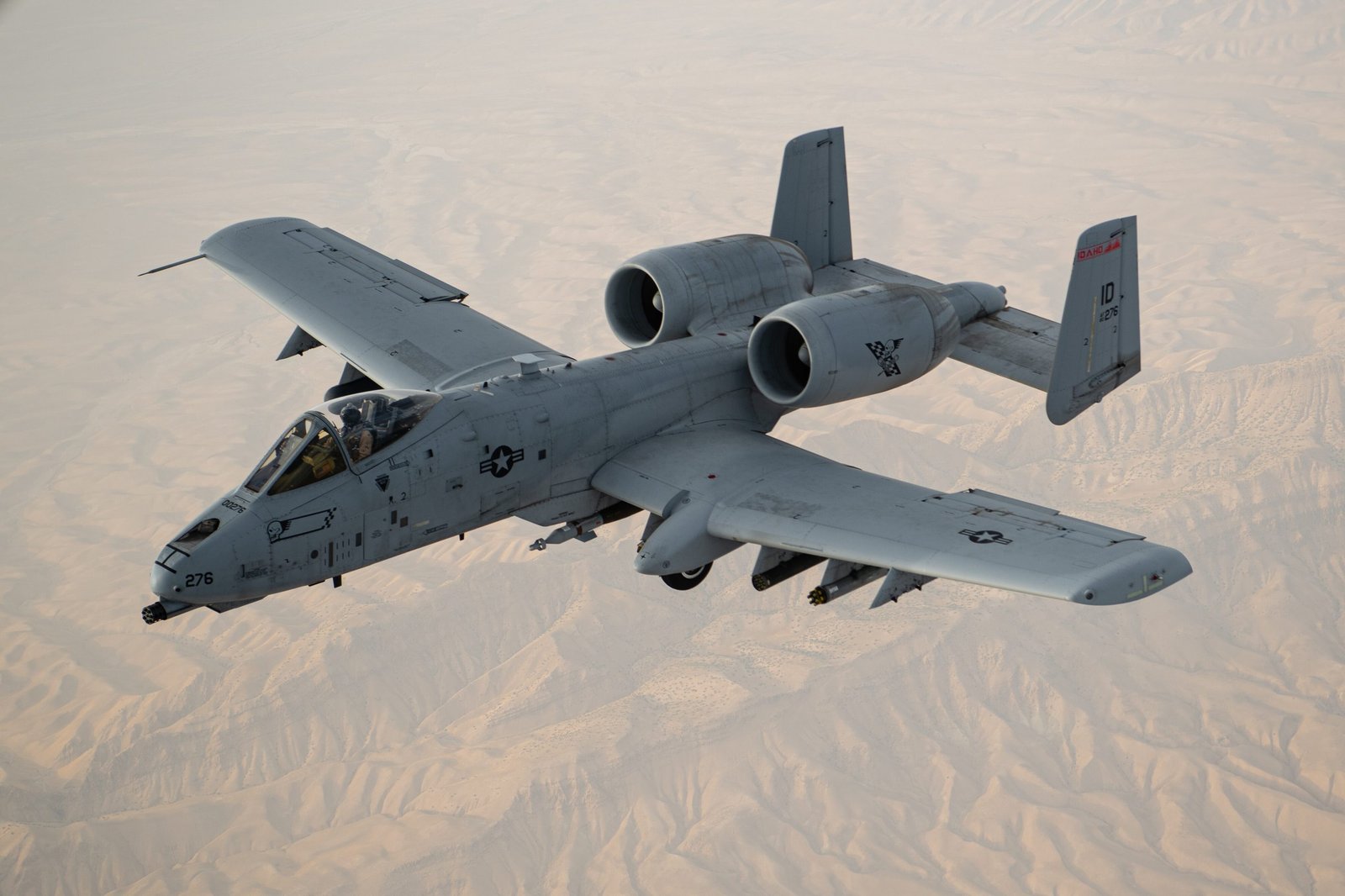
- The Gun With a Plane: The 3,900-pound GAU-8/A cannon accounts for 20% of the aircraft’s empty weight, generating up to 19,000 pounds of recoil force—momentarily counteracting the combined 18,000 pounds of thrust from its engines.
- Titanium “Bathtub” Armor: The pilot is encased in a 1,200-pound titanium shell (0.5 to 1.5 inches thick), capable of withstanding direct 23 mm cannon strikes and 57 mm shrapnel.
- Redundant Survivability: Flight controls utilize dual independent hydraulic systems backed by a mechanical cable-routing system, allowing manual flight if all hydraulics are severed.
- Unmatched Loiter Time: Fuel-efficient engines and a 1,644-gallon internal fuel capacity allow the A-10 to circle a target area for 1 hour and 53 minutes at 5,000 feet.
- Precision Upgrades: The A-10C variant integrates a glass cockpit, HOTAS controls, Link 16 datalink, and the AN/AAQ-28 Litening targeting pod for pinpoint deployment of up to 16,000 pounds of ordnance.
The Airframe: Engineered for Extreme Survivability
The A-10’s architecture rejects complex composite materials in favor of field-repairable resilience. Approximately 95% of the fuselage is constructed from stress- and corrosion-resistant aluminum alloys. Flat plating is used extensively, and major components—including the elevators, rudders, and flaps—are interchangeable between the left and right sides to streamline combat logistics.
The unswept, three-spar wings are designed expressly for low-speed stability and short takeoff and landing (STOL) operations. Featuring Hoerner drooped wingtips to reduce drag, the A-10 can launch from a 4,000-foot (1,219 m) runway at maximum weight. Massive ailerons spanning nearly half the wing provide exceptional low-speed roll control and split open to act as decelerons (air brakes).
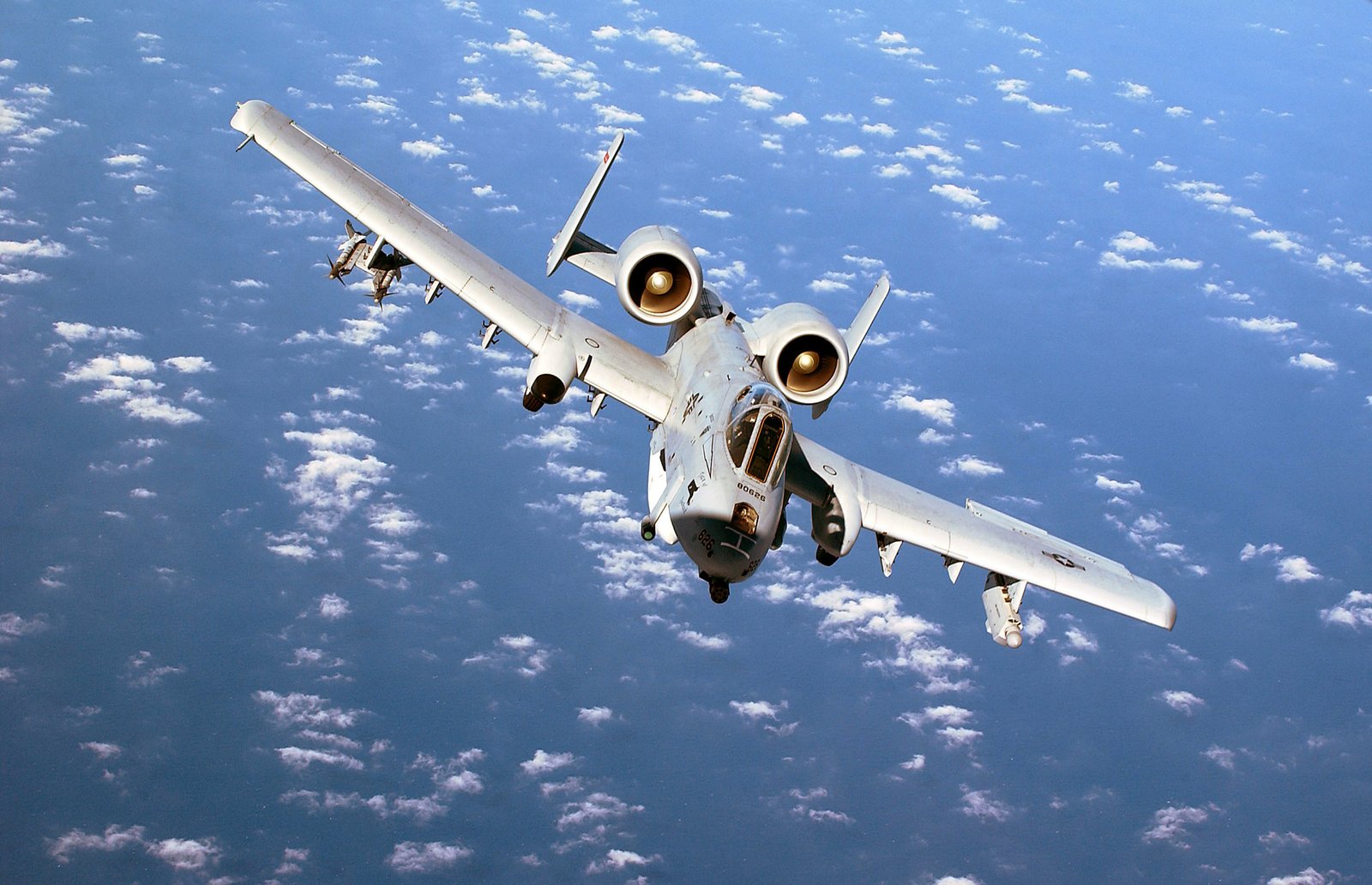
Survivability dictates the physical layout. The main fuel tanks are centrally located, separate from the outer fuselage skin, and protected by self-sealing lines. If the primary tanks are breached, twin self-sealing sump tanks provide enough reserve fuel for 230 miles of emergency flight. The twin tail empennage shields the engine exhaust from ground-based infrared tracking, while the wide separation of the engine nacelles ensures a single missile strike is unlikely to destroy both powerplants.
Firepower: The 30 mm GAU-8/A Avenger
The A-10 is the delivery mechanism for the seven-barrel 30 mm GAU-8/A Avenger. The cannon fires depleted uranium armor-piercing incendiary (API) rounds mixed with high-explosive incendiary (HEI) rounds at a standard 5:1 ratio.
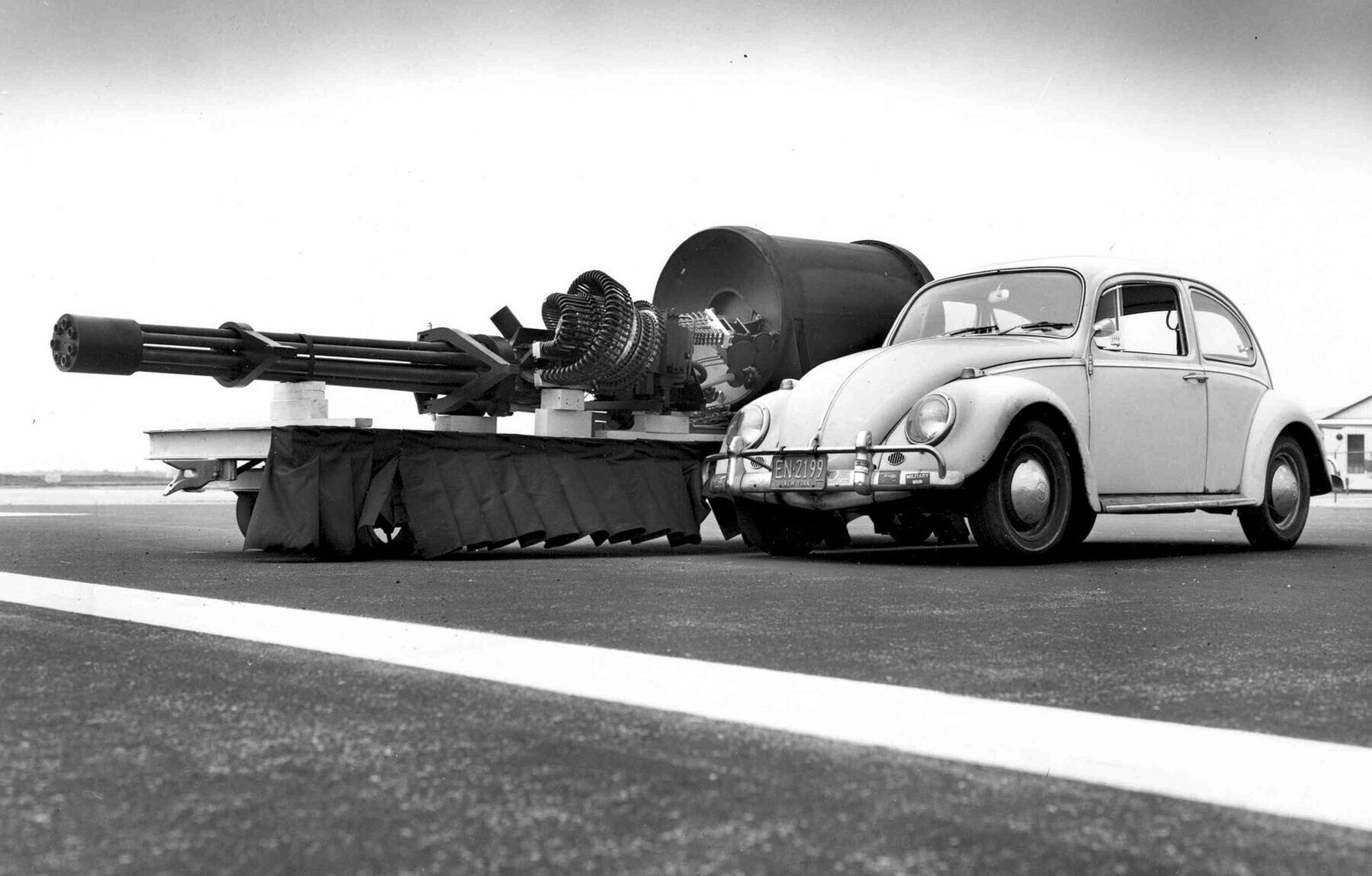
In the A-10C, the fire rate is governed to 3,900 rounds per minute to preserve barrel life. The muzzle velocity exceeds 3,000 feet per second, meaning the rounds strike the target before the iconic, continuous growl of the gun reaches enemy positions on the ground. A single drum holds 1,174 rounds of combat ammunition. Because the ammunition is so heavy, the feed system returns spent brass to the drum to maintain the aircraft’s center of gravity and prevent foreign object damage (FOD) to the rear-mounted engines.
Beyond the gun, the A-10C features 11 hardpoints carrying up to 16,000 pounds of ordnance. Typical loadouts include AGM-65 Maverick missiles, Hydra 70 rocket pods, JDAMs, and AIM-9 Sidewinder missiles for self-defense.
Propulsion and Low-Altitude Maneuverability
Power is supplied by twin General Electric TF34-GE-100 turbofans, each generating 9,065 pounds of thrust. These engines are designed for rugged reliability; the single-stage titanium fan blades can be swapped individually on the flight line without disassembling the engine core.
The Warthog trades supersonic speed for battlefield loiter time. Cruising at 300 knots (350 mph), the A-10 operates comfortably beneath 1,000-foot weather ceilings and in visibility as poor as 1.5 miles. With low wing loading, it can execute tight, sustained turns pulling up to 5.8 Gs, allowing pilots to re-engage targets rapidly while staying inside the defensive umbrella of friendly ground forces.
During the 2003 invasion of Iraq, A-10s demonstrated this capability near the Tigris River. Navigating through a severe sandstorm, pilots utilized the aircraft’s low-speed maneuverability and targeting pods to decimate a battalion-sized Iraqi armored force, destroying T-72 tanks and APCs while operating under intense anti-aircraft fire.
The A-10C Precision Cockpit
While the physical armor—a 1,200-pound titanium tub lined with Kevlar spall shields—remains analog, the A-10C “Precision Engagement” upgrade brought the cockpit into the modern digital battlespace.
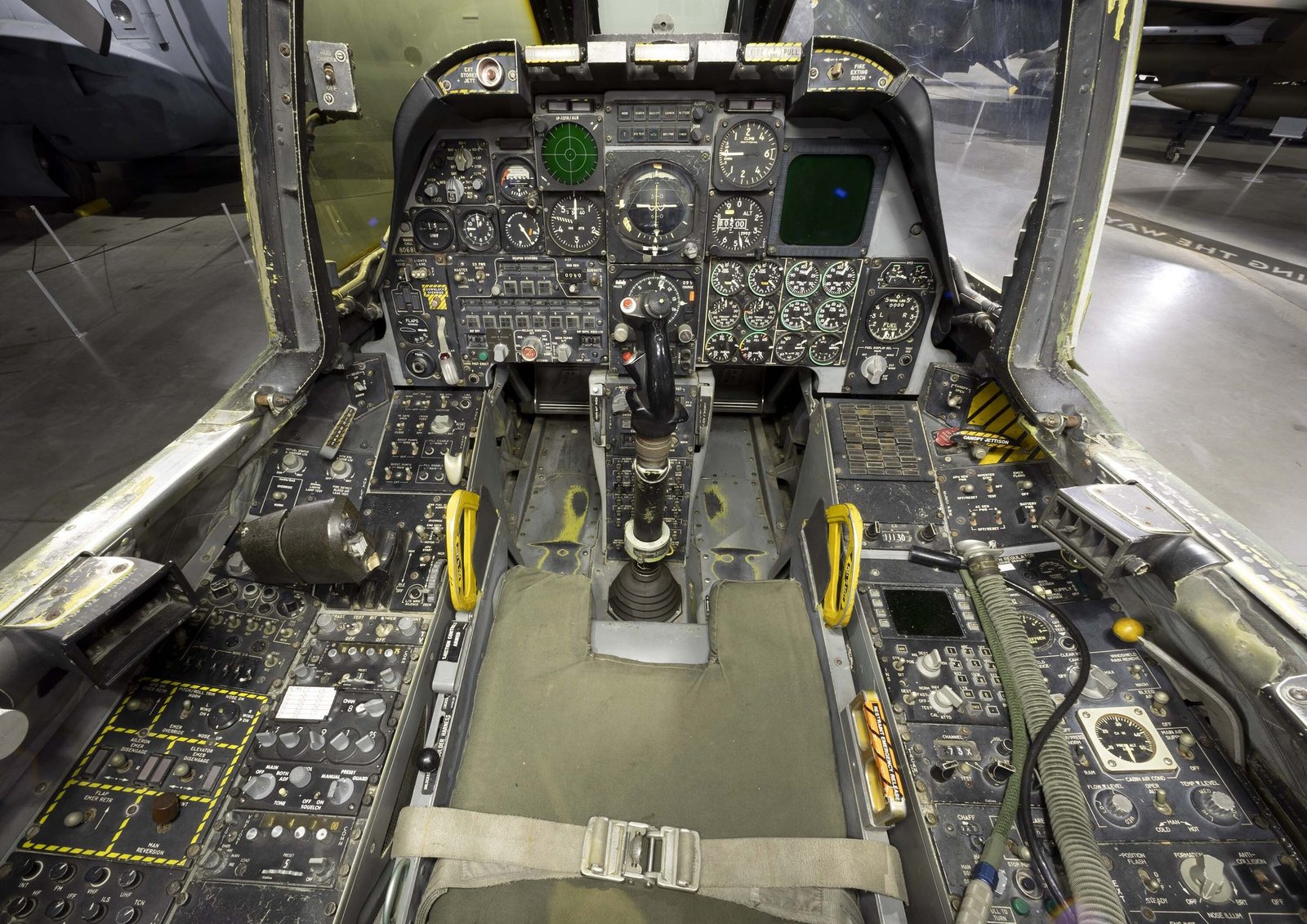
The analog dials were replaced with two 5.5-inch color multifunction displays (MFDs). The pilot interfaces with the aircraft via a Hands-On Throttle and Stick (HOTAS) configuration derived from the F-16 and F-15. An integrated flight and fire control computer calculates exact weapon delivery ballistics, while Link 16 and satellite communications ensure the pilot has total situational awareness of the ground conflict.
| Parameter | Value | Tactical Implication |
| Max Takeoff Weight | 50,000 lbs (22,680 kg) | Capable of carrying a payload equal to its own empty weight |
| Main Armament | 30 mm GAU-8/A Avenger | 3,900 RPM; penetrates modern armor using depleted uranium |
| Max Ordnance Payload | 16,000 lbs | 11 hardpoints for precision bombs, Mavericks, and rockets |
| Engine Output | 2x GE TF34-GE-100 | 9,065 lbs thrust each; high-mounted to reduce IR signature |
| Cruising Speed | 300 knots (350 mph) | Slow speed allows for high-precision visual target acquisition |
| Combat Loiter Time | 1 hr 53 mins @ 5,000 ft | Exceptional persistent support for ground troops |
| Pilot Protection | 1,200 lb Titanium Bathtub | Stops direct 23 mm strikes; internal nylon anti-spall lining |