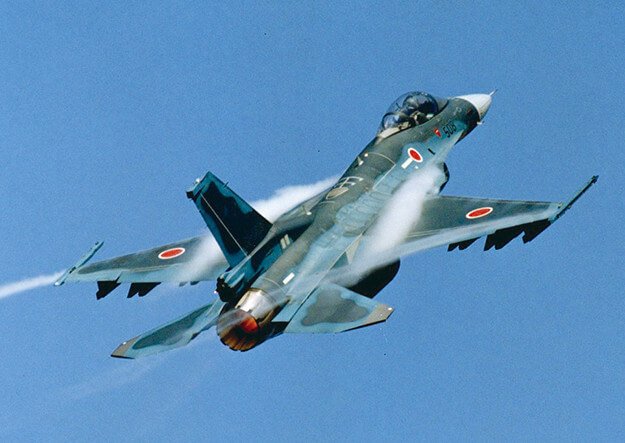
- Tokyo requested 8.89 trillion yen ($55.5 billion) for FY2027, prioritizing stand-off weapons and AI-driven platforms.
- The ASM-3 Kai supersonic missile is slated for a new air-to-air role to neutralize enemy radar aircraft at ranges exceeding 400 kilometers.
- Japan’s New SSM island defense missile will feature a terminal barrel-roll maneuver to evade Chinese Type 730 and Type 1130 close-in weapon systems.
- Construction of a 12,000-ton Aegis System Equipped Vessel with 128 vertical launch cells is underway to counter lofted ballistic and hypersonic threats.
- Revised export rules allow Tokyo to share lethal arms with 17 allied nations, establishing a multinational weapons architecture in the Pacific.
Air-to-Air Strike: The ASM-3 Kai Threat
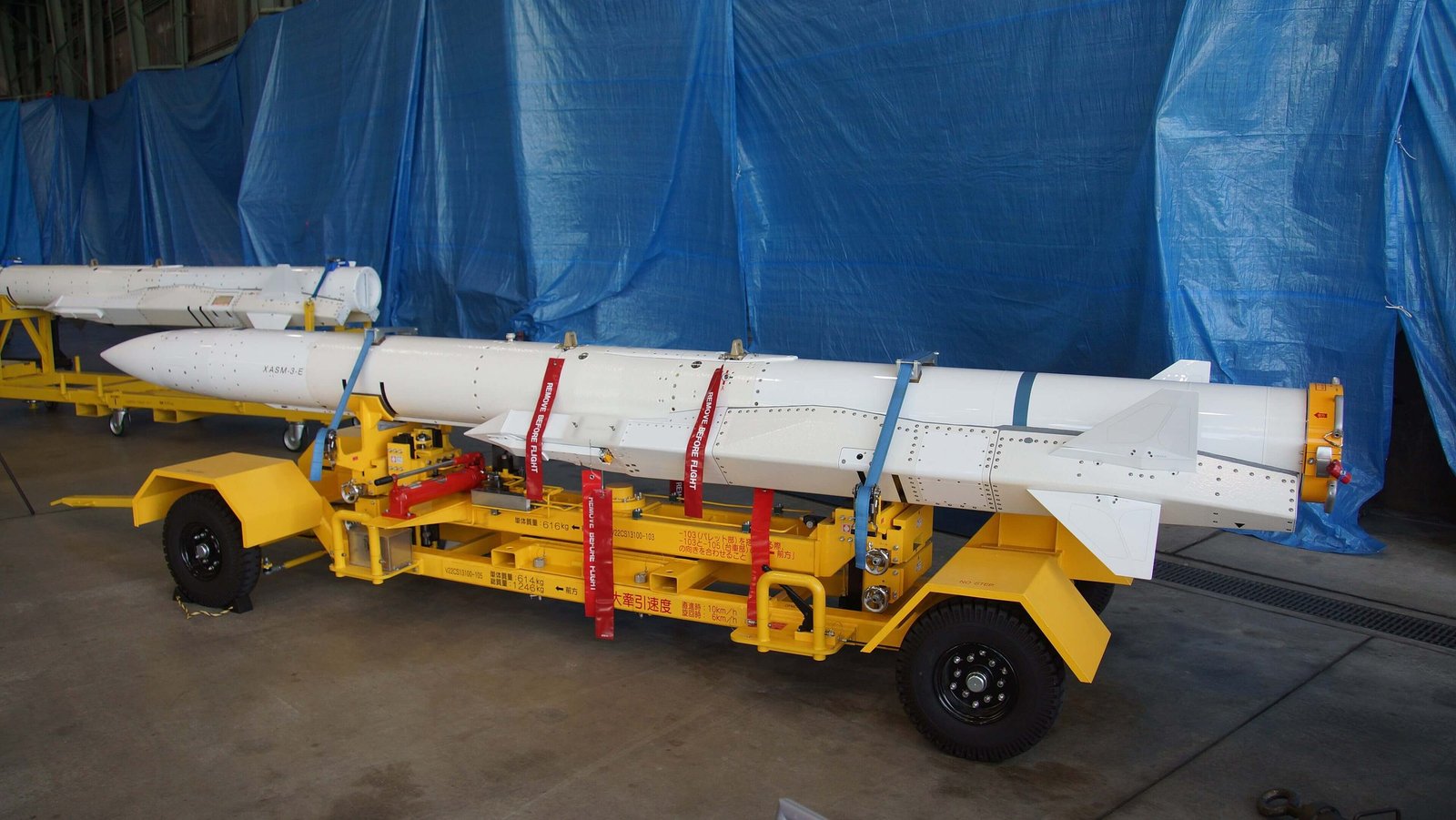
Japan is converting its dedicated ship-killer into an aircraft hunter. The ASM-3 Kai relies on an integral rocket-ramjet to sustain speeds above Mach 3 over its entire flight path.
Unlike traditional air-to-air missiles that coast after initial burn, this sustained energy allows it to hit targets at estimated ranges past 400 kilometers.
The primary targets are Chinese airborne early warning aircraft like the KJ-3000, alongside aerial tankers and command posts. The missile utilizes a dual active/passive radar seeker.
The passive mode hones in on the massive electromagnetic emissions from adversary radar planes. By pushing command-and-control aircraft further back from the East China Sea, Japan degrades the adversary’s targeting architecture.
Evading CIWS: The New SSM’s Barrel Roll
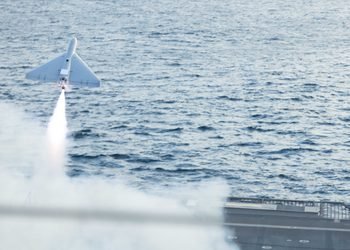
Kawasaki’s new island defense missile, simply dubbed the New SSM, addresses the problem of advanced warship defenses. Video released by Japan’s Acquisition, Technology and Logistics Agency in early 2026 shows a prototype executing a terminal barrel roll.
This maneuver actively defeats radar-directed close-in weapon systems, specifically the Chinese Type 730 and Type 1130 rotary cannons.
By spiraling unpredictably, the missile prevents the gun’s fire-control computer from plotting a reliable interception point. The weapon relies on a turbofan engine and will far exceed the 200-kilometer range of the baseline Type 12 surface-to-ship missile.
The Aegis System Equipped Vessel (ASEV)
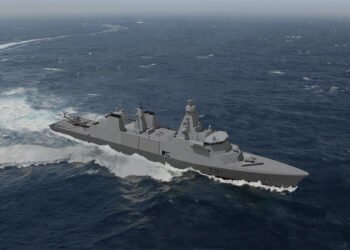
To protect its air bases from opening salvos, Japan is building the largest surface combatant in its modern history. The first ASEV measures 620 feet and displaces 12,000 tons.
A towering integrated mast carries the AN/SPY-7(V)1 radar, designed to track lofted ballistic arcs and incoming hypersonic glide vehicles.
The ship features 128 vertical launch cells armed with SM-3 and SM-6 interceptors. Future upgrades will include the American-led Glide Phase Interceptor.
By intercepting incoming barrages offshore, the ASEV buys time for land-based fighters to launch counterstrikes.
Unseen Threats: Submarines and Electronic Warfare
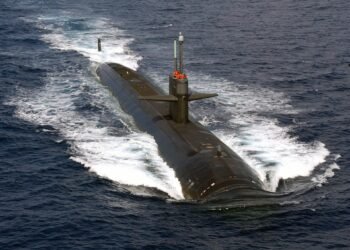
The 2027 budget request outlines research into submarine-launched hypersonic missiles. Shifting long-range strike capabilities to conventionally powered submarines creates an extreme survivability advantage.
Unlike static land bases, a submerged vertical launch system cannot be reliably targeted in a preemptive strike. In the air domain, the Kawasaki EC-2 standoff electronic warfare aircraft provides deep-sensor degradation.
Flying far outside enemy engagement zones, the EC-2 will blind adversary communications and radar networks. This clears a path for allied strike packages to operate with a significantly reduced threat.
| Weapon System | Role | Key Specifications | Deployment Status |
| ASM-3 Kai | Air-to-Air / Anti-Ship Missile | Mach 3+, 400+ km range, Ramjet propulsion | Budget FY2027 (Development) |
| New SSM | Anti-Ship Cruise Missile | Barrel-roll evasion, Turbofan, Extended range | Mass Production Targeting 2027 |
| ASEV | Aegis Surface Combatant | 12,000 tons, 128 VLS cells, AN/SPY-7(V)1 | First ship laid down July 2025 |
| Type 12 (Upgraded) | Surface-to-Ship Missile | 900 – 1,000 km estimated range | Under Development |
| EC-2 | Standoff Electronic Warfare | C-2 airframe, advanced jamming suites | Operational / Fleet Expanding |
Japan’s defense evolution represents a severe structural vulnerability for adversary anti-access/area-denial networks. By fielding weapons specifically designed to kill force-multiplying assets—radar aircraft and command nodes—Tokyo shifts the arithmetic of Pacific warfare. The combination of the New SSM‘s evasive terminal maneuvers and the deep-strike range of the ASM-3 Kai creates a highly credible, multi-axis counterstrike threat. When combined with revised export laws that allow interoperable munitions across allied nations, Japan is rapidly establishing a highly survivable, distributed deterrent.