Frontline Defense Journal | Objective OSINT & Military Analysis
  • Home
  • Latest Intelligence
  • Domain Of Warfare
    • Naval & Maritime
    • Air & Aerospace
    • Ground Forces & Armor
    • Unmanned & Autonomous Systems
    • Strategic Weapons
  • Regions
    • USA & Americas
    • Europe
    • Middle East
    • Asia & Pacific
  • Defense Archives
  • About Us
    • Who We Are
    • Privacy Policy
    • Terms Of Use
No Result
View All Result
  • Home
  • Latest Intelligence
  • Domain Of Warfare
    • Naval & Maritime
    • Air & Aerospace
    • Ground Forces & Armor
    • Unmanned & Autonomous Systems
    • Strategic Weapons
  • Regions
    • USA & Americas
    • Europe
    • Middle East
    • Asia & Pacific
  • Defense Archives
  • About Us
    • Who We Are
    • Privacy Policy
    • Terms Of Use
Frontline Defense Journal | Objective OSINT & Military Analysis
No Result
View All Result
Frontline Defense Journal | Objective OSINT & Military Analysis
No Result
View All Result
Home Regions Middle East

U.S. Faces Interceptor Shortfall as Iran Resumes Ballistic Missile Production

September 18, 2026
Reading Time: 6 mins read
A A
Terminal High Altitude Area Defense (THAAD) surface-to-air missile launching during a high-intensity air defense intercept maneuver.
Share on FacebookShare On Reddit

BOTTOM LINE UP FRONT

  • U.S. forces expended 60 to 70 Patriot missiles and over 12 THAAD interceptors against 20 Iranian ballistic missiles.
  • Iranian munitions penetrated the defense umbrella, damaging eight F-15s and an A-10 in Jordan.
  • A recent Congressional Inspector General report cites “strategic inventory shortfalls” for U.S. air defense munitions.
  • Iran is reconstituting its ballistic missile program using stockpiled components in underground facilities.
  • Strait of Hormuz oil flow has improved to a rolling average of 9 million barrels per day, buying temporary operational time.

Attack in Jordan Exposes Defense Math

U.S. interceptor expenditure is accelerating. The recent engagement over Jordan required roughly 80 total interceptors to counter 20 Iranian ballistic missiles. That expenditure matches what U.S. forces previously used across an entire week of operations. The arithmetic favors the attacker.

Iran is adapting its strike tactics. Tehran deployed separating warheads and cluster munitions during the Jordan attack. This forces U.S. air defense radars to track and engage a higher volume of terminal targets.

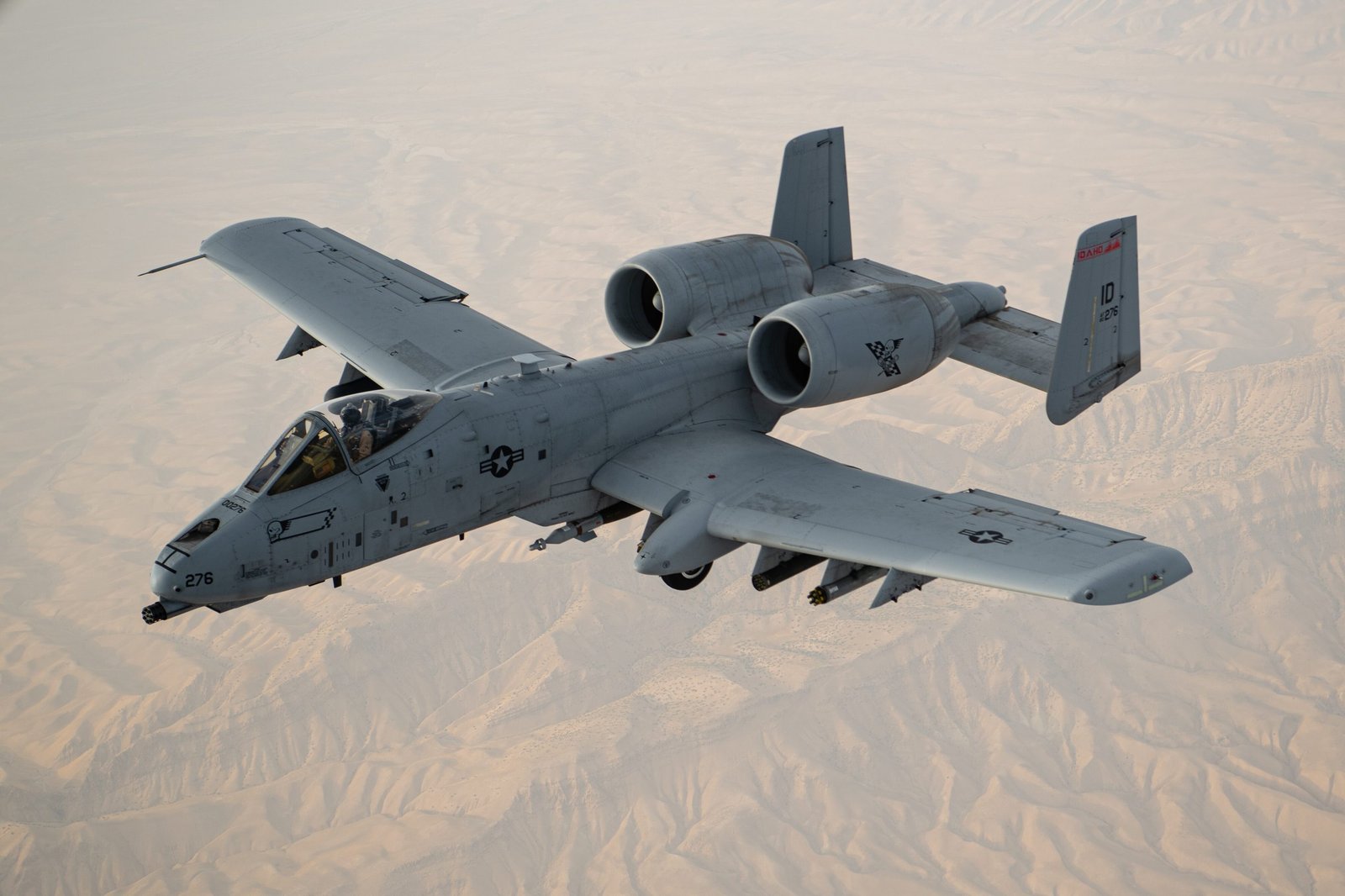
The base sustained direct impacts. Eight F-15 fighters received light damage. One A-10 Thunderbolt II lost a wing. While officials report the F-15s were returned to service, minor fragmentation damage routinely grounds advanced combat aircraft for extended maintenance periods.
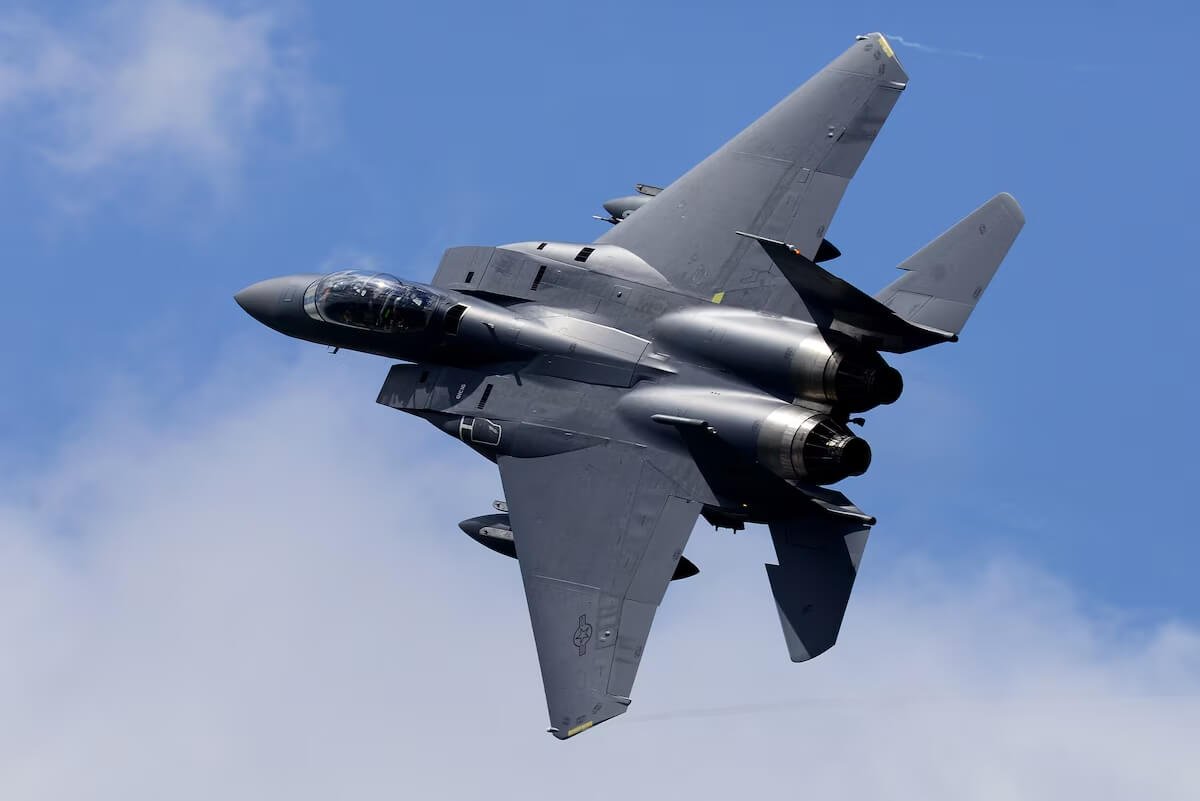
An F-15E Strike Eagle assigned to the 492nd Fighter Squadron
USAF F-15E Strike Eagle. Source: U.S. Air Force
A U.S. Air Force A-10 Thunderbolt II flies over the U.S. Central Command area of responsibility in support of Operation Freedom's Sentinel, June 29, 2020. The Thunderbolt II is a highly accurate, global reach airframe that provides U.S. and coalition forces a maneuverable close air support and precision strike platform. (U.S. Air Force photo by Staff Sgt. Justin Parsons)
USAF A-10 Thunderbolt II. Source: U.S. Air Force

Interceptor Shortages and Industrial Bottlenecks

A stark divide exists between combatant command statements and systemic realities. CENTCOM commander Admiral Cooper stated the U.S. is “well-armed and ready.” A new Congressional Inspector General report contradicts this assessment entirely.

The under Secretary for acquisition and sustainment reported severe constraints. Operation Epic Fury has triggered “strategic inventory shortfalls” The report explicitly identified industrial-based bottlenecks preventing rapid munitions resupply.

The U.S. cannot maintain this intercept tempo indefinitely. Patriot and THAAD production lines are not scaled for protracted attrition warfare. The interceptors exist to buy operational runway. They are currently failing to outlast Iranian launch capabilities.

Iran Reconstitutes Missile Production

Iran is no longer operating strictly from pre-war stockpiles. The Wall Street Journal confirms Tehran has resumed ballistic missile production. Operations have shifted to underground facilities using salvaged and stockpiled components.

The exact production rate remains unverified. Estimates range from piecing together existing parts to manufacturing new airframes. Former CIA analysts assess Iran could eventually field hundreds or thousands of newly assembled missiles.

U.S. and Israeli strikes previously damaged Iranian industrial sites. Naval blockades restricted solid-fuel ingredient imports. Despite this, Iranian forces are adapting to bypass supply chain disruptions. The missile program is actively regenerating.

Economic Pressures and Oil Flow

The military timeline is tied directly to the economic blockade. Iran is losing control over the Strait of Hormuz. U.S. and allied operations have partially restored commercial transit through the waterway.

Oil flow is stabilizing. Energy Secretary Chris Wright reported a running average of over 9 million barrels per day via waterborne routes. Sustained daily averages have recovered to between 6.5 and 7 million barrels.

Iran is exporting almost zero domestic oil. The economic pressure on Tehran is mounting. As Iran’s control over the Strait degrades, U.S. commanders anticipate escalated asymmetric attacks against regional bases. Air defense interceptors remain the only buffer against these strikes.

MetricVerified FigureSource
MIM-104 Patriot Fired60–70Wall Street Journal
THAAD Interceptors Fired>12Wall Street Journal
Inbound Iranian Missiles~20Defense tracking
U.S. Aircraft Damaged8x F-15, 1x A-10CBS News / Air & Space Forces
Strait of Hormuz Oil Flow~9M barrels/dayU.S. Dept. of Energy

The U.S. is trading high-value, low-density interceptors for low-cost, high-density ballistic missiles. This exchange ratio is structurally unsustainable. Iran’s shift to complex warheads and rapid reconstitution of underground production facilities signals a deliberate strategy of munitions exhaustion. Unless the U.S. accelerates industrial resupply or eliminates launch capacity directly, the interceptor stockpile will deplete before the economic blockade forces Iranian capitulation.


Tags: Air DefenseGeopoliticsus iran war

Related Posts

An image of Destroyed MC-130J ii iran
USA & Americas

US Aircraft Losses in Iran Surpass $4 Billion: Fleet Impact

September 25, 2026
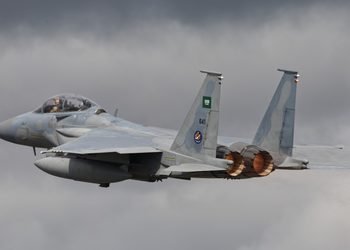
An advanced RSAF F-15SA Strike Eagle fighter jet equipped with precision-guided munitions
Middle East

Houthis Shoot Down Saudi F-15, Target East-West Pipeline

September 17, 2026
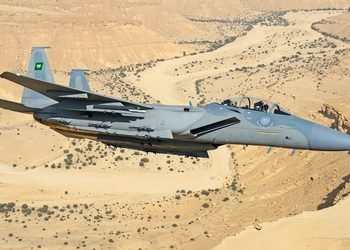
An advanced RSAF F-15SA Strike Eagle fighter jet equipped with precision-guided munitions
Middle East

Saudi Air Strikes Escalation as Houthis Seize Red Sea Islands

September 14, 2026
Next Post
U.S. Air Force F-15EX Eagle II showcasing multiple weapon hardpoints.

F-15EX Eagle II Drops Live Bombs: Full Tech Breakdown

Leave a Reply Cancel reply

Your email address will not be published. Required fields are marked *

I agree to the Terms & Conditions and Privacy Policy.

Latest Intelligence

US Aircraft Losses in Iran Surpass $4 Billion: Fleet Impact

A-10C Thunderbolt II Technical Breakdown: The GAU-8, Titanium Armor, and CAS Legacy

Lockheed Martin Unveils Vectis Stealth Fighter Drone

USMC Tests KAC LMG and Anti-Drone Ammunition

The Royal Navy’s Paper Tiger: The £7.6 Billion Carrier Crisis

Japan’s ¥8.9T FY2027 Budget: ASM-3 Kai & New SSM Explained

Domain Of Warfare

Canadian Army LAV VI armored vehicle operating during combat maneuvers.
Ground Forces & Armor

Canadian Army Reorganization: The 1st Manoeuvre Division ORBAT

MQ-9 Reaper uncrewed aerial vehicle
Unmanned & Autonomous Systems

General Atomics Unveils Wildfire Drone to Replace MQ-9 Reaper

U.S. Air Force F-15EX Eagle II showcasing multiple weapon hardpoints.
Air & Aerospace

F-15EX Eagle II Drops Live Bombs: Full Tech Breakdown

The Los Angeles-class attack submarine USS Louisville (SSN 724) underway off the coast of southern California.
Naval & Maritime

US Navy Nuclear Attack Submarines: Fleet Tactical Breakdown

Defense Archives

Surviving the Nuclear Battlefield: The Rise and Fall of the U.S. Army’s Pentomic Divisions

US Army launcher vehicle based on the M139D 5-ton truck. Honest John nuclear-capable rocket artillery.

“In the search for maximum dispersion on an atomic battlefield, the Pentomic division traded the proven flexibility of combined arms...

Read moreDetails

The Evolution of the British Army Infantry Section (WWI to 2026)

A member of British No. 9 Commando at Anzio equipped for a patrol with his Bren gun 5 March 1944.

BOTTOM LINE UP FRONT WWI & The All Arms Concept (1916-1918): Prompted by massive losses at the Somme, the British...

Read moreDetails

WWII Submachine Gun Production Costs: Economics of Infantry Firepower

A British soldier equipped with a Thompson M1928 submachine gun in November 1940

BOTTOM LINE UP FRONT American Economic Burden: The U.S. Thompson M1A1 was the most expensive SMG fielded by any major...

Read moreDetails

Operation Serval: French Expeditionary Tactics & Mobile Warfare in Mali

Northern Mali conflict Map 2013 Operation Serval

BLUF Immediate Threat Nullification: An initial assault force of 1,000+ Islamist fighters mounted in up to 300 technicals was successfully...

Read moreDetails

Frontline Defense is an independent, objective analysis platform. The content provided on this website, including but not limited to technical breakdowns, military hardware comparisons, defense budget reports, and open-source intelligence (OSINT) analyses, is strictly for educational, historical, and informational purposes. Frontline Defense is not affiliated with, endorsed by, or acting on behalf of any government agency, department of defense, armed forces branch, or defense contractor. All content on this site represents independent research based strictly on unclassified, publicly available data and open-source records at the time of writing. Nothing published on this website should be construed as official military guidance, defense strategy consulting, or government policy.

Follow Us

Domain Of Warfare

  • Naval & Maritime
  • Air & Aerospace
  • Ground Forces & Armor
  • Strategic Weapons
  • Unmanned & Autonomous Systems

Regions

  • USA & Americas
  • Europe
  • Middle East
  • Asia & Pacific
  • About Us
  • Privacy Policy
  • Terms Of Use

© 2026 | Fronline Defense Journal. All Rights Reserved

No Result
View All Result
  • Home
  • Latest Intelligence
  • Domain Of Warfare
    • Naval & Maritime
    • Air & Aerospace
    • Ground Forces & Armor
    • Unmanned & Autonomous Systems
    • Strategic Weapons
  • Regions
    • USA & Americas
    • Europe
    • Middle East
    • Asia & Pacific
  • Defense Archives
  • About Us
    • Who We Are
    • Privacy Policy
    • Terms Of Use

© 2026 | Fronline Defense Journal. All Rights Reserved