KEY INTELLIGENCE
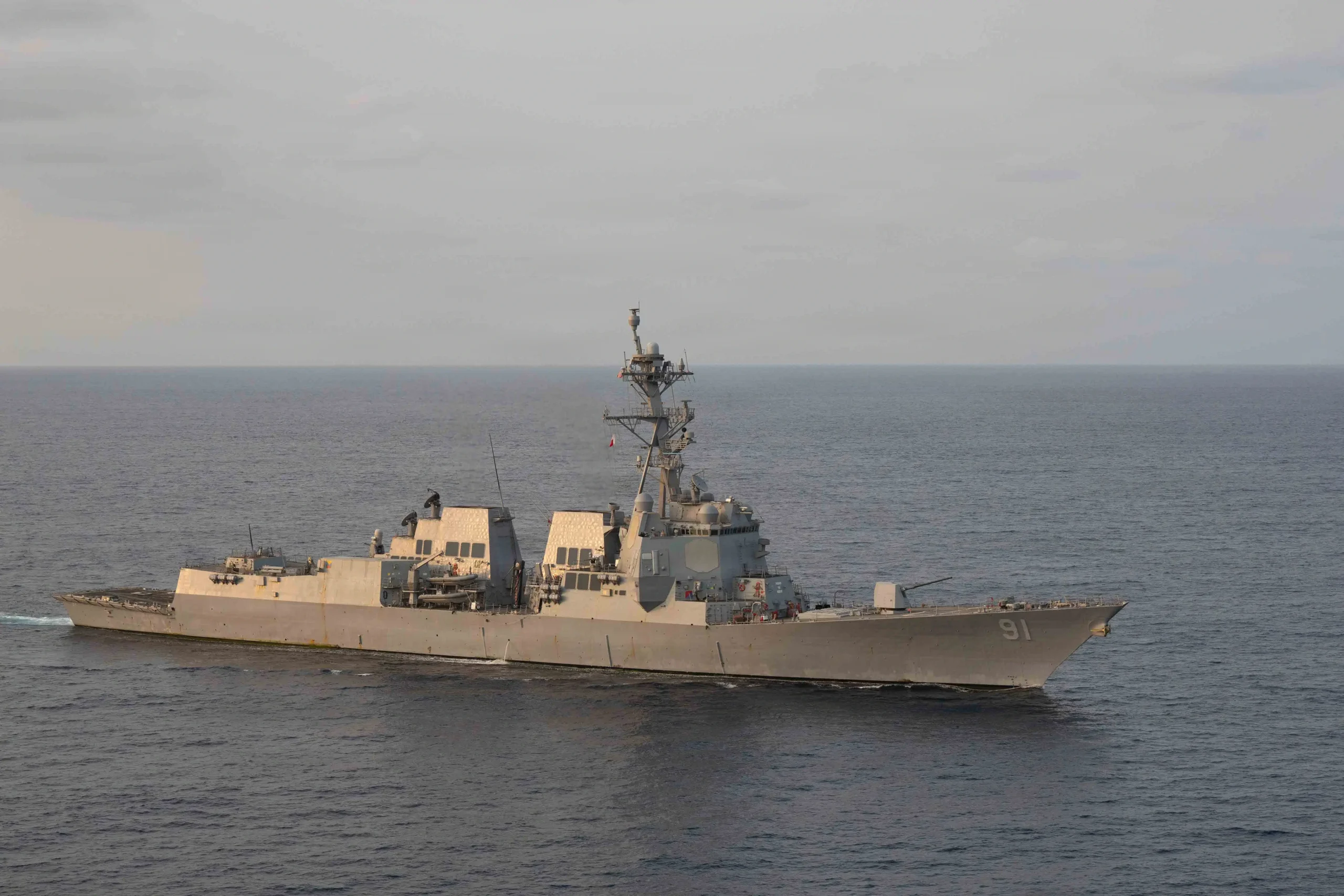
- Kinetic Retaliation: U.S. naval forces engaged and neutralized three Iranian transport vessels (one confirmed sunk) following unprovoked ballistic missile strikes targeting two American destroyers.
- Tehran’s Maritime Red Line: The IRGC is attempting to establish a territorial exclusion zone to counter the ongoing U.S. economic blockade, threatening commercial shipping and naval transit.
- U.S. Kill Chain Integration: American air wings are deploying E-2D Advanced Hawkeyes networked via Link 16 to F-35s and the Aegis Combat System for real-time target acquisition and precision JDAM strikes.
- Economic Attrition: The Strait of Hormuz processes 9 to 15 million barrels of oil per day; simultaneous U.S. Treasury sanctions and naval interdictions are systematically starving the regime of export revenue.
Kinetic Escalation in the Strait
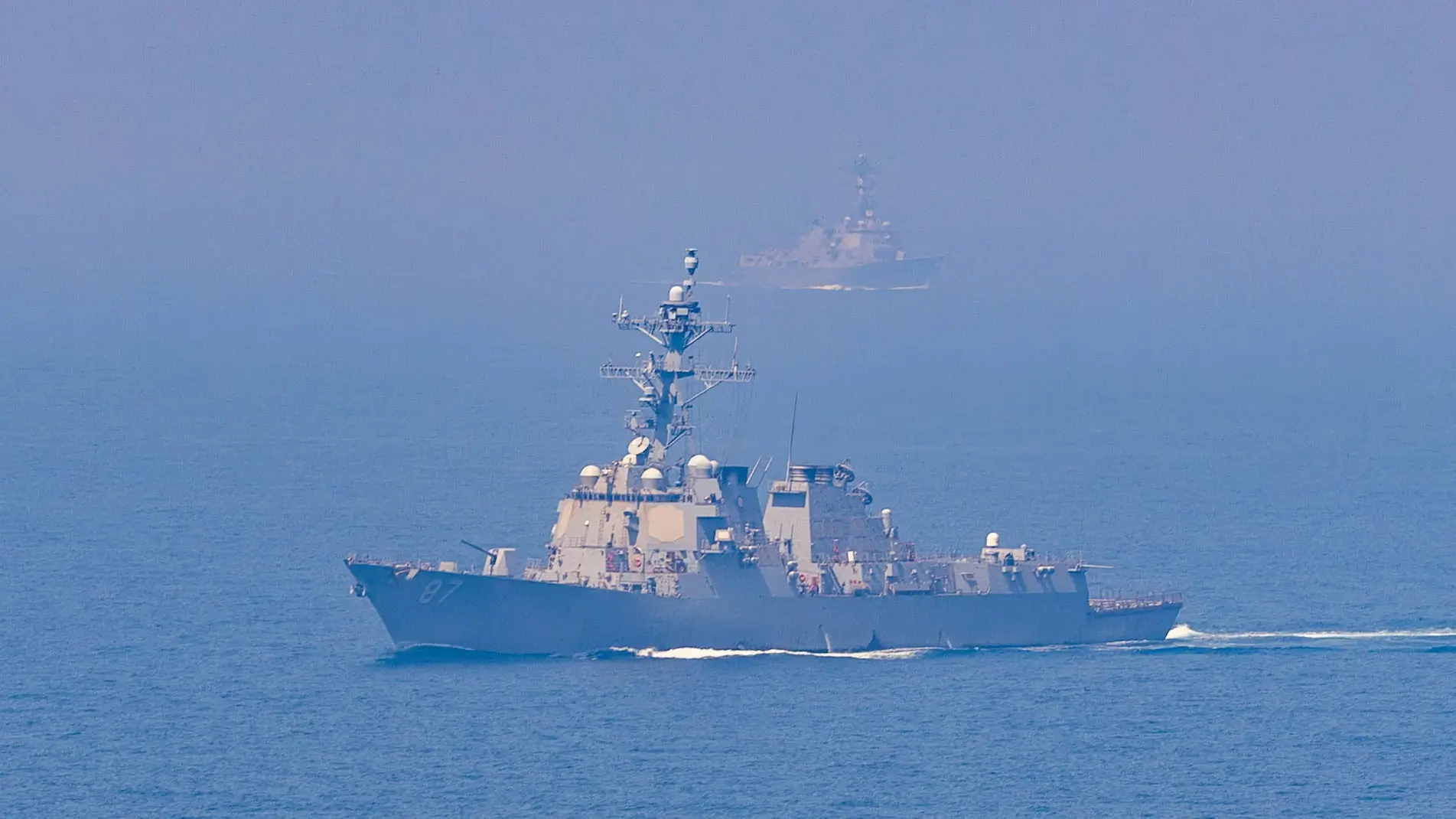
Tensions in the Persian Gulf have transitioned from diplomatic signaling to direct kinetic engagement. Following a failed Iranian ballistic missile strike against a pair of U.S. Navy warships, CENTCOM executed a decisive counter-surface operation. The U.S. Navy neutralized three Iranian oil carriers in the Gulf of Oman, sending one vessel to the bottom and severely disabling two others.
This strike heavily degrades Iran’s illicit oil export infrastructure. In retaliation, Tehran has announced the implementation of an exclusion zone, attempting to legally and physically restrict U.S. naval movements. Enforcing this zone, however, requires Iran to directly challenge a fully integrated U.S. Carrier Strike Group and Amphibious Ready Group.
IRGC Asymmetric Tactics vs. U.S. Air Power
Iran’s enforcement of a naval exclusion zone relies on asymmetric A2/AD (Anti-Access/Area Denial) tactics. The IRGC employs fast-attack surface craft armed with rocket-propelled grenades (RPGs), heavy machine guns, and improvised sea mines. Their aerial ISR (Intelligence, Surveillance, and Reconnaissance) capabilities are limited to legacy high-wing turboprops, such as modified Cessna Caravans, which operate with high radar cross-sections and zero survivability against modern anti-air systems.
Against this, the U.S. Marine Corps is launching F-35B Lightning II fifth-generation fighters from the decks of amphibious assault ships. Equipped with advanced stealth capabilities and targeting sensors, these platforms are armed with Joint Direct Attack Munitions (JDAMs) designed to obliterate surface targets long before Iranian forces can establish visual contact.
The E-2D and F-35 Data-Link Architecture
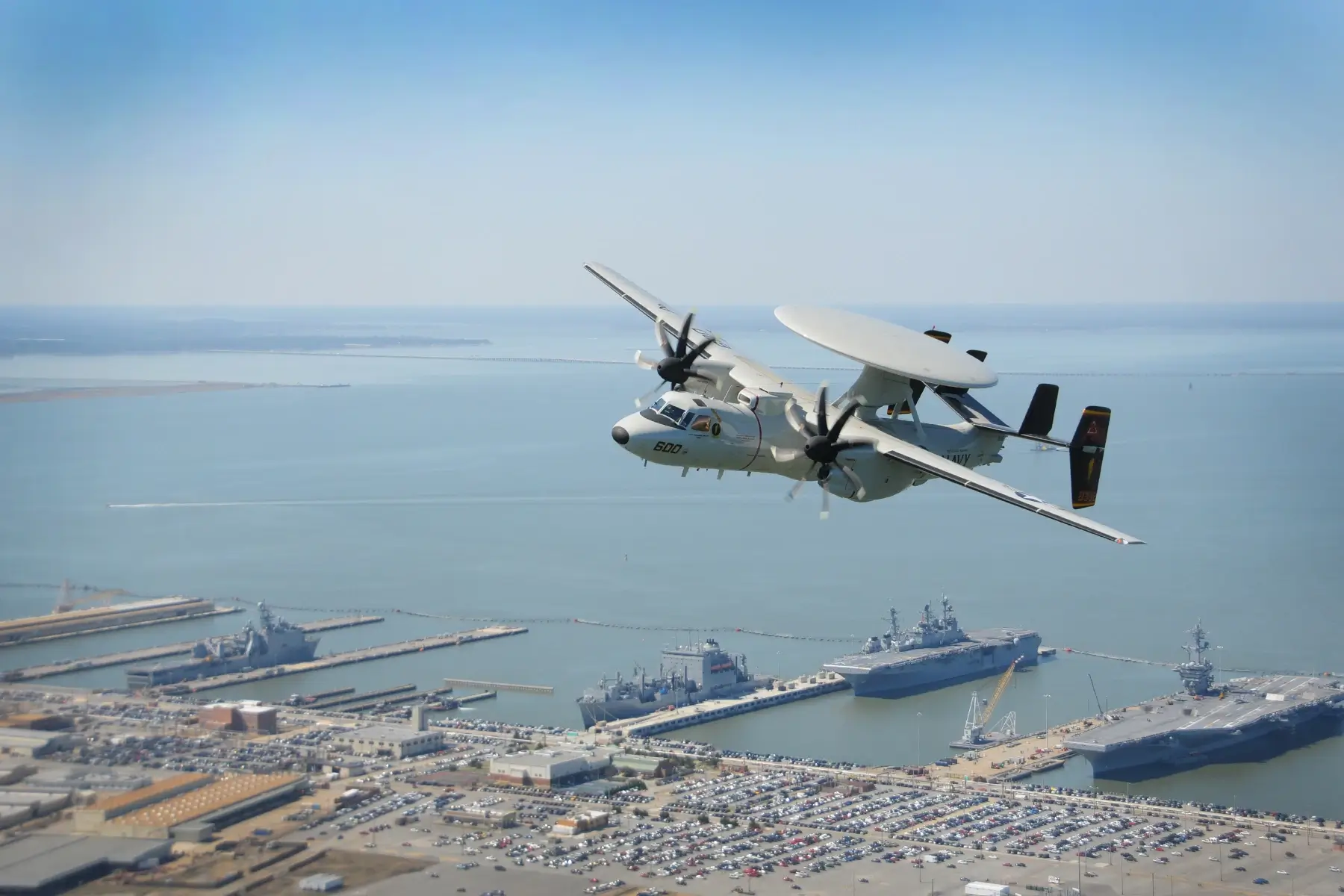
The tactical linchpin of the American response is the E-2D Advanced Hawkeye. Operating as an airborne command and control node, the E-2D utilizes its APY-9 UHF radar to detect Iranian surface and air movements through heavy ground clutter and coastal interference.
This sensor data is instantly piped via Link 16 data links directly into the Aegis Combat System on surface destroyers and the cockpit displays of orbiting F-35s. This allows the F-35 to operate in maximum stealth with its own active radar turned off, functioning entirely as a silent, lethal strike platform cued by the Hawkeye.
Maximum Pressure and Global Realignments
The naval clashes in Hormuz run parallel to a broader U.S. strategy of maximum economic pressure. By crippling Iran’s tanker fleet, the U.S. is choking off an estimated $1 million per month in illicit revenue previously funneled into IRGC proxy operations.
Simultaneously, global diplomatic maneuvers are shifting. Backchannel negotiations in the European theater—evidenced by recent high-level meetings between U.S. envoys, Vladimir Putin in Moscow, and Volodymyr Zelensky in Kyiv—suggest a push to stabilize the Ukrainian front. Winding down the European conflict would allow the U.S. and its allies to pivot overwhelming strategic and economic focus squarely onto containing Iranian aggression in the Middle East.
U.S. Navy vs. IRGC Naval Forces (Strait of Hormuz)
| System / Capability | U.S. Navy / Marine Corps (CENTCOM) | IRGC Navy (Tehran) | Tactical Advantage / Impact |
| Air Superiority | F-35B Lightning II (Stealth, Link 16, JDAM) | Legacy ISR (Cessna Caravan variants) | U.S. Overmatch. F-35 operates with impunity; IRGC assets are highly vulnerable to BVR engagement. |
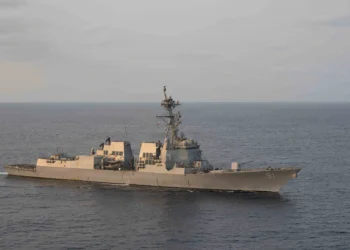
| Surface Combatants | Arleigh Burke-class Destroyers (Aegis Combat System, SM-2/SM-3) | Fast Attack Craft (FIAC) armed with RPGs / AK-47s | U.S. Overmatch. Aegis tracks hundreds of targets; FIAC swarms are neutralized by automated CIWS and 5-inch deck guns. |
| Early Warning / C2 | E-2D Advanced Hawkeye (APY-9 UHF Radar) | Coastal shore-based radar networks | U.S. Overmatch. E-2D provides uninterrupted, over-the-horizon maritime domain awareness. |
| Area Denial | Space Force kinetic targeting, U.S. Naval Blockade | Ballistic Missiles, Rocket-deployed Sea Mines | Contested. Iranian mines pose a threat to commercial transit, requiring constant U.S. mine-sweeping overwatch. |
Iran’s declared maritime exclusion zone is operationally unenforceable against an integrated U.S. Carrier Strike Group. The IRGC lacks the necessary radar architecture and air superiority to challenge 5th-generation stealth and Aegis-linked overwatch. Expect the U.S. Navy to aggressively test and violate this red line to maintain freedom of navigation. Any forward deployment of Iranian fast-attack craft or improvised sea mines will likely be neutralized beyond visual range by JDAM-equipped F-35s networked to E-2D airborne command nodes. The strategic and tactical advantage in the Strait of Hormuz remains entirely secured by U.S. naval overmatch.