Frontline Defense Journal | Objective OSINT & Military Analysis
  • Home
  • Latest Intelligence
  • Domain Of Warfare
    • Naval & Maritime
    • Air & Aerospace
    • Ground Forces & Armor
    • Unmanned & Autonomous Systems
    • Strategic Weapons
  • Regions
    • USA & Americas
    • Europe
    • Middle East
    • Asia & Pacific
  • Defense Archives
  • About Us
    • Who We Are
    • Privacy Policy
    • Terms Of Use
No Result
View All Result
  • Home
  • Latest Intelligence
  • Domain Of Warfare
    • Naval & Maritime
    • Air & Aerospace
    • Ground Forces & Armor
    • Unmanned & Autonomous Systems
    • Strategic Weapons
  • Regions
    • USA & Americas
    • Europe
    • Middle East
    • Asia & Pacific
  • Defense Archives
  • About Us
    • Who We Are
    • Privacy Policy
    • Terms Of Use
Frontline Defense Journal | Objective OSINT & Military Analysis
No Result
View All Result
Frontline Defense Journal | Objective OSINT & Military Analysis
No Result
View All Result
Home Regions Middle East

U.S. Faces Interceptor Shortfall as Iran Resumes Ballistic Missile Production

September 18, 2026
Reading Time: 6 mins read
A A
Terminal High Altitude Area Defense (THAAD) surface-to-air missile launching during a high-intensity air defense intercept maneuver.
Share on FacebookShare On Reddit

BOTTOM LINE UP FRONT

  • U.S. forces expended 60 to 70 Patriot missiles and over 12 THAAD interceptors against 20 Iranian ballistic missiles.
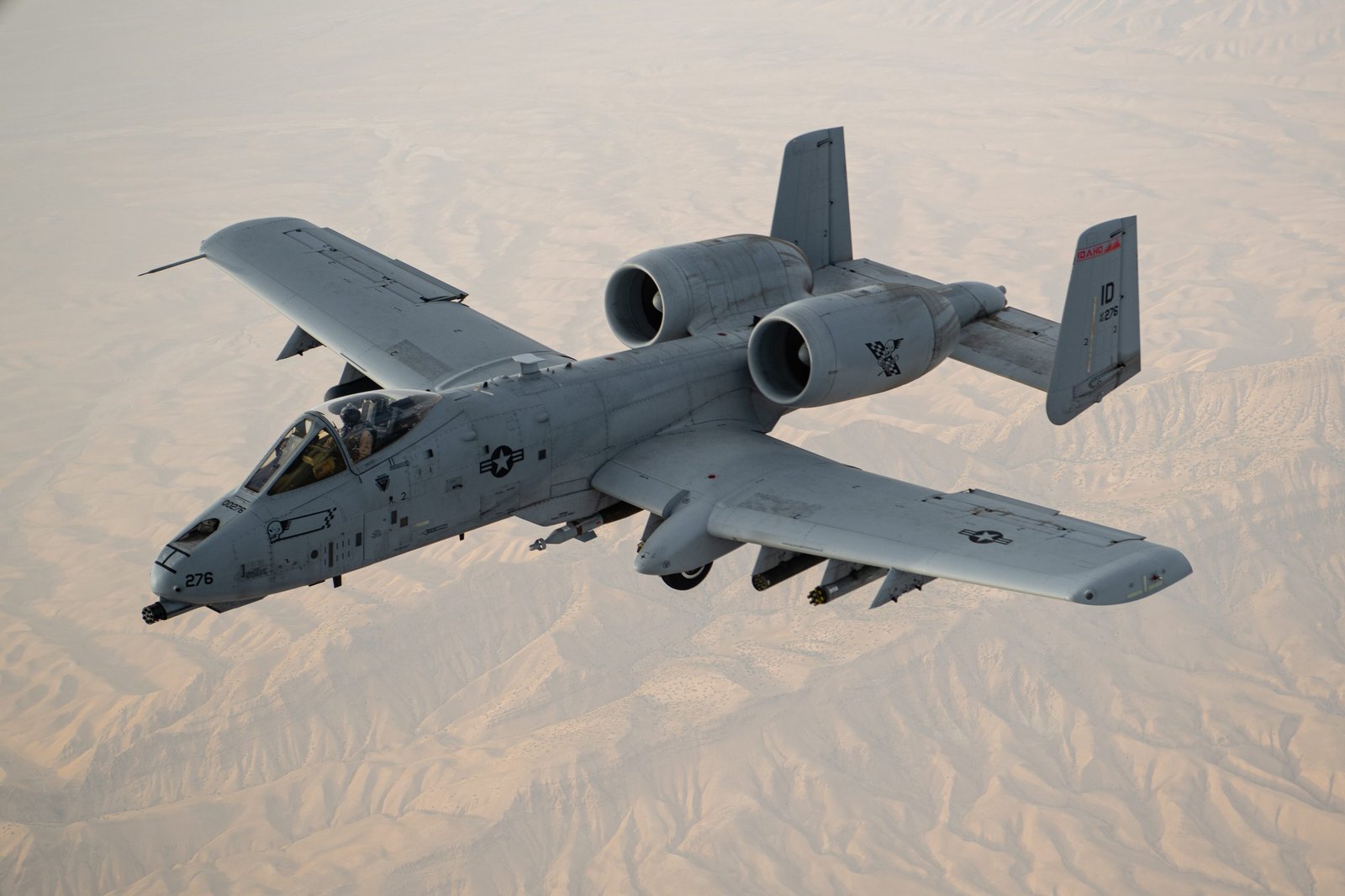
  • Iranian munitions penetrated the defense umbrella, damaging eight F-15s and an A-10 in Jordan.
  • A recent Congressional Inspector General report cites “strategic inventory shortfalls” for U.S. air defense munitions.
  • Iran is reconstituting its ballistic missile program using stockpiled components in underground facilities.
  • Strait of Hormuz oil flow has improved to a rolling average of 9 million barrels per day, buying temporary operational time.

Attack in Jordan Exposes Defense Math

U.S. interceptor expenditure is accelerating. The recent engagement over Jordan required roughly 80 total interceptors to counter 20 Iranian ballistic missiles. That expenditure matches what U.S. forces previously used across an entire week of operations. The arithmetic favors the attacker.

Iran is adapting its strike tactics. Tehran deployed separating warheads and cluster munitions during the Jordan attack. This forces U.S. air defense radars to track and engage a higher volume of terminal targets.

The base sustained direct impacts. Eight F-15 fighters received light damage. One A-10 Thunderbolt II lost a wing. While officials report the F-15s were returned to service, minor fragmentation damage routinely grounds advanced combat aircraft for extended maintenance periods.
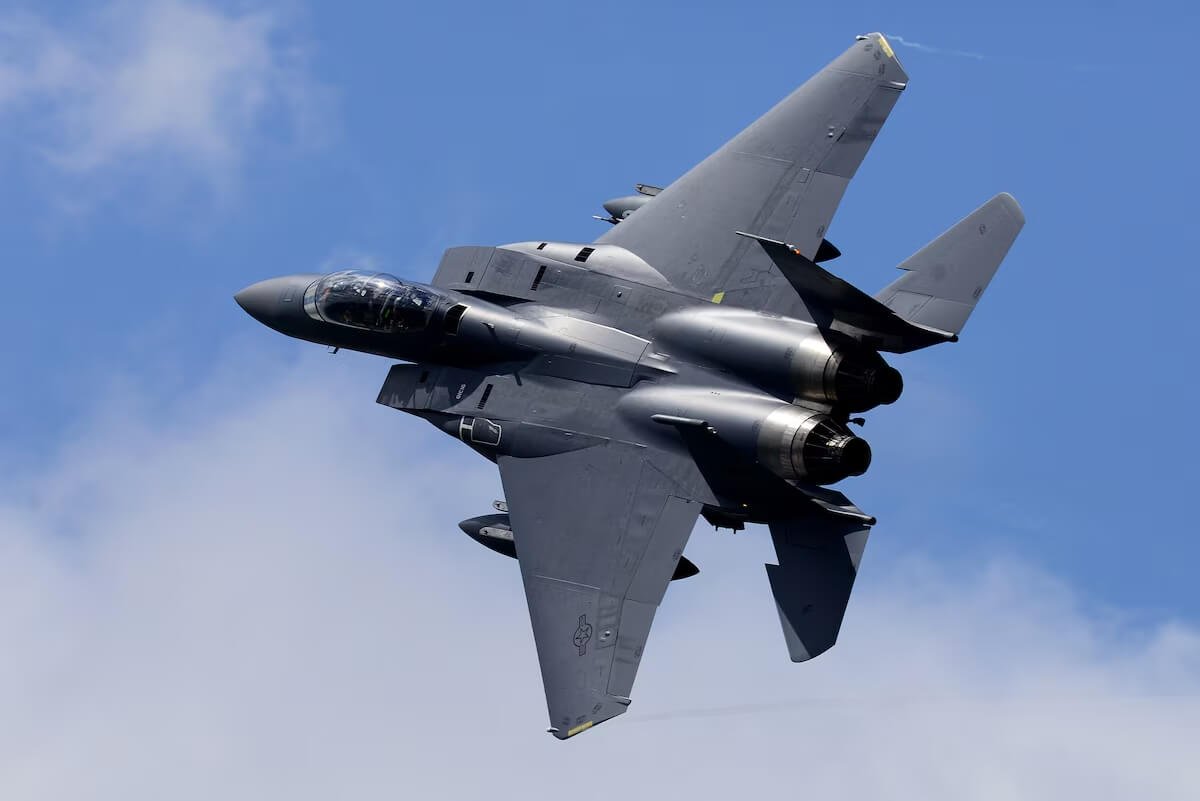
An F-15E Strike Eagle assigned to the 492nd Fighter Squadron
USAF F-15E Strike Eagle. Source: U.S. Air Force
A U.S. Air Force A-10 Thunderbolt II flies over the U.S. Central Command area of responsibility in support of Operation Freedom's Sentinel, June 29, 2020. The Thunderbolt II is a highly accurate, global reach airframe that provides U.S. and coalition forces a maneuverable close air support and precision strike platform. (U.S. Air Force photo by Staff Sgt. Justin Parsons)
USAF A-10 Thunderbolt II. Source: U.S. Air Force

Interceptor Shortages and Industrial Bottlenecks

A stark divide exists between combatant command statements and systemic realities. CENTCOM commander Admiral Cooper stated the U.S. is “well-armed and ready.” A new Congressional Inspector General report contradicts this assessment entirely.

The under Secretary for acquisition and sustainment reported severe constraints. Operation Epic Fury has triggered “strategic inventory shortfalls” The report explicitly identified industrial-based bottlenecks preventing rapid munitions resupply.

The U.S. cannot maintain this intercept tempo indefinitely. Patriot and THAAD production lines are not scaled for protracted attrition warfare. The interceptors exist to buy operational runway. They are currently failing to outlast Iranian launch capabilities.

Iran Reconstitutes Missile Production

Iran is no longer operating strictly from pre-war stockpiles. The Wall Street Journal confirms Tehran has resumed ballistic missile production. Operations have shifted to underground facilities using salvaged and stockpiled components.

The exact production rate remains unverified. Estimates range from piecing together existing parts to manufacturing new airframes. Former CIA analysts assess Iran could eventually field hundreds or thousands of newly assembled missiles.

U.S. and Israeli strikes previously damaged Iranian industrial sites. Naval blockades restricted solid-fuel ingredient imports. Despite this, Iranian forces are adapting to bypass supply chain disruptions. The missile program is actively regenerating.

Economic Pressures and Oil Flow

The military timeline is tied directly to the economic blockade. Iran is losing control over the Strait of Hormuz. U.S. and allied operations have partially restored commercial transit through the waterway.

Oil flow is stabilizing. Energy Secretary Chris Wright reported a running average of over 9 million barrels per day via waterborne routes. Sustained daily averages have recovered to between 6.5 and 7 million barrels.

Iran is exporting almost zero domestic oil. The economic pressure on Tehran is mounting. As Iran’s control over the Strait degrades, U.S. commanders anticipate escalated asymmetric attacks against regional bases. Air defense interceptors remain the only buffer against these strikes.

MetricVerified FigureSource
MIM-104 Patriot Fired60–70Wall Street Journal
THAAD Interceptors Fired>12Wall Street Journal
Inbound Iranian Missiles~20Defense tracking
U.S. Aircraft Damaged8x F-15, 1x A-10CBS News / Air & Space Forces
Strait of Hormuz Oil Flow~9M barrels/dayU.S. Dept. of Energy

The U.S. is trading high-value, low-density interceptors for low-cost, high-density ballistic missiles. This exchange ratio is structurally unsustainable. Iran’s shift to complex warheads and rapid reconstitution of underground production facilities signals a deliberate strategy of munitions exhaustion. Unless the U.S. accelerates industrial resupply or eliminates launch capacity directly, the interceptor stockpile will deplete before the economic blockade forces Iranian capitulation.


Tags: Air DefenseGeopoliticsus iran war

Related Posts

SpaceX Falcon 9 first stage booster successfully touching down on an autonomous spaceport drone ship at sea.
Air & Aerospace

Lunar South Pole Race: US and China Target Ice Reserves

October 23, 2026
A U.S. Navy Anduril Dive-LD autonomous underwater vehicle (AUV)
Unmanned & Autonomous Systems

Can Iran Reverse-engineering US Navy Anduril Dive LD Autonomous Submarine

October 6, 2026
Marines of 2nd Battalion, 7th Marines packing up gear to withdraw from Al-Taqaddum Air Base, 24 March 2020
Middle East

US Completes Total Military Withdrawal From Iraq After 35 Years

October 2, 2026
Next Post
U.S. Air Force F-15EX Eagle II showcasing multiple weapon hardpoints.

F-15EX Eagle II Drops Live Bombs: Full Tech Breakdown

Leave a Reply Cancel reply

Your email address will not be published. Required fields are marked *

I agree to the Terms & Conditions and Privacy Policy.

Latest Intelligence

Lunar South Pole Race: US and China Target Ice Reserves

Horten Ho 229 Technical Breakdown: WWII’s Jet Flying Wing and the Stealth Myth

Russia’s Rassvet Satellite Constellation Fails: Starlink Rival Crippled

Can Iran Reverse-engineering US Navy Anduril Dive LD Autonomous Submarine

US Navy Cancels Constellation Frigate: FFG-62 Procurement Disaster

B-17F Flying Fortress Technical Breakdown: Armor, Armament, and the Brutal Reality of Daylight Bombing

Domain Of Warfare

GJ 11 Chinese Drone
Unmanned & Autonomous Systems

China’s GJ-11 Sharp Sword: The Stealth UCAV Rewriting Indo-Pacific SEAD Operations

Rendered visualization of Boeing's tail-less sixth-generation carrier-based strike fighter concept
Air & Aerospace

US Navy Awards Boeing $20B F/A-XX Sixth-Gen Carrier Fighter Contract

LPP Holding autonomous drone platform displayed at a NATO defense innovation showcase
Unmanned & Autonomous Systems

LPP Wins NATO Challenge With AI Off-Grid Airfield Denial

M142 High Mobility Artillery Rocket System (HIMARS) fires a training rocket during a live-fire exercise in Undva, Estonia, July 11, 2025. The exercise included dry-firing, equipment staging, communication systems checks, and concluded with live-fire qualifications.
Naval & Maritime

US Army Expands HIMARS Role With PrSM Anti-Ship Strike

Defense Archives

Horten Ho 229 Technical Breakdown: WWII’s Jet Flying Wing and the Stealth Myth

The Horten Ho 229 V3 German Nazi Stealth Bomber in flight 1945

Developed during the final desperate months of World War II, the Horten Ho 229 remains one of the most visually...

Read moreDetails

B-17F Flying Fortress Technical Breakdown: Armor, Armament, and the Brutal Reality of Daylight Bombing

USAF The B-17F Flying Fortress

The Boeing B-17F Flying Fortress was the blunt-force instrument of the Allied daylight strategic bombing campaign over Europe. Tasked with...

Read moreDetails

B-17 Ball Turret Technical Breakdown: Firepower, Armor, and Survival

Cutaway diagram or close-up profile of a B-17 ball turret showing the fetal position of the gunner.

BOTTOM LINE UP FRONT Advanced Fire Control: The Sperry K-4 automatic computing gunsight calculated gravity, wind speed, aircraft velocity, and...

Read moreDetails

King Tiger Technical Breakdown: Firepower, Armor, and Flaws

Panzerkampfwagen VI Ausf. B King Tiger tank with Henschel turret in a field.

BOTTOM LINE UP FRONT Unmatched Stand-off Firepower: The 88 mm KwK 43 L/71 gun achieved 100% test accuracy at 1,000...

Read moreDetails

Frontline Defense is an independent, objective analysis platform. The content provided on this website, including but not limited to technical breakdowns, military hardware comparisons, defense budget reports, and open-source intelligence (OSINT) analyses, is strictly for educational, historical, and informational purposes. Frontline Defense is not affiliated with, endorsed by, or acting on behalf of any government agency, department of defense, armed forces branch, or defense contractor. All content on this site represents independent research based strictly on unclassified, publicly available data and open-source records at the time of writing. Nothing published on this website should be construed as official military guidance, defense strategy consulting, or government policy.

Follow Us

Domain Of Warfare

  • Naval & Maritime
  • Air & Aerospace
  • Ground Forces & Armor
  • Strategic Weapons
  • Unmanned & Autonomous Systems

Regions

  • USA & Americas
  • Europe
  • Middle East
  • Asia & Pacific
  • About Us
  • Privacy Policy
  • Terms Of Use

© 2026 | Fronline Defense Journal. All Rights Reserved

No Result
View All Result
  • Home
  • Latest Intelligence
  • Domain Of Warfare
    • Naval & Maritime
    • Air & Aerospace
    • Ground Forces & Armor
    • Unmanned & Autonomous Systems
    • Strategic Weapons
  • Regions
    • USA & Americas
    • Europe
    • Middle East
    • Asia & Pacific
  • Defense Archives
  • About Us
    • Who We Are
    • Privacy Policy
    • Terms Of Use

© 2026 | Fronline Defense Journal. All Rights Reserved