BOTTOM LINE UP FRONT
- Functional Restructuring: The historical 2nd, 3rd, 4th, and 5th Geographical Divisions have been dissolved or repurposed. The army is now divided functionally into the Manoeuvre Division, the Defence of Canada Division, and the Canadian Army Support Division.
- 1st Canadian Division (Manoeuvre): Replacing the former 3rd Division HQ at CFB Edmonton, this formation now commands all Regular Force combat elements, including the 1st, 2nd, and 5th Canadian Mechanized Brigade Groups (CMBGs).
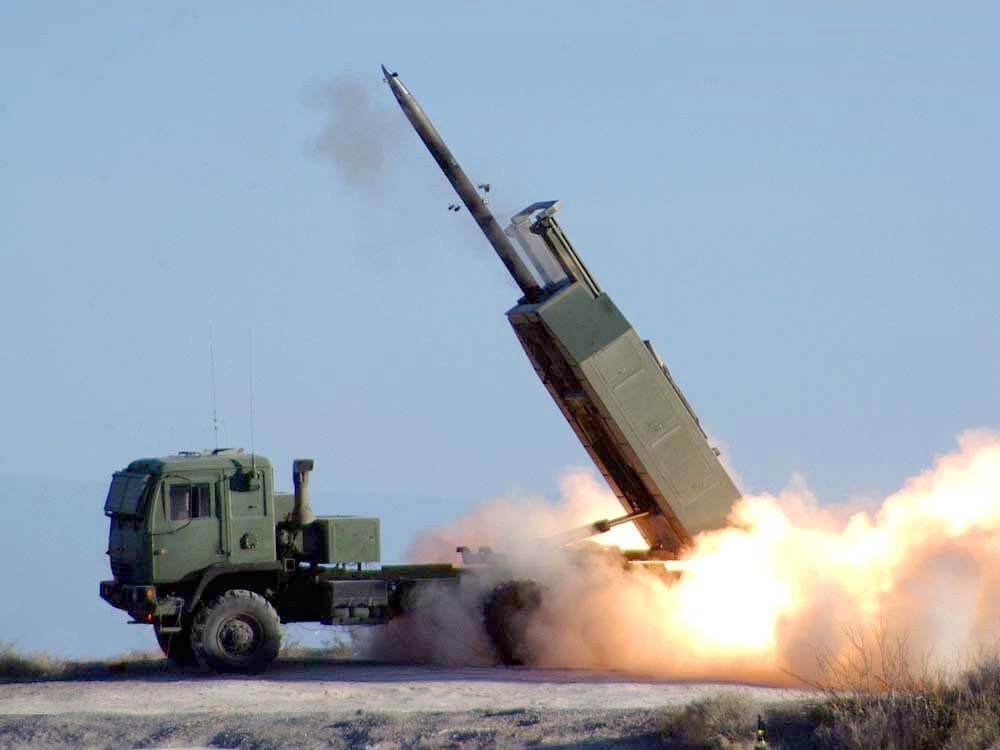
- Fires & Artillery Consolidation: Close and general support artillery have been stripped from the brigades and centralized into the new 1st Canadian Artillery Brigade, which will operate self-propelled howitzers (SPH) and HIMARS via the newly formed 9th Rocket Regiment, RCA.
- Global Response Vanguard: The new 3rd Canadian Light Infantry Regiment absorbs all three Regular Force light infantry battalions, isolating the Global Response Task Force role from the heavy mechanized brigades.
- SHORAD & Protection Uplift: The 6th Canadian Combat Support Brigade (CCSB) transitions into a dedicated Protection Brigade under the 1st Division, fielding the 8th Air Defence Regiment, RCA to establish three sequential SHORAD batteries by 2029.
Forging the 1st Canadian Manoeuvre Division
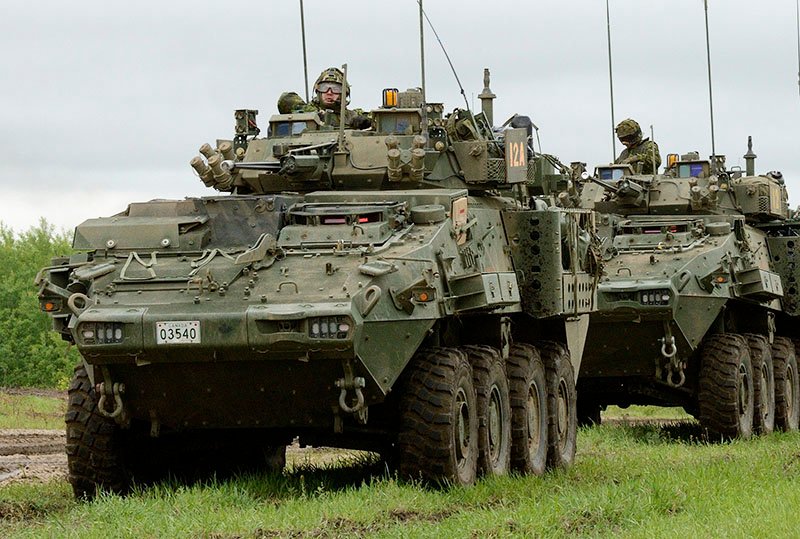
The core of Canada’s return to conventional warfighting is the activation of the 1st Canadian Division. Acting as the designated Manoeuvre Division, it absorbs the 1st, 2nd, and 5th CMBGs, standardizing them with ordinal numbering conventions. Each mechanized brigade group is heavily armored, consisting of a Headquarters, 1 or 2 Cavalry Regiments, 2 Mechanized Infantry Battalions, a Combat Engineer Regiment, a Signal Regiment, and a Service Battalion.
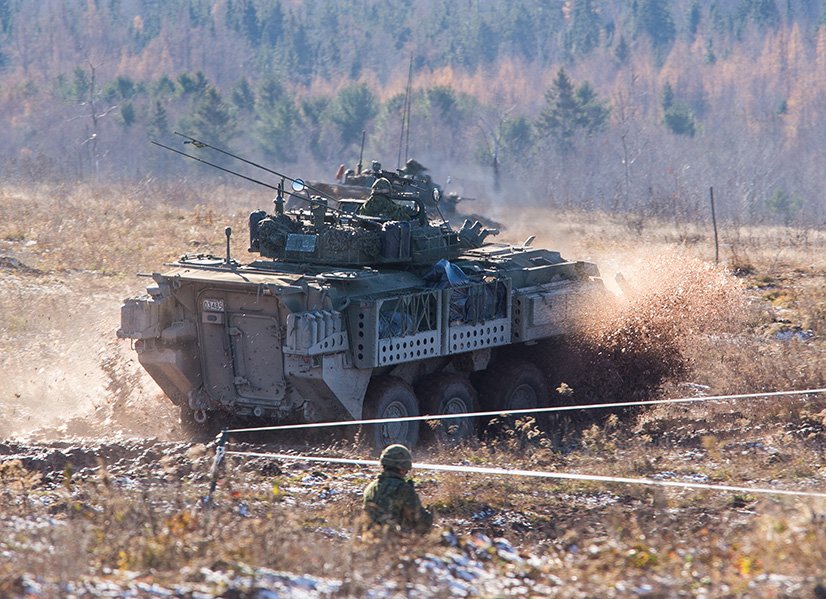
Strategic projections suggest the 1st CMBG (operating out of CFB Wainwright) may eventually expand to include two Tank Regiments, though this timeline remains contingent on future main battle tank (MBT) procurements. Meanwhile, the light infantry battalions previously tied to these brigades have been geographically decoupled and centralized under the 3rd Canadian Light Infantry Regiment, streamlining rapid deployment capabilities for global crisis response.
Next-Generation Fires and Force Protection
To enable true division-level combat, organic fires have been reorganized into the 1st Canadian Artillery Brigade. This formation strips direct support artillery from the CMBGs, preparing to equip them with modern 155mm Self-Propelled Howitzers (SPH). Deep strike capability is provided by the newly activated 9th Rocket Regiment, RCA, which will operate the High Mobility Artillery Rocket System (HIMARS). Divisional reconnaissance will likely be augmented by a prospective battalion-strength UAS regiment.
Force protection falls to the 6th CCSB, integrated directly into the 1st Division. It features the 4th General Support Artillery Regiment (VSHORAD) and the 8th Air Defence Regiment, RCA, which will systematically stand up three SHORAD batteries between 2027 and 2029. The brigade is rounded out by the 1st CBRN Defence Battalion, a dedicated ISTAR Battalion, the 21st Electronic Warfare Regiment, and the 1st Military Intelligence Battalion. A new 1st Canadian Sustainment Brigade provides the logistics required for prolonged, high-intensity operations over hundreds of kilometers.
Domestic Defense and Institutional Support
While the 1st Division projects power abroad, the 2nd Canadian Division acts as the Defence of Canada Division. This formation is primarily administrative, overseeing 10 Primary Reserve Brigade Groups designed to act as individual augmentees for the Regular Force. It also assumes command of the new Canadian Rangers Group, consolidating the 1st through 5th Canadian Ranger Patrol Groups to secure Canada’s remote coastal and Arctic frontiers, following successful deep-range sovereignty patrols across the Northwest Passage.
Institutional support and logistics have been entirely stripped from the combat divisions and handed to the new Canadian Army Support Division. This administrative command absorbs the four regional Division Support Groups (West, Central, East, Atlantic) and assumes direct control over CFB Kingston, streamlining the national military supply chain.
Revolutionizing the Army Training Pipeline
To drastically reduce recruitment processing times, the Canadian Army Doctrine and Training Centre (CADTC) has established a centralized Army Training Centre (ATC). The ATC commands four regional nodes, each serving as a specialized Center of Excellence. ATC West spearheads the Uncrewed and Counter-UAS program (modeled directly on Ukrainian combat lessons). ATC Central runs the Soldier First Course, acting as a mandatory combat fundamentals bridging phase prior to trade school. ATC East manages Francophone instruction, while ATC Atlantic handles leadership development.
Canadian Army Reorganization: Functional Division Mandates
| Formation | Headquarters | Primary Mandate | Core Subordinate Units |
| 1st Canadian Division | CFB Edmonton | Deployable Manoeuvre Division (Large-Scale Combat) | 1st, 2nd, 5th CMBGs; 6th CCSB; 1st Artillery Bde; 3rd Light Infantry Regt. |
| 2nd Canadian Division | Montreal | Defence of Canada, Crisis Response, Arctic Sovereignty | 10 Primary Reserve Brigades; Canadian Rangers Group; 2nd Mil-Intel Bn. |
| Army Support Division | CFB Kingston | Base Administration, National Logistics & Supply Chain | CSG (West, Central, East, Atlantic); CFB Kingston. |
| Army Training Centre | Under CADTC | Consolidated Recruitment, BSLs, Centers of Excellence | ATC (West, Central, East, Atlantic); 9 Reserve Battle Schools. |
| 1st Canadian Artillery Bde | CFB Edmonton | Divisional Fires (Direct, General, & Precision Strike) | 9th Rocket Regt (HIMARS); Direct Support SPH Regiments; Drone Recce Unit. |
| 6th CCSB (Protection) | 1st Div (OPCON) | Divisional Air Defense, C-UAS, EW, & CBRN Support | 8th Air Defence Regt (SHORAD); 21st EW Regt; 1st CBRN Bn; ISTAR Bn. |
The Canadian Army’s structural shift from geographical to functional divisions is a necessary survival mechanism for the modern battlefield. The legacy model of generating piecemeal battle groups for low-intensity counter-insurgency left Canada utterly unprepared for near-peer, high-intensity conflict. By pooling its heavily armored combat power, localized air defense, precision fires (HIMARS), and organic sustainment into the 1st Canadian Division, Ottawa is attempting to field a genuine, self-sufficient combined-arms maneuver force for the first time since the Cold War. However, this reorganization exposes severe procurement vulnerabilities. The success of the 1st Division’s mandate relies entirely on the timely delivery of pending assets, namely modern self-propelled howitzers, SHORAD systems, and the distant Tactical Aviation Capability Set Project (2032–2036). Until these platforms hit the motor pools, the 1st Division will remain an ambitious command architecture awaiting its full kinetic teeth.