KEY INTELLIGENCE
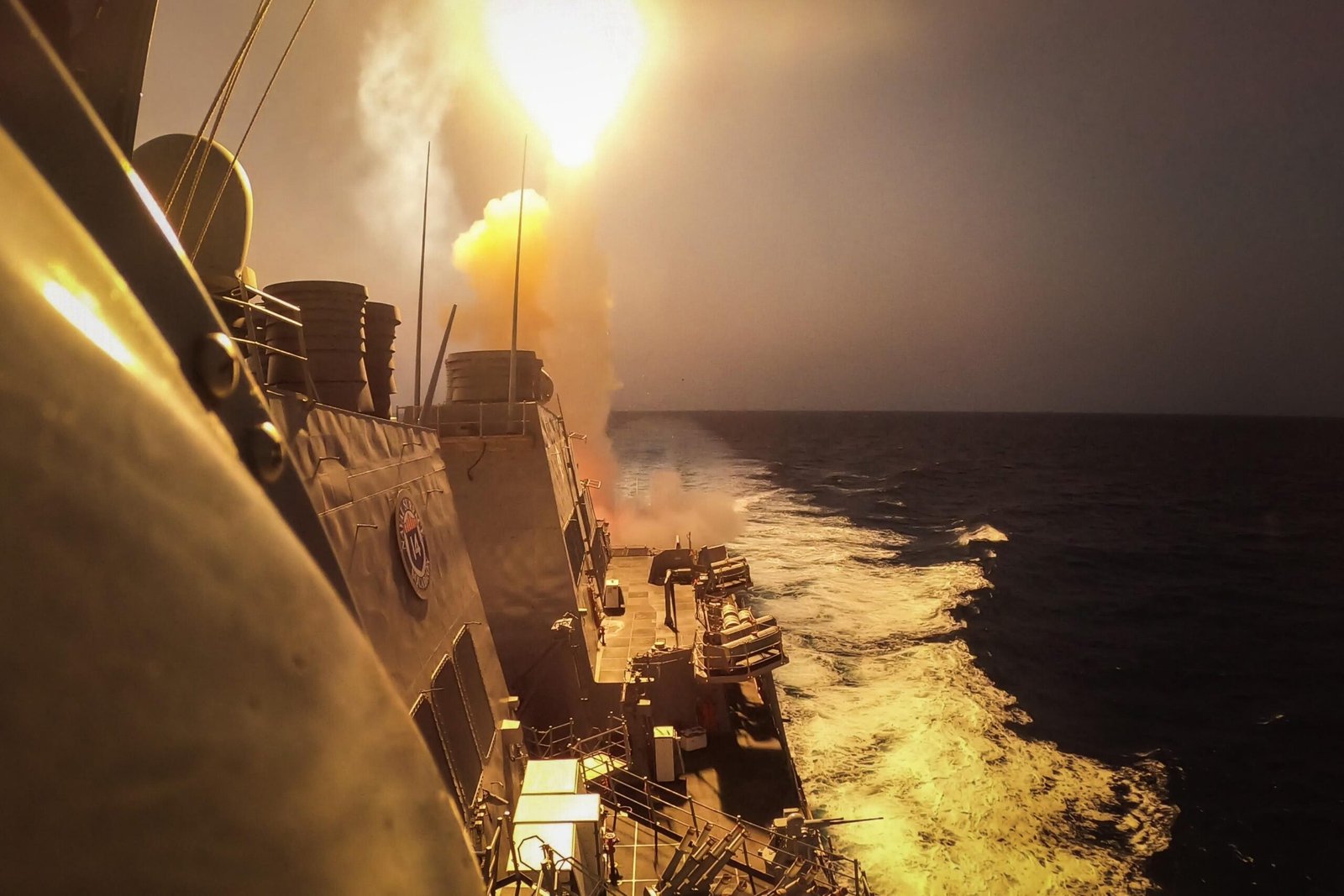
- Asymmetric ASBM Engagement: The IRGC fired the solid-fueled, terminally maneuverable Qasem Basir ASBM at U.S. surface combatants; the U.S. Navy’s Aegis Combat System successfully intercepted the threats, resulting in zero American casualties or hull damage.
- Dual-Chokepoint Squeeze: Tehran is simultaneously applying kinetic pressure to the Strait of Hormuz and the Bab-el-Mandeb, directly threatening maritime transit corridors responsible for 20% of global crude and LNG shipments.
- Houthi Counter-Value Strikes: Yemen-based proxies launched coordinated ballistic missile and drone attacks against four Saudi municipalities—Abha, Khamis Mushait, Najran, and Jizan—igniting fires at vital Saudi Aramco infrastructure.
- Saudi Kinetic Response: The Royal Saudi Air Force deployed F-15SA multirole strike fighters equipped with AN/APG-63(V)3 AESA radars to neutralize Houthi Transporter Erector Launchers (TELs).
- Escalation Trajectory: Mohsen Rezaei, Secretary of Iran’s Supreme National Security Council, has threatened a unilateral maritime exclusion zone across the Persian Gulf, raising the threshold for total structural warfare against Iranian energy nodes like Kharg Island.
Dual-Chokepoint Warfare: Tehran’s Asymmetric Maritime Strategy
The Islamic Revolutionary Guard Corps (IRGC) has weaponized global energy dependence through a coordinated two-front offensive. In the Persian Gulf, Iranian Supreme National Security Council Secretary Mohsen Rezaei announced the potential enforcement of a “maritime exclusion zone,” fundamentally recalibrating Tehran’s operational posture. This represents a direct attempt to hold international shipping hostage against U.S. economic sanctions.
Simultaneously, the IRGC is using Houthi forces to threaten the Bab-el-Mandeb strait on the opposite side of the Arabian Peninsula. By threatening both nodes, Iran seeks to force shipping and insurance companies to suspend operations. The tactical goal is not to sink every vessel, but to leverage asymmetric area-denial to spike global Brent crude prices and fracture allied resolve.
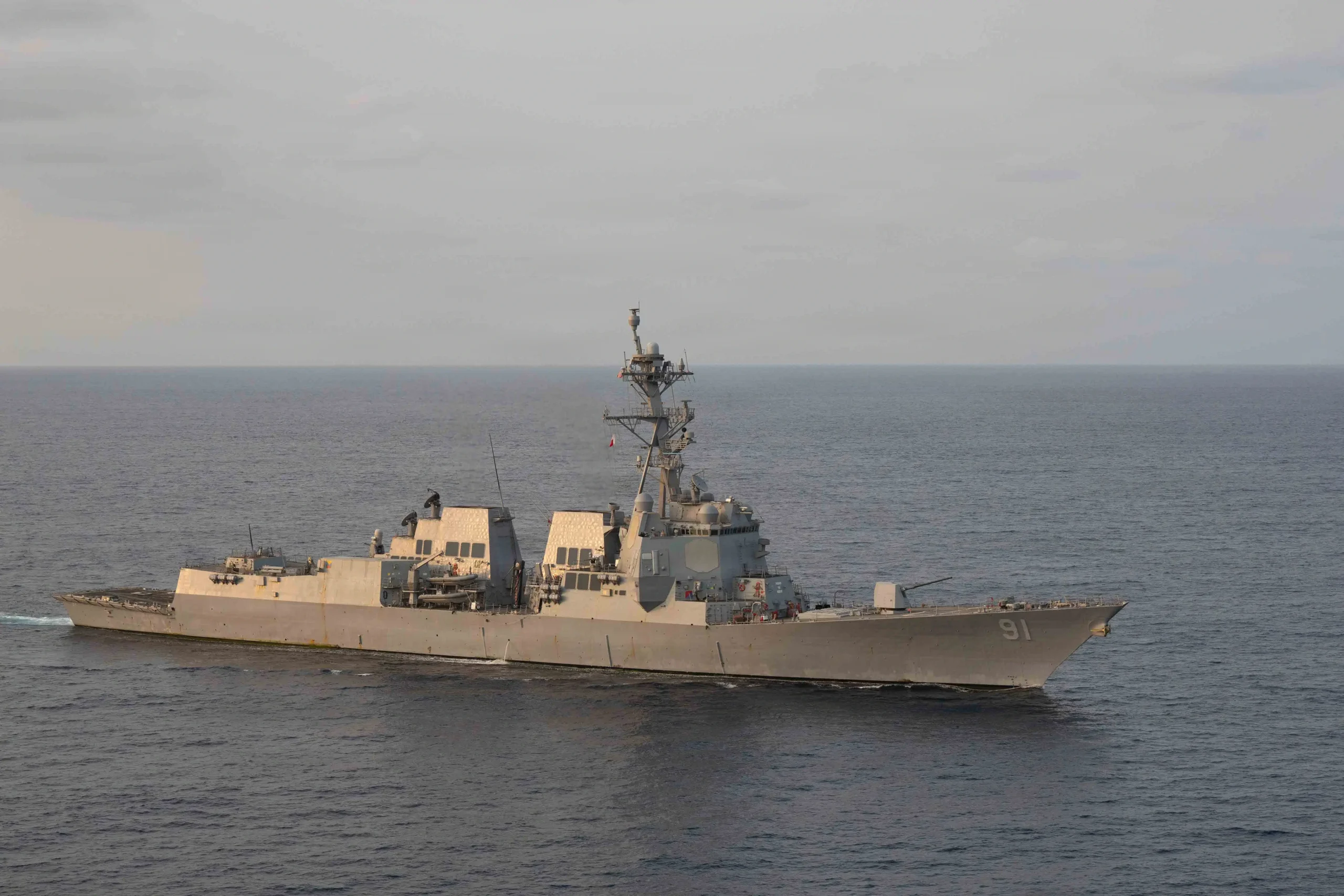
Qasem Basir ASBM vs. Aegis Missile Defense
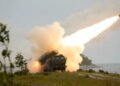
Iran’s latest kinetic attempt utilized the Qasem Basir, a medium-range anti-ship ballistic missile (ASBM) capable of reaching speeds up to Mach 5 at terminal impact. Unveiled in 2025, this solid-fueled platform boasts an approximate 1,200 km range and utilizes an electro-optical/infrared (EO/IR) seeker to autonomously track target heat signatures without relying on GPS.
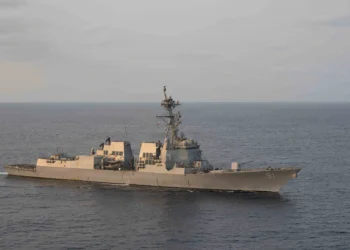
Despite Iranian claims that the weapon is highly resistant to electronic warfare (EW) and can bypass modern defenses, the U.S. Navy successfully defeated the salvo. The engagement validates the superiority of the U.S. Navy’s Aegis Combat System (Baseline 9/10), utilizing AN/SPY-1D phased array radars combined with SM-6 dual-mode interceptors to sever the IRGC’s kill chain before terminal impact.
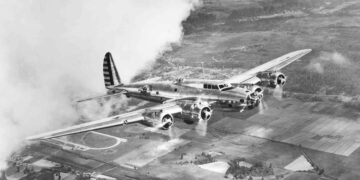
Following the failed Iranian strikes, U.S. air dominance assets established hardened defensive postures. U.S. Air Force F-15E/EX Strike Eagles and KC-135 Stratotankers have been continuously orbiting near Kish Island, enforcing total airspace dominance and providing high-fidelity ISR (Intelligence, Surveillance, and Reconnaissance) over Iranian launch sites.
Southern Front: Houthi Barrages and RSAF Interventions
On the southern flank, Houthi militants escalated their offensive by striking deep into Saudi territory. Multi-vector drone and missile barrages targeted civilian centers in Abha, Khamis Mushait, Najran, and Jizan, wounding 73 people and triggering structural fires at Saudi Aramco facilities. The strikes directly targeted areas adjacent to the King Khalid Air Base, a critical node for allied air operations.
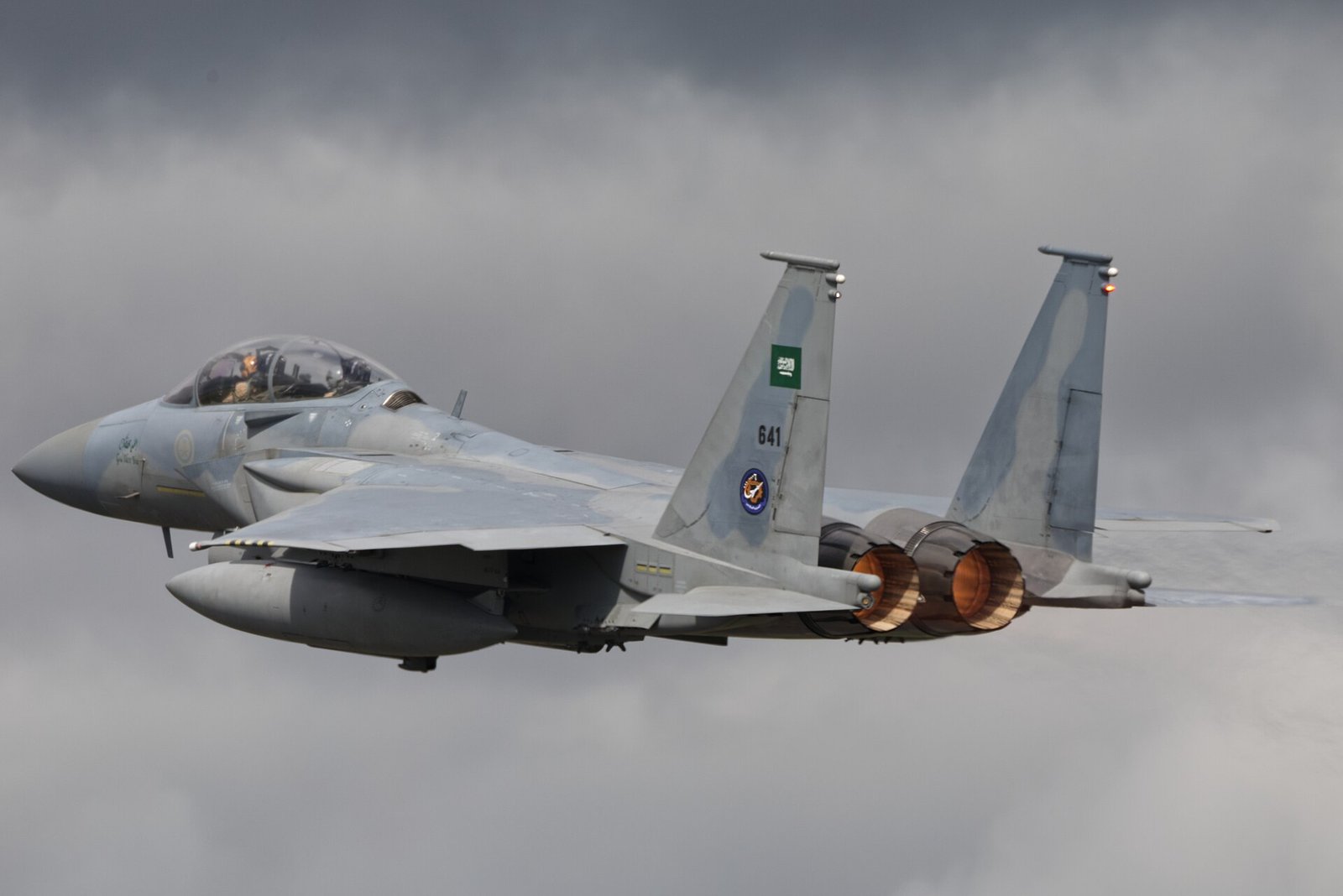
In response, the Royal Saudi Air Force (RSAF) initiated aggressive counter-battery and interdiction sorties. The primary platform for this operation is the F-15SA (Saudi Advanced). Operating as a dual-crew platform, the pilot and Weapon Systems Officer (WSO) can effectively orchestrate complex, time-sensitive strikes against mobile Houthi technicals and TELs hidden in harsh desert terrain.
Equipped with the Raytheon AN/APG-63(V)3 AESA radar and the Digital Electronic Warfare System (DEWS), the F-15SA provides unparalleled targeting fidelity. This allows RSAF crews to geolocate, track, and destroy shoot-and-scoot missile units with precision-guided munitions before they can reload and relocate.
Nuclear Deadlock and Coalition Responses
Beneath the immediate kinetic exchanges lies a deeper strategic crisis regarding Iran’s nuclear infrastructure. The U.S. has ramped up diplomatic pressure, demanding immediate compliance with IAEA safeguards—a move Tehran fundamentally rejects under its domestic non-compliance laws.
This diplomatic deadlock has prompted severe warnings from allied states. Former Israeli Ambassador Michael Oren and Prime Minister Benjamin Netanyahu have signaled that any further Iranian provocation will result in catastrophic retaliatory strikes. Targets would likely expand beyond military sites to include critical energy infrastructure, such as the Kharg Island terminal, crippling Iran’s economy.
The ripple effects of this theater are global. Heavily reliant on Hormuz for energy, South Korea has deployed a maritime assessment team to the UAE. Seoul is actively evaluating the deployment of P-8A Poseidon maritime patrol aircraft to provide critical surface tracking and over-the-horizon targeting, effectively expanding the multinational maritime security shield.
| Platform / System | Origin / Operator | Key Specifications & Payload | Primary Tactical Role | Counter-Capability / Vulnerability |
| Qasem Basir ASBM | Iran (IRGC) | ~1,200 km range, 500 kg warhead, solid-fuel, EO/IR seeker | Anti-Ship Ballistic Strike | Susceptible to Aegis SM-6 terminal phase interception; requires pristine ISR. |
| Arleigh Burke-class Destroyer | United States Navy | AN/SPY-1D 3D radar, 90–96 VLS cells, SM-2/SM-3/SM-6 | Integrated Air & Missile Defense | Provides localized air superiority and exo-atmospheric interception capabilities. |
| F-15SA Advanced Eagle | Royal Saudi Air Force | AN/APG-63(V)3 AESA, DEWS, dual-crew (Pilot/WSO), 29.5k lbs | Dynamic Targeting / Deep Strike | High-resolution SAR imaging optimizes hunting mobile TELs across expansive desert terrain. |
| P-8A Poseidon | ROK Navy / US Navy | AN/APY-10 radar, MX-20HD EO/IR turret, Harpoon anti-ship | Maritime Domain Awareness (MDA) | Critical for identifying fast attack craft and providing over-the-horizon ISR for Aegis nodes. |
Iran’s dual-chokepoint escalation represents a high-risk operational gambit driven by severe economic suffocation rather than actual tactical superiority. While the combat debut of the terminally maneuverable Qasem Basir ASBM signals technical ambition, the IRGC’s persistent inability to overcome the U.S. Navy’s Aegis kill chains exposes a critical deficit in their over-the-horizon ISR capabilities. By unleashing Houthi proxies against Saudi energy infrastructure, Tehran has inadvertently solidified regional air power—unleashing Saudi F-15SA interdiction strikes while drawing out-of-theater actors like South Korea into the intelligence-sharing fold. Should Tehran attempt to physically enforce its threatened “maritime exclusion zone,” Western and allied air-sea doctrine will rapidly transition from defensive ballistic missile interception to total counter-value targeting, likely resulting in the systematic dismantling of Iranian energy nodes and the Kharg Island export apparatus.