KEY INTELLIGENCE
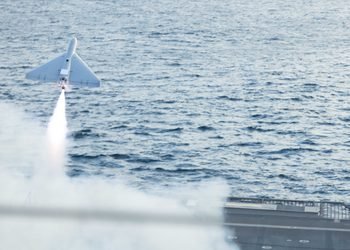
- Project C430L: Coordinated by Russia’s Rosoboronexport and NPO Mashinostroyeniya, Russian missile designers are transferring highly sensitive ramjet technology to Iran. The objective is a sea-skimming, Mach 3+ cruise missile capable of compressing the reaction time of U.S. Aegis defense systems to near zero.
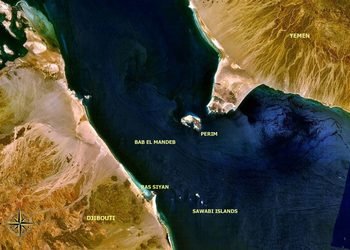
- Hormuz Maritime Escalation: Iran is actively disrupting commercial shipping, claiming two oil tankers struck sea mines. Separately, the Saudi-flagged tanker SIDR was targeted in the Strait, resulting in the deaths of two Filipino seafarers.
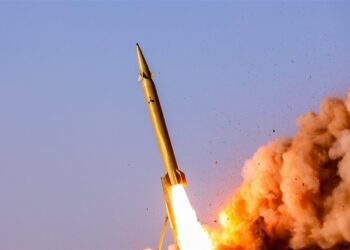
- U.S. SEAD & Ballistic Intercepts: U.S. forces continue to destroy IRGC command sites. In response, Iran fired 13 ballistic missiles targeting U.S. positions in Jordan; 10 were intercepted mid-flight, and the remainder malfunctioned or impacted uninhabited desert.
- IRGC Disinformation Tactics: Following an explosion at a civilian wedding party located just 130 meters from an IRGC telecom tower, Tehran blamed U.S. forces. However, geolocated footage of the incident reveals the point of origin was a malfunctioning Iranian munition launched from within the civilian enclave.
- U.S.-Venezuela Energy Pact: The U.S. has secured majority control over a 65-billion-barrel reserve in Venezuela, signaling a total abandonment of nuclear negotiations with Tehran in favor of economic strangulation and alternative energy sourcing.
- Black Sea Attrition: The Ukrainian Navy released footage confirming the destruction of a Russian Unmanned Surface Vessel (USV) near Snake Island, neutralized by a precision munition dropped from a Ukrainian UAV.
Project C430L: Russia’s Mach 3 Gift to Tehran
The most significant strategic development of the week is the exposure of Project C430L by the Financial Times. Initiated in late 2023, the program involves senior engineers from Russia’s NPO Mashinostroyeniya—the state-owned manufacturer behind the supersonic P-800 Oniks and Bastion coastal defense systems. These engineers have been actively analyzing Iranian flight-test data to help the IRGC finalize a working ramjet engine.
For decades, Iran’s anti-ship cruise missile (ASCM) arsenal has relied on subsonic turbojet engines. While dangerous, subsonic missiles flying at 500 knots provide U.S. Navy destroyers sufficient time to detect, track, and intercept the threat using Standard Missiles (SM-2/SM-6) or Close-In Weapon Systems (CIWS).
A ramjet engine fundamentally alters this math. Relying on the sheer forward velocity of the missile to compress incoming air rather than using moving turbine blades, a ramjet allows a cruise missile to sustain speeds between Mach 2.5 and Mach 3+. When flying on the deck (approximately 50 feet above the water to stay below the radar horizon), a supersonic sea-skimmer gives defending warships mere seconds to react once the missile crests the horizon. If Iran successfully operationalizes this Russian technology, it represents a direct, existential threat to the survivability of U.S. aircraft carriers operating in the Persian Gulf and the Gulf of Oman.
The Hormuz Blockade and IRGC Disinformation
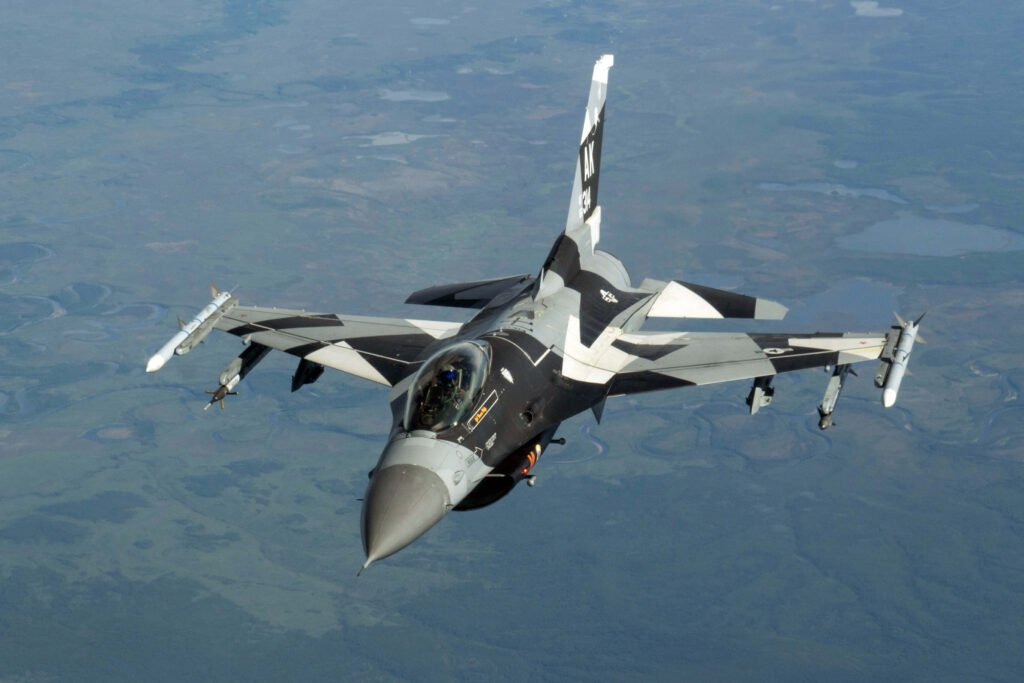
While Russia arms Tehran for the future, the immediate kinetic reality in the Strait of Hormuz is defined by a heavy U.S. SEAD campaign and desperate IRGC asymmetric warfare. U.S. CENTCOM continues to utilize F-16CJ Vipers to systematically hunt and destroy Iranian radar installations and command-and-control nodes.
Unable to successfully penetrate the U.S. integrated air and missile defense network—evidenced by the complete failure of their 13-missile ballistic strike toward Jordan—the IRGC has resorted to holding commercial shipping hostage. The Iranian Navy announced it had mined sections of the Strait, claiming two oil tankers had already struck explosives. Concurrently, the Saudi-flagged crude tanker SIDR was attacked by unknown projectiles, resulting in a fire and the deaths of two Filipino crew members.
Iran is also leaning heavily into information warfare to mask its tactical failures. Following a catastrophic explosion at a civilian wedding party in Iran, state media immediately accused the United States of committing a war crime. However, the U.S. target in the sector was a dual-use telecommunications tower that the IRGC had deliberately positioned a mere 130 meters from the civilian gathering. Furthermore, open-source analysis of launch footage indicates the explosion was caused by a malfunctioning Iranian munition—likely a rocket laden with sea mines—that failed immediately after launch and plummeted into the residential area.
Global Energy Realignment
Recognizing the long-term volatility of the Strait of Hormuz, the Trump administration has finalized a historic energy pact with the Venezuelan government. Brokered by Secretary of State Marco Rubio and interim Venezuelan leadership, the agreement secures U.S. majority control over 65 billion barrels of Venezuelan oil.
This geopolitical maneuver serves a dual purpose. First, it stabilizes global energy markets against the IRGC’s ongoing threat to blockade the roughly 20% of global oil that transits the Strait of Hormuz (though the U.S. currently maintains 75% of pre-war oil flow through the corridor). Second, it signals a definitive end to any diplomatic negotiations with the current regime in Tehran. By economically strangulating the IRGC while securing alternative massive energy reserves, the U.S. is actively betting on internal economic collapse and civilian uprising to unseat the Islamic Republic.
Iranian Anti-Ship Capabilities: Legacy vs. Project C430L
| Metric | Legacy Iranian ASCMs (e.g., Noor, Qader) | Project C430L (Russian Ramjet Tech) | Tactical Implication for U.S. Navy |
| Propulsion | Subsonic Turbojet | Supersonic Ramjet | Ramjets possess no moving turbine blades, allowing continuous acceleration at high altitudes or on the deck. |
| Cruising Speed | Mach 0.8 – 0.9 (~500 – 600 knots) | Mach 2.5 – Mach 3+ | High speeds drastically compress the defensive reaction window for Aegis combat systems. |
| Flight Profile | Sea-skimming | Sea-skimming (~50 ft off water) | Late detection over the radar horizon combined with Mach 3+ speed heavily strains SM-6 and CIWS intercept geometry. |
| Strategic Goal | Harass commercial shipping and light vessels. | Defeat Carrier Strike Group (CSG) air defenses. | Represents a core shift from maritime harassment to a genuine Anti-Access/Area Denial (A2/AD) capability. |
Final Assessment
THE RACE BETWEEN ATTRITION AND TECHNOLOGY. The United States currently holds unquestionable tactical dominance in the Middle East. The systematic destruction of IRGC radar networks by American SEAD forces, combined with the 100% interception or failure rate of Iran’s latest ballistic missile salvo, proves that the Islamic Republic cannot win a conventional kinetic exchange. However, the revelation of Project C430L changes the long-term strategic calculus. By transferring ramjet technology to Tehran, Moscow is explicitly attempting to export the exact Anti-Access/Area Denial (A2/AD) tools necessary to push U.S. carriers out of the Persian Gulf. The U.S. strategy to counter this—economic strangulation, eliminating the IRGC’s domestic infrastructure, and securing 65 billion barrels of Venezuelan oil to insulate the global market—must result in the collapse of the Iranian regime before the Russian-designed Mach 3 cruise missiles achieve mass production.