Frontline Defense Journal | Objective OSINT & Military Analysis
  • Home
  • Latest Intelligence
  • Domain Of Warfare
    • Naval & Maritime
    • Air & Aerospace
    • Ground Forces & Armor
    • Unmanned & Autonomous Systems
    • Strategic Weapons
  • Regions
    • USA & Americas
    • Europe
    • Middle East
    • Asia & Pacific
  • Defense Archives
  • About Us
    • Who We Are
    • Privacy Policy
    • Terms Of Use
No Result
View All Result
  • Home
  • Latest Intelligence
  • Domain Of Warfare
    • Naval & Maritime
    • Air & Aerospace
    • Ground Forces & Armor
    • Unmanned & Autonomous Systems
    • Strategic Weapons
  • Regions
    • USA & Americas
    • Europe
    • Middle East
    • Asia & Pacific
  • Defense Archives
  • About Us
    • Who We Are
    • Privacy Policy
    • Terms Of Use
Frontline Defense Journal | Objective OSINT & Military Analysis
No Result
View All Result
Frontline Defense Journal | Objective OSINT & Military Analysis
No Result
View All Result
Home Domain Of Warfare Air & Aerospace

NASA Moves SR-71 Blackbird: Flight Test or SR-72 Reveal?

September 30, 2026
Reading Time: 6 mins read
A A
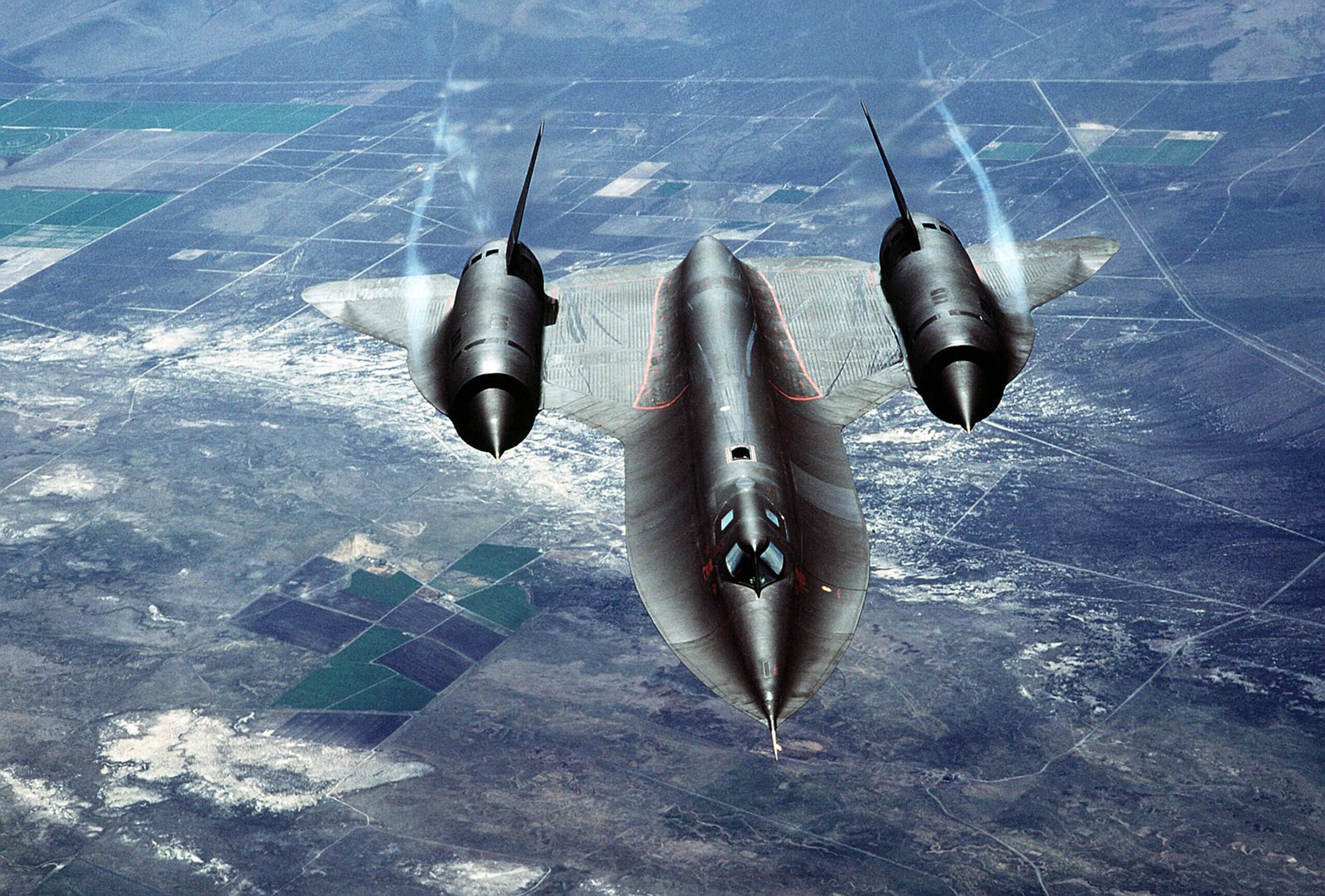
An air-to-air overhead front view of an SR-71A strategic reconnaissance aircraft. The SR-71 is unofficially known as the "Blackbird."
Share on FacebookShare On Reddit

KEY INTELLIGENCE

  • Airframe Relocation: Tail number 844, the final SR-71 constructed and last to fly on October 9, 1999 (Mach 3.21 at 80,000+ feet), was relocated from static display into a hangar prior to May 17, 2026.
  • Reactivation Barriers: A return-to-flight program faces severe operational hurdles, including the total absence of JP-7 fuel production, lack of Pratt & Whitney J58 engine spares, and thermal degradation from 27 years of outdoor exposure.
  • Propulsion Transition: Lockheed Martin’s hypersonic SR-72 concept utilizes a turbine-based combined cycle (TBCC) engine with dual-mode scramjet technology targeting speeds above Mach 5.
  • Strategic Alignment: Statements from NASA leadership signal renewed high-altitude, high-speed flight testing, matching Lockheed’s projected 2030 operational timeline for next-generation intelligence, surveillance, and reconnaissance (ISR).

Hangar Relocation at Edwards Air Force Base

Satellite imagery confirms that SR-71A tail number 844 was removed from its public display site at NASA Armstrong Flight Research Center on Edwards Air Force Base. Technicians placed the airframe inside an active hangar facility.
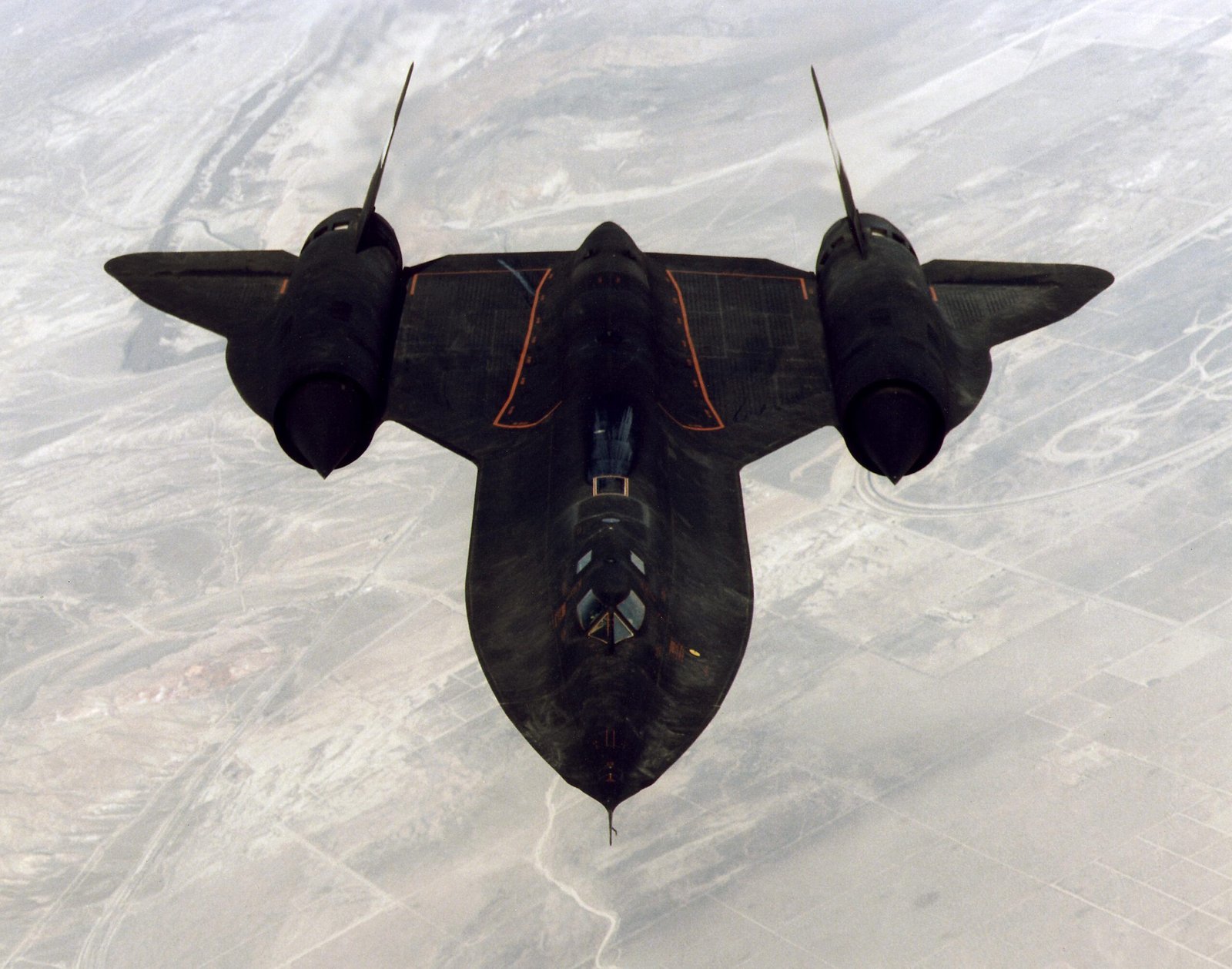
The SR-71 Blackbird utilized J58 turbo-ramjet engines to sustain speeds above Mach 3.
NASA SR-71A (serial 61-7980 / tail 844) conducted high-speed flight research at Edwards Air Force Base until its final flight in October 1999

This specific aircraft remains the last SR-71 built and the final unit to log flight time. During its final mission on October 9, 1999, the platform reached Mach 3.21 at altitudes exceeding 80,000 feet.

The sudden relocation mirrors ongoing defense efforts to evaluate legacy platforms for specialized test roles. The move immediately triggered speculation regarding a potential return-to-flight evaluation.

Engineering and Financial Obstacles to Flight Restoration

Restoring an SR-71 to airworthy status presents severe technical challenges. The supply chain is extinct. Costs will explode.

The platform relies on specialized JP-7 jet fuel, which possesses a high flash point and requires triethylborane (TEB) for engine ignition. Refineries no longer produce JP-7. Sourcing custom chemical runs would require tens of millions in non-recurring engineering costs.
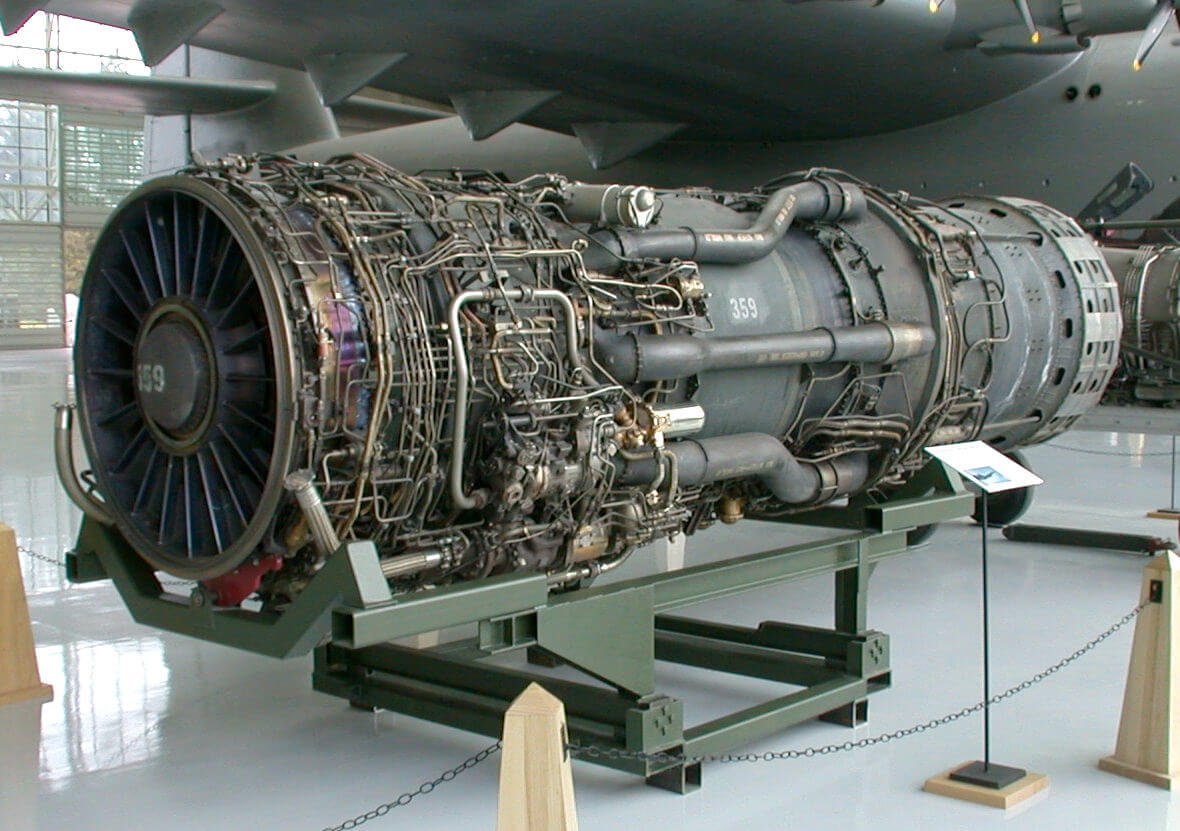
The Pratt & Whitney J58 (JT11D-20) turbojet aero engine, which had a specific fuel requirement; namely JP-7 turbine fuel.

The aircraft’s twin Pratt & Whitney J58-P-4 continuous-bleed turbojets require specialized tooling and obsolete spare parts. Three decades of outdoor static display cause seal deterioration, wiring harness corrosion, and titanium airframe thermal stress.

Reactivating two USAF SR-71s in 1995 cost over $100 million. Restoring tail 844 today would dwarf that figure.

Hypersonic SR-72 Development and Scramjet Integration

The airframe movement likely serves as a public relations staging effort for Lockheed Martin’s SR-72 hypersonic program. Lockheed Martin Skunk Works began developing the SR-72 to fill operational gaps in high-speed ISR and deep-strike missions.

The platform targets speeds in excess of Mach 5. Propulsion relies on a turbine-based combined cycle (TBCC) system. This setup pairs an off-the-shelf continuous-bleed turbojet with a dual-mode scramjet for high-Mach transition. Ground engine testing concluded in 2017.
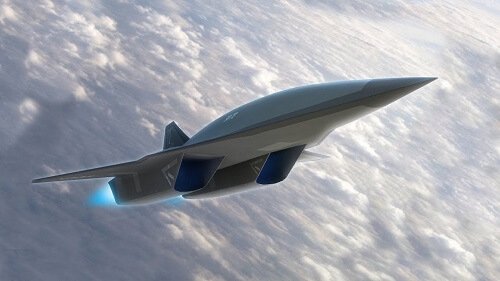
Conceptual illustration of the SR-72 hypersonic program
Source: Lockheed Martin

NASA Administrator Jared Isaacman recently noted that the agency is recommitting to high-speed, high-altitude flight tests. Restoring the exterior of tail 844 allows NASA and Lockheed Martin to present the historical benchmark alongside its hypersonic successor.

Operational Flight Dynamics and Pilot Demands

Operational flying in the SR-71 required distinct control techniques depending on flight phase. Low-speed handling resembled a heavy fighter aircraft without trailing-edge flaps. High-speed regimes demanded total reliance on automated flight controls.

Retired Major General Bob Baylor, a former operational SR-71 pilot, noted that supersonic cruise at Mach 3 required automatic flight control systems (AFCS) to maintain stability. Manual bank adjustments of even 1 degree at 80,000 feet caused target offset errors of several miles.

The aircraft operated at maximum gross takeoff weights between 140,000 lbs and 150,000 lbs. Pilots monitored complex inlet guide vane geometries and fuel distribution systems rather than relying on visual references.

ParameterSR-71A BlackbirdSR-72
Primary MissionStrategic Reconnaissance (ISR)Hypersonic Strike & ISR
Maximum VelocityMach 3.32 (Operational Limit)Mach 6.0+ (Target Cruise)
Operational Ceiling85,000+ ft100,000+ ft
Propulsion Architecture2x Pratt & Whitney J58 (Turbojet)TBCC (Turbojet + Dual-Mode Scramjet)
Fuel SpecificationJP-7 (Thermal Heat-Sink Hydrocarbon)Conventional Jet Fuel / Endothermic Hydrocarbon
Max Takeoff Weight140,000 – 150,000 lbsClassified / Unmanned Medium Airframe
Fleet / Program StatusRetired (1999)Active Development (Target 2030)

FINAL ASSESSMENT: Structural Vulnerability & PR Alignment.

Restoring an SR-71A to active flight status is operationally unviable due to extinct supply chains, prohibitive refurbishment costs, and obsolete sensor integration. The relocation of tail 844 serves as an aesthetic airframe restoration. Expect NASA and Lockheed Martin to use the refreshed platform as a static historical anchor for the impending public rollout of the SR-72 hypersonic demonstrator.


Tags: NASAUSAF

Related Posts

USAF The B-17F Flying Fortress
Defense Archives

B-17F Flying Fortress Technical Breakdown: Armor, Armament, and the Brutal Reality of Daylight Bombing

October 4, 2026
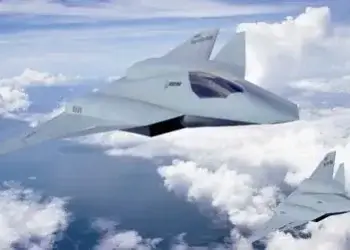
Rendered visualization of Boeing's tail-less sixth-generation carrier-based strike fighter concept
Air & Aerospace

US Navy Awards Boeing $20B F/A-XX Sixth-Gen Carrier Fighter Contract

October 2, 2026
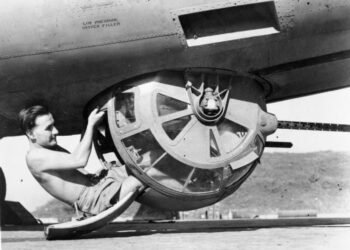
Cutaway diagram or close-up profile of a B-17 ball turret showing the fetal position of the gunner.
Defense Archives

B-17 Ball Turret Technical Breakdown: Firepower, Armor, and Survival

September 29, 2026
Next Post
M142 High Mobility Artillery Rocket System (HIMARS) fires a training rocket during a live-fire exercise in Undva, Estonia, July 11, 2025. The exercise included dry-firing, equipment staging, communication systems checks, and concluded with live-fire qualifications.

US Army Expands HIMARS Role With PrSM Anti-Ship Strike

Leave a Reply Cancel reply

Your email address will not be published. Required fields are marked *

I agree to the Terms & Conditions and Privacy Policy.

Latest Intelligence

Can Iran Reverse-engineering US Navy Anduril Dive LD Autonomous Submarine

US Navy Cancels Constellation Frigate: FFG-62 Procurement Disaster

B-17F Flying Fortress Technical Breakdown: Armor, Armament, and the Brutal Reality of Daylight Bombing

China’s GJ-11 Sharp Sword: The Stealth UCAV Rewriting Indo-Pacific SEAD Operations

US Navy Awards Boeing $20B F/A-XX Sixth-Gen Carrier Fighter Contract

LPP Wins NATO Challenge With AI Off-Grid Airfield Denial

Domain Of Warfare

M142 High Mobility Artillery Rocket System (HIMARS) fires a training rocket during a live-fire exercise in Undva, Estonia, July 11, 2025. The exercise included dry-firing, equipment staging, communication systems checks, and concluded with live-fire qualifications.
Naval & Maritime

US Army Expands HIMARS Role With PrSM Anti-Ship Strike

Cutaway diagram or close-up profile of a B-17 ball turret showing the fetal position of the gunner.
Defense Archives

B-17 Ball Turret Technical Breakdown: Firepower, Armor, and Survival

Panzerkampfwagen VI Ausf. B King Tiger tank with Henschel turret in a field.
Defense Archives

King Tiger Technical Breakdown: Firepower, Armor, and Flaws

An air-to-air front view of a B-52G Stratofortress aircraft from the 416th bombardment Wing armed with AGM-86B air-launched cruise missiles (ALCMs).
Strategic Weapons

USAF Advances $30B AGM-181A LRSO Nuclear Cruise Missile

Defense Archives

B-17F Flying Fortress Technical Breakdown: Armor, Armament, and the Brutal Reality of Daylight Bombing

USAF The B-17F Flying Fortress

The Boeing B-17F Flying Fortress was the blunt-force instrument of the Allied daylight strategic bombing campaign over Europe. Tasked with...

Read moreDetails

B-17 Ball Turret Technical Breakdown: Firepower, Armor, and Survival

Cutaway diagram or close-up profile of a B-17 ball turret showing the fetal position of the gunner.

BOTTOM LINE UP FRONT Advanced Fire Control: The Sperry K-4 automatic computing gunsight calculated gravity, wind speed, aircraft velocity, and...

Read moreDetails

King Tiger Technical Breakdown: Firepower, Armor, and Flaws

Panzerkampfwagen VI Ausf. B King Tiger tank with Henschel turret in a field.

BOTTOM LINE UP FRONT Unmatched Stand-off Firepower: The 88 mm KwK 43 L/71 gun achieved 100% test accuracy at 1,000...

Read moreDetails

Surviving the Nuclear Battlefield: The Rise and Fall of the U.S. Army’s Pentomic Divisions

US Army launcher vehicle based on the M139D 5-ton truck. Honest John nuclear-capable rocket artillery.

“In the search for maximum dispersion on an atomic battlefield, the Pentomic division traded the proven flexibility of combined arms...

Read moreDetails

Frontline Defense is an independent, objective analysis platform. The content provided on this website, including but not limited to technical breakdowns, military hardware comparisons, defense budget reports, and open-source intelligence (OSINT) analyses, is strictly for educational, historical, and informational purposes. Frontline Defense is not affiliated with, endorsed by, or acting on behalf of any government agency, department of defense, armed forces branch, or defense contractor. All content on this site represents independent research based strictly on unclassified, publicly available data and open-source records at the time of writing. Nothing published on this website should be construed as official military guidance, defense strategy consulting, or government policy.

Follow Us

Domain Of Warfare

  • Naval & Maritime
  • Air & Aerospace
  • Ground Forces & Armor
  • Strategic Weapons
  • Unmanned & Autonomous Systems

Regions

  • USA & Americas
  • Europe
  • Middle East
  • Asia & Pacific
  • About Us
  • Privacy Policy
  • Terms Of Use

© 2026 | Fronline Defense Journal. All Rights Reserved

No Result
View All Result
  • Home
  • Latest Intelligence
  • Domain Of Warfare
    • Naval & Maritime
    • Air & Aerospace
    • Ground Forces & Armor
    • Unmanned & Autonomous Systems
    • Strategic Weapons
  • Regions
    • USA & Americas
    • Europe
    • Middle East
    • Asia & Pacific
  • Defense Archives
  • About Us
    • Who We Are
    • Privacy Policy
    • Terms Of Use

© 2026 | Fronline Defense Journal. All Rights Reserved