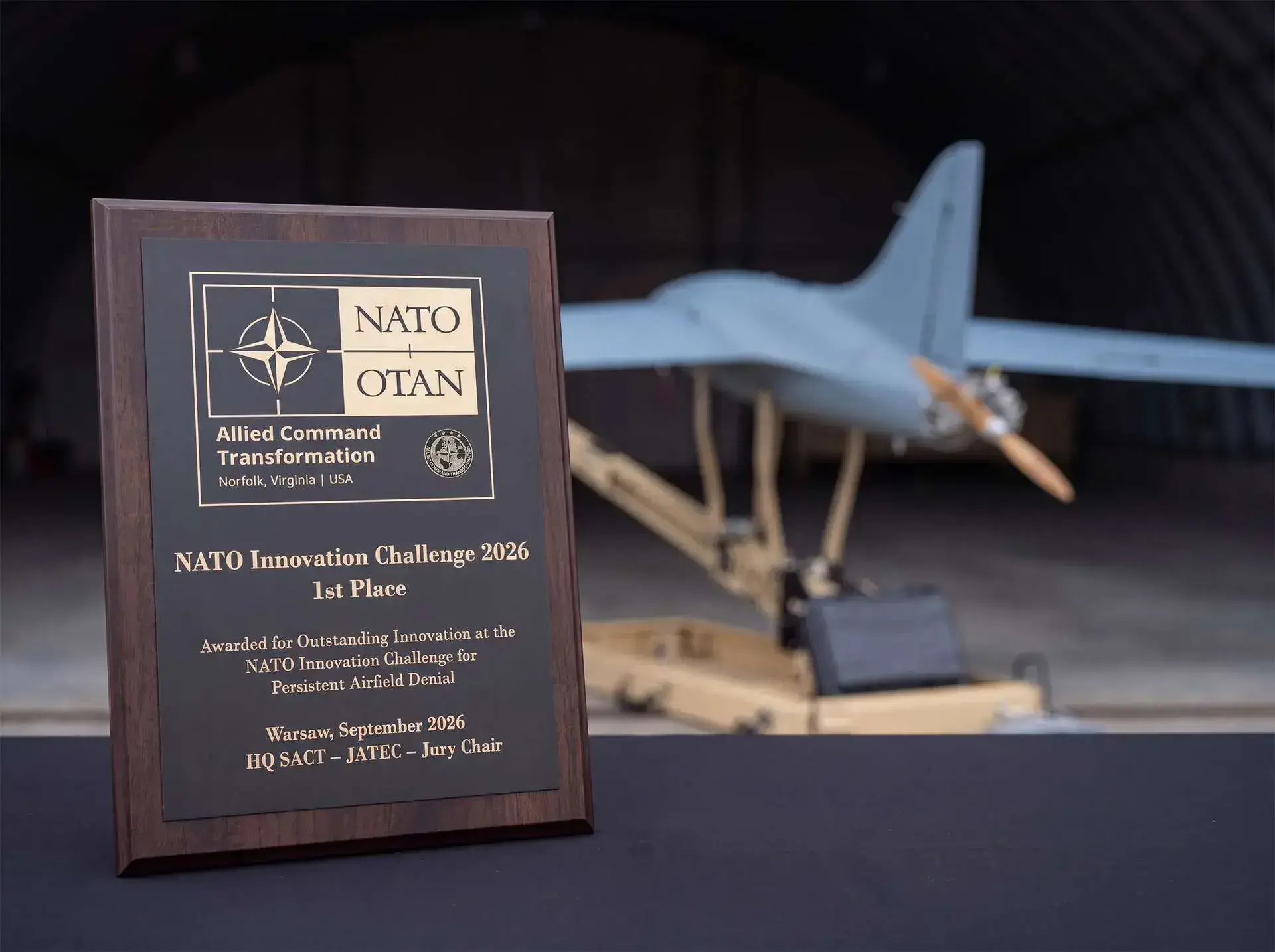
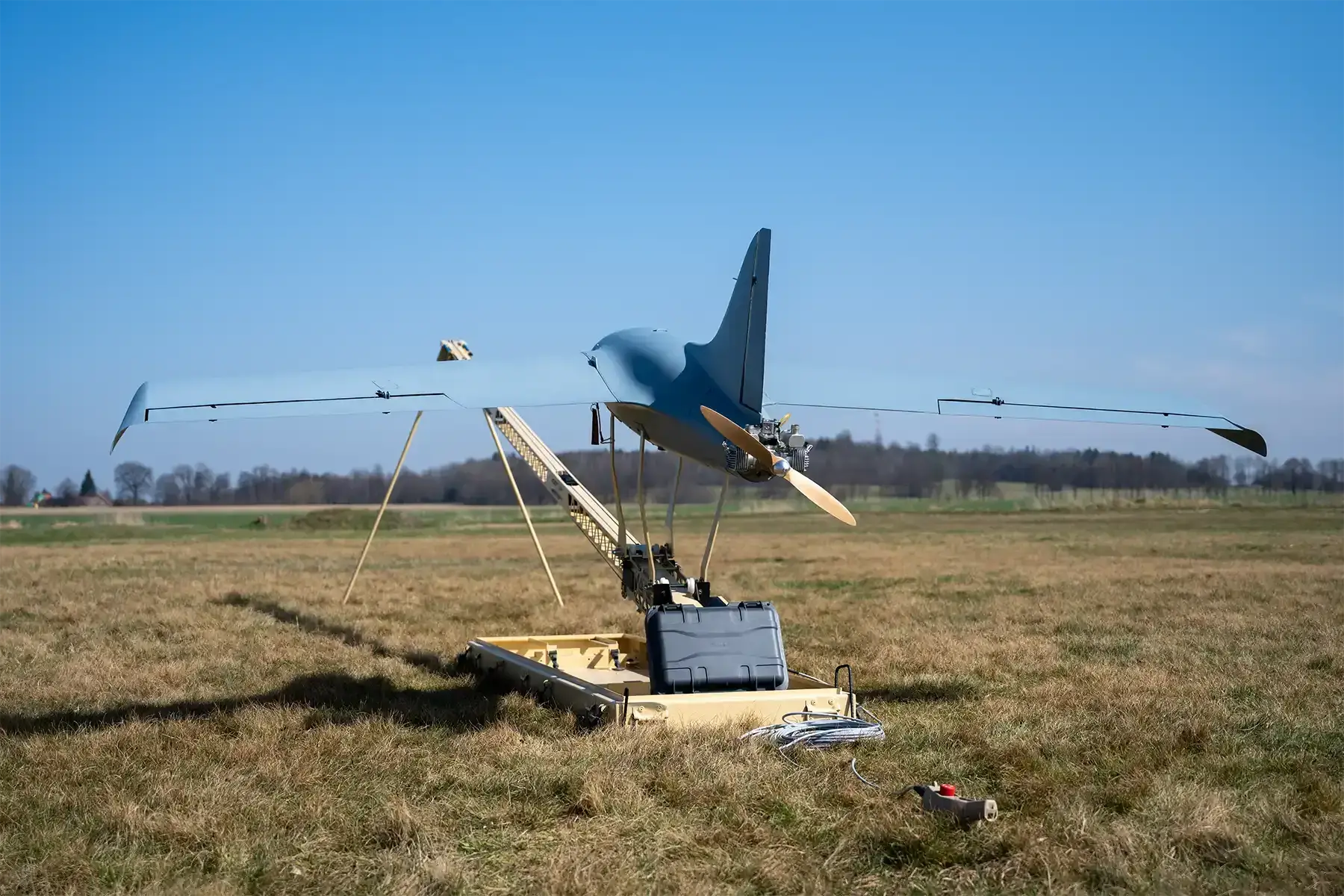
Czech defense technology firm LPP Holding has won the NATO Allied Command Transformation (ACT) Innovation Challenge focused on persistent airfield denial. Defeating competing entries across the alliance and Ukraine, LPP’s battle-tested operational concept combines swarming autonomous unmanned aerial systems (UAS) and a low-cost cruise missile to systematically suppress adversary air bases. The system leverages optical navigation and edge AI to execute deep strikes exceeding 150 kilometers in severe GNSS-denied and heavily jammed electronic warfare environments.
- Operational Range & Autonomy: Capable of deep strikes beyond 150 km, the system relies on proprietary optical navigation and AI autopilot, bypassing GNSS dependencies and data links.
- Cost-Effective Mass: Employs scalable, lower-cost attrition assets to saturate adversary air defenses before deploying high-precision kinetic effectors like the Narwhal jet-powered cruise missile.
- Persistent Suppression: Shifts doctrine from single-strike runway cratering to continuous, systematic disruption of air base infrastructure, maintenance facilities, and flight operations.
- Battlefield Validation: Tested in Ukraine under active combat conditions, feeding real-time electronic warfare countermeasure iterations back into software and flight control units.
NATO ACT Challenge and Operational Context
The NATO Allied Command Transformation (ACT) challenge targeted a major operational problem: suppressing adversary air bases to prevent deep strike missions against alliance territory. Moving away from reactive counter-drone air defense, the initiative prioritized proactive, long-range attrition capabilities capable of operating inside dense anti-access/area-denial (A2/AD) envelopes.
Criteria mandated a minimum strike radius of 150 km, high electronic warfare resistance, scalable manufacturing metrics, and high technology readiness levels (TRL). LPP Holding’s winning framework integrates multiple autonomous platforms designed to saturate and exhaust surface-to-air missile (SAM) networks while maintaining continuous target acquisition over the contested airfield.
Technical Breakdown: Off-Grid Optical Navigation and Narwhal Platform
Operating in electronic warfare environments requires complete independence from satellite signals and radio frequency command links. LPP Holding integrates optical scene-matching navigation paired with onboard AI image classification. This architecture allows the platform to navigate terrain, identify high-value targets (such as aircraft shelters, maintenance bays, and radar installations), and execute strike terminal guidance completely offline.
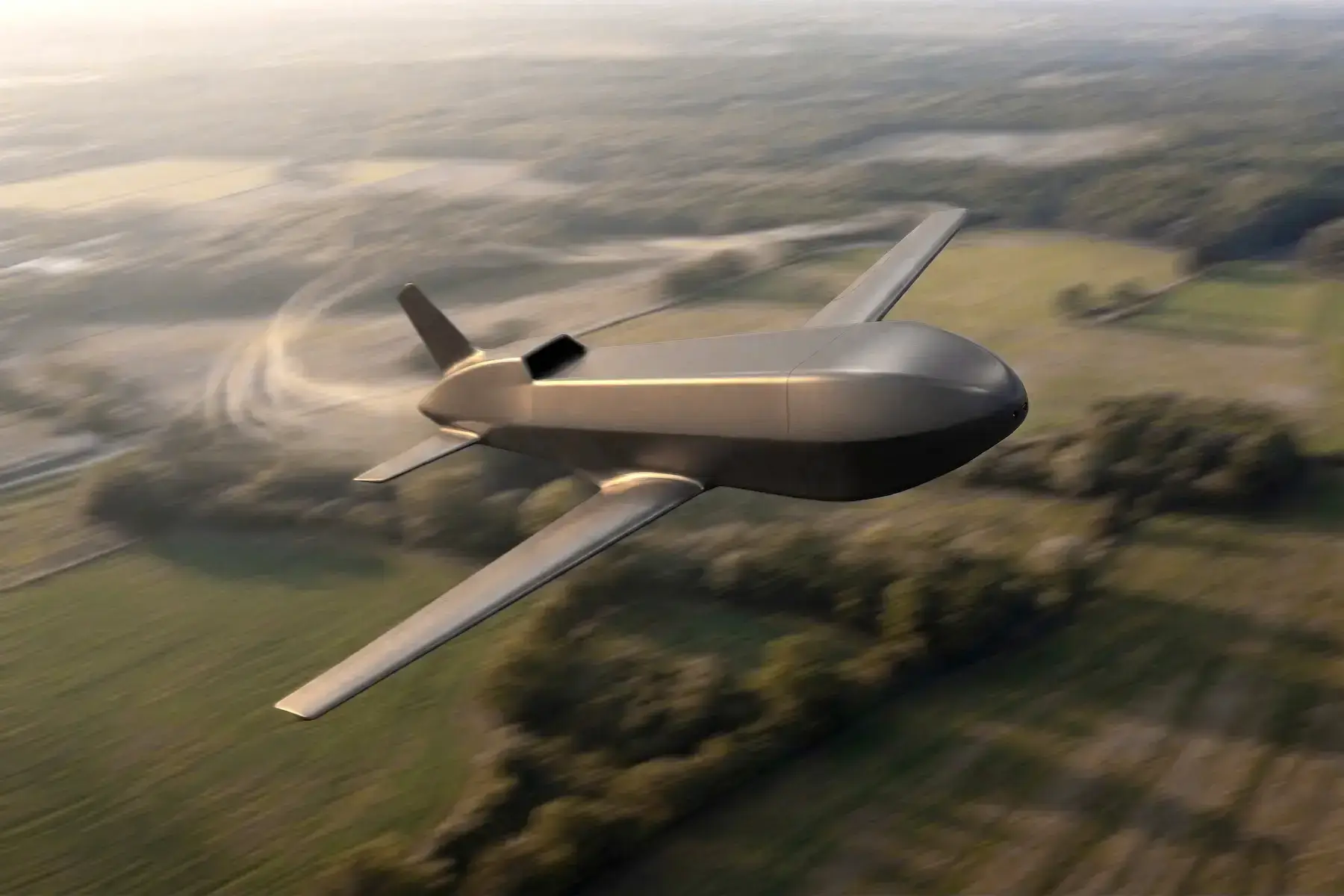
The solution integrates a layered family of systems, culminating in the Narwhal, a jet-powered, low-cost cruise missile currently undergoing validation testing in Ukraine. By utilizing inexpensive airframes to draw enemy air defense interceptors, the system creates operational gaps for higher-payload platforms like the Narwhal to strike fixed infrastructure.
Industrial Agility and Ukraine Battle-Testing
A decisive factor in LPP Holding’s selection was its direct integration with active Ukrainian combat units. Operating as a mid-cap technology company with over 400 employees, LPP maintains an agile software iteration cycle, updating firmware based on front-line electronic warfare data.
Because traditional satellite links like Starlink and standard RF channels face high disruption rates near deep-strike objectives, off-grid autonomy has transitioned from an optional feature to a baseline requirement for Western defense suppliers.
| Platform | Operational Parameter | Primary Guidance Mechanism | Role |
| LPP Fixed-Wing Swarm UAS | >150 km Range | Optical Navigation / Edge AI | Air Defense Saturation & Infrastructure Disruption |
| Narwhal Cruise Missile | High-Subsonic (Jet-Powered) | Autonomous Target Classification | High-Precision Kinetic Strike |
| Deployment Environment | Electronic Warfare / GNSS-Denied | Completely Offline (No Data Link) | Persistent Airfield Suppression |
FINAL ASSESSMENT: LPP Holding’s winning solution provides a scalable force multiplier for NATO’s eastern flank. By shifting airfield denial from high-cost, limited-inventory munitions toward massed autonomous platforms, the operational concept denies adversary operational tempo at a manageable cost curve. The reliance on battle-tested optical navigation sets a technical baseline for future deep-strike operations in saturated electronic warfare environments.