Frontline Defense Journal | Objective OSINT & Military Analysis
  • Home
  • Latest Intelligence
  • Domain Of Warfare
    • Naval & Maritime
    • Air & Aerospace
    • Ground Forces & Armor
    • Unmanned & Autonomous Systems
    • Strategic Weapons
  • Regions
    • USA & Americas
    • Europe
    • Middle East
    • Asia & Pacific
  • Defense Archives
  • About Us
    • Who We Are
    • Privacy Policy
    • Terms Of Use
No Result
View All Result
  • Home
  • Latest Intelligence
  • Domain Of Warfare
    • Naval & Maritime
    • Air & Aerospace
    • Ground Forces & Armor
    • Unmanned & Autonomous Systems
    • Strategic Weapons
  • Regions
    • USA & Americas
    • Europe
    • Middle East
    • Asia & Pacific
  • Defense Archives
  • About Us
    • Who We Are
    • Privacy Policy
    • Terms Of Use
Frontline Defense Journal | Objective OSINT & Military Analysis
No Result
View All Result
Frontline Defense Journal | Objective OSINT & Military Analysis
No Result
View All Result
Home Domain Of Warfare Naval & Maritime

Japan’s ¥8.9T FY2027 Budget: ASM-3 Kai & New SSM Explained

September 21, 2026
Reading Time: 5 mins read
A A
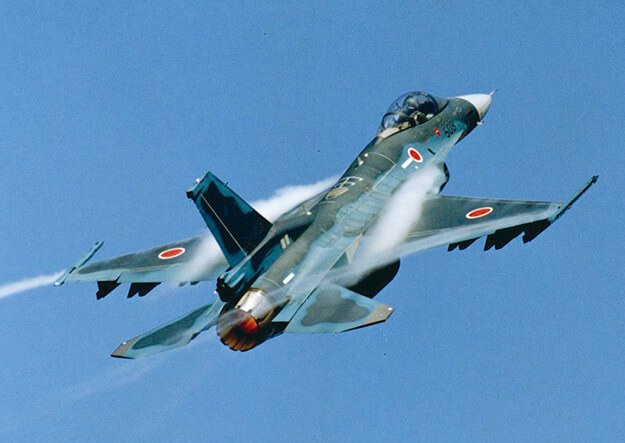
A Japanese F-2 fighter jet equipped with a large supersonic ASM-3 missile on the wing pylon.
Share on FacebookShare On Reddit
  • Tokyo requested 8.89 trillion yen ($55.5 billion) for FY2027, prioritizing stand-off weapons and AI-driven platforms.
  • The ASM-3 Kai supersonic missile is slated for a new air-to-air role to neutralize enemy radar aircraft at ranges exceeding 400 kilometers.
  • Japan’s New SSM island defense missile will feature a terminal barrel-roll maneuver to evade Chinese Type 730 and Type 1130 close-in weapon systems.
  • Construction of a 12,000-ton Aegis System Equipped Vessel with 128 vertical launch cells is underway to counter lofted ballistic and hypersonic threats.
  • Revised export rules allow Tokyo to share lethal arms with 17 allied nations, establishing a multinational weapons architecture in the Pacific.

Air-to-Air Strike: The ASM-3 Kai Threat

Japan is converting its dedicated ship-killer into an aircraft hunter. The ASM-3 Kai relies on an integral rocket-ramjet to sustain speeds above Mach 3 over its entire flight path.

Unlike traditional air-to-air missiles that coast after initial burn, this sustained energy allows it to hit targets at estimated ranges past 400 kilometers.
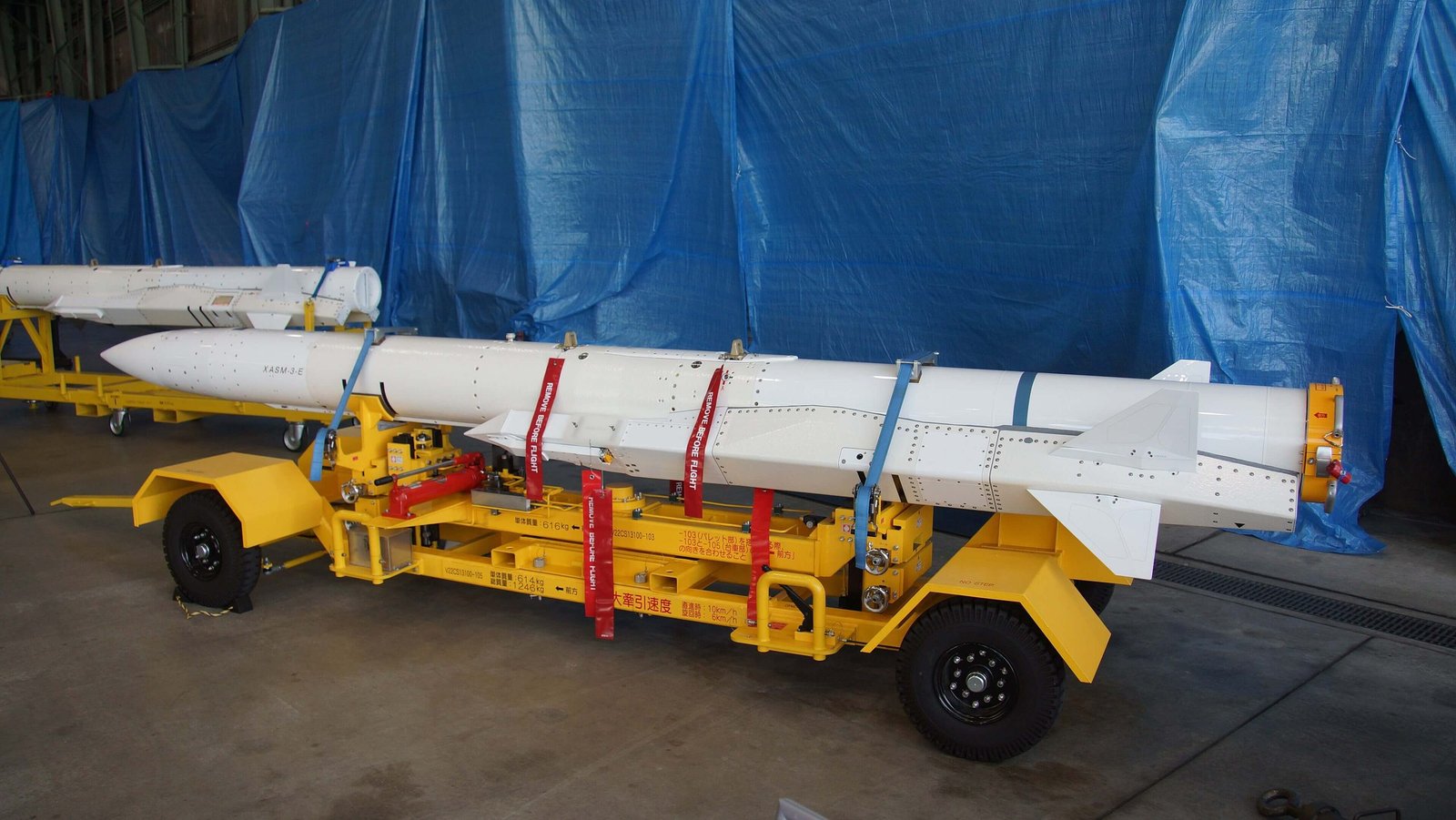
The japanese ASM-3 Kai air to air missile
The ASM-3 Kai air-to-air missiles. Image by: Hunini

The primary targets are Chinese airborne early warning aircraft like the KJ-3000, alongside aerial tankers and command posts. The missile utilizes a dual active/passive radar seeker.

The passive mode hones in on the massive electromagnetic emissions from adversary radar planes. By pushing command-and-control aircraft further back from the East China Sea, Japan degrades the adversary’s targeting architecture.
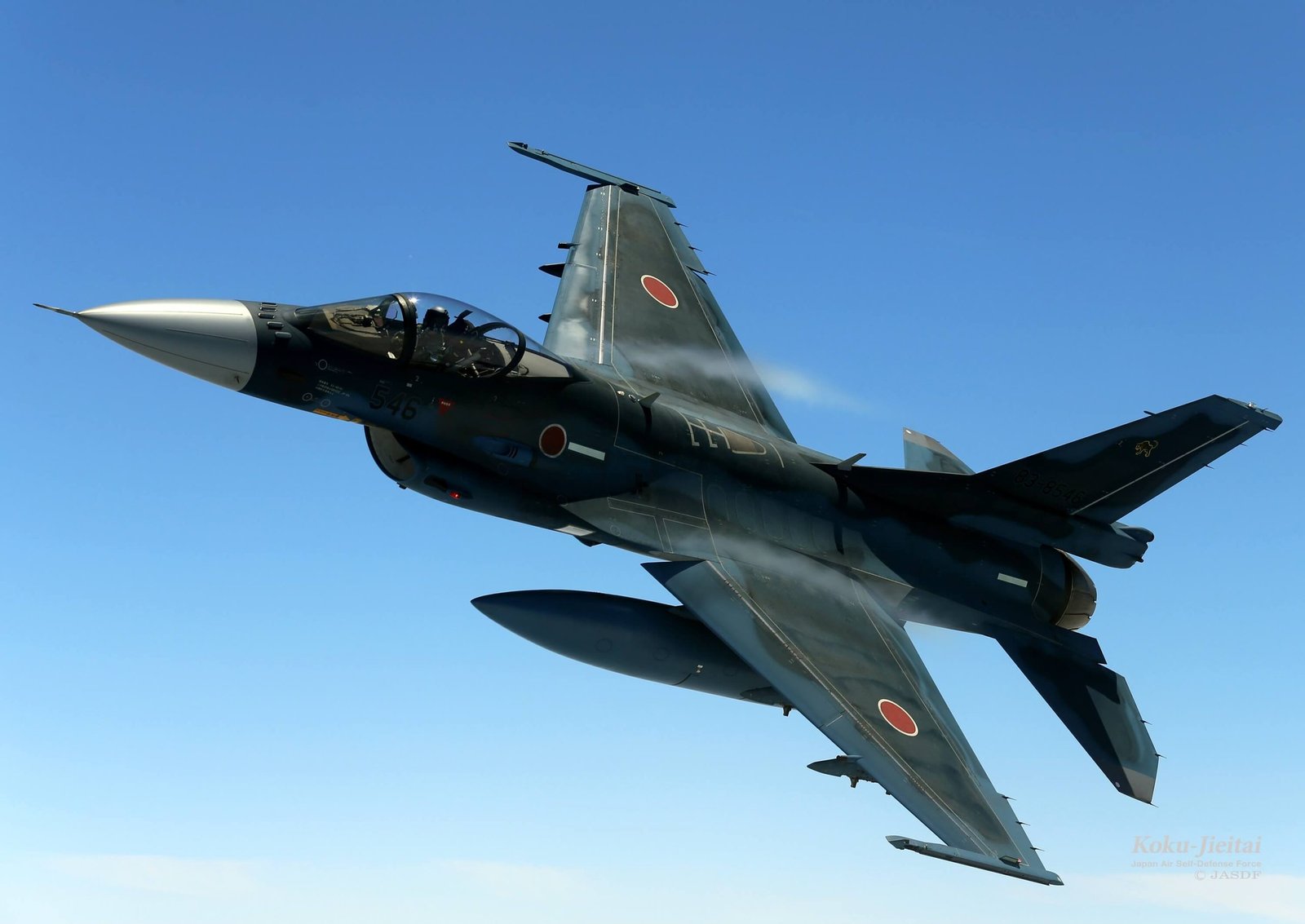
A Japanese F-2 fighter jet equipped with a large supersonic ASM-3 missile on the wing pylon.
Japanese Mitsubishi F-2 fighter jet. Source: Japan Ministry of Defense

Evading CIWS: The New SSM’s Barrel Roll

Kawasaki’s new island defense missile, simply dubbed the New SSM, addresses the problem of advanced warship defenses. Video released by Japan’s Acquisition, Technology and Logistics Agency in early 2026 shows a prototype executing a terminal barrel roll.

This maneuver actively defeats radar-directed close-in weapon systems, specifically the Chinese Type 730 and Type 1130 rotary cannons.

By spiraling unpredictably, the missile prevents the gun’s fire-control computer from plotting a reliable interception point. The weapon relies on a turbofan engine and will far exceed the 200-kilometer range of the baseline Type 12 surface-to-ship missile.

The Aegis System Equipped Vessel (ASEV)

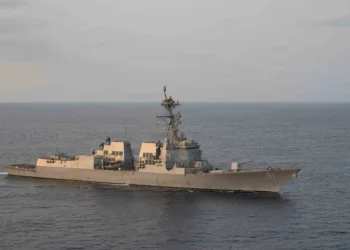
To protect its air bases from opening salvos, Japan is building the largest surface combatant in its modern history. The first ASEV measures 620 feet and displaces 12,000 tons.

A towering integrated mast carries the AN/SPY-7(V)1 radar, designed to track lofted ballistic arcs and incoming hypersonic glide vehicles.

The ship features 128 vertical launch cells armed with SM-3 and SM-6 interceptors. Future upgrades will include the American-led Glide Phase Interceptor.

By intercepting incoming barrages offshore, the ASEV buys time for land-based fighters to launch counterstrikes.

Unseen Threats: Submarines and Electronic Warfare

The 2027 budget request outlines research into submarine-launched hypersonic missiles. Shifting long-range strike capabilities to conventionally powered submarines creates an extreme survivability advantage.

Unlike static land bases, a submerged vertical launch system cannot be reliably targeted in a preemptive strike. In the air domain, the Kawasaki EC-2 standoff electronic warfare aircraft provides deep-sensor degradation.

Flying far outside enemy engagement zones, the EC-2 will blind adversary communications and radar networks. This clears a path for allied strike packages to operate with a significantly reduced threat.

Weapon SystemRoleKey SpecificationsDeployment Status
ASM-3 KaiAir-to-Air / Anti-Ship MissileMach 3+, 400+ km range, Ramjet propulsionBudget FY2027 (Development)
New SSMAnti-Ship Cruise MissileBarrel-roll evasion, Turbofan, Extended rangeMass Production Targeting 2027
ASEVAegis Surface Combatant12,000 tons, 128 VLS cells, AN/SPY-7(V)1First ship laid down July 2025
Type 12 (Upgraded)Surface-to-Ship Missile900 – 1,000 km estimated rangeUnder Development
EC-2Standoff Electronic WarfareC-2 airframe, advanced jamming suitesOperational / Fleet Expanding

Japan’s defense evolution represents a severe structural vulnerability for adversary anti-access/area-denial networks. By fielding weapons specifically designed to kill force-multiplying assets—radar aircraft and command nodes—Tokyo shifts the arithmetic of Pacific warfare. The combination of the New SSM‘s evasive terminal maneuvers and the deep-strike range of the ASM-3 Kai creates a highly credible, multi-axis counterstrike threat. When combined with revised export laws that allow interoperable munitions across allied nations, Japan is rapidly establishing a highly survivable, distributed deterrent.

Tags: Indo-PacificJapanNaval Warfare

Related Posts

Arleigh Burke-class guided-missile destroyer USS Pinckney (DDG 91) conducts blockade operations, April 17, 2026. Pinckney is deployed to the U.S. 5th Fleet area of operations to support maritime security and stability in the Middle East.
Naval & Maritime

US Navy Cancels Constellation Frigate: FFG-62 Procurement Disaster

October 5, 2026
GJ 11 Chinese Drone
Unmanned & Autonomous Systems

China’s GJ-11 Sharp Sword: The Stealth UCAV Rewriting Indo-Pacific SEAD Operations

October 3, 2026
M142 High Mobility Artillery Rocket System (HIMARS) fires a training rocket during a live-fire exercise in Undva, Estonia, July 11, 2025. The exercise included dry-firing, equipment staging, communication systems checks, and concluded with live-fire qualifications.
Naval & Maritime

US Army Expands HIMARS Role With PrSM Anti-Ship Strike

October 1, 2026
Next Post
An image of HMS Prince of Wales and f35b lightining 2 taking off from it.

The Royal Navy's Paper Tiger: The £7.6 Billion Carrier Crisis

Leave a Reply Cancel reply

Your email address will not be published. Required fields are marked *

I agree to the Terms & Conditions and Privacy Policy.

Latest Intelligence

Lunar South Pole Race: US and China Target Ice Reserves

Horten Ho 229 Technical Breakdown: WWII’s Jet Flying Wing and the Stealth Myth

Russia’s Rassvet Satellite Constellation Fails: Starlink Rival Crippled

Can Iran Reverse-engineering US Navy Anduril Dive LD Autonomous Submarine

US Navy Cancels Constellation Frigate: FFG-62 Procurement Disaster

B-17F Flying Fortress Technical Breakdown: Armor, Armament, and the Brutal Reality of Daylight Bombing

Domain Of Warfare

GJ 11 Chinese Drone
Unmanned & Autonomous Systems

China’s GJ-11 Sharp Sword: The Stealth UCAV Rewriting Indo-Pacific SEAD Operations

Rendered visualization of Boeing's tail-less sixth-generation carrier-based strike fighter concept
Air & Aerospace

US Navy Awards Boeing $20B F/A-XX Sixth-Gen Carrier Fighter Contract

LPP Holding autonomous drone platform displayed at a NATO defense innovation showcase
Unmanned & Autonomous Systems

LPP Wins NATO Challenge With AI Off-Grid Airfield Denial

M142 High Mobility Artillery Rocket System (HIMARS) fires a training rocket during a live-fire exercise in Undva, Estonia, July 11, 2025. The exercise included dry-firing, equipment staging, communication systems checks, and concluded with live-fire qualifications.
Naval & Maritime

US Army Expands HIMARS Role With PrSM Anti-Ship Strike

Defense Archives

Horten Ho 229 Technical Breakdown: WWII’s Jet Flying Wing and the Stealth Myth

The Horten Ho 229 V3 German Nazi Stealth Bomber in flight 1945

Developed during the final desperate months of World War II, the Horten Ho 229 remains one of the most visually...

Read moreDetails

B-17F Flying Fortress Technical Breakdown: Armor, Armament, and the Brutal Reality of Daylight Bombing

USAF The B-17F Flying Fortress

The Boeing B-17F Flying Fortress was the blunt-force instrument of the Allied daylight strategic bombing campaign over Europe. Tasked with...

Read moreDetails

B-17 Ball Turret Technical Breakdown: Firepower, Armor, and Survival

Cutaway diagram or close-up profile of a B-17 ball turret showing the fetal position of the gunner.

BOTTOM LINE UP FRONT Advanced Fire Control: The Sperry K-4 automatic computing gunsight calculated gravity, wind speed, aircraft velocity, and...

Read moreDetails

King Tiger Technical Breakdown: Firepower, Armor, and Flaws

Panzerkampfwagen VI Ausf. B King Tiger tank with Henschel turret in a field.

BOTTOM LINE UP FRONT Unmatched Stand-off Firepower: The 88 mm KwK 43 L/71 gun achieved 100% test accuracy at 1,000...

Read moreDetails

Frontline Defense is an independent, objective analysis platform. The content provided on this website, including but not limited to technical breakdowns, military hardware comparisons, defense budget reports, and open-source intelligence (OSINT) analyses, is strictly for educational, historical, and informational purposes. Frontline Defense is not affiliated with, endorsed by, or acting on behalf of any government agency, department of defense, armed forces branch, or defense contractor. All content on this site represents independent research based strictly on unclassified, publicly available data and open-source records at the time of writing. Nothing published on this website should be construed as official military guidance, defense strategy consulting, or government policy.

Follow Us

Domain Of Warfare

  • Naval & Maritime
  • Air & Aerospace
  • Ground Forces & Armor
  • Strategic Weapons
  • Unmanned & Autonomous Systems

Regions

  • USA & Americas
  • Europe
  • Middle East
  • Asia & Pacific
  • About Us
  • Privacy Policy
  • Terms Of Use

© 2026 | Fronline Defense Journal. All Rights Reserved

No Result
View All Result
  • Home
  • Latest Intelligence
  • Domain Of Warfare
    • Naval & Maritime
    • Air & Aerospace
    • Ground Forces & Armor
    • Unmanned & Autonomous Systems
    • Strategic Weapons
  • Regions
    • USA & Americas
    • Europe
    • Middle East
    • Asia & Pacific
  • Defense Archives
  • About Us
    • Who We Are
    • Privacy Policy
    • Terms Of Use

© 2026 | Fronline Defense Journal. All Rights Reserved