KEY INTELLIGENCE
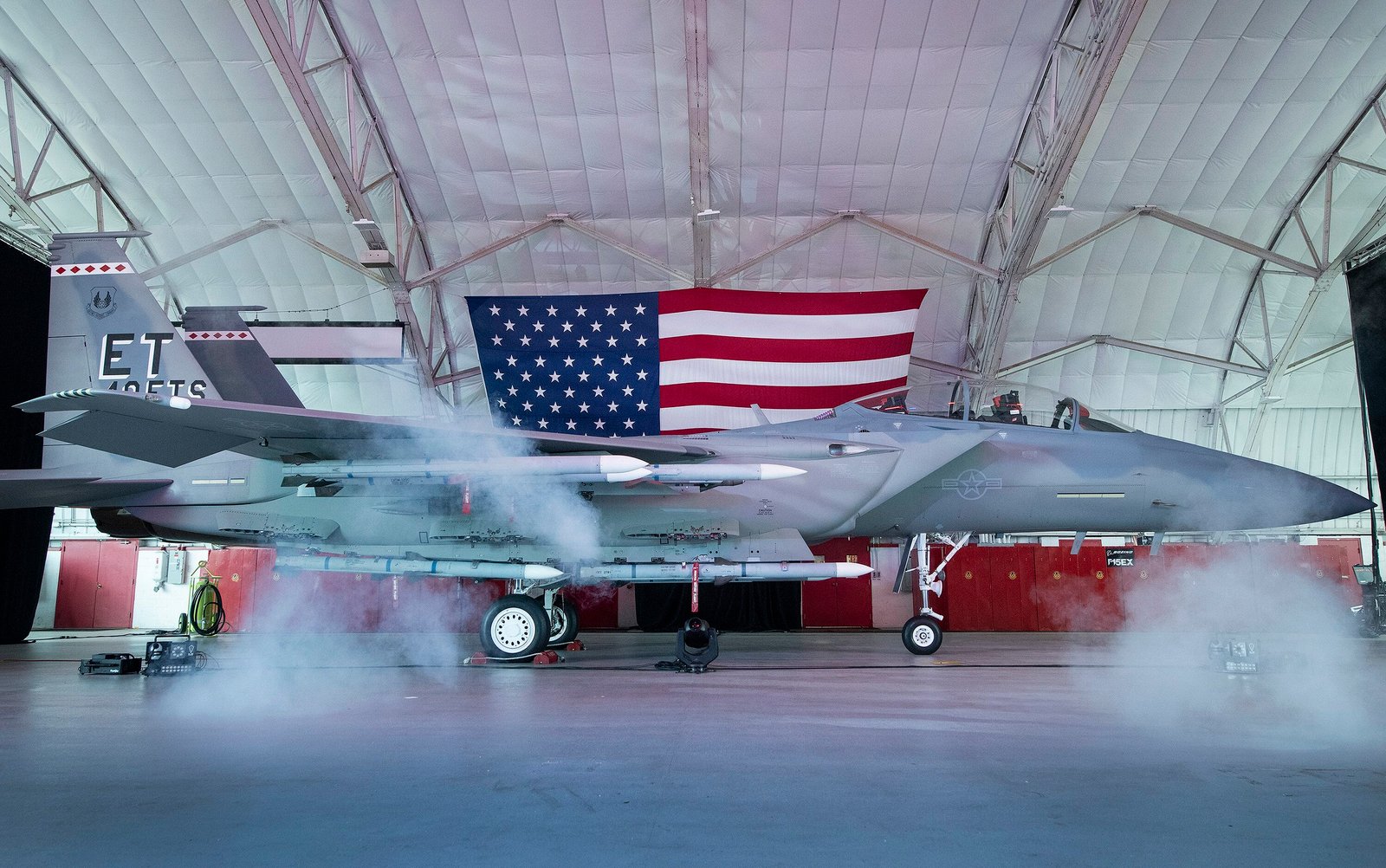
- The airframe supports an unprecedented 29,500 lbs of munitions distributed across 23 weapon hardpoints.
- Twin F110-GE-129 turbofans generate a combined 59,000 lbs of afterburning thrust, outperforming legacy F-15 variants by over 11,000 lbs.
- An integrated digital fly-by-wire system implements computerized envelope protection, permitting sustained 9G maneuvers.
- The AN/ALQ-250(V)1 EPAWSS suite provides deep-penetration electronic warfare capabilities against advanced surface-to-air missile threats.
- Structural reinforcements extend the operational lifespan to 20,000 flight hours, bypassing the typical 6,000 to 8,000-hour limit of modern combat aircraft.
Kinetic Output and Propulsion Overhaul
The F-15EX Eagle II abandons legacy constraints through a massive integration of raw thrust and digital flight control. The jet utilizes two F110-GE-129 afterburning turbofan engines. Each power plant outputs 29,500 lbs of thrust. This aggressive power-to-weight ratio allows the aircraft to hit a documented top speed of Mach 2.5.
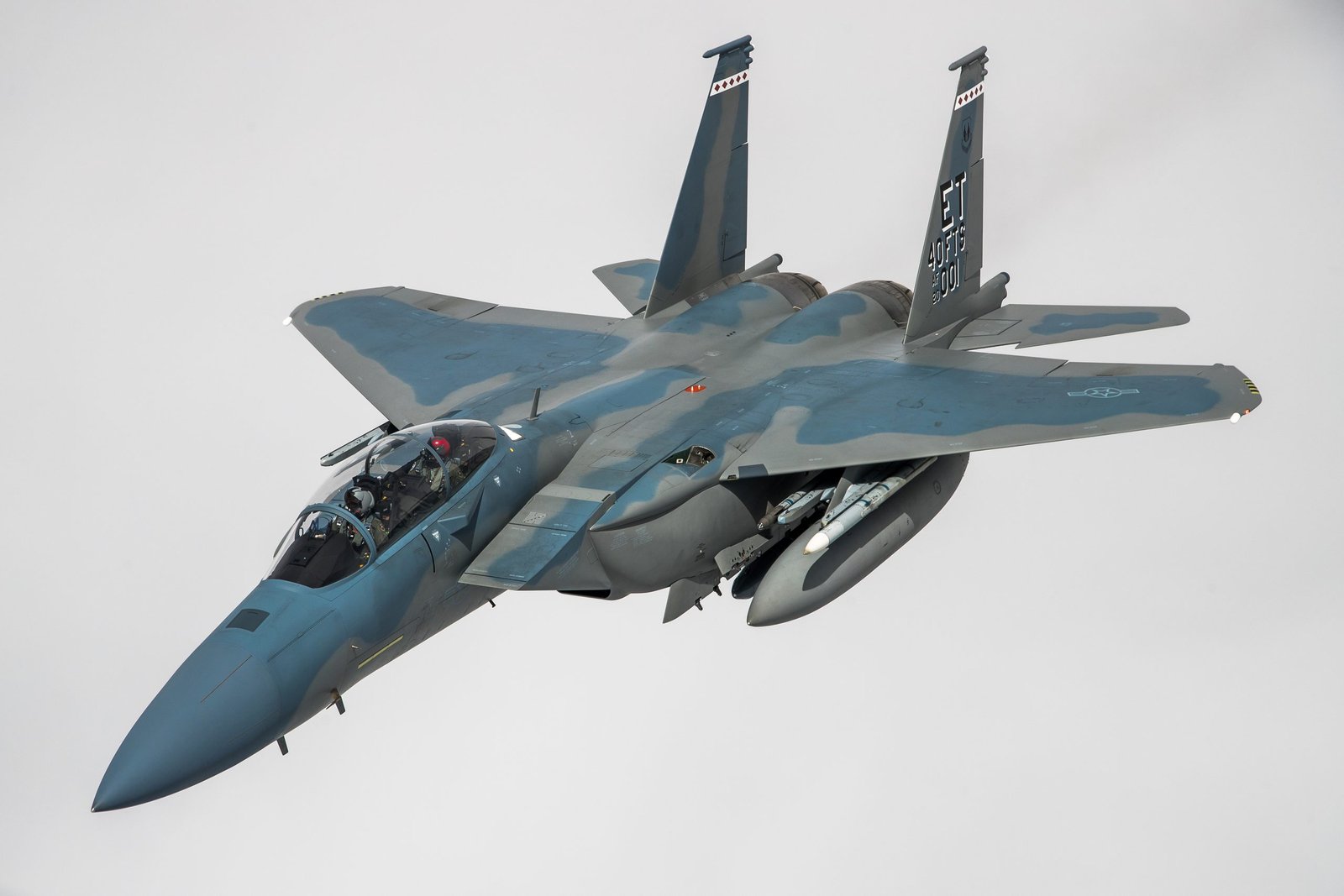
A digital fly-by-wire system completely replaces the mechanical linkages found in older airframes. This computer-assisted flight control fundamentally alters the platform’s agility. Test pilots execute maneuvers previously restricted to thrust-vectoring fighters like the F-22 Raptor.
The flight computer strictly limits airframe stress. This allows pilots to reliably push the jet to its 9G limit without inducing structural failure. Emergency override protocols permit extreme evasive maneuvers up to 12G.
Deep Strike Capacity and Sensor Integration
Boeing engineered the airframe to operate as a high-capacity weapons truck. The F-15EX hauls 29,500 lbs of combat ordnance across 23 hardpoints. By comparison, the legacy F-15E Strike Eagle carries a maximum of 23,000 lbs, while original air superiority models managed only 16,000 lbs. This exceeds the internal payload of historic heavy strategic bombers.
Target acquisition depends on the AN/APG-82(V)1 active electronically scanned array radar. This sensor provides long-range tracking and engagement metrics in high-clutter environments. The cockpit accommodates either a solo pilot or a two-person crew. Both operators utilize dual digital helmet-mounted queuing systems (JHMCS). This enables off-boresight weapon designation directly through the operator’s line of sight.
Electronic Warfare and Platform Survivability
The aircraft actively ignores low-observable stealth characteristics. It features one of the largest radar cross-sections of any modern fighter. Defense relies entirely on the new AN/ALQ-250(V)1 EPAWSS. This electronic warfare suite degrades enemy target acquisition and disrupts incoming radio-frequency threats.
Director of Operational Test and Evaluation assessments confirm the suite effectively blinds tracking sensors on fifth-generation fighter platforms. The airframe is also heavily reinforced to survive extreme kinetic environments. A rated service life of 20,000 flight hours drastically reduces long-term procurement costs compared to fifth-generation alternatives.
| System | F-15EX Eagle II | F-15E Strike Eagle | |
| Max Payload | 29,500 lbs | 23,000 lbs | +6,500 lbs increase |
| Weapon Hardpoints | 23 | 15 | Expanded external carriage |
| Max Engine Thrust | 29,500 lbs (x2) | 23,770 lbs (x2) | +11,460 lbs total thrust |
| Flight Control | Digital Fly-By-Wire | Mechanical / Hydro-mechanical | Advanced envelope protection |
| Airframe Lifespan | 20,000 hours | 8,000 hours | 150% lifespan extension |
| Primary EW Suite | AN/ALQ-250(V)1 EPAWSS | AN/ALQ-135 TEWS | Next-generation threat disruption |