Frontline Defense Journal | Objective OSINT & Military Analysis
  • Home
  • Latest Intelligence
  • Domain Of Warfare
    • Naval & Maritime
    • Air & Aerospace
    • Ground Forces & Armor
    • Unmanned & Autonomous Systems
    • Strategic Weapons
  • Regions
    • USA & Americas
    • Europe
    • Middle East
    • Asia & Pacific
  • Defense Archives
  • About Us
    • Who We Are
    • Privacy Policy
    • Terms Of Use
No Result
View All Result
  • Home
  • Latest Intelligence
  • Domain Of Warfare
    • Naval & Maritime
    • Air & Aerospace
    • Ground Forces & Armor
    • Unmanned & Autonomous Systems
    • Strategic Weapons
  • Regions
    • USA & Americas
    • Europe
    • Middle East
    • Asia & Pacific
  • Defense Archives
  • About Us
    • Who We Are
    • Privacy Policy
    • Terms Of Use
Frontline Defense Journal | Objective OSINT & Military Analysis
No Result
View All Result
Frontline Defense Journal | Objective OSINT & Military Analysis
No Result
View All Result
Home Domain Of Warfare Naval & Maritime

3M22 Zircon: Debris Exposes Russia’s Hypersonic Hoax

September 8, 2026
Reading Time: 6 mins read
A A
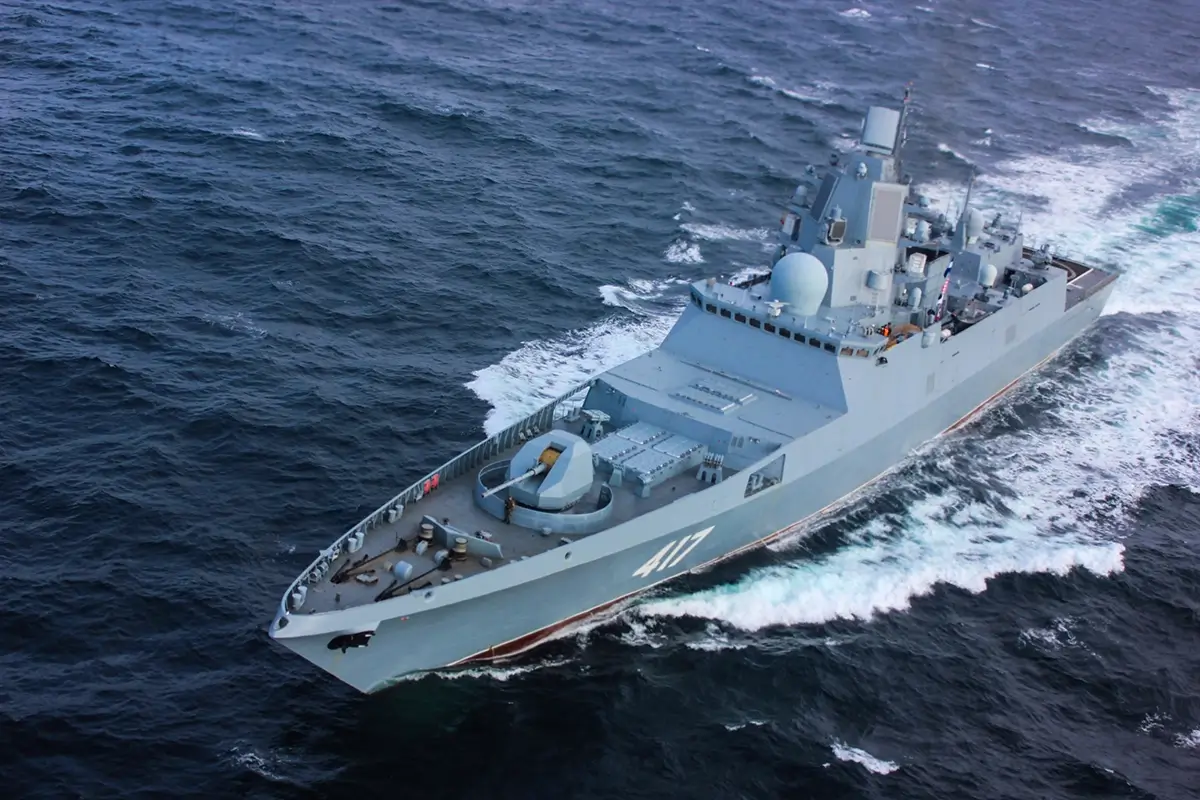
Admiral Gorshkov launches a 3M22 Zircon missile
Share on FacebookShare On Reddit

KEY INTELLIGENCE

  • Propulsion Architecture: Powered entirely by an NPO Iskra 3L2211 solid-fueled rocket engine; explicitly lacks the scramjet or air intake required for true cruise missile classification.
  • Kinetic Profile: Achieves a peak descent velocity of Mach 9 from a 132,000-foot apogee, with sustained maneuvering speeds limited to Mach 6.8.
  • Payload Discrepancy: Employs a 265-lb (120 kg) 3G22 warhead, significantly lighter than the 660–880 lb payload previously claimed by Russian state media.
  • Supply Chain Vulnerability: Debris analysis identified components from over 70 foreign organizations, including specific microelectronics from U.S.-based Intel and Corvo subsidiaries.
  • Air Defense Vulnerability: Repeatedly intercepted and destroyed in combat by Ukrainian MIM-104 Patriot batteries utilizing PAC-3 CRI and MSE interceptors.

Russian Maskirovka and the Hypersonic Narrative

For over a decade, the Kremlin has leveraged state media and reflexive control tactics (Maskirovka) to market the 3M22 Zircon as an unstoppable hypersonic cruise missile. First announced in 2011, Russian defense officials routinely claimed the weapon was a scramjet-powered, radar-evading system capable of rendering Western aircraft carriers obsolete.

This state-sponsored disinformation loop relied heavily on unverified tests and compliant proxy media to artificially project strategic overmatch. By claiming to field the world’s first operational scramjet missile, Moscow aimed to deter NATO intervention and secure its position as a top-tier arms supplier to nations facing Western sanctions.
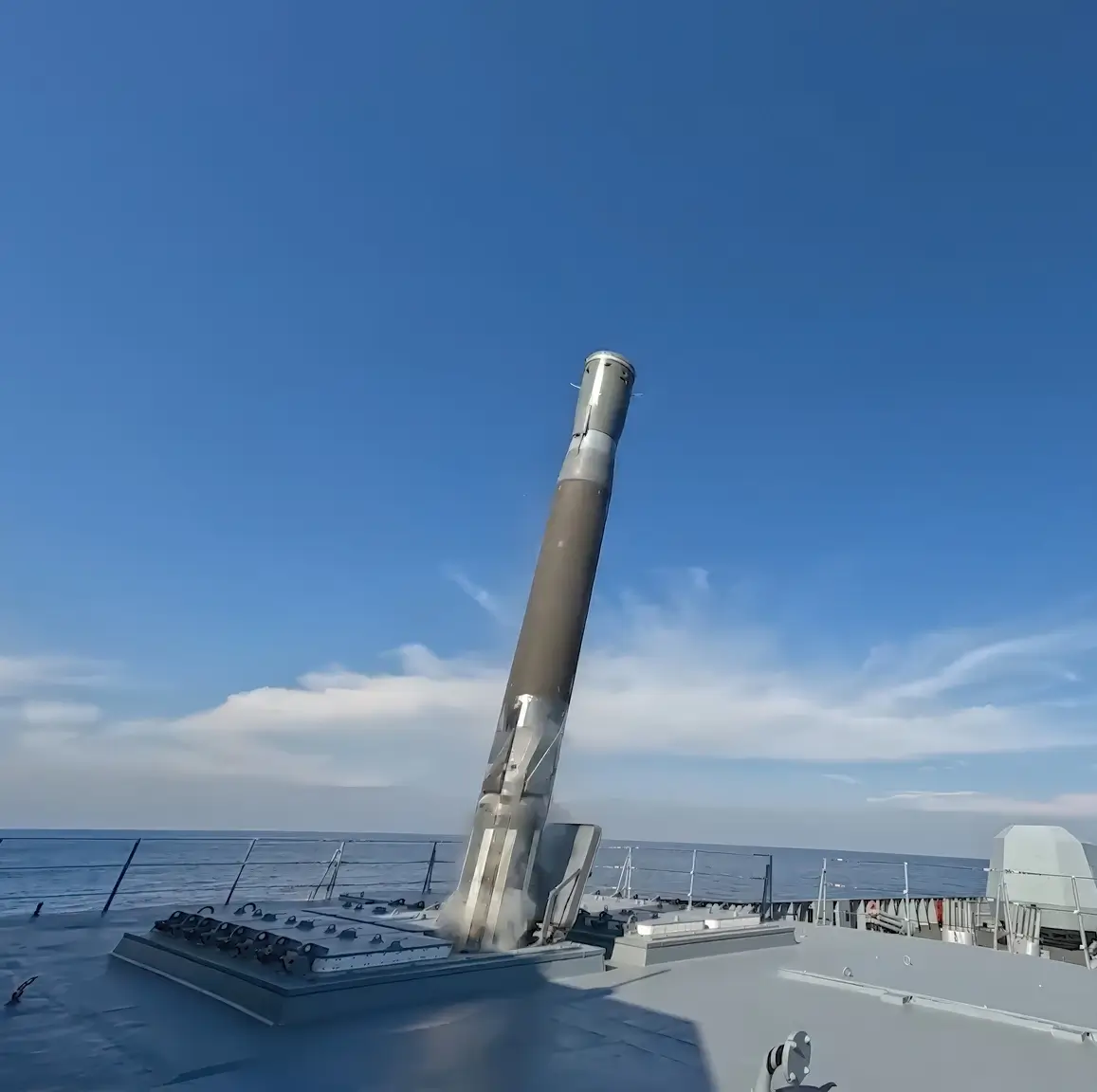
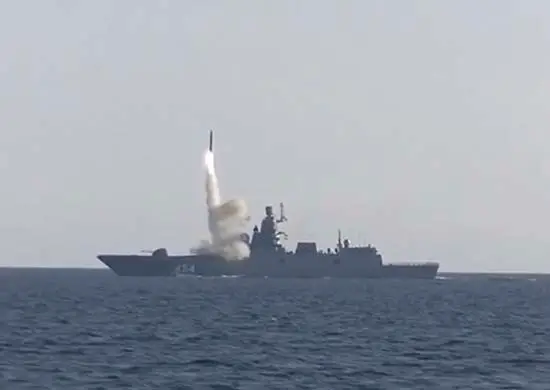
The 3M22 Zirkon missile launched from the Admiral Golovko, an Admiral Gorshkov-class frigate of the Russian Navy
The 3M22 Zirkon missile. Source: Ministry of Defence of the Russian Federation
Russian Project 22350 frigate Admiral Gorshkov launching a missile from a 3S14 vertical launch system.
The Project 22350 frigate Admiral Gorshkov, the primary launch platform for the 3M22 Zircon quasi-ballistic missile. Source: Ministry of Defence of the Russian Federation

Anatomy of the 3M22 Zircon

Debris recovered from the 65+ Zircon missiles fired into Ukraine since February 2024 paints a vastly different picture of the platform’s engineering. Ukrainian Main Intelligence Directorate (GUR) analysis confirms the missile measures 26 feet in length with a 2.2-foot diameter, propelled initially by a standard surface-launched booster.

Once the booster separates, propulsion is maintained by an NPO Iskra 3L2211 solid-fueled rocket engine. Forensic analysis by independent researchers notes a complete absence of air intakes, confirming it is physically impossible for the weapon to operate as an air-breathing scramjet. Instead, it achieves hypersonic velocities through a high-altitude ballistic arc, peaking at 132,000 feet (17.4 miles) before initiating a depressed, quasi-ballistic descent.

Supply Chains and Interception

The Zircon’s warhead—the 3G22—weighs only 265 lbs, delivering less than half the kinetic yield originally advertised by Russian officials. Despite its reduced explosive capacity, the missile’s reliance on Western commercial-off-the-shelf (COTS) technology is a glaring structural vulnerability. The GUR isolated advanced logic gates and amplifiers traced back to American firms, highlighting Russia’s continued dependence on sanctions-evading gray-market logistics.

The Collapse of the Wonder-Weapon Myth

The confirmed interception of the Zircon by legacy MIM-104 Patriot batteries shatters the myth of Russian hypersonic invulnerability. While a Mach 6.8 quasi-ballistic missile fired from a 3S14 vertical launch system still poses a severe threat to under-defended targets, it does not represent a paradigm-shifting leap in military aerospace. The exposure of the Zircon as a rebranded Cold War-era rocket concept significantly degrades Russia’s defense export credibility.

3M22 Zircon: Claimed Specifications vs. Forensic Reality

Metric / SpecificationRussian MoD Claim (Maskirovka)Actual GUR Debris AnalysisTactical Implication
ClassificationScramjet Hypersonic Cruise MissileSolid-Fueled Quasi-Ballistic MissileFollows predictable descent arcs, highly vulnerable to modern ABM systems.
Propulsion SystemExotic Air-Breathing Scramjet3L2211 Solid-Fuel Rocket (NPO Iskra)Lacks sustained low-altitude maneuverability characteristic of true cruise missiles.
Max VelocityMach 10+ (Sustained)Mach 9 (Peak) / Mach 6.8 (Sustained)Speed achieved via high-altitude gravity assist, not advanced propulsion.
Payload Capacity660 – 880 lbs (300 – 400 kg)265 lbs (120 kg) 3G22 WarheadSeverely limits structural damage against hardened military targets.
Interception Risk“Immune to all modern air defenses”Frequently intercepted by PAC-3 MSEFails to provide guaranteed strategic penetration against NATO-tier IADS.
Supply Chain100% Domestic Russian TechRelies on 70+ foreign componentsSusceptible to tightened Western export controls and microchip sanctions.

FINAL ASSESSMENT

The 3M22 Zircon is a tactical threat masquerading as a strategic wonder-weapon. Stripped of its state-sponsored disinformation, the Zircon is a quasi-ballistic platform that trades heavy payload capacity for high-altitude velocity. While its Mach 9 descent profile compresses the kill-chain timeline for defending forces, its reliance on a predictable ballistic arc allows U.S.-supplied PAC-3 MSE interceptors to reliably neutralize it. For defense planners, the Zircon represents a known, calculable kinetic threat rather than an indefensible technological breakthrough, while its heavy reliance on Western microelectronics exposes a critical vulnerability in Russia’s domestic defense industrial base.


Tags: HypersonicRussian Military

Related Posts

A Soyuz-2.1b rocket carrying a satellite payload launches from a Russian space facility.
Air & Aerospace

Russia’s Rassvet Satellite Constellation Fails: Starlink Rival Crippled

October 10, 2026
Next Post
KC-46 Pegasus from Pease Air National Guard Base, N.H.

USAF Tanker Crisis: KC-46 Flaws Threaten Global Reach

Leave a Reply Cancel reply

Your email address will not be published. Required fields are marked *

I agree to the Terms & Conditions and Privacy Policy.

Latest Intelligence

Lunar South Pole Race: US and China Target Ice Reserves

Horten Ho 229 Technical Breakdown: WWII’s Jet Flying Wing and the Stealth Myth

Russia’s Rassvet Satellite Constellation Fails: Starlink Rival Crippled

Can Iran Reverse-engineering US Navy Anduril Dive LD Autonomous Submarine

US Navy Cancels Constellation Frigate: FFG-62 Procurement Disaster

B-17F Flying Fortress Technical Breakdown: Armor, Armament, and the Brutal Reality of Daylight Bombing

Domain Of Warfare

GJ 11 Chinese Drone
Unmanned & Autonomous Systems

China’s GJ-11 Sharp Sword: The Stealth UCAV Rewriting Indo-Pacific SEAD Operations

Rendered visualization of Boeing's tail-less sixth-generation carrier-based strike fighter concept
Air & Aerospace

US Navy Awards Boeing $20B F/A-XX Sixth-Gen Carrier Fighter Contract

LPP Holding autonomous drone platform displayed at a NATO defense innovation showcase
Unmanned & Autonomous Systems

LPP Wins NATO Challenge With AI Off-Grid Airfield Denial

M142 High Mobility Artillery Rocket System (HIMARS) fires a training rocket during a live-fire exercise in Undva, Estonia, July 11, 2025. The exercise included dry-firing, equipment staging, communication systems checks, and concluded with live-fire qualifications.
Naval & Maritime

US Army Expands HIMARS Role With PrSM Anti-Ship Strike

Defense Archives

Horten Ho 229 Technical Breakdown: WWII’s Jet Flying Wing and the Stealth Myth

The Horten Ho 229 V3 German Nazi Stealth Bomber in flight 1945

Developed during the final desperate months of World War II, the Horten Ho 229 remains one of the most visually...

Read moreDetails

B-17F Flying Fortress Technical Breakdown: Armor, Armament, and the Brutal Reality of Daylight Bombing

USAF The B-17F Flying Fortress

The Boeing B-17F Flying Fortress was the blunt-force instrument of the Allied daylight strategic bombing campaign over Europe. Tasked with...

Read moreDetails

B-17 Ball Turret Technical Breakdown: Firepower, Armor, and Survival

Cutaway diagram or close-up profile of a B-17 ball turret showing the fetal position of the gunner.

BOTTOM LINE UP FRONT Advanced Fire Control: The Sperry K-4 automatic computing gunsight calculated gravity, wind speed, aircraft velocity, and...

Read moreDetails

King Tiger Technical Breakdown: Firepower, Armor, and Flaws

Panzerkampfwagen VI Ausf. B King Tiger tank with Henschel turret in a field.

BOTTOM LINE UP FRONT Unmatched Stand-off Firepower: The 88 mm KwK 43 L/71 gun achieved 100% test accuracy at 1,000...

Read moreDetails

Frontline Defense is an independent, objective analysis platform. The content provided on this website, including but not limited to technical breakdowns, military hardware comparisons, defense budget reports, and open-source intelligence (OSINT) analyses, is strictly for educational, historical, and informational purposes. Frontline Defense is not affiliated with, endorsed by, or acting on behalf of any government agency, department of defense, armed forces branch, or defense contractor. All content on this site represents independent research based strictly on unclassified, publicly available data and open-source records at the time of writing. Nothing published on this website should be construed as official military guidance, defense strategy consulting, or government policy.

Follow Us

Domain Of Warfare

  • Naval & Maritime
  • Air & Aerospace
  • Ground Forces & Armor
  • Strategic Weapons
  • Unmanned & Autonomous Systems

Regions

  • USA & Americas
  • Europe
  • Middle East
  • Asia & Pacific
  • About Us
  • Privacy Policy
  • Terms Of Use

© 2026 | Fronline Defense Journal. All Rights Reserved

No Result
View All Result
  • Home
  • Latest Intelligence
  • Domain Of Warfare
    • Naval & Maritime
    • Air & Aerospace
    • Ground Forces & Armor
    • Unmanned & Autonomous Systems
    • Strategic Weapons
  • Regions
    • USA & Americas
    • Europe
    • Middle East
    • Asia & Pacific
  • Defense Archives
  • About Us
    • Who We Are
    • Privacy Policy
    • Terms Of Use

© 2026 | Fronline Defense Journal. All Rights Reserved