
Bottom Line Up Front
- First New Alliance in 70+ Years: The Pukpuk Treaty elevates the Australia-Papua New Guinea relationship to a mutual defense alliance, granting Canberra unimpeded access to mutually agreed military facilities while shutting out external powers.
- Security Veto Powers: Under the Falepili Union (Tuvalu) and the 2024 Nauru bilateral treaty, Australia successfully negotiated effective veto rights over these nations’ external security and third-party defense arrangements.
- Blocking Chinese Basing: The Nakamal Security Treaty with Vanuatu explicitly prohibits the establishment of foreign military bases or infrastructure on Vanuatuan territory.
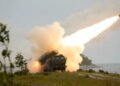
- Naval Containment: China’s surprise live-fire naval drills in the Tasman Sea and a recent submarine-launched ballistic missile test from the South China Sea into the Pacific have vastly accelerated Canberra’s regional defense integration.
- Economic & Cultural Soft Power: Beyond military pacts, Australia is deploying massive financial incentives, including $1.5 billion in development finance annually and a $400 million commitment to integrate PNG into the Australian National Rugby League.
Strategic Catalyst: The Threat of a Pacific PLA Footprint
China’s shifting strategy in the Pacific has evolved from a diplomatic battle with Taiwan into a sustained campaign for economic, infrastructure, and military footholds. Beijing’s ambitions range from controlling undersea cables and deep-sea mining to securing vital maritime shipping routes.
For Canberra, a critical member of the Western Alliance, the prospect of a People’s Liberation Army (PLA) military base in the Pacific represents a tier-one national security threat. Alarms first sounded in 2018 regarding preliminary talks between China and Vanuatu, intensifying in 2022 when Beijing signed a secretive security deal with the Solomon Islands.
Diplomatic Blitzkrieg: Weaving the Security Net
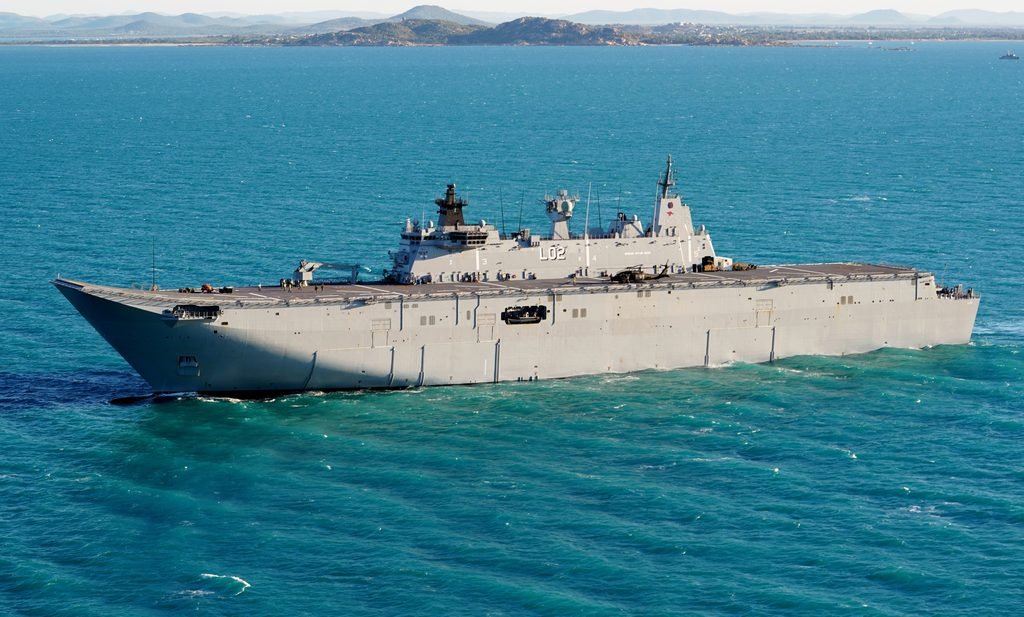
To counter this encirclement, Prime Minister Anthony Albanese and Foreign Minister Penny Wong launched a diplomatic blitz under the “Pacific Step-up” strategy. The objective was straightforward: cement Australia as the unquestioned security partner of choice, thereby foreclosing opportunities for Chinese military integration.
The results are historically unprecedented. The most significant breakthrough is the Pukpuk Treaty with Papua New Guinea. This landmark pact not only mandates mutual defense if either nation is attacked but also ensures Australia’s military access to PNG facilities. Crucially, it serves as a geographic bulwark immediately north of the Australian mainland.
The strategy applies a spectrum of tailored coercion and support. The Falepili Union with Tuvalu leverages climate survival—offering climate mobility and adaptation—in exchange for an Australian veto over Tuvalu’s external defense agreements. A similar veto mechanism was secured with Nauru in 2024.
The Cost of Influence: Economics and Soft Power
While security is the ultimate prize, Australia’s toolkit relies heavily on economic underwriting. Australia dominates regional aid, dispersing over $1.5 billion in official development finance in 2024 alone. These financial commitments directly backstop its defense treaties.
Recent twin deals with Fiji—the Vuvale Union and the open-access Ocean of Peace Alliance—commit Australia to $700 million in infrastructure, healthcare, and education investments over the next decade. Vanuatu’s Nakamal Agreement, while stopping short of an outright Australian veto, secured a binding promise from Port Vila to reject foreign military infrastructure.
Australia’s diplomatic triumph is not absolute. Pacific island nations are highly wary of being reduced to geopolitical pawns. While nations like PNG and Fiji embrace Australian security guarantees, they simultaneously court Chinese economic frameworks to maximize their trade leverage.
Australia’s Pacific Treaty Network: Strategic Defense Breakdown
| Bilateral Treaty | Partner Nation | Year | Defense / Security Constraint | Associated Australian Investment/Concessions |
| Pukpuk Treaty | Papua New Guinea | 2025 | Mutual Defense Alliance; Australian access to PNG military facilities. | $400M for National Rugby League integration + extensive defense capability upgrades. |
| Falepili Union | Tuvalu | 2023 | Security Veto: Australia controls Tuvalu’s external defense arrangements. | Climate migration pathways, permanent residency guarantees, disaster response. |
| Bilateral Security Pact | Nauru | 2024 | Security Veto: Australia controls third-party security deals. | Undisclosed financial support and border security frameworks. |
| Nakamal Agreement | Vanuatu | 2025 | Base Blocking: Prohibition of foreign military bases/infrastructure. | Hundreds of millions in financial commitments over the coming decade. |
| Ocean of Peace / Vuvale | Fiji | 2024 | Defense Pact: Open to accession for other Pacific nations. | $700M investment in transnational crime prevention, healthcare, and infrastructure. |
STRATEGIC VERDICT
Australia has successfully outmaneuvered China in the Pacific security domain, shifting from reactive diplomacy to aggressive alliance-building. By exchanging economic life-lines, climate resilience funding, and development aid for hard-security concessions—specifically veto rights and anti-basing clauses—Canberra is methodically locking Beijing out of the Southern Pacific’s military architecture. However, the long-term viability of this strategy relies heavily on Australia’s capacity to maintain its massive financial commitments while navigating Pacific leaders’ desires to maintain lucrative trade ties with China.