Frontline Defense Journal | Objective OSINT & Military Analysis
  • Home
  • Latest Intelligence
  • Domain Of Warfare
    • Naval & Maritime
    • Air & Aerospace
    • Ground Forces & Armor
    • Unmanned & Autonomous Systems
    • Strategic Weapons
  • Regions
    • USA & Americas
    • Europe
    • Middle East
    • Asia & Pacific
  • Defense Archives
  • About Us
    • Who We Are
    • Privacy Policy
    • Terms Of Use
No Result
View All Result
  • Home
  • Latest Intelligence
  • Domain Of Warfare
    • Naval & Maritime
    • Air & Aerospace
    • Ground Forces & Armor
    • Unmanned & Autonomous Systems
    • Strategic Weapons
  • Regions
    • USA & Americas
    • Europe
    • Middle East
    • Asia & Pacific
  • Defense Archives
  • About Us
    • Who We Are
    • Privacy Policy
    • Terms Of Use
Frontline Defense Journal | Objective OSINT & Military Analysis
No Result
View All Result
Frontline Defense Journal | Objective OSINT & Military Analysis
No Result
View All Result
Home Regions Asia & Pacific

Taiwan’s $35B Defense Hike: The Drone ‘Hellscape’ Strategy

September 12, 2026
Reading Time: 6 mins read
A A
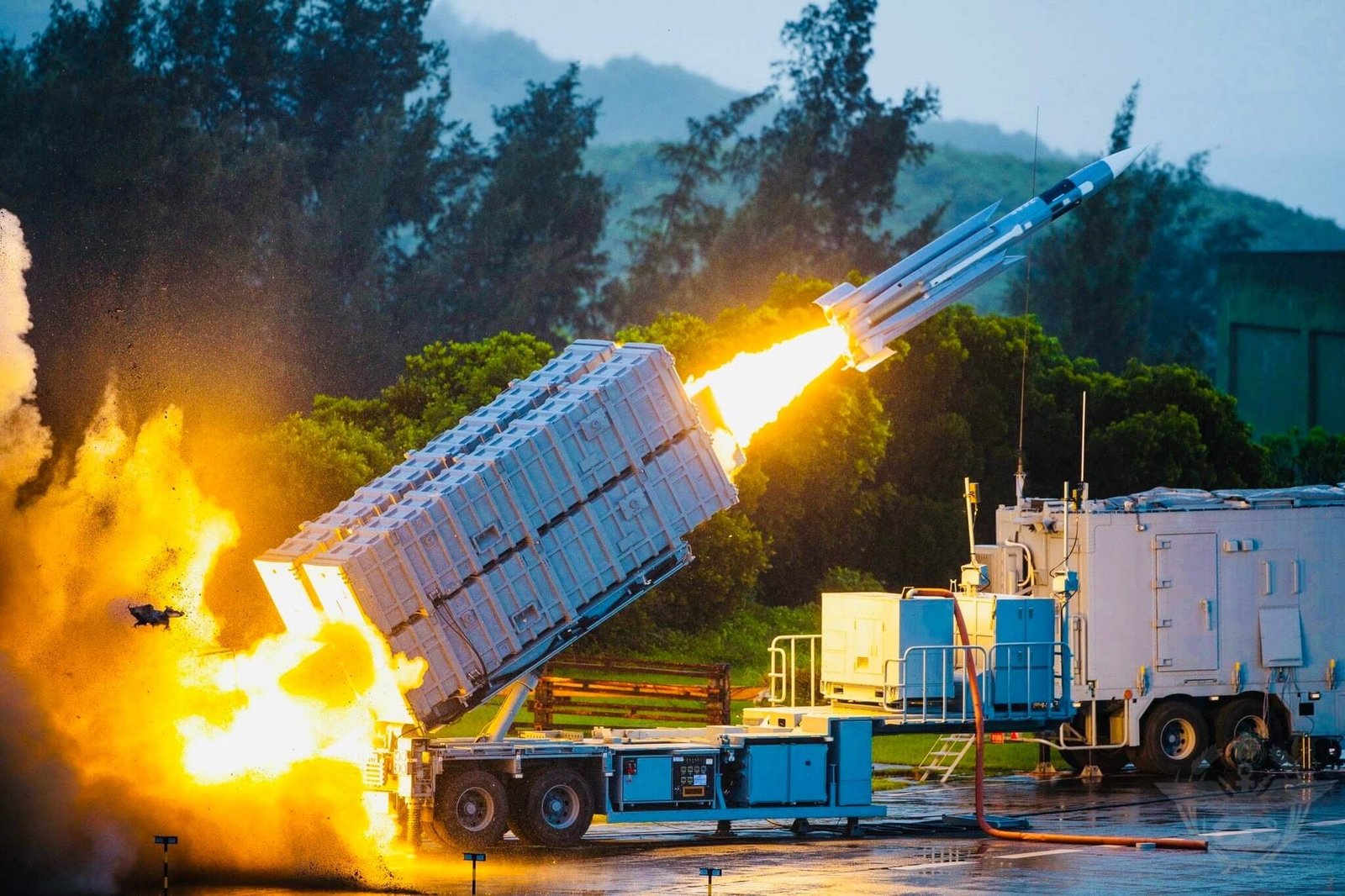
Hsiung Feng III anti-ship missile launched from a missile launchers truck
Share on FacebookShare On Reddit

BOTTON LINE UP FRONT

  • Fiscal Milestone: 2027 defense expenditures are projected to break NT$1 trillion ($35 billion USD), targeting 5% of GDP by 2030.
  • Asymmetric Arsenal: Procurement focus shifting to 200,000+ unmanned aerial, surface, and underwater systems.
  • Legislative Friction: Opposition lawmakers cut a massive $40 billion special budget, forcing a compromised $7.5 billion drone acquisition plan into the general budget.
  • Industrial Surge: Domestic drone exports skyrocketed from 3,472 units in 2024 to 191,373 in H1 2026.

The Asymmetric Pivot: Porcupine to Hellscape

For decades, Taiwan sought to match the People’s Liberation Army (PLA) symmetrically. That strategy is dead. Recognizing China’s overwhelming economic and industrial overmatch, Taipei has fully embraced the “Porcupine Strategy.” The objective is deterrence by denial—making an amphibious invasion prohibitively costly using mobile, survivable, and highly lethal systems.

HF-3 launched by ROCN Tuo Chiang (PGG-618) Taiwan Army
Taiwan’s Porcupine Strategy prioritizes mobile anti-ship and air-defense systems. Source: Youth Daily News

This framework has evolved into the “Hellscape Strategy,” a concept articulated by US Admiral Samuel Paparo in 2024. The operational design calls for flooding the Taiwan Strait with thousands of low-cost, expendable aerial, sea-surface, and underwater drones. By leveraging autonomous swarms, Taiwan aims to bog down a PLA invasion fleet long enough for allied forces to mobilize.

The $35 Billion Question: Budgeting for Deterrence

President Lai is pushing aggressively to expand Taiwan’s military footprint, proposing to raise overall defense spending to 5% of the island’s GDP by 2030. The proposed 2026 state budget allocates $31 billion USD for defense operations, explicitly earmarking nearly $2 billion for domestic drone development.

Funding this architecture requires bypassing traditional budgetary constraints. The executive branch historically utilizes multi-year “special budgets” for major weapons acquisitions. The administration initially proposed a massive $40 billion special budget over eight years, but opposition lawmakers slashed it by more than a third, stripping out funds for domestic drone manufacturing.

The government countered with a $6.6 billion, six-year special budget for 200,000+ new uncrewed vehicles. Ultimately, the opposition-led legislature approved a $7.5 billion framework, but mandated it be drawn from the general budget instead. This exposes the acquisition pipeline to annual caps, inter-service competition, and prolonged parliamentary delays.

The Domestic Drone Boom

Despite political friction, Taiwan’s domestic defense-industrial base is scaling rapidly. Driven almost entirely by global demand sparked by conflicts in Ukraine and the Middle East, Taiwan’s drone exports surged from a mere 3,472 units in 2024 to 191,373 units in the first half of 2026 alone.
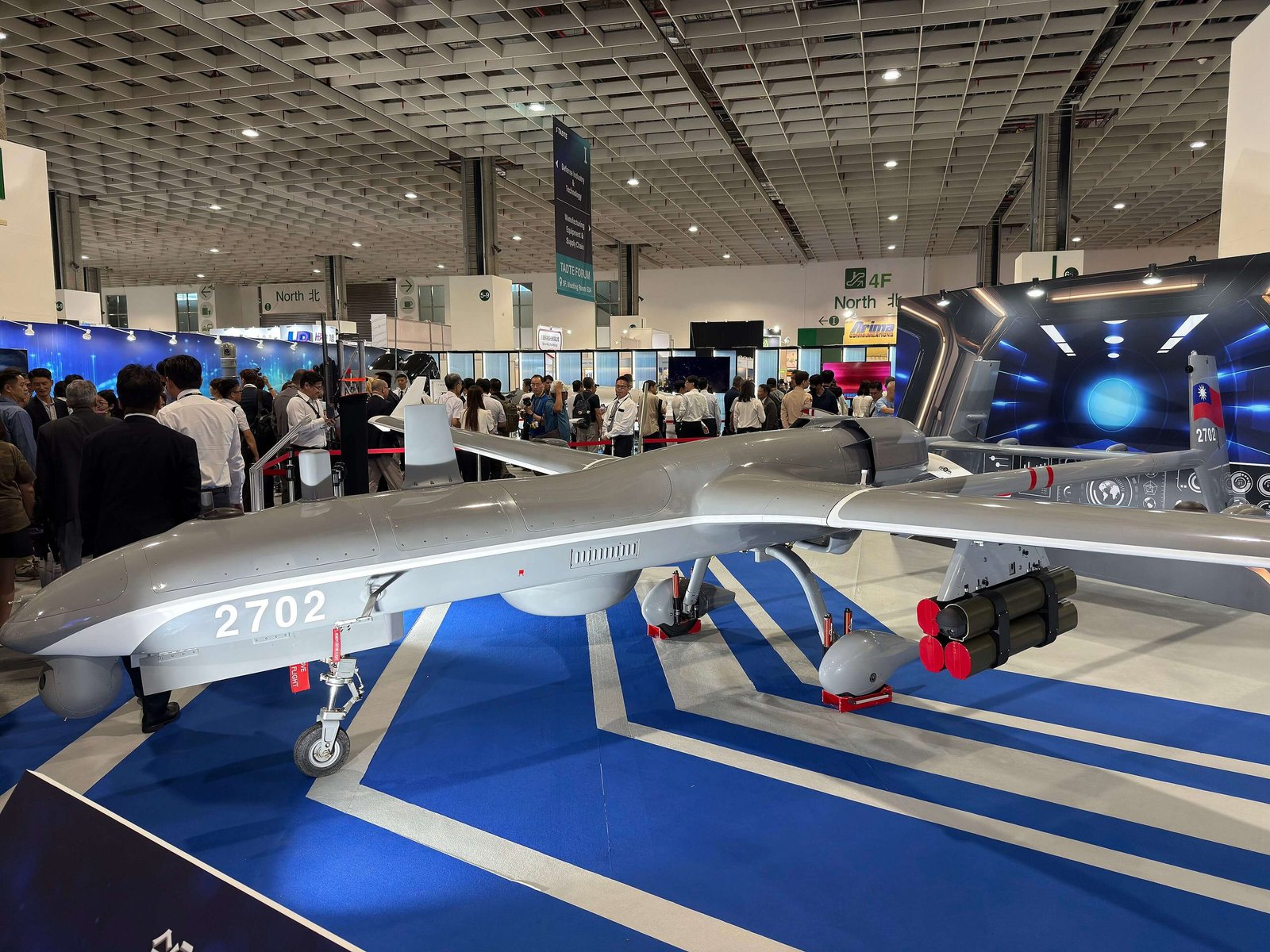
NCSIST Albatross II UAV 2702 in 2025 Taipei Aerospace & Defense Technology Exhibition
Taiwan’s domestic drone industry output has surged, heavily driven by export demand. Image by: Kenchen

Scaling indigenous manufacturing is critical to reducing reliance on US weapons systems and insulating Taiwan from potential blockades. While foreign sales have established active production lines, the defense ministry’s massive procurement goals are intended to provide stable, long-term domestic demand. Whether the convoluted legislative funding mechanism undermines this stability remains a critical vulnerability.

Gridlock, Manpower, and Civil Defense Gaps

Procuring hardware is only one component of Taiwan’s deterrence calculus. Operationalizing these systems requires a resilient society and adequate manpower, both of which face severe structural challenges. The recent Han Kuang military exercises tested whole-of-society defense mechanisms, incorporating critical infrastructure operators and simulating wartime internet blackouts.
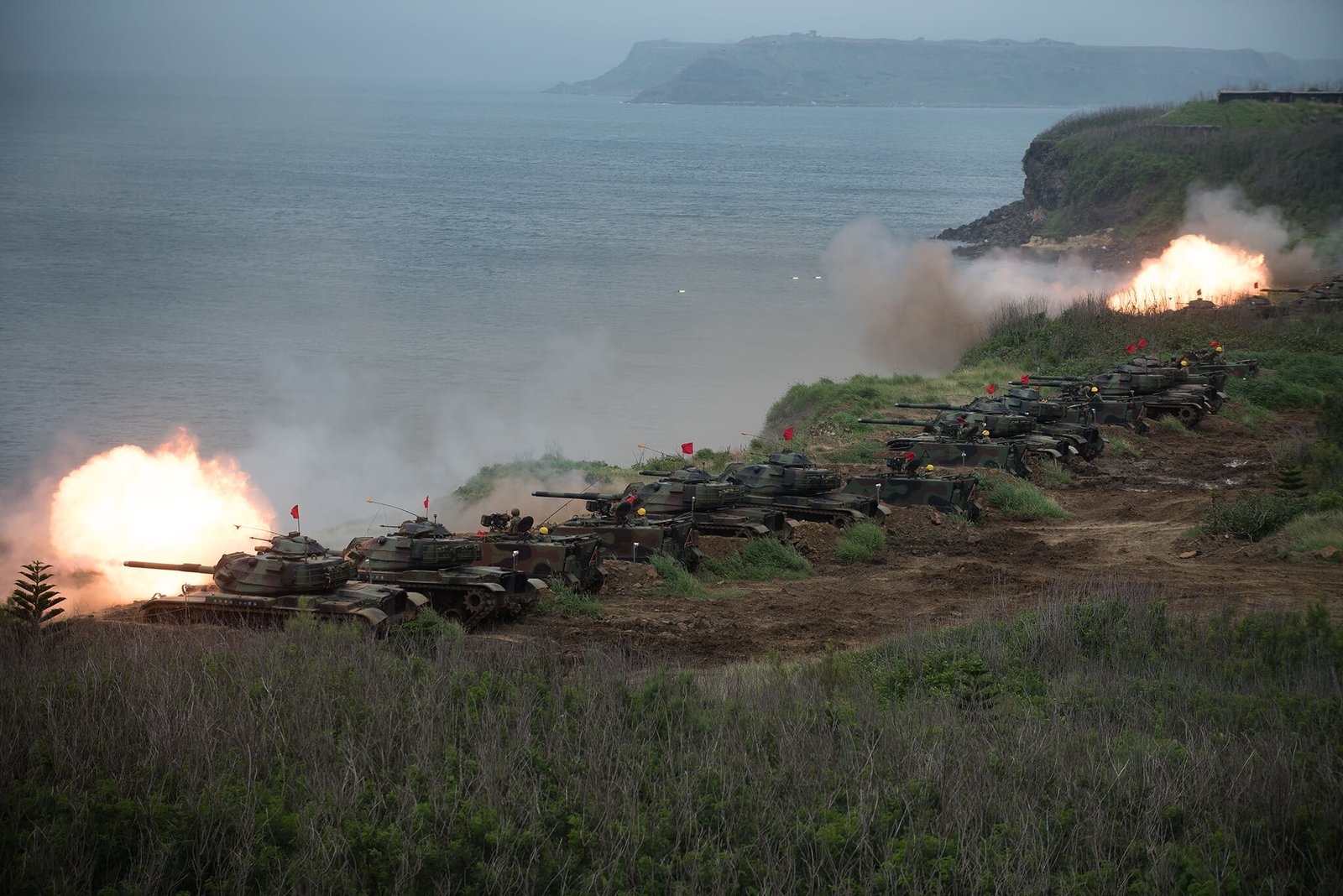
Han Kuang military exercises focus on anti-landing operations and civil-military integration
Han Kuang military exercises focus on anti-landing operations and civil-military integration. Source: Office of the President, Republic of China (Taiwan)

Despite these drills, military analysts assess that Taiwan’s civil defense network remains psychologically and practically underprepared. Furthermore, the armed forces are grappling with a severe manpower and morale crisis. While mandatory conscription terms have been extended, the seamless integration of conscripts into highly technical, drone-centric formations remains an ongoing strategic hurdle.

Taiwan’s Defense Posture

Strategic MetricCurrent Status / Target
2027 Proposed Defense Budget> NT$1 Trillion (~$35 Billion USD)
Long-Term Spending Target5% of GDP by 2030
Drone Procurement Goal200,000+ uncrewed systems
DPP Proposed Drone Budget$6.6 Billion (Over 6 years, Special Budget)
KMT Approved Drone Budget$7.5 Billion (Over 6 years, General Budget)
Drone Export Volume3,472 (2024) ➔ 191,373 (H1 2026)

Taiwan possesses the technological base and the strategic blueprint necessary to implement a formidable asymmetric defense. The transition to the drone-heavy Hellscape strategy correctly identifies the PLA’s vulnerabilities. However, Taipei’s greatest threat may not be Chinese shipbuilding, but its own domestic gridlock. For deterrence to hold, the government must streamline its defense acquisition process, stabilize long-term funding for its domestic industrial base, and aggressively resolve its critical manpower shortages. A strategy on paper, no matter how lethal, cannot deter a physical invasion.

Tags: Indo-PacificTaiwanuav

Related Posts

MIM-104 Patriot surface-to-air missile system launching an interceptor at night against an incoming ballistic target.
Europe

Russia Strikes NATO Border Amid Ukraine Interceptor Crisis

September 13, 2026
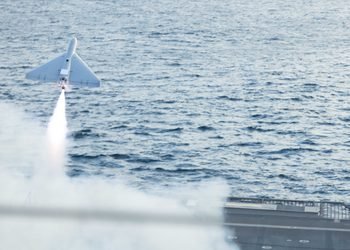
FLM-136 LUCAS
Middle East

Gulf Escalation: Qeshm Strike, LUCAS Drones & China Intel

September 13, 2026
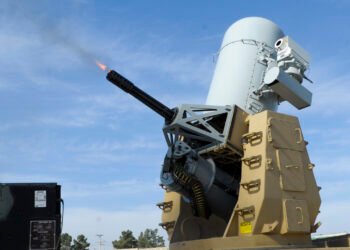
A Land-based Phalanx Weapon System (LPWS) deployed for Counter Rocket, Artillery, and Mortar (C-RAM) duties.
Unmanned & Autonomous Systems

USAF Pursues Medium-Caliber Guns to Defeat Drone Swarms

September 13, 2026
Next Post
A member of British No. 9 Commando at Anzio equipped for a patrol with his Bren gun 5 March 1944.

The Evolution of the British Army Infantry Section (WWI to 2026)

Leave a Reply Cancel reply

Your email address will not be published. Required fields are marked *

I agree to the Terms & Conditions and Privacy Policy.

Latest Intelligence

ASC 890 AEW&C: Ukraine’s New Aerial Radar Blinds Russia

US Navy Ohio-Class SSBN: America’s Ultimate Nuke Deterrent

Russia Strikes NATO Border Amid Ukraine Interceptor Crisis

Gulf Escalation: Qeshm Strike, LUCAS Drones & China Intel

USAF Pursues Medium-Caliber Guns to Defeat Drone Swarms

Targeting Pickaxe Mountain: GBU-72 Strike on Iran Site

Domain Of Warfare

Russia’s hybrid warfare tactics against the UK, from GRU cyberattacks to covert Akula-class subsea operations.
Europe

Russia’s Shadow War on the UK: Cyber, Sabotage & Poseidon

A member of British No. 9 Commando at Anzio equipped for a patrol with his Bren gun 5 March 1944.
Defense Archives

The Evolution of the British Army Infantry Section (WWI to 2026)

Map of the Falkland Islands
USA & Americas

Could Argentina Retake the Falklands in 2026? A Military Analysis

A B-2 Spirit bomber deployed from Whiteman Air Force Base, Missouri, flies near Joint Base Pearl Harbor-Hickam, Hawaii, during an interoperability training mission Jan. 15, 2019. The aircraft are flying in support of a U.S. Strategic Command Bomber Task Force mission. U.S. Strategic Command’s Bomber Forces regularly conduct combined theater security cooperation engagements with allies and partners, demonstrating the U.S. capability to command, control and conduct bomber missions across the globe.
Air & Aerospace

B-2 Spirit Stealth Bomber: $2B Payload & Tactical Breakdown

Defense Archives

The Evolution of the British Army Infantry Section (WWI to 2026)

A member of British No. 9 Commando at Anzio equipped for a patrol with his Bren gun 5 March 1944.

BOTTOM LINE UP FRONT WWI & The All Arms Concept (1916-1918): Prompted by massive losses at the Somme, the British...

Read moreDetails

WWII Submachine Gun Production Costs: Economics of Infantry Firepower

A British soldier equipped with a Thompson M1928 submachine gun in November 1940

BOTTOM LINE UP FRONT American Economic Burden: The U.S. Thompson M1A1 was the most expensive SMG fielded by any major...

Read moreDetails

Operation Serval: French Expeditionary Tactics & Mobile Warfare in Mali

Northern Mali conflict Map 2013 Operation Serval

BLUF Immediate Threat Nullification: An initial assault force of 1,000+ Islamist fighters mounted in up to 300 technicals was successfully...

Read moreDetails

USMC J-Series Division: Force Restructuring for the Nuclear Battlefield

U.S. Marines conducting amphibious operations in Landing Vehicle Tracked (LVT) platforms during the late 1940s.

Bottom Line Up Front Catastrophic Force Contraction: Active-duty USMC personnel collapsed from a wartime peak of 485,000 in August 1945...

Read moreDetails

Frontline Defense is an independent, objective analysis platform. The content provided on this website, including but not limited to technical breakdowns, military hardware comparisons, defense budget reports, and open-source intelligence (OSINT) analyses, is strictly for educational, historical, and informational purposes. Frontline Defense is not affiliated with, endorsed by, or acting on behalf of any government agency, department of defense, armed forces branch, or defense contractor. All content on this site represents independent research based strictly on unclassified, publicly available data and open-source records at the time of writing. Nothing published on this website should be construed as official military guidance, defense strategy consulting, or government policy.

Follow Us

Domain Of Warfare

  • Naval & Maritime
  • Air & Aerospace
  • Ground Forces & Armor
  • Strategic Weapons
  • Unmanned & Autonomous Systems

Regions

  • USA & Americas
  • Europe
  • Middle East
  • Asia & Pacific
  • About Us
  • Privacy Policy
  • Terms Of Use

© 2026 | Fronline Defense Journal. All Rights Reserved

No Result
View All Result
  • Home
  • Latest Intelligence
  • Domain Of Warfare
    • Naval & Maritime
    • Air & Aerospace
    • Ground Forces & Armor
    • Unmanned & Autonomous Systems
    • Strategic Weapons
  • Regions
    • USA & Americas
    • Europe
    • Middle East
    • Asia & Pacific
  • Defense Archives
  • About Us
    • Who We Are
    • Privacy Policy
    • Terms Of Use

© 2026 | Fronline Defense Journal. All Rights Reserved