Frontline Defense Journal | Objective OSINT & Military Analysis
  • Home
  • Latest Intelligence
  • Domain Of Warfare
    • Naval & Maritime
    • Air & Aerospace
    • Ground Forces & Armor
    • Unmanned & Autonomous Systems
    • Strategic Weapons
  • Regions
    • USA & Americas
    • Europe
    • Middle East
    • Asia & Pacific
  • Defense Archives
  • About Us
    • Who We Are
    • Privacy Policy
    • Terms Of Use
No Result
View All Result
  • Home
  • Latest Intelligence
  • Domain Of Warfare
    • Naval & Maritime
    • Air & Aerospace
    • Ground Forces & Armor
    • Unmanned & Autonomous Systems
    • Strategic Weapons
  • Regions
    • USA & Americas
    • Europe
    • Middle East
    • Asia & Pacific
  • Defense Archives
  • About Us
    • Who We Are
    • Privacy Policy
    • Terms Of Use
Frontline Defense Journal | Objective OSINT & Military Analysis
No Result
View All Result
Frontline Defense Journal | Objective OSINT & Military Analysis
No Result
View All Result
Home Regions Europe

Russia Strikes NATO Border Amid Ukraine Interceptor Crisis

September 13, 2026
Reading Time: 5 mins read
A A
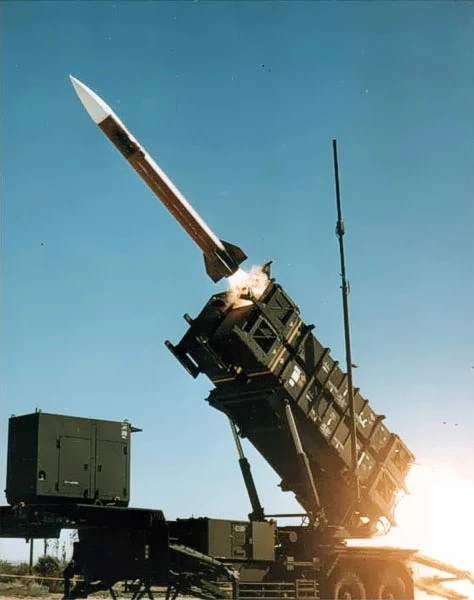
MIM-104 Patriot surface-to-air missile system launching an interceptor at night against an incoming ballistic target.
Share on FacebookShare On Reddit
  • NATO Border Probe: A Russian drone struck a cargo truck just 800 meters from the Polish border at the Yahodyn-Dorohusk crossing, while a secondary strike hit a train locomotive 2 kilometers away.
  • Polish Airspace Defense: The Polish Armed Forces immediately scrambled F-16 multirole fighters, attack helicopters, and a Saab airborne early warning (AEW) aircraft to secure the NATO perimeter.
  • Russian Missile Output: Russia is now independently producing 140 ballistic missiles per month, creating a massive air defense deficit for Kyiv.
  • Interceptor Shortfall: Under NATO’s standard 2:1 intercept ratio, neutralizing 140 missiles requires 280 Patriot-class interceptors monthly—a figure vastly exceeding the entire Western military-industrial complex’s monthly production rate.
  • Asymmetric Economic Damage: Ukrainian long-range deep strikes have reduced Russian oil output to a 17-year low, representing a 30% reduction in production volume compared to pre-invasion levels.

Probing the NATO Boundary

The recent bombardment near the Yahodyn-Dorohusk crossing represents a calculated probe by Moscow to test NATO’s escalation threshold. By striking a cargo truck 800 meters from the frontier and a passenger train locomotive 2 kilometers away, Russia is attempting to interdict Western logistics networks before critical military aid disperses across Ukraine. The Polish response was immediate but strictly defensive, scrambling F-16s and a Saab airborne early warning (AEW) aircraft to ensure no sovereign airspace violations occurred.

Ukrainian Foreign Minister Andrii Sybiha classified the near-miss as a direct terror threat to the EU and NATO, urging allies to implement a full trade embargo and comprehensive sanctions against Russia’s military-industrial complex. In Washington, the U.S. House of Representatives is evaluating a newly proposed sanctions package that passed the Senate, though its immediate strategic impact remains debatable.
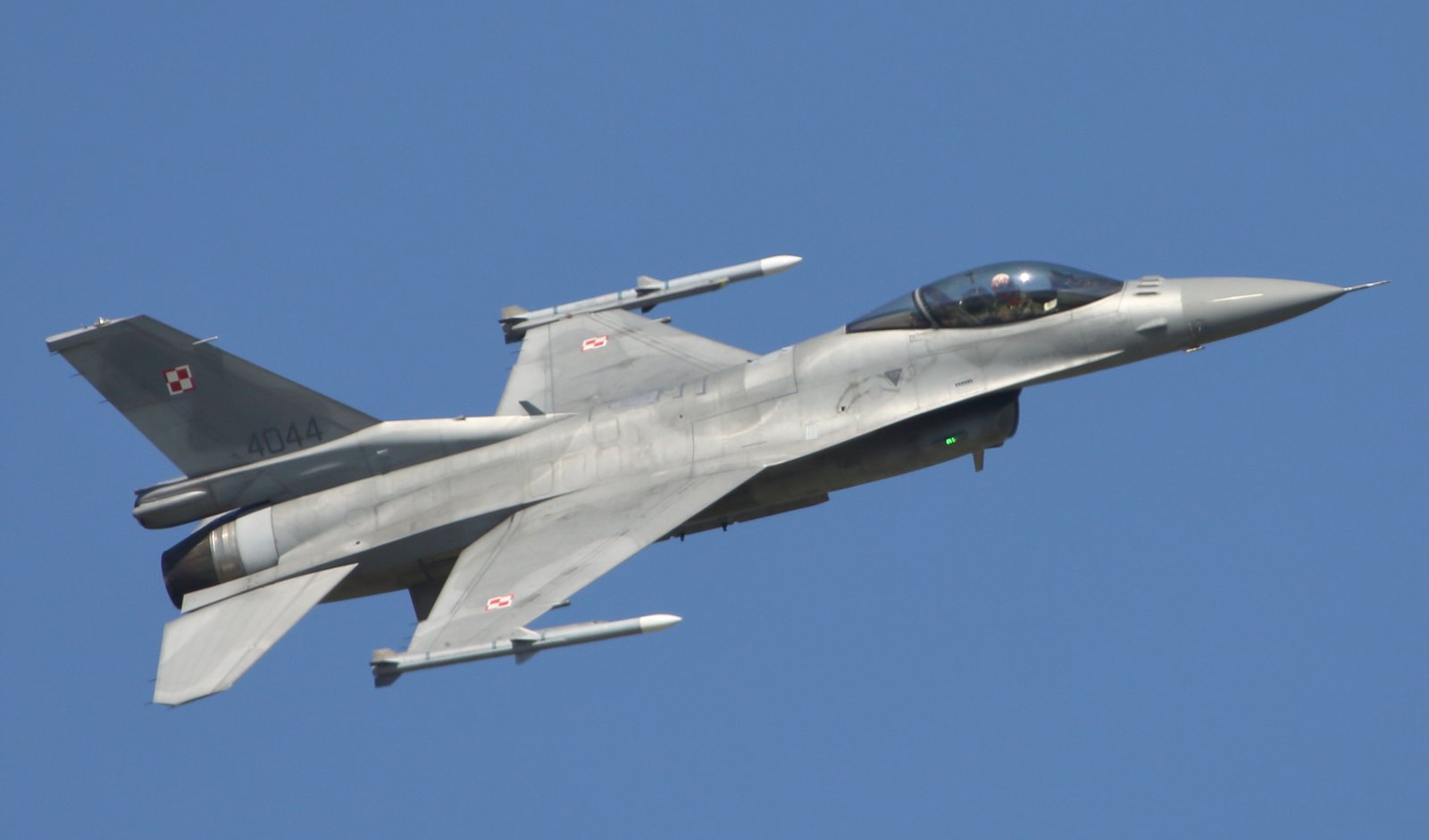
Polish Air Force F-16C Block 52+ fighter jet armed for intercept missions.
Polish Armed Forces routinely scramble F-16 multirole fighters to secure NATO’s eastern flank during mass Russian drone and missile barrages.Image by Konflikty.pl

The Interceptor Math Deficit

The most alarming development on the frontline is the unsustainable arithmetic of current air defense operations. President Volodymyr Zelenskyy confirmed that Russian defense industries are now manufacturing 140 ballistic missiles per month. Under standard NATO air defense doctrine, which dictates a 2-to-1 interceptor launch ratio to guarantee a kinetic kill, Ukraine requires 280 Patriot-class or equivalent interceptors monthly just to neutralize the ballistic threat.

Producing 280 complex surface-to-air interceptors in a 30-day cycle is currently impossible for the Western defense industrial base. Consequently, Kyiv has adjusted its emergency requirement to a baseline of 100-120 interceptors monthly for the upcoming winter. To bridge this gap, Ukraine is actively lobbying to tap directly into existing U.S. military reserve stockpiles and exploring emergency procurement from undisclosed Middle Eastern partners.

Russian Vulnerabilities and Economic Disruption

Despite its missile production advantages, the Russian Federation is experiencing significant internal friction and supply chain strain. The mass deployment of jet-powered Shahed-class attack drones has forced a reduction in overall UAV volume due to manufacturing trade-offs. More importantly, Ukrainian deep-strike operations using autonomous systems have systematically dismantled Russian energy infrastructure and oil refinement capabilities.

According to the International Energy Agency and Bloomberg, Russia’s oil production has plummeted to a 17-year low. Output is down 30% from pre-2022 levels, leading to widespread domestic fuel rationing. This severe disruption degrades the Kremlin’s ability to service both its wartime logistics and civilian sectors simultaneously. Furthermore, Ukrainian strikes have severely depleted Russia’s own long-range air defense stockpiles, forcing Moscow to redeploy interceptors away from the frontlines to defend critical infrastructure deep within its territory.

Metrics & Combat Production Assessment

Metric / Weapon SystemCurrent Status / VolumeOperational Impact
Russian Ballistic Missiles140 units / monthSustained high-intensity bombardment capability.
Required NATO Interceptors280 units / month (2:1 Ratio)Far exceeds current Western production capacity.
Ukraine Winter Interceptor Goal100-120 units / monthHighly dependent on draining US military reserve stockpiles.
Russian Oil Production VolumeDown 30% (17-year low)Forces domestic fuel rationing; degrades war economy funding.
Yahodyn-Dorohusk Strike800 meters from PolandTests NATO red lines; forces Polish combat air patrols.

The strategic picture entering the winter months heavily favors Russian offensive mass, exposing a critical structural vulnerability in NATO’s air defense supply chain. The math is absolute: Western defense industries cannot currently match the production output of Russian ballistic missile factories. Ukraine’s reliance on draining finite U.S. and European reserve stockpiles poses a direct risk to broader Western operational readiness in the Middle East and the Indo-Pacific. However, Ukraine’s successful asymmetric degradation of the Russian oil industry—down 30%—provides a highly effective counter-strategy, leveraging long-range autonomous drones to economically cripple Moscow’s war machine while compensating for frontline interceptor shortages.

Tags: Air DefenseNATOuav

Related Posts

Saab 340 AEW&C (ASC 890) aircraft featuring the fixed rectangular Erieye AESA radar fairing on its fuselage.
Air & Aerospace

ASC 890 AEW&C: Ukraine’s New Aerial Radar Blinds Russia

September 14, 2026
FLM-136 LUCAS
Middle East

Gulf Escalation: Qeshm Strike, LUCAS Drones & China Intel

September 13, 2026
A Land-based Phalanx Weapon System (LPWS) deployed for Counter Rocket, Artillery, and Mortar (C-RAM) duties.
Unmanned & Autonomous Systems

USAF Pursues Medium-Caliber Guns to Defeat Drone Swarms

September 13, 2026
Next Post
USS Ohio Class Ballistic Missile Submarine.

US Navy Ohio-Class SSBN: America’s Ultimate Nuke Deterrent

Leave a Reply Cancel reply

Your email address will not be published. Required fields are marked *

I agree to the Terms & Conditions and Privacy Policy.

Latest Intelligence

ASC 890 AEW&C: Ukraine’s New Aerial Radar Blinds Russia

US Navy Ohio-Class SSBN: America’s Ultimate Nuke Deterrent

Gulf Escalation: Qeshm Strike, LUCAS Drones & China Intel

USAF Pursues Medium-Caliber Guns to Defeat Drone Swarms

Targeting Pickaxe Mountain: GBU-72 Strike on Iran Site

Russia’s Shadow War on the UK: Cyber, Sabotage & Poseidon

Domain Of Warfare

A member of British No. 9 Commando at Anzio equipped for a patrol with his Bren gun 5 March 1944.
Defense Archives

The Evolution of the British Army Infantry Section (WWI to 2026)

Hsiung Feng III anti-ship missile launched from a missile launchers truck
Asia & Pacific

Taiwan’s $35B Defense Hike: The Drone ‘Hellscape’ Strategy

Map of the Falkland Islands
USA & Americas

Could Argentina Retake the Falklands in 2026? A Military Analysis

A B-2 Spirit bomber deployed from Whiteman Air Force Base, Missouri, flies near Joint Base Pearl Harbor-Hickam, Hawaii, during an interoperability training mission Jan. 15, 2019. The aircraft are flying in support of a U.S. Strategic Command Bomber Task Force mission. U.S. Strategic Command’s Bomber Forces regularly conduct combined theater security cooperation engagements with allies and partners, demonstrating the U.S. capability to command, control and conduct bomber missions across the globe.
Air & Aerospace

B-2 Spirit Stealth Bomber: $2B Payload & Tactical Breakdown

Defense Archives

The Evolution of the British Army Infantry Section (WWI to 2026)

A member of British No. 9 Commando at Anzio equipped for a patrol with his Bren gun 5 March 1944.

BOTTOM LINE UP FRONT WWI & The All Arms Concept (1916-1918): Prompted by massive losses at the Somme, the British...

Read moreDetails

WWII Submachine Gun Production Costs: Economics of Infantry Firepower

A British soldier equipped with a Thompson M1928 submachine gun in November 1940

BOTTOM LINE UP FRONT American Economic Burden: The U.S. Thompson M1A1 was the most expensive SMG fielded by any major...

Read moreDetails

Operation Serval: French Expeditionary Tactics & Mobile Warfare in Mali

Northern Mali conflict Map 2013 Operation Serval

BLUF Immediate Threat Nullification: An initial assault force of 1,000+ Islamist fighters mounted in up to 300 technicals was successfully...

Read moreDetails

USMC J-Series Division: Force Restructuring for the Nuclear Battlefield

U.S. Marines conducting amphibious operations in Landing Vehicle Tracked (LVT) platforms during the late 1940s.

Bottom Line Up Front Catastrophic Force Contraction: Active-duty USMC personnel collapsed from a wartime peak of 485,000 in August 1945...

Read moreDetails

Frontline Defense is an independent, objective analysis platform. The content provided on this website, including but not limited to technical breakdowns, military hardware comparisons, defense budget reports, and open-source intelligence (OSINT) analyses, is strictly for educational, historical, and informational purposes. Frontline Defense is not affiliated with, endorsed by, or acting on behalf of any government agency, department of defense, armed forces branch, or defense contractor. All content on this site represents independent research based strictly on unclassified, publicly available data and open-source records at the time of writing. Nothing published on this website should be construed as official military guidance, defense strategy consulting, or government policy.

Follow Us

Domain Of Warfare

  • Naval & Maritime
  • Air & Aerospace
  • Ground Forces & Armor
  • Strategic Weapons
  • Unmanned & Autonomous Systems

Regions

  • USA & Americas
  • Europe
  • Middle East
  • Asia & Pacific
  • About Us
  • Privacy Policy
  • Terms Of Use

© 2026 | Fronline Defense Journal. All Rights Reserved

No Result
View All Result
  • Home
  • Latest Intelligence
  • Domain Of Warfare
    • Naval & Maritime
    • Air & Aerospace
    • Ground Forces & Armor
    • Unmanned & Autonomous Systems
    • Strategic Weapons
  • Regions
    • USA & Americas
    • Europe
    • Middle East
    • Asia & Pacific
  • Defense Archives
  • About Us
    • Who We Are
    • Privacy Policy
    • Terms Of Use

© 2026 | Fronline Defense Journal. All Rights Reserved