KEY INTELLIGENCE
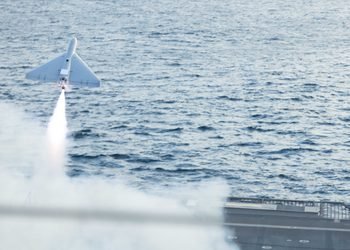
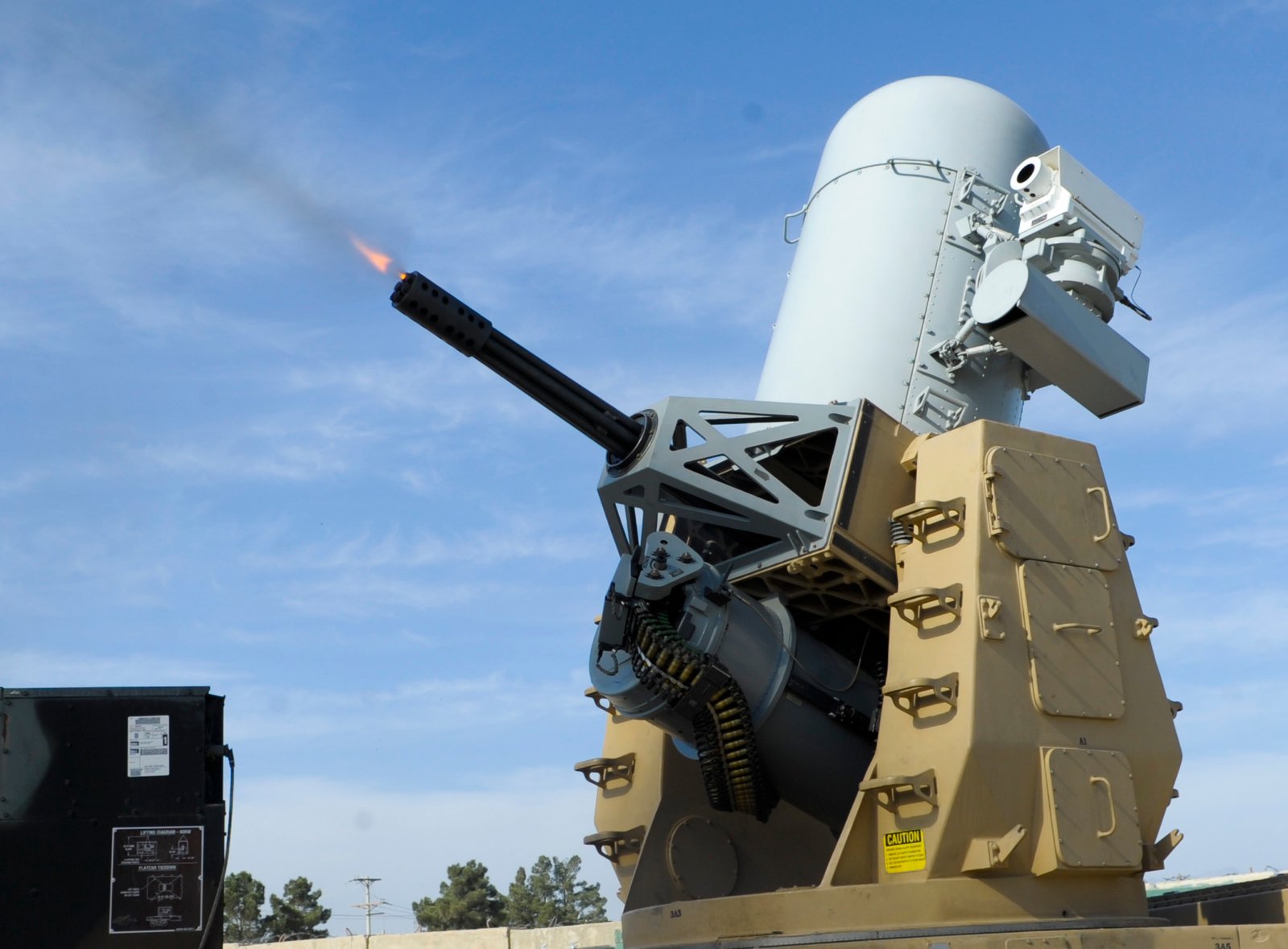
- Threat Spectrum: The proposed GBAD system must kinetically defeat targets ranging from commercial Group 1 quadcopters to Group 5 UAS operating above 18,000 feet, alongside subsonic cruise missiles.
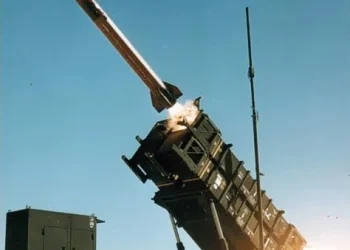
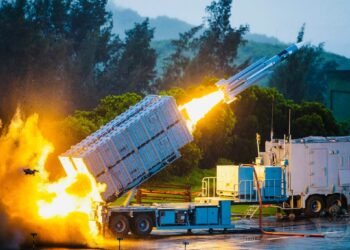
- Cost-per-Engagement: A core requirement is establishing a deep magazine with a low per-shot cost, preventing the asymmetric financial attrition of finite, multi-million-dollar Patriot interceptors.
- Baseline Capabilities: The Air Force stipulates 15 primary requirements, heavily weighing salvo probability of kill ($P_k$), raid handling for swarm defense, and extreme elevation coverage to eliminate overhead blind spots.
- Expeditionary Footprint: Emphasizing Agile Combat Employment (ACE), the weapon system must be modular, lightweight, and rapidly transportable to secure pop-up, austere airfields across the Pacific and Middle East.
The Imperative for an Organic Air Force GBAD Mission
The era of sprawling, static air bases shielded by vast U.S. Army air defense umbrellas is functionally over. The mass proliferation of cheap, precision-guided UAS and cruise missiles forces a tactical paradigm shift where every forward operating location is a frontline target. Recognizing the Army’s finite GBAD resources, the Air Force is pivoting to organically protect its own assets.
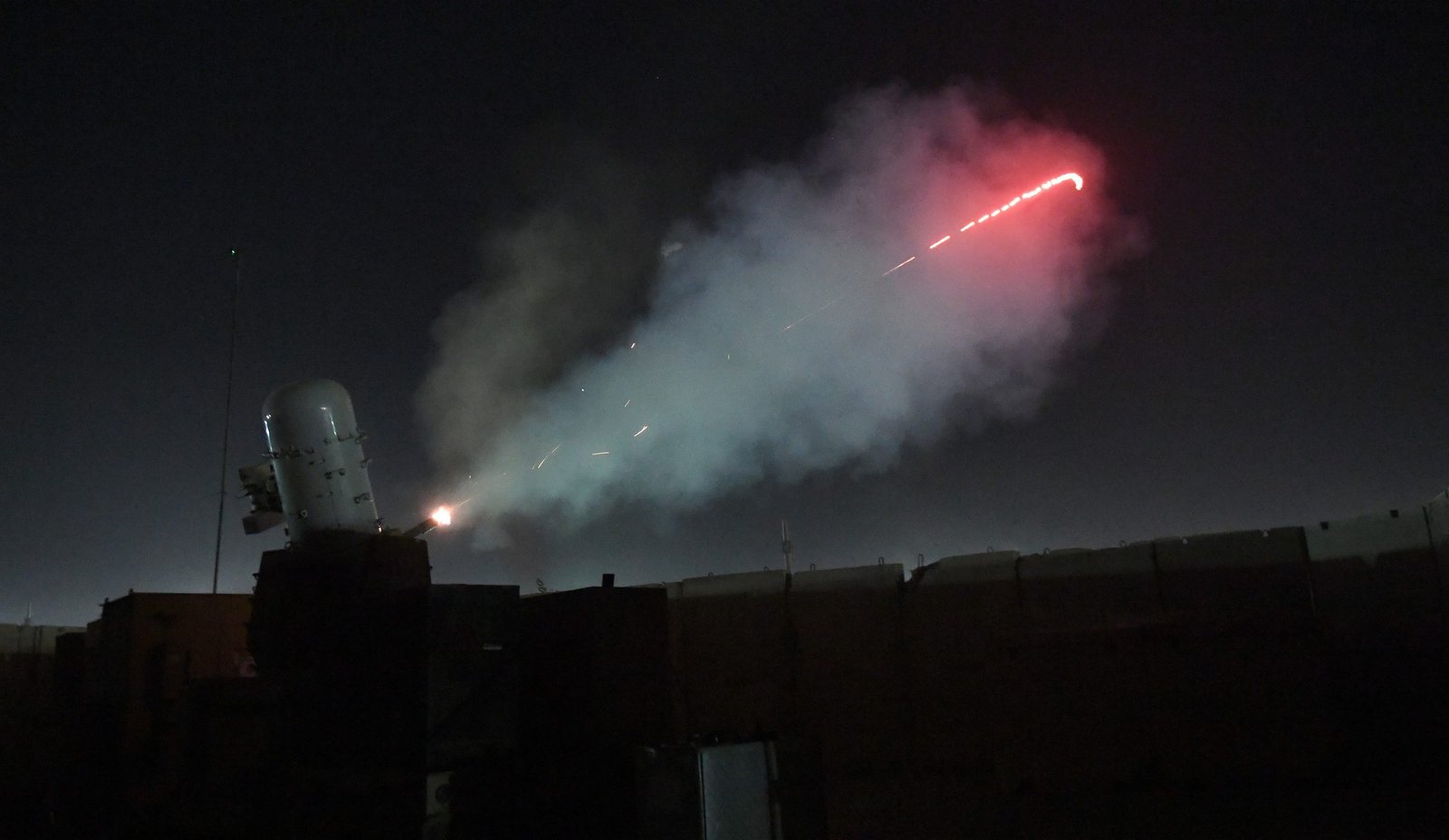
By securing its perimeter with a dedicated medium-caliber gun, the Air Force closes a critical vulnerability in Agile Combat Employment (ACE) doctrine. Airmen operating from distributed, austere highway airstrips require defenses that maneuver natively, eliminating inter-branch deployment dependencies and expanding the survival window of tactical aviation.
Analyzing the 15 Baseline System Requirements
The Air Force’s September 3 RFI identifies 15 baseline capabilities, revealing a pragmatic approach to layered defense. Key among these are salvo probability of kill ($P_k$), effective slant range, and rapid raid handling. These metrics dictate the system’s ability to track and kinetically engage saturated target environments approaching from multiple vectors.
Crucially, the service demands extensive elevation coverage to engage targets directly overhead, compensating for the inherent altitude limitations of traditional cannons. To achieve these metrics rapidly, the Air Force is willing to accept trade-space compromises, balancing organic sensor phenomenology against maximum transportability and low munition costs.
Layered Defense and Form Factor Speculation
This new medium-caliber weapon will not operate in isolation; it is designed to plug directly into a layered defensive matrix. It will operate alongside existing non-kinetic Air Force C-UAS tools like the THOR and Mjolnir high-power microwave systems, as well as the X-MADIS electronic warfare suite.
While the exact configuration remains undecided, industry solutions could range from a 30mm cannon mounted on a Joint Light Tactical Vehicle (JLTV)—similar to the Marine Corps MADIS—to containerized pop-up turrets. Palletized configurations, such as the Rheinmetall Skyranger 35 turret, offer the precise modularity demanded by austere theater operations.
| Threat Category | Altitude Profile | Target Examples | Defeating Asset (Layered Defense) | Strategic Cost Dynamics |
| Group 1-2 UAS | < 3,500 ft | FPV Drones, Loitering Munitions | X-MADIS (EW), THOR, Medium-Caliber Gun | Extremely low cost; mandates cheap kinetic or non-kinetic defeat mechanisms. |
| Group 3-5 UAS | Up to > 18,000 ft | Shahed-136, MQ-9 class | Medium-Caliber Gun, Mjolnir | Requires moderate slant range and deep magazines for high $P_k$ per salvo. |
| Subsonic Cruise Missiles | Terrain-hugging | Land Attack Cruise Missiles (LACM) | Medium-Caliber Gun, Point Defense Missiles | Fast-moving; requires rapid raid handling and integrated sensor C2. |
| Ballistic Missiles | Exospheric / High-Arc | SRBMs, MRBMs | Patriot PAC-3, THAAD, SM-3 | High interceptor cost; must be preserved by defeating lower-tier threats with guns. |
The U.S. Air Force’s transition into the organic GBAD domain represents a vital structural evolution. Relying exclusively on finite Patriot interceptors to defeat $20,000 kamikaze drones is mathematically unsustainable and strategically negligent in a near-peer conflict. By procuring an organic, medium-caliber kinetic system, the Air Force achieves a critical force multiplier: the ability to autonomously secure Agile Combat Employment nodes while preserving the Joint Force’s high-end interceptors strictly for complex ballistic threats.