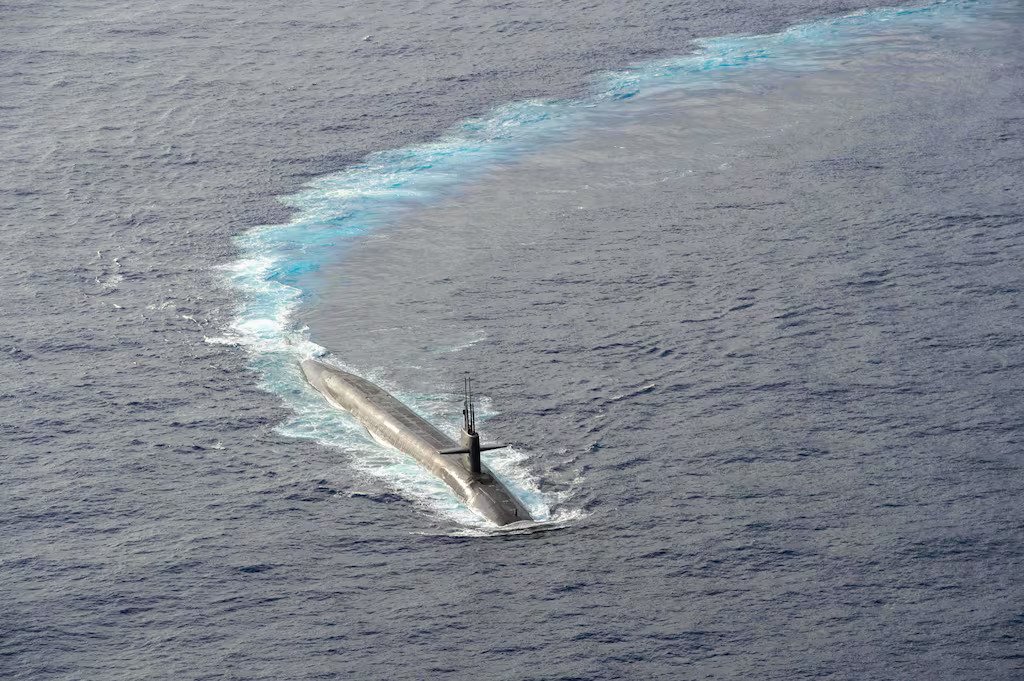
BOTTOM LINE UP FRONT
- Capital Ship Scale: At 560 feet long and 20,700 US tons displaced submerged, the Ohio-class is nearly three times larger than a Los Angeles-class SSN and twice the size of a Block V Virginia-class attack submarine.
- Strategic Firepower: Armed with up to 20 Trident II D5 SLBMs (reduced from 24 under New START treaty compliance), each missile delivers up to eight W88 455-kiloton nuclear warheads across ranges exceeding 4,700 miles.
- SSGN Precision Strike: Four converted Ohio hulls house 154 Tomahawk Land Attack Missiles (TLAMs) across 22 modified launch tubes, providing localized strike density rivaling an entire surface battle group alongside SEAL lockout capabilities.
- Next-Gen Delivery Delays: The lead ship of the 21,140-ton Columbia-class (USS District of Columbia) is approximately 18 months behind schedule, pushing expected delivery into late 2028 or early 2029 and compressing the force-generation transition window.
Stealth and Second-Strike Doctrine: The Ohio-Class Architecture
The fundamental mission of the Ohio-class SSBN is not to actively hunt enemy combatants, but to slip undetected into the ocean depths, survive an initial nuclear exchange, and guarantee absolute retribution. This second-strike capability ensures deterrence remains intact even if land-based ICBM silos and strategic bomber bases are neutralized in a surprise assault.
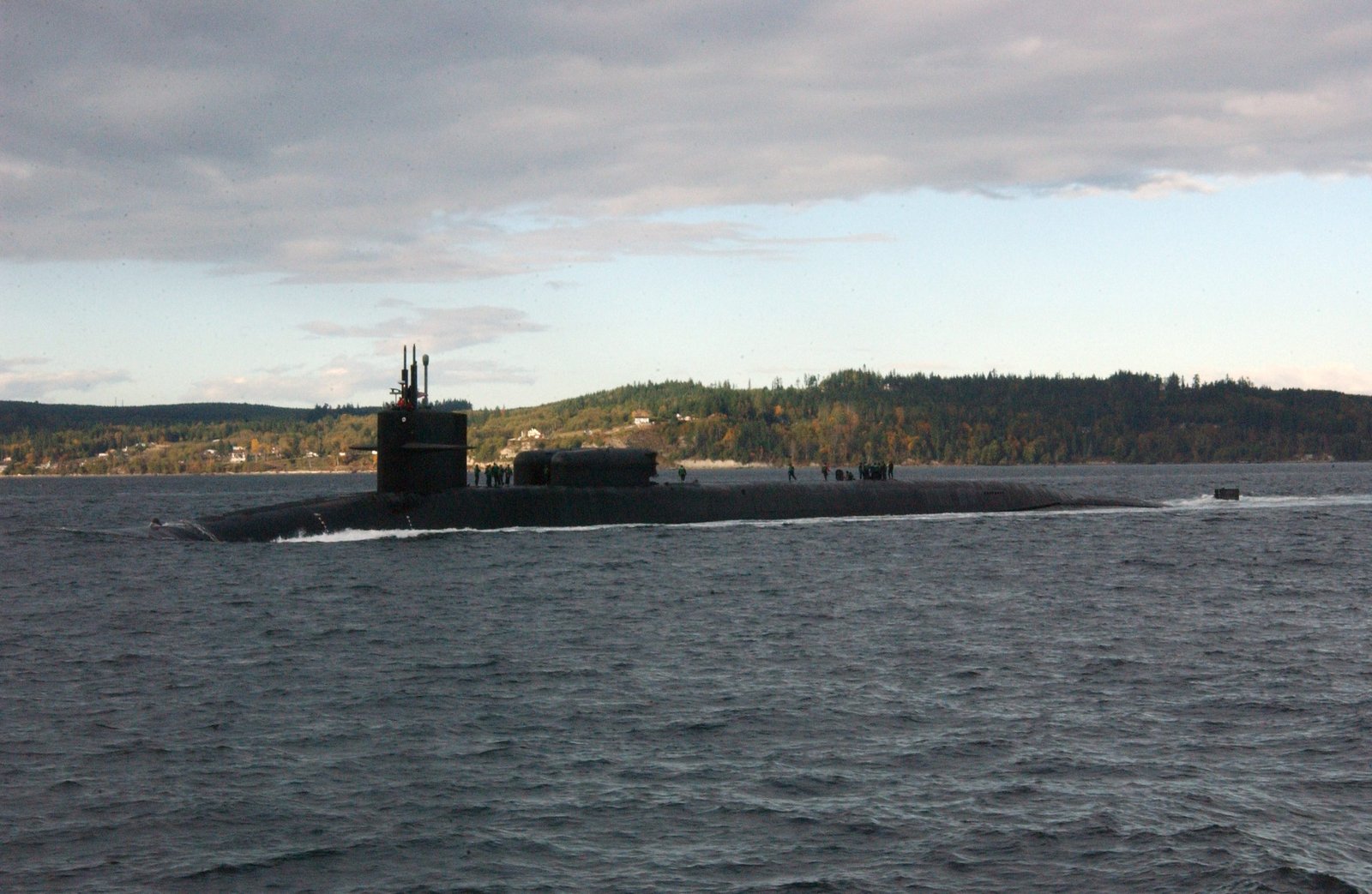
Propelled by a single S8G nuclear reactor generating 220 megawatts of thermal output, the submarine routes power through two geared turbines to deliver 35,000 shaft horsepower. While official Navy figures state a top speed of 20+ knots and a operational depth greater than 800 feet, actual performance envelope figures remain classified. The platform prioritizes acoustic silencing, utilizing advanced shock-isolation mountings and propulsion geometry to minimize its acoustic signature.
Trident II D5 vs. SSGN Conventional Conversion
The armament of the Ohio fleet represents two distinct pillars of American naval power projection: intercontinental thermonuclear response and high-volume land-attack strike capability.
Strategic Deterrence: Trident II D5 Capability
Each of the 14 operational SSBN variants carries up to 20 Trident II D5 missiles, down from the original 24 tube configuration following Treaty-mandated deactivations between 2014 and 2017. The Trident II D5 measures 45 feet in length, 7 feet in diameter, and weighs approximately 130,000 pounds.
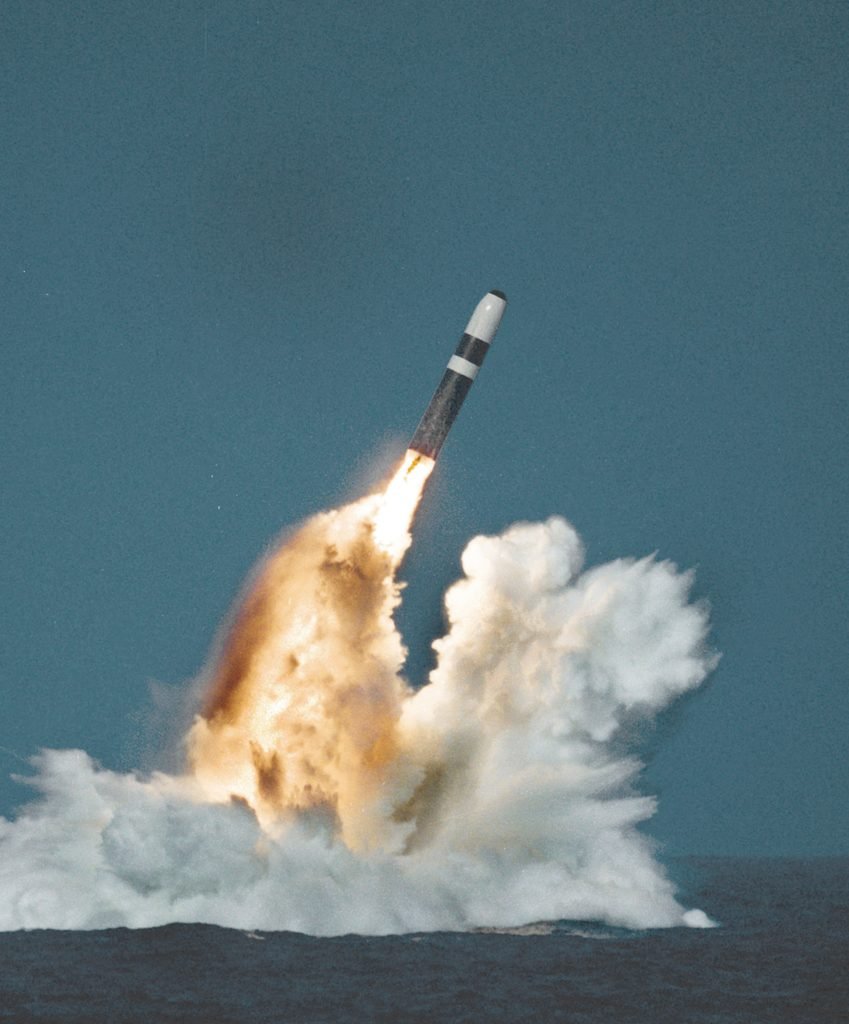
Loaded with Multiple Independently Targetable Reentry Vehicles (MIRVs), a single missile can deploy multiple W88 455-kiloton warheads—with each warhead delivering more than 30 times the explosive yield of the 1945 Hiroshima bomb.
Conventional Arsenal: The SSGN Conversion
Between 2002 and 2008, the Navy converted its four oldest Ohio hulls (Ohio, Michigan, Florida, and Georgia) into guided-missile submarines (SSGNs). Engineers modified 22 of the 24 massive ballistic missile tubes into Multiple All-Up-Round Canisters (MACs), each housing seven Tomahawk cruise missiles.
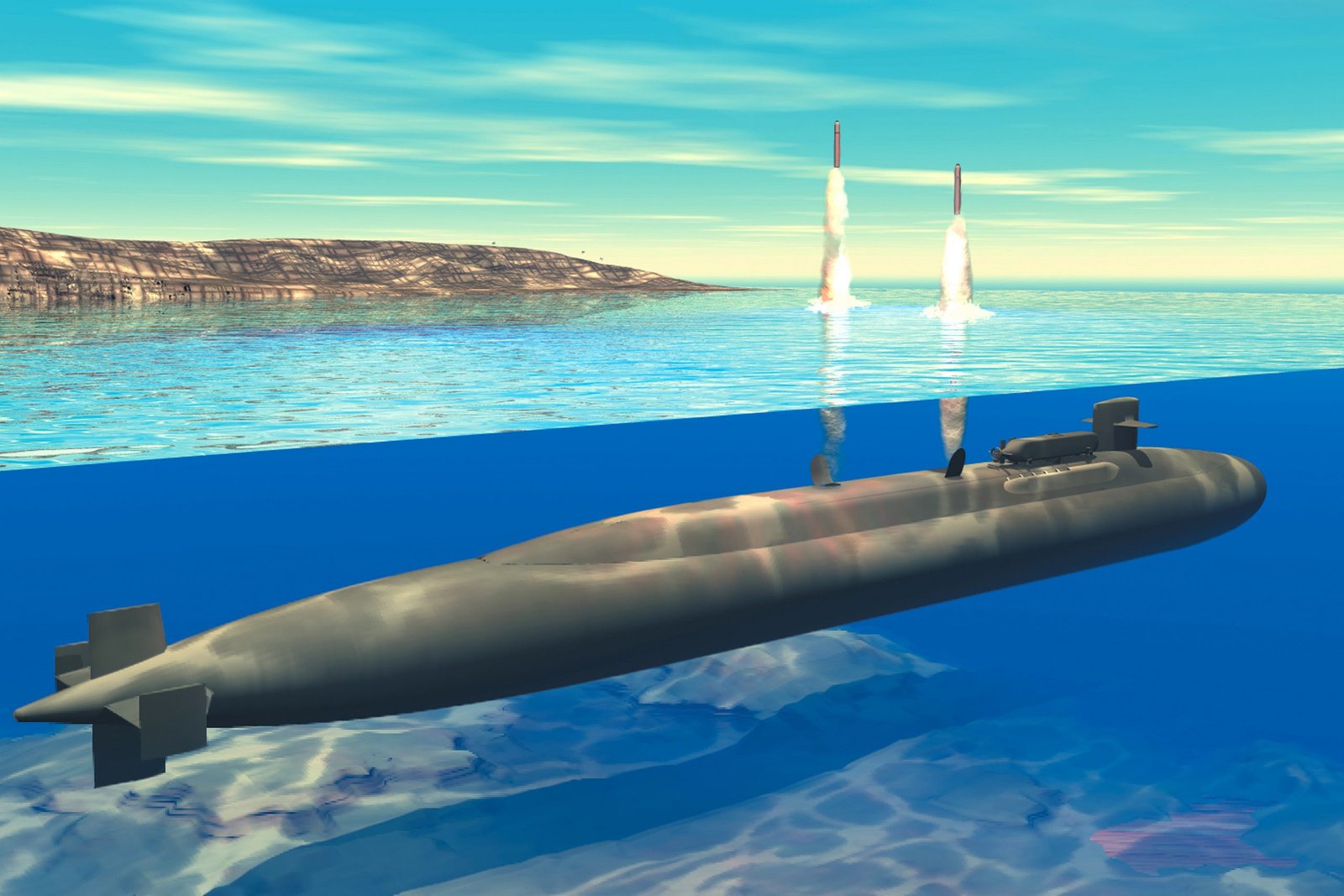
- Total Missile Payload: 154 TLAMs per submarine.
- Special Warfare Integration: The remaining two tubes were converted into dry deck shelter (DDS) lockout chambers, allowing US Navy SEALs and special operations forces to deploy covertly while submerged.
Next-Gen Transition: Columbia-Class Delays and Fleet Readiness
As the oldest Ohio-class hulls approach 40+ years of operational service, the US Navy is preparing to transition to the Columbia-class SSBN. Designed with a displacement exceeding 21,140 tons, the Columbia-class will feature a life-of-ship reactor core that eliminates the need for mid-life nuclear refueling, enabling a planned 12-ship fleet to maintain the same operational availability as the 14-ship Ohio SSBN force.
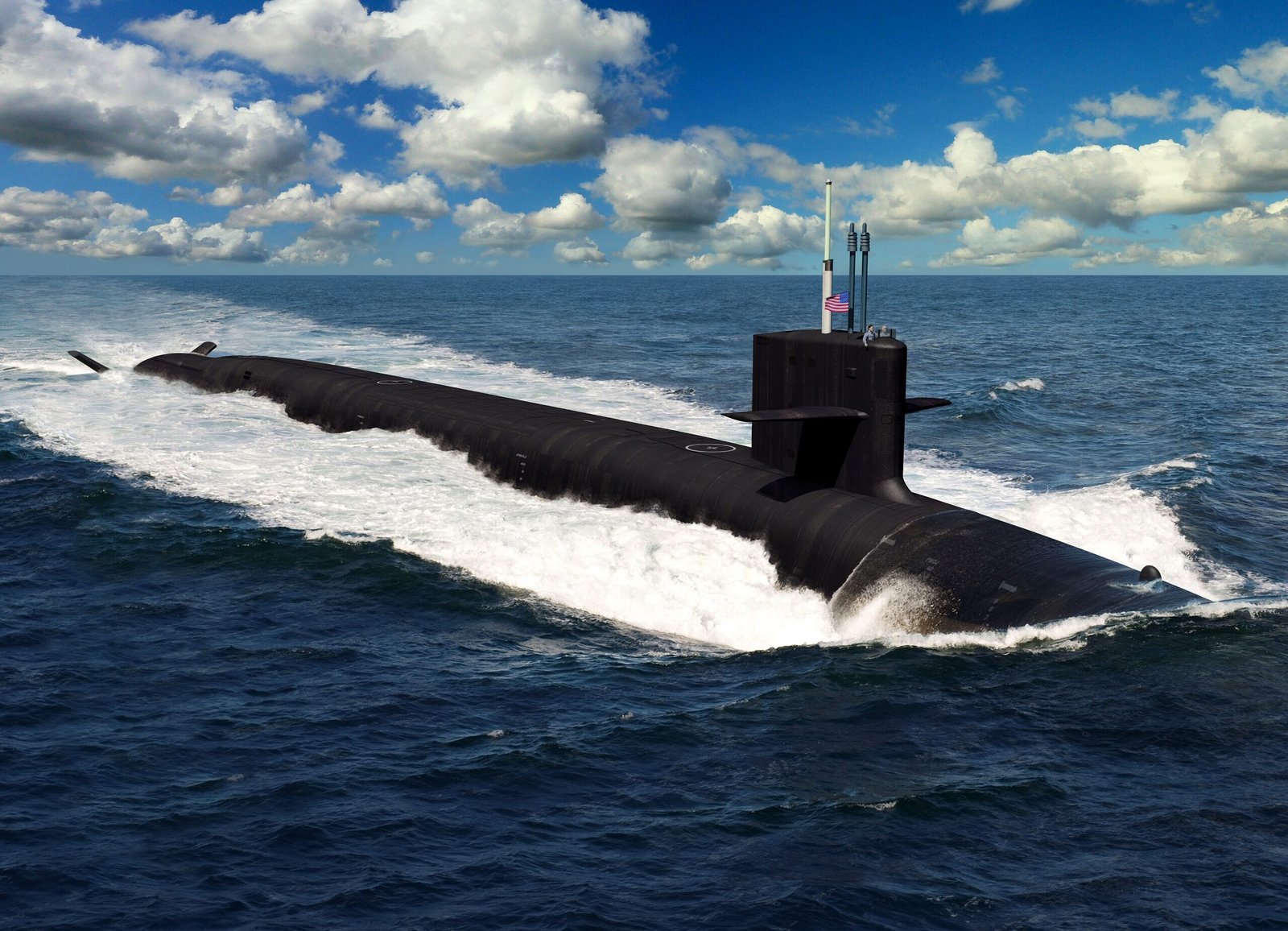
However, industrial supply chain bottlenecks, skilled labor shortages, and first-in-class integration challenges have delayed delivery of the lead vessel, USS District of Columbia (SSBN-826). Initially scheduled for a late 2027 delivery, Navy leadership currently projects an 18-month delay, pushing delivery into late 2028 or early 2029. This slippage tightens the operational bridge, requiring extended service life evaluations for existing Ohio hulls to prevent a gap in sea-based nuclear deterrence.
| Metric / Parameter | Ohio-Class SSBN | Ohio-Class SSGN | Columbia-Class SSBN |
| Primary Mission | Strategic Nuclear Deterrence | Conventional Land Attack / SOF | Strategic Nuclear Deterrence |
| Submerged Displacement | 20,700 US tons (~18,750 MT) | 20,700 US tons (~18,750 MT) | 21,140+ US tons |
| Primary Armament | Up to 20 Trident II D5 SLBMs | 154 Tomahawk Cruise Missiles | 16 Trident II D5 SLBMs |
| Warhead / Payload Type | W88 / W76 Thermonuclear MIRVs | Conventional High-Explosive | W88 / W76 Thermonuclear MIRVs |
| Nuclear Reactor Plant | S8G Reactor (220 MW) | S8G Reactor (220 MW) | S1B Reactor (Life-of-Ship Core) |
| Active / Planned Hulls | 14 Active Hulls | 4 Active Hulls | 12 Planned Hulls |
The Ohio-class submarine remains the most lethal and survivable strategic platform in existence, combining unexcelled acoustic stealth with unmatched secondary-strike capability. However, the Navy’s strategic posture faces a critical transition zone: four Ohio SSGNs retiring in the late 2020s will temporarily strip 616 vertical launch tubes from the fleet before enough Virginia Block V hulls enter service, while the 18-month delay on the Columbia-class creates zero margin for error in maintaining the required 12-SSBN operational baseline. Managing the life-extension of aging Ohio hulls while accelerating shipyard throughput is now a top national security imperative.