
BOTTOM LINE UP FRONT
- Germany’s High Economic Burden: The Panzer IV was the most expensive tank per unit among major 1945 armored forces at 103,462 Reichsmarks ($93,630 contemporary USD / $1,737,107 in 2026 USD), driven by labor-intensive framed hull construction.
- Soviet Mass-Production Efficiency: The T-34/85 achieved unprecedented economies of scale, dropping its 1945 production cost to 160,000 Rubles (~$30,000 contemporary USD / $560,000 in 2026 USD) across an overall family build volume exceeding 80,000 hulls.
- U.S. Industrial Balance: The M4 Sherman struck an optimal compromise at $44,556 contemporary USD ($804,000 in 2026 USD), combining standardized manufacturing across 49,000 units with superior logistical maintainability.
- British Armor Philosophy: Britain’s heavy Churchill Mark VII prioritizing maximum frontal protection (152 mm) came at a cost of £13,000 ($52,000 contemporary USD / $972,000 in 2026 USD), accepting severe tactical speed limitations (16.4 mph) for trench-crossing power.
- Japanese Resource Scarcity: Imperial Japan’s primary late-war tank, the 7-ton Type 95 Ha-Go, cost only 71,000 Yen ($4,733 contemporary USD / $88,000 in 2026 USD), reflecting severe metallurgical constraints that left crews dangerously vulnerable to modern anti-tank munitions.
Industrial Mobilization and Cost Doctrine
By 1945, armored vehicle procurement had evolved from peacetime experimentation into a brutal war of economic attrition. The major belligerents faced diverging industrial pressures: the Western Allies leveraged standardized assembly lines and raw material abundance, the Soviet Union streamlined heavy manufacturing to maximize output per factory floor, and Germany struggled against strategic bombing, skilled labor shortages, and costly manufacturing techniques.
Tank procurement costs directly reflected these industrial realities. While Germany poured capital into complex, labor-intensive designs, the Allies prioritized modularity, mass production, and simplified supply chains. This ideological split determined not only how many armored vehicles reached the frontline, but also how effectively nation-states sustained prolonged multi-theater campaigns.
The Big Five Armor Procurement Programs
German Panzerkampfwagen IV (Sd.Kfz. 161)
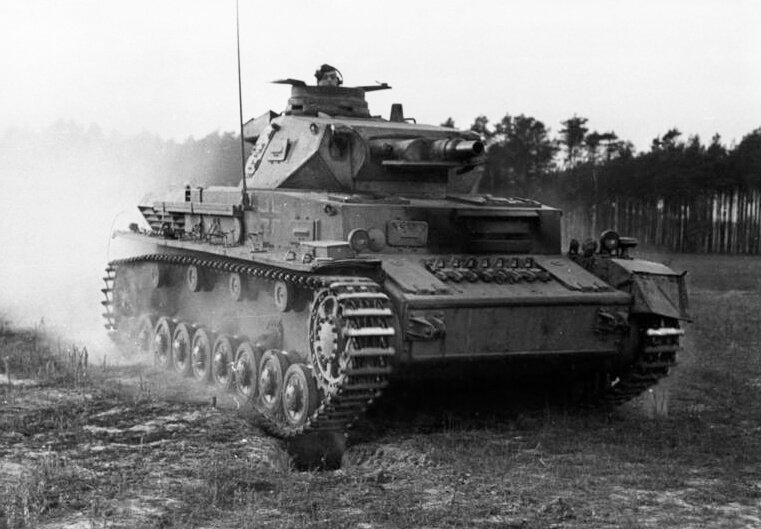
Despite the introduction of the heavier Panther and Tiger platforms, the Panzer IV remained the workhorse of German armored formations, with 8,553 units produced. Weighing 25 tons and armed with a 7.5 cm KwK 40 L/48 gun, its manufacturing process relied on a frame structure where armor plates were attached after frame assembly. This assembly method dramatically increased labor hours, driving its 1945 unit cost to 103,462 Reichsmarks ($93,630 contemporary USD), or approximately $1,737,107 in modern 2026 USD.
British Infantry Tank Churchill (Mark IV / Mark VII)
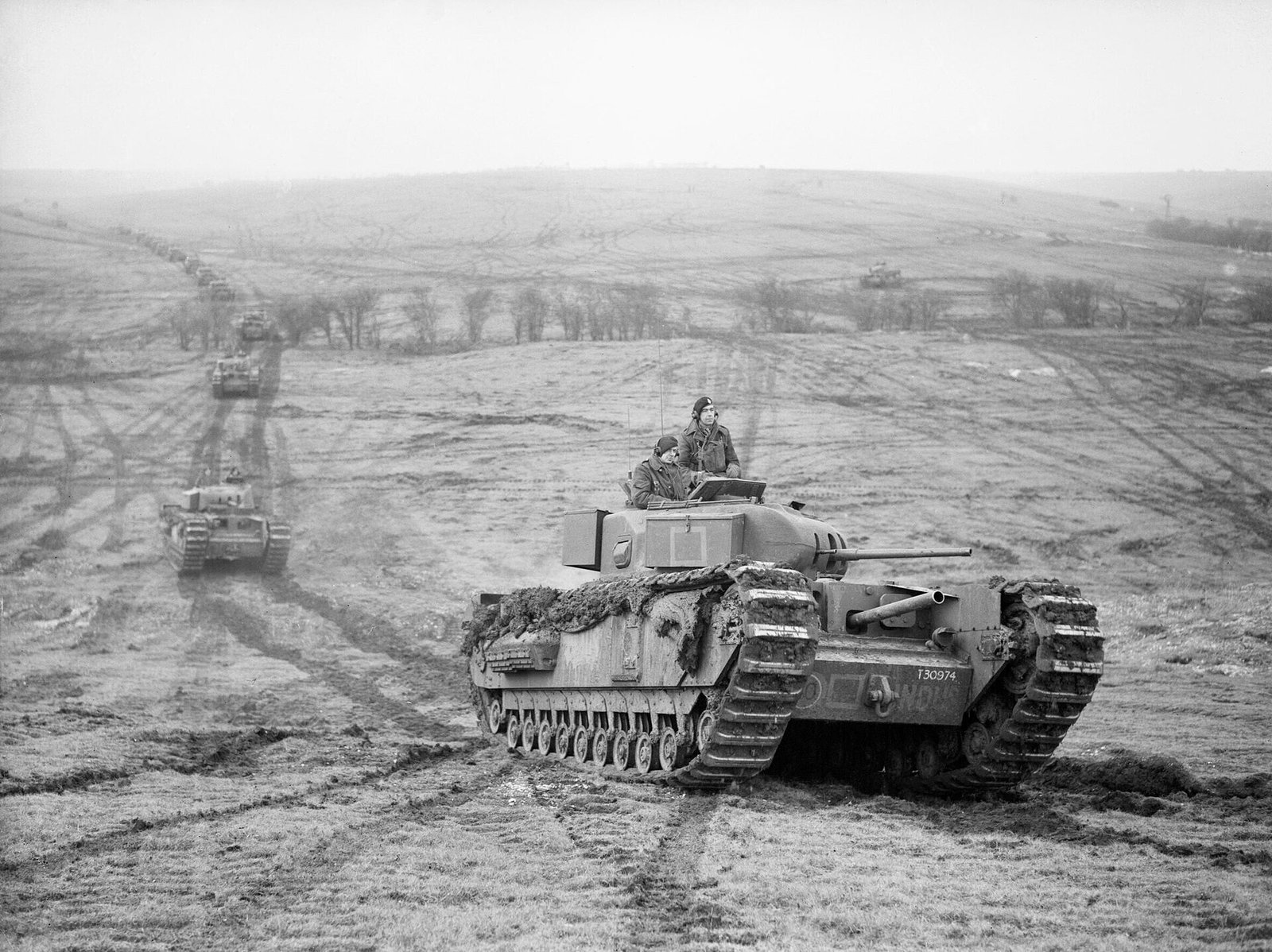
Designed around heavy assault protection, the 41-ton Churchill Mark VII featured massive 152 mm frontal armor capable of absorbing heavy anti-tank fire. Powered by a 350 hp engine, it was restricted to a maximum speed of 16.4 mph. At a unit cost of £13,000 ($52,000 contemporary USD / $972,000 modern 2026 USD), the Churchill provided British infantry units with specialized assault power, though its mobility constraints limited rapid maneuvers.
United States Medium Tank M4 Sherman
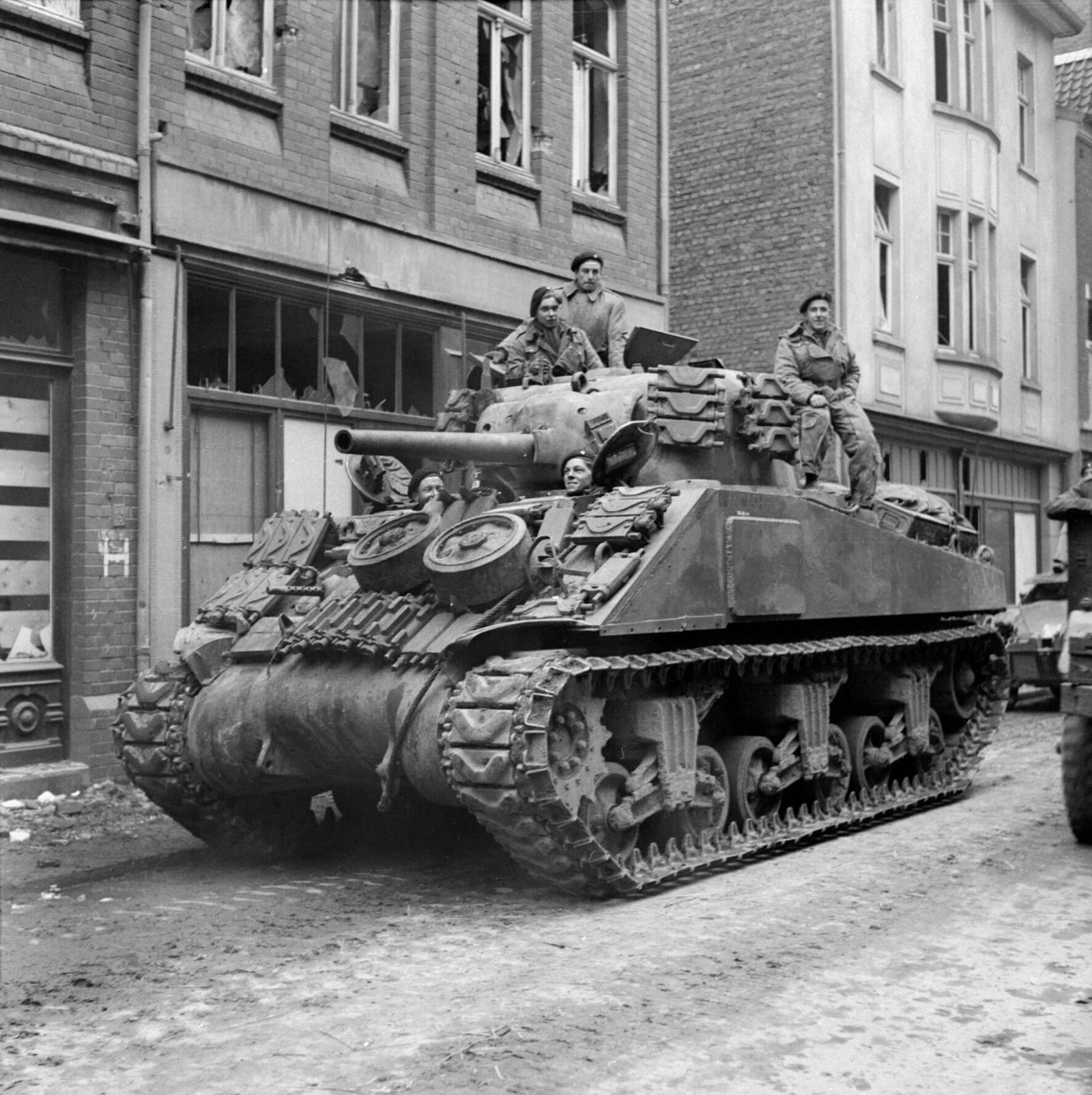
The M4 Sherman represented the pinnacle of industrial standardization. With over 49,000 built across all variants, the basic 1945 model cost $44,556 contemporary USD ($804,000 modern 2026 USD). Although early 75 mm variants lacked raw armor-penetration capability against German heavy tanks, the introduction of the 76 mm M1 gun and the British 17-pounder Sherman Firefly converted the platform into a lethal anti-armor system while preserving its mechanical reliability.
Soviet Union T-34/85
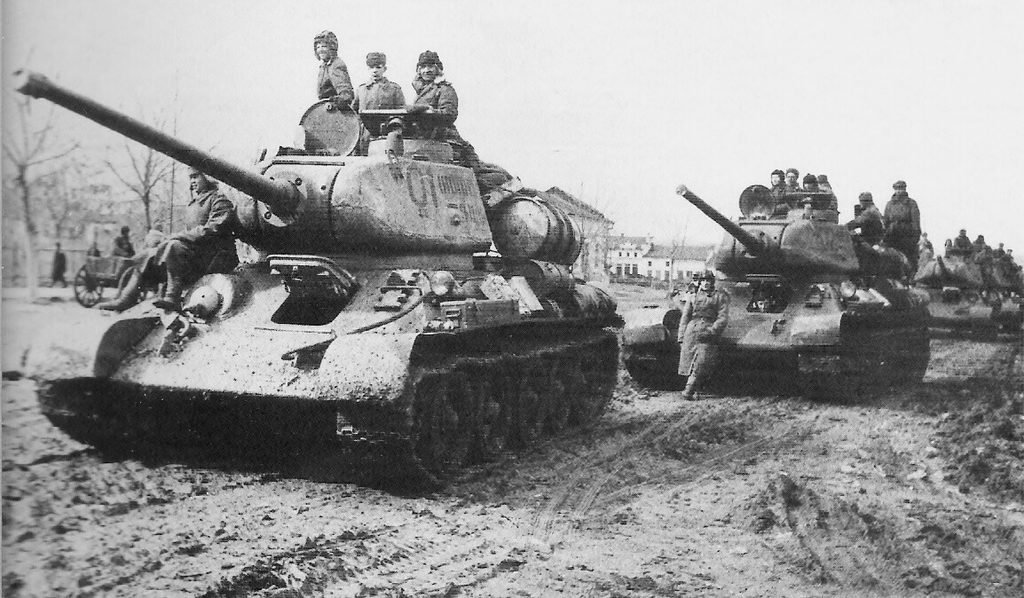
The T-34 family remains the most produced tank design of the war, exceeding 80,000 units. By 1945, the upgraded T-34/85 featured an 85 mm ZiS-S-53 gun mounted in an enlarged three-man turret. Aggressive manufacturing optimization reduced its unit price to 160,000 Rubles ($30,000 contemporary USD / $560,000 modern 2026 USD). Its sloped armor design and simple mechanical layout proved so durable that updated variants remain in active reserve service into 2026.
Imperial Japanese Type 95 Ha-Go
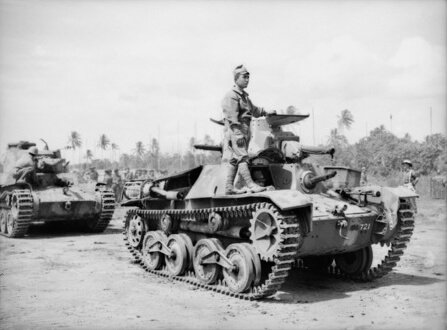
Weighing a mere 7 tons, the Type 95 Ha-Go was built under severe national resource constraints. Armed with a 37 mm main gun and capped at 12 mm of frontal armor, the tank cost 71,000 Yen in 1943 ($4,733 contemporary USD / $88,000 modern 2026 USD). While effective against infantry forces in early Malayan operations where anti-tank defenses were minimal, it was hopelessly outmatched by Western medium tanks by 1945.
The financial metrics of 1945 tanks underscore a fundamental defense economics lesson: wartime doctrine must align with manufacturing capacity. Germany’s expenditure of over $1.7 million equivalent per Panzer IV diverted critical industrial capacity from more efficient monocoque designs like the Panther.
Conversely, the U.S. and Soviet Union prioritized platform scalability. By capping unit costs and standardizing component supply chains, Allied commanders sustained heavy attritional combat while maintaining quantitative operational superiority on both the Eastern and Western fronts.
| Tank Platform | Country of Origin | Combat Weight | Primary Armament | Total Build Volume | 1945 Unit Cost (Local Currency) | 1945 USD Equivalent | Modern 2026 USD Equivalent |
| Panzer IV (Sd.Kfz. 161) | Nazi Germany | 25.0 Tons | 7.5 cm KwK 40 L/48 | ~8,553 | 103,462 Reichsmarks | $93,630 | $1,737,107 |
| Churchill Mark VII | United Kingdom | 41.0 Tons | QF 75 mm / Besa MG | ~5,640 (All Mks) | £13,000 | $52,000 | $972,000 |
| M4 Sherman | United States | 30.3 Tons | 75 mm M3 / 76 mm M1 | >49,000 | $44,556 USD | $44,556 | $804,000 |
| T-34/85 | Soviet Union | 32.0 Tons | 85 mm ZiS-S-53 | >80,000 (All Mks) | 160,000 Rubles | ~$30,000 | $560,000 |
| Type 95 Ha-Go | Imperial Japan | 7.0 Tons | 37 mm Type 98 | ~2,300 | 71,000 Yen (1943) | $4,733 | $88,000 |
A rigorous assessment of World War II armor procurement demonstrates that battlefield dominance was governed by unit economic viability and industrial scalability rather than raw tactical lethality alone. Germany’s reliance on complex manufacturing methodologies created an unsustainable procurement burden ($1.737M modern USD per hull), crippling its ability to replace heavy battle casualties during late-war allied offensives. In contrast, the Soviet T-34 ($560K modern USD) and American M4 Sherman ($804K modern USD) optimized defense economics by trading bespoke craftsmanship for modular assembly and operational reliability. For contemporary defense analysts, this historic dataset reinforces a timeless principle of land warfare procurement: high-tech platforms without industrial unit-cost discipline create structural force vulnerabilities that collapse under high-intensity attritional warfare.