Bottom Line Up Front
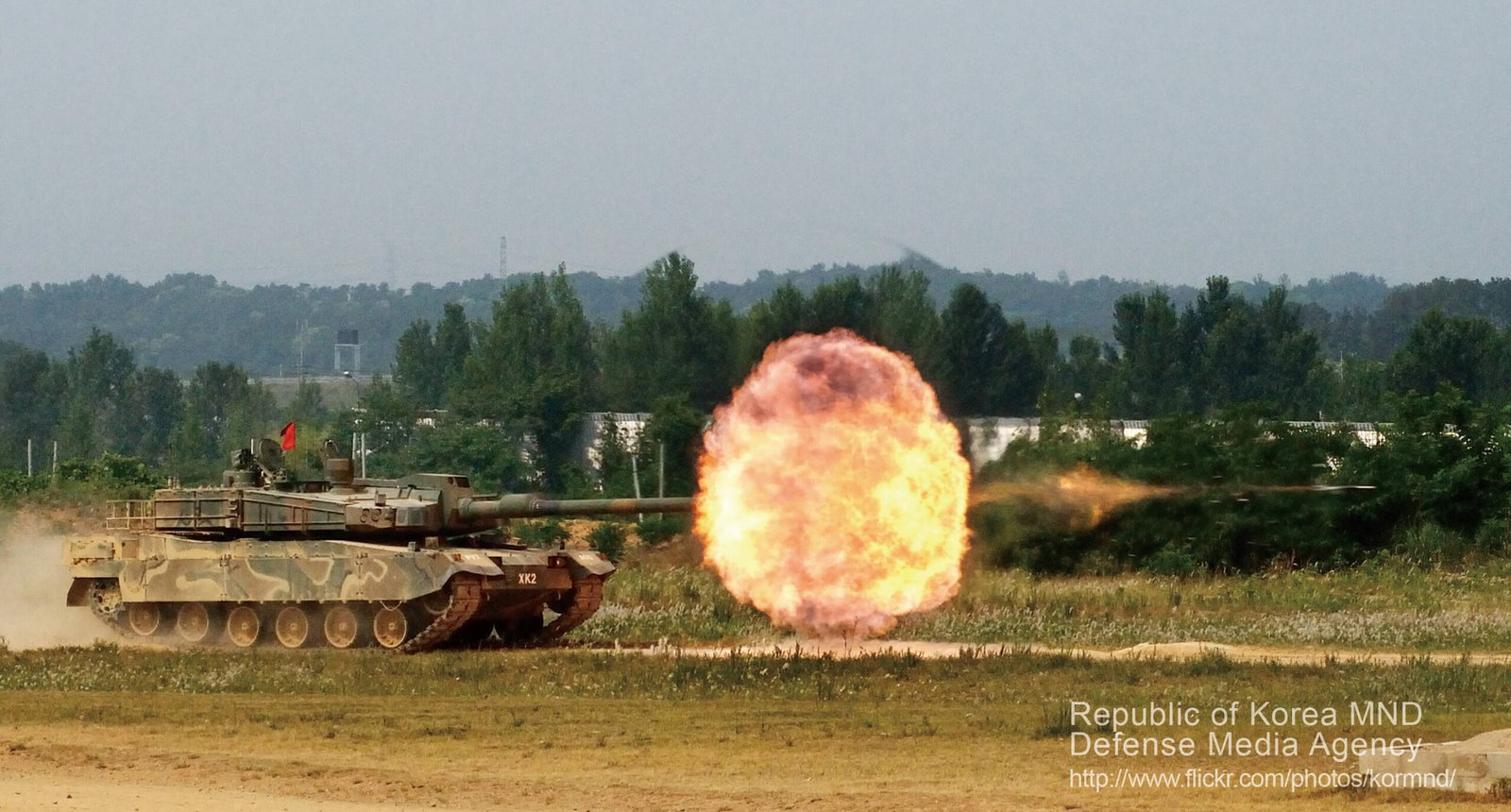
- Domestic Independence: The K2 was developed to eliminate reliance on US technology (K1/M1 Abrams variants) and export restrictions.
- Mobility Over Armor: Weighing 56 tons, it emphasizes speed and maneuverability in mountainous terrain over maximum armor thickness, utilizing an adjustable suspension system for varied combat postures.
- Advanced Armament: Features an autoloaded 120mm L55 gun capable of firing beyond-line-of-sight KSTAM-II munitions up to 8km.
- Network-Centric: Designed as a mobile command center, it utilizes a battlefield management system for shared situational awareness and automated friend-or-foe identification.
The Drive for Defense Self-Reliance
The geopolitical reality of the Korean Peninsula necessitates a massive, highly capable defense force. Since the cessation of hostilities in the 1950s, the demilitarized zone has remained the most heavily guarded border globally. North Korea’s persistent belligerence, marked by assassination attempts and terrorist acts during the Cold War, maintains a state of high tension. South Korea recognized that relying on allied support—specifically the US-derived K1 tank—presented a strategic vulnerability. The K1, while capable, came with strict export controls and technological dependencies.
The development of the K2 Black Panther, initiated in the early 1990s, was not merely an upgrade; it was a mandate for national defense autonomy. South Korea spent a decade laying the intellectual groundwork, consulting global experts before finalizing the design in 2003. This deliberate approach ensured the K2 wasn’t just a vanity project but a cornerstone of South Korea’s sovereign defense industrial base, capable of domestic production, maintenance, and lucrative international export.
Mobility and Firepower Optimized
The K2’s design philosophy diverges from Western heavyweights like the M1 Abrams (up to 67 tons) and Leopard 2 (up to 66 tons). At 56 tons, the K2 trades sheer armor mass for exceptional mobility. It utilizes a combination of POSCO MIL-A-12560 steel, silicon carbide ceramic plates, and aluminum, capable of withstanding 155mm artillery at 60m and heavy armor-piercing rounds. Crucially, it incorporates South Korean-developed Explosive Reactive Armor (ERA) to degrade incoming projectiles. While its armor may be thinner than NATO peers, its agility compensates. Powered by a 1500 hp engine (currently a mix of MTU Euro Power Packs and domestic Hyundai DV27K engines), it boasts a superior power-to-weight ratio of 27.3 hp/ton.
Network-Centric and Export Potential
The K2 is designed to dominate the modern, digitized battlefield. Its advanced fire control system (FCS) features an autonomous target tracking and engagement capability, theoretically allowing a single surviving crew member to operate the tank. The system is networked, acting as an intelligence hub that shares targeting and situational data across units, a significant upgrade from the original K1. This network-centric approach minimizes fratricide through automated friend-or-foe identification and maximizes collective combat effectiveness.
Despite its capabilities, the Republic of Korea Army (ROKA) currently operates only 260 K2s, a fraction of its 1,750-strong tank fleet (predominantly upgraded K1 variants). The limited domestic procurement is driven by the massive existing inventory and the looming development of the next-generation K3 tank. However, the K2 has found significant success in the export market. Poland has ordered hundreds, with domestic production planned, making the K2 a future backbone of European armored defense. Its technology also heavily influenced Turkey’s Altay tank, proving the strategic value of South Korea’s investment in indigenous tank development.
Specifications and Comparisons
| Feature | K2 Black Panther | M1A2 Abrams | Leopard 2A7 |
| Weight | 56 tons | ~67 tons | ~66 tons |
| Engine | 1,500 hp Diesel | 1,500 hp Gas Turbine | 1,500 hp Diesel |
| Power-to-Weight Ratio | 27.3 hp/ton | ~22 hp/ton | ~22.7 hp/ton |
| Main Armament | 120mm L55 (Autoloader) | 120mm L44 (Manual) | 120mm L55 (Manual) |
| Max Elevation/Depression | +24° / -11° (w/ ISU) | +20° / -9° | +20° / -9° |
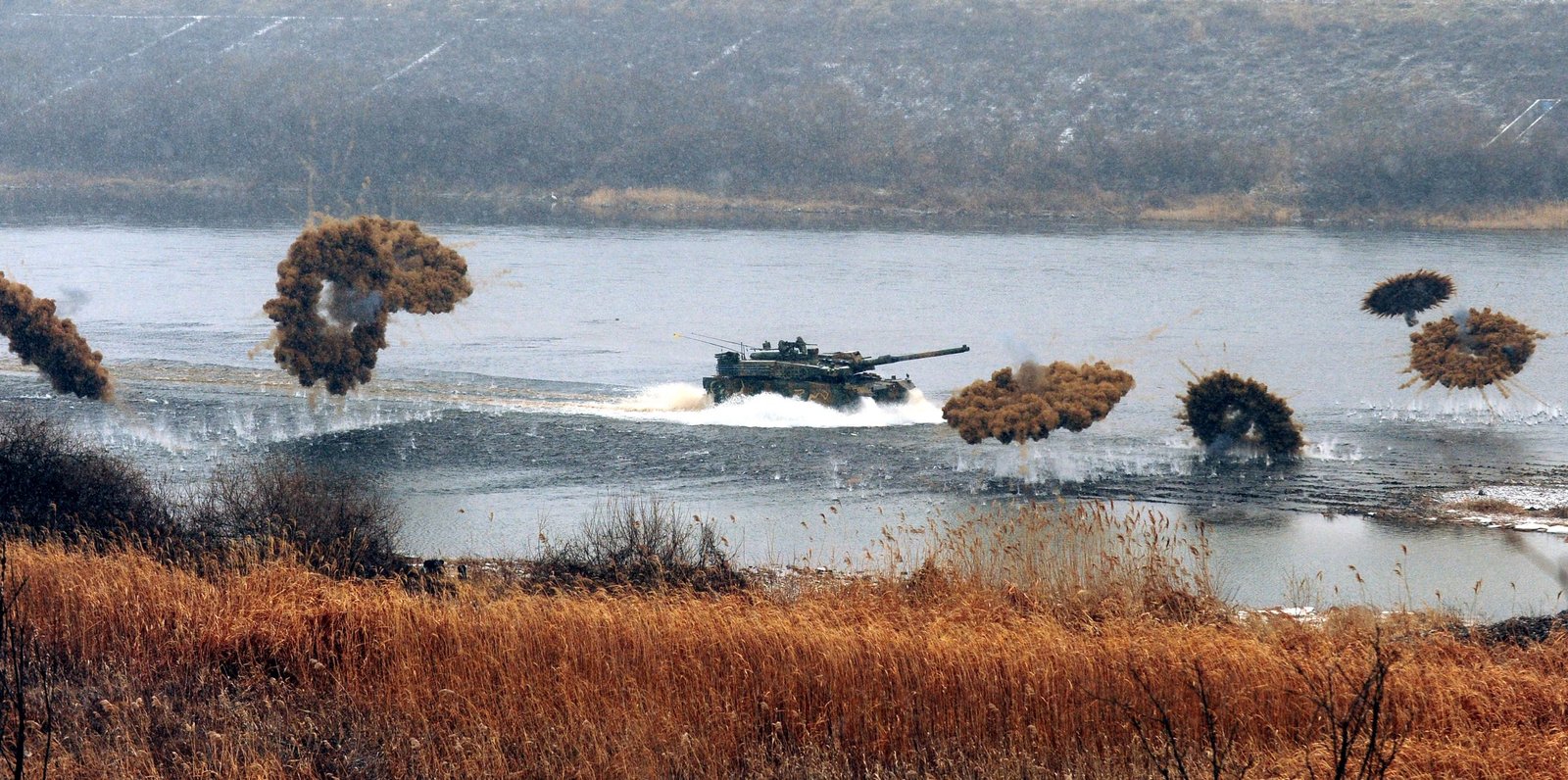
| Unique Capabilities | KSTAM-II (8km range), Advanced ISU, Snorkel (4.2m) | Heavy depleted uranium armor | Extensive modular armor packages |
| Crew | 3 | 4 | 4 |
Final Assessment
The K2 Black Panther is a highly capable force multiplier tailored for the specific geographic constraints of the Korean Peninsula. By prioritizing mobility and advanced, networked firepower over maximum armor protection, South Korea has developed a tank that outmaneuvers heavier Western counterparts in complex terrain. Its success on the export market, notably in Poland, validates its design philosophy and cements South Korea’s status as a major player in global defense manufacturing. While its domestic deployment numbers remain relatively low due to legacy fleets, the K2 serves as a critical technological bridge and a formidable deterrent in one of the world’s most volatile regions.