
KEY INTELLIGENCE
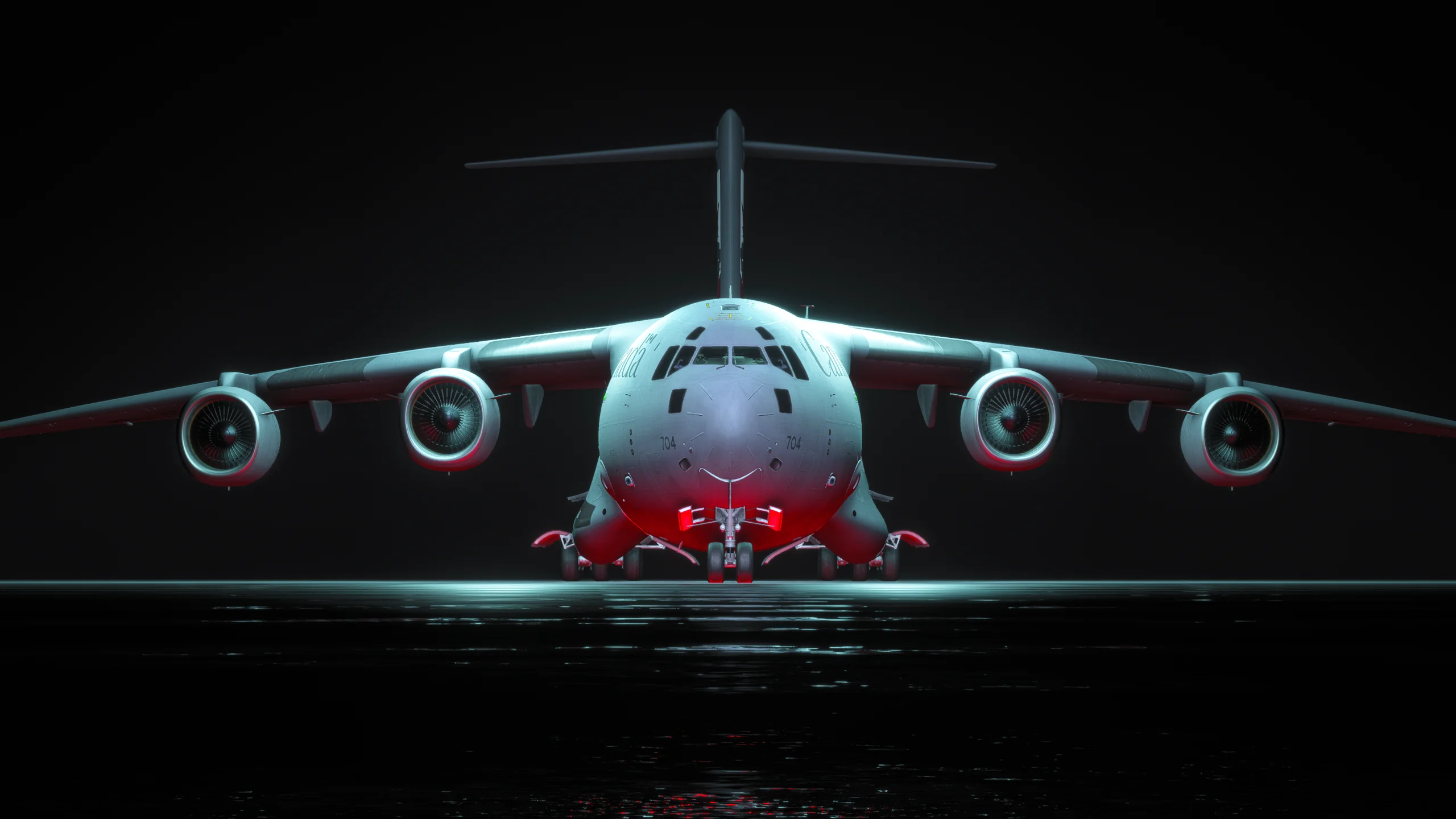
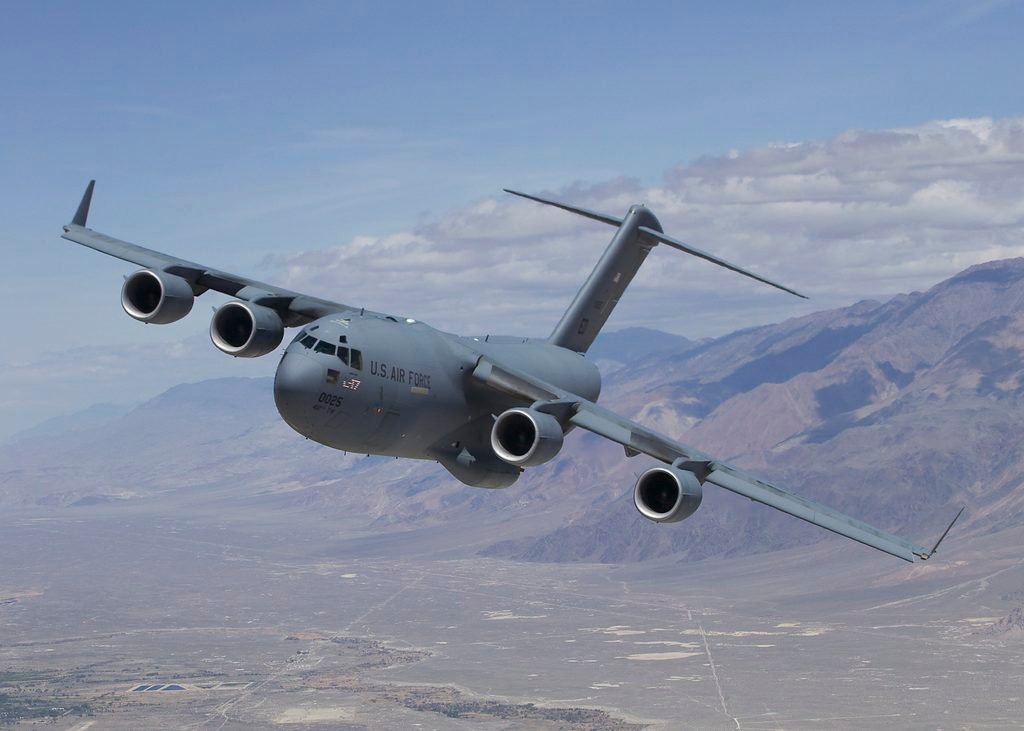
- The Asset: U.S. Air Force C-17 Globemaster III (Callsign: RCH4555), modified with a Roll-On Conference Capsule (ROCC) for secure airborne communications.
- The Routing: Departed Joint Base Andrews, staged at Riga, Latvia, and landed at Vnukovo Airport in Moscow just after 10:00 a.m. local time on August 25.
- The Context: The highest-level U.S. visit to Russia in years, occurring alongside major NATO electronic warfare deployments (EA-37B Compass Call) near Kaliningrad and a surge in Russian gray zone attacks in Europe.
- The Objective: Intelligence analysts strongly suspect the mission bypassed standard diplomatic channels to deliver a definitive deterrent warning regarding an impending Russian escalation against NATO allies or its deepening military support for Iran.
The Covert Deployment: A Heavy Airlifter Over Moscow
On the morning of August 25, open-source intelligence networks tracked a highly irregular flight profile. A U.S. Air Force C-17 Globemaster III crossed from Latvian airspace directly into Russia.
The heavy transport touched down at Moscow’s Vnukovo Airport. Ground footage captured by local witnesses quickly corroborated the flight data, showing the U.S. military jet taxiing past a Soviet-era Tu-104B monument outside the terminal.
To secure a safe flight corridor into hostile airspace, Washington issued an unprecedented request. U.S. officials ordered Ukraine to temporarily halt any planned long-range drone or missile strikes against Moscow and St. Petersburg during the diplomatic window.
A secondary aircraft, a militarized Boeing 737-700 designated as a C-40B, shadowed the C-17’s initial leg to Riga. Operating out of the 89th Airlift Wing, this asset likely transported additional senior officials before the delegation consolidated onto the heavily defended C-17 for the final push into Russian airspace.
Inside the Globemaster: The Flying SCIF
Deploying a cargo airlifter rather than a standard executive jet like the C-32 highlights the severe security posture of the mission. The C-17 features robust defensive countermeasures, including expendable decoys and the LAIRCM laser-based infrared defense system, making it ideal for penetrating contested environments.
Inside the massive cargo bay, the Air Force loaded a Roll-On Conference Capsule (ROCC). This self-contained, mobile Sensitive Compartmented Information Facility (SCIF) insulates high-value personnel from the extreme noise and temperature fluctuations of the cargo hold.
The ROCC provided Ratcliffe with secure video teleconferencing channels, encrypted data transmission, and classified voice feeds. This ensured the CIA Director retained uninterrupted command and control over global intelligence operations while flying into adversary territory.
Analyzing the Kremlin’s Information Blackout
Following the landing, the Kremlin initiated a strict information blackout. Spokesman Dmitry Peskov offered minimal details, acknowledging only that contacts were made between “security services” while explicitly denying any scheduled meetings with Vladimir Putin.
Despite the denials, multiple intelligence sources reported that Putin abruptly cleared his schedule on August 25. Concurrently, the Russian president signed several classified decrees (numbered 605 through 607) that remain withheld from state portals, indicating rapid, undisclosed strategic maneuvers.
The Warning: Deterring a Multi-Front Escalation
While some analysts floated the possibility of a prisoner exchange involving detained American Charles Wayne Zimmerman, the deployment of the CIA Director strongly negates this. Prisoner swaps are routinely handled by lower-tier envoys; they do not require an emergency C-17 flight to Moscow by the nation’s top intelligence chief.
The prevailing strategic consensus is that Ratcliffe delivered a blunt, non-negotiable warning. Following massive NATO exercises in Poland and the specialized reconnaissance flights of the U.S. Air Force’s EA-37B Compass Call electronic warfare jet, American intelligence likely detected preparations for a severe Russian escalation.
Recent hybrid warfare incidents—including military explosives discovered near Germany’s Leipzig airport and a Russian Kh-101 cruise missile violating Polish airspace—point to Moscow actively testing NATO’s Article 5 resolve. Ratcliffe’s unannounced arrival signals that Washington has uncovered the Kremlin’s next operational phase and is setting the boundaries for a devastating allied response.
| Asset / Metric | Specifications & Details | Strategic Purpose |
| Aircraft Designation | C-17A Globemaster III (Tail 07-7181) | Heavy strategic airlifter, utilized for high-risk, low-visibility diplomatic transport into hostile zones. |
| Callsign & Routing | RCH4555 / Joint Base Andrews $\rightarrow$ Riga $\rightarrow$ Vnukovo | Official Air Mobility Command designation; flight path required active Ukrainian strike deconfliction. |
| Specialized Payload | Roll-On Conference Capsule (ROCC) | Self-contained mobile SCIF providing encrypted VTC and secure comms at 30,000 feet. |
| Defensive Suites | LAIRCM & Decoy Dispensers | Laser infrared countermeasures designed to blind ground-to-air tracking and defeat MANPADS. |
| Support Aircraft | USAF C-40B (Riga layover) | Militarized Boeing 737-700 executive transport utilized for staging the senior delegation. |
STRATEGIC VERDICT
Utilizing a heavily defended C-17 equipped with a ROCC prioritizes operational survivability over diplomatic optics. Forcing a temporary halt to allied Ukrainian strikes in order to secure the flight corridor demonstrates the acute tactical risks accepted by the U.S. to place its top intelligence official physically on Russian soil.
John Ratcliffe’s unannounced deployment to Moscow represents a textbook deterrence maneuver. Stripped of diplomatic pleasantries, the mission was designed to deliver an inescapable warning directly to the Russian security apparatus. Whether targeting an impending gray zone offensive against NATO infrastructure or Russia’s accelerating logistical support for Iranian aggression, the U.S. has forcefully signaled that its intelligence network has exposed the Kremlin’s next move—and that further escalation will trigger a disproportionate response.