KEY TAKEAWAYS BOX
- Budget Allocation Surge: The Pentagon’s FY2026 budget confirms a $6.8 billion allocation for the Collaborative Combat Aircraft (CCA) program through 2030, marking a permanent shift from exquisite manned fighters to attritable mass.
- Unit Cost Economics: Next-generation AI wingmen are locked at a target cost of $20M to $30M per unit, less than one-third the cost of a baseline $82.5M F-35A.
- Software Margins Dominate: Defense tech disruptors supplying autonomous architecture (Palantir, Shield AI) are reporting gross margins exceeding 75%, severely outpacing legacy hardware primes operating at traditional 10–12% margins.
- Production Ramp-Up: Kratos and Anduril have scaled autonomous production lines in Q3 2026, projecting a combined delivery of 150+ operational CCA units by Q4 2027.
The Autonomous Shift: CCA Program Reaches Critical Mass
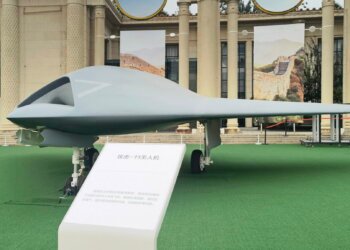
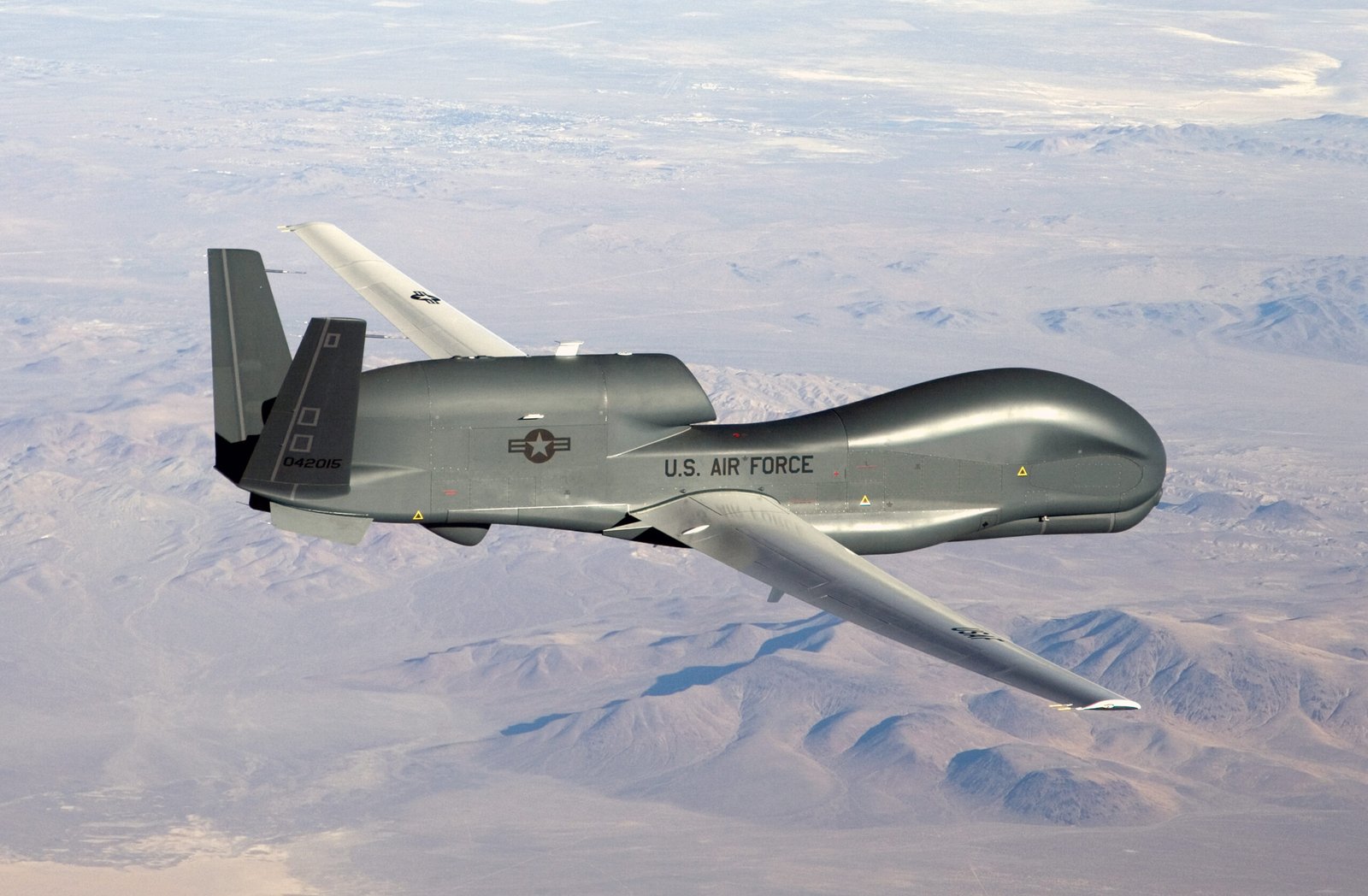
The US Air Force’s transition toward AI-piloted drone swarms has crossed the threshold from R&D to active industrial scaling. FY2026 procurement data reveals a definitive pivot toward “attritable mass.” The Pentagon is no longer solely prioritizing survivability; it is actively weaponizing volume.
By committing $6.8 billion over the next four years, the Department of Defense is forcing a total restructure of the aerospace supply chain. Prime contractors must now deliver combat-capable autonomous systems at a fraction of legacy aircraft costs, triggering a fierce battle between heritage aerospace giants and Silicon Valley-backed defense firms.

Cost-Per-Unit Economics Overhaul
The fundamental thesis of the CCA program is asymmetric cost imposition. Developing an $82.5M F-35A requires complex global supply chains and decades of lifecycle sustainment costs. In contrast, emerging autonomous wingmen are designed with a strict ceiling of $20M to $30M per unit.
This allows combatant commanders to deploy tactical formations where losing an asset does not equate to a strategic financial disaster. Companies capable of utilizing modular manufacturing and commercial-off-the-shelf (COTS) components to keep prices below this $30M threshold are currently securing the majority of Phase 2 procurement contracts.
Legacy Primes vs. Agile Disruptors
The defense industrial base is fracturing into two distinct camps: traditional aerospace primes relying on heavy infrastructure, and agile defense-tech companies leveraging software-defined manufacturing. Anduril’s Fury and Kratos’s XQ-58A Valkyrie have dominated recent operational testing, proving that non-traditional vendors can meet strict DOD timelines.
Boeing’s MQ-28 Ghost Bat remains a formidable contender, but its reliance on legacy manufacturing overhead threatens its ability to compete on volume. The true battlefield is no longer just aerodynamics; it is the underlying AI architecture—specifically the Autonomy Core Architecture (ACA) that allows these drones to process threat environments without human intervention.
Q3 2026 Earnings Impact
Financial markets are pricing in this structural shift. In Q3 2026, traditional hardware-centric defense stocks displayed stagnant top-line growth, heavily bottlenecked by supply chain constraints and fixed-price contract overruns. Conversely, software-defined defense contractors are thriving.
Palantir and Shield AI, providing the mission-command software and autonomous swarming logic, have reported unprecedented margins. Because their primary product is scalable software rather than titanium and composite materials, gross margins are holding steady above 75%. Investors are actively reallocating capital from legacy aerospace indices into defense-tech ETFs.
INFORMATION-DENSE MARKDOWN TABLE
CCA Market Landscape & Prime Competitor Metrics (Q3 2026)
| System Name | Manufacturer | Est. Unit Cost | Combat Range | Primary Payload | AI Autonomy Tier | Gross Margin Impact |
| Fury | Anduril Industries | $22M – $25M | 2,000+ NM | Modular AI / EW | Tier 4 (Swarm capable) | High (Software heavy) |
| XQ-58A Valkyrie | Kratos Defense | $15M – $18M | 3,000 NM | Precision Munitions | Tier 3 (Semi-auto) | Moderate (Scale driven) |
| MQ-28 Ghost Bat | Boeing | $35M – $40M | 2,000 NM | ISR / Kinetic | Tier 3 (Wingman lock) | Low (Legacy overhead) |
| V-BAT Swarm | Shield AI / Edge | $5M – $8M | 500 NM |
Final Assessment
SECTOR OUTLOOK: Overweight Software-Defined Defense, Hold Legacy Primes. The transition to attritable, autonomous systems is cannibalizing future manned fighter budgets.
- BUY Kratos Defense (KTOS): The most direct hardware play for high-volume CCA production. Their ability to consistently deliver sub-$20M autonomous platforms makes them a prime acquisition target or primary subcontractor for Phase 3 DOD scaling.
- BUY Palantir (PLTR): As hardware becomes commoditized, the real alpha is in the AI operating system commanding the swarms. Palantir’s DOD software monopoly continues to expand with massive 75%+ margins.
- HOLD Boeing (BA) & Lockheed Martin (LMT): While both remain deeply entrenched in the DOD ecosystem through F-35 sustainment and strategic bombers, their inability to rapidly pivot to low-cost, high-volume autonomous hardware restricts upside growth over the next 24 months. Wait for clearer signals on their internal M&A activity regarding smaller AI firms.