BOTTOM LINE UP FRONT
- Unmatched Stand-off Firepower: The 88 mm KwK 43 L/71 gun achieved 100% test accuracy at 1,000 meters, firing armor-piercing rounds capable of penetrating 219 mm of plate at 500 meters.
- Impenetrable Frontal Glacis: The 150 mm upper glacis plate, angled at 50 degrees (213 mm effective thickness), recorded zero documented combat penetrations.
- Severe Drivetrain Mismatch: Reusing the transmission and final drives from the 10-ton lighter Tiger I caused final drive failures at an average interval of just 300 kilometers (186 miles).
- Crippling Maintenance Overhead: Operational field data indicates the vehicle required 10 hours of maintenance for every 1 hour of operational movement.
- Excessive Unit Cost: At 321,500 Reichsmarks per unit—double the cost of a Panther tank—the vehicle drained vital industrial resources during late-war supply shortages.
Ballistic Superiority: The 88 mm KwK 43 L/71
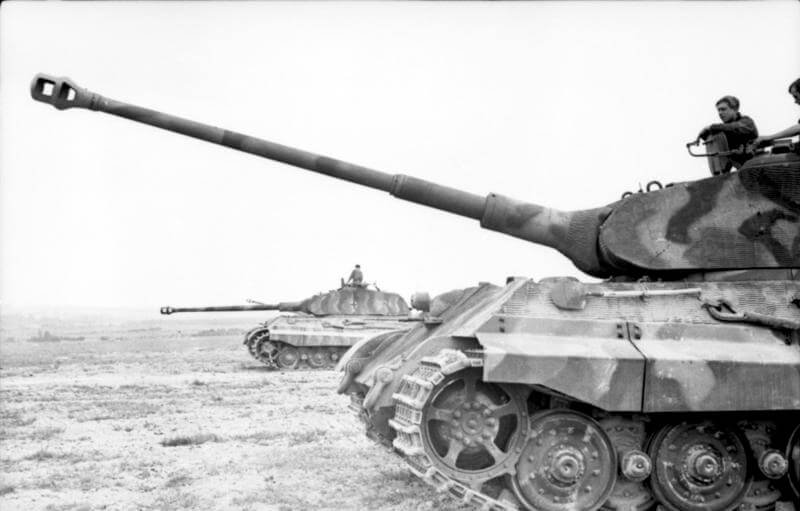
The main gun dominated engagements. Measuring 20.5 feet (6.2 meters) in length, the 88 mm KwK 43 L/71 provided high muzzle velocities between 1,968 ft/s (600 m/s) and 3,707 ft/s (1,130 m/s).
To manage recoil, engineers installed a double-baffle muzzle brake alongside a hydraulic recoil control cylinder and a hydropneumatic recuperator cylinder. Fume extraction was achieved by blowing compressed air through the barrel post-firing.
The primary anti-armor munition was the Panzergranate 39/43 armor-piercing capped ballistic cap (APBC) round. Exiting the muzzle at 3,340 ft/s (1,018 m/s), the shell used a soft-metal armor-piercing cap to prevent ricochets on impact, penetrating 8.6 inches (219 mm) of armor at 500 meters before detonating an internal Amatol charge.
For heavier targets, crews carried the Panzergranate 40/43 tungsten-core round, capable of penetrating 9.9 inches (251 mm) of armor at 500 meters. Tungsten shortages limited its issue.
Target acquisition relied on the T.Z.F. 9d monocular sight. Featuring 2.5x and 5x magnification levels, the sight used a milliradian reticle pattern. Guners used stadiametric range-finding triangles to calculate target distances rapidly.
Field reports from Oberstleutnant Alfred Rubbel noted that Soviet T-34 armor could be reliably destroyed at ranges up to 3,000 meters.
Turret Engineering and Structural Armor Protection
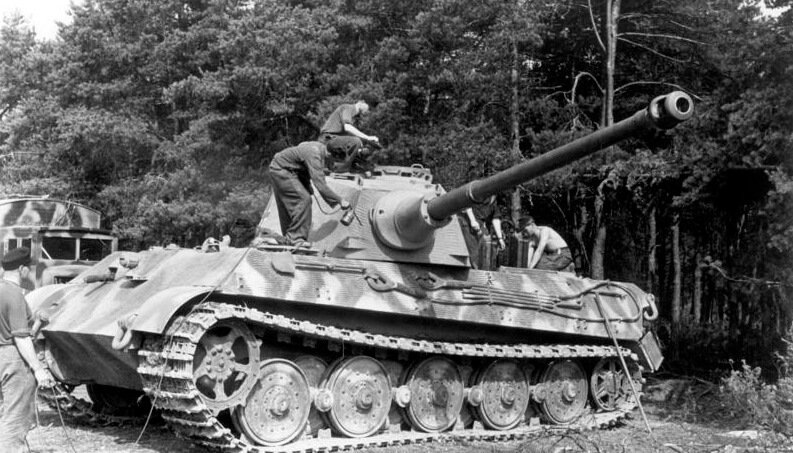
The Henschel turret housed the primary armament asymmetrically on a 72.8-inch (1,850 mm) turret ring. The asymmetry provided necessary working space for the gunner on the left side of the breech.
Turret armor measured 7.1 inches (180 mm) on the front plate at a 10-degree slope, protected by a 5.9-inch (150 mm) “Saukopf” cast gun mantlet. Turret sides and rear used 3.15-inch (80 mm) armor plates.
Turret traverse was driven hydraulically via a power take-off shaft connected to the main engine. At 2,000 engine rpm, a full 360-degree rotation took 19 seconds. At max 3,000 rpm, rotation speed dropped under 10 seconds, though high-speed operation increased mechanical failure rates.
Manual handwheels provided precision fine-aiming and emergency backup. The loader managed a 22-round ready rack in the turret rear, while 48 rounds were stowed along the hull walls.
The hull featured an upper glacis plate of 5.9 inches (150 mm) angled at 50 degrees, creating an effective horizontal thickness of 8.3 inches (213 mm). The lower glacis measured 3.9 inches (100 mm) at 50 degrees.
Secondary armament included a coaxial 7.92 mm MG-34 machine gun operated via foot pedal, and a hull-mounted MG-34 in a ball mount guided by the radio operator using an armored head-dome. A roof-mounted Nahverteidigungswaffe launcher fired smoke, flare, and anti-personnel fragmentation grenades.
Propulsion Limits, Drivetrain Overstress, and Maintenance Collapse
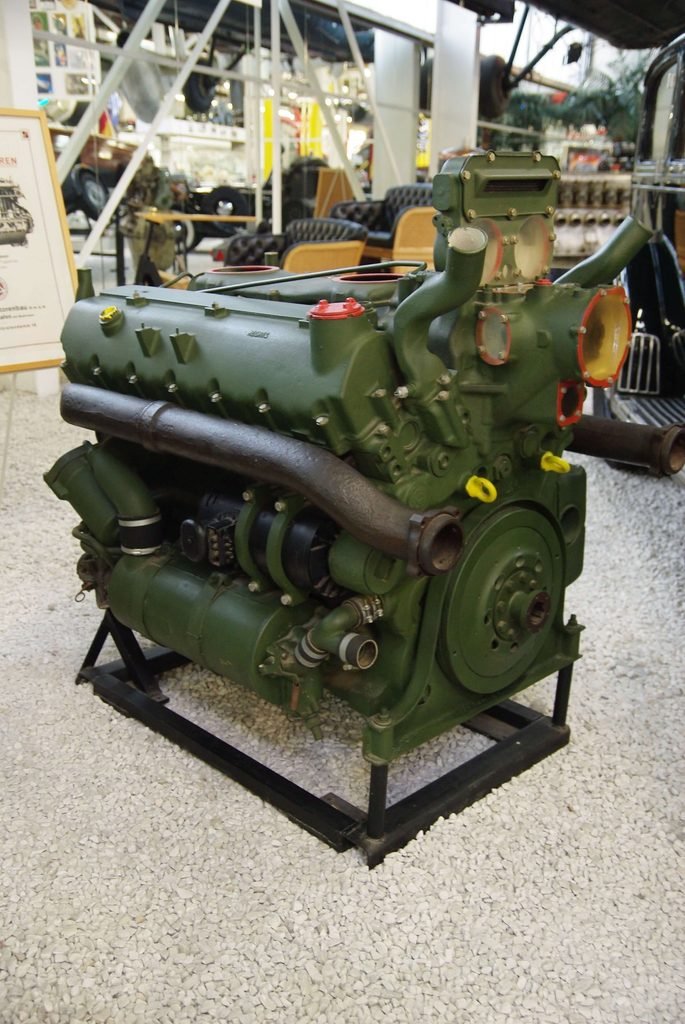
Tactical mobility collapsed under the vehicle’s extreme mass. Power was supplied by a 23-liter V-12 Maybach HL 230 P30 cast-iron gasoline engine delivering 700 horsepower at 3,000 rpm and 1,364.5 lb-ft of torque at 2,100 rpm.
The engine used a specialized tunnel crankshaft with roller bearings. Seven internal fuel tanks held 227 gallons of gasoline. Fuel burn exceeded 2 gallons per mile, capping operational range at 105.6 miles on roads and 74.5 miles cross-country.
The tank’s primary structural defect resided in the drivetrain. The cancellation of the Panther II forced engineers to reuse the Maybach Olvar OG 40 12 16b eight-speed transmission and final drives from the Tiger I.
These components were engineered for a vehicle weighing 10 tons less. Extreme torque sheared drive sprocket teeth and destroyed final drive planetary gears.
Final drive units had an average lifespan of just 186 miles (300 kilometers). Mechanics serviced vehicles constantly; every 1 hour of operation required 10 hours of maintenance.
SS-Obersturmbannführer Joachim Peiper stated that three out of every five King Tigers lost in combat were abandoned and destroyed by their own crews due to mechanical breakdowns during retreat.
| Specification / Parameter | Metric Value | Operational Impact / Structural Limit |
| Combat Mass | 154,000 lbs (69.8 tons) | Exceeded European bridge weight limits; restricted transport |
| Main Armament | 88 mm KwK 43 L/71 | Sustained high muzzle velocity (1,018 m/s APBC) |
| Upper Glacis Armor | 150 mm @ 50° (213 mm effective) | Zero documented combat penetrations from frontal arc |
| Turret Front Armor | 180 mm @ 10° (182.8 mm effective) | Heavy front-aspect protection against Allied main tank guns |
| Engine Output | 700 hp @ 3,000 rpm | Underpowered power-to-weight ratio (10.0 hp/ton) |
| Fuel Capacity / Range | 227 gal / 105.6 miles road | Severe logistical burden; high risk of fuel line leaks and fires |
| Final Drive MTBF | 186 miles (300 km) | Component failure required vehicle abandonment during maneuvers |
| Unit Production Cost | 321,500 Reichsmarks | Twice the cost of a Panther; unsustainable industrial strain |