Frontline Defense Journal | Objective OSINT & Military Analysis
  • Home
  • Latest Intelligence
  • Domain Of Warfare
    • Naval & Maritime
    • Air & Aerospace
    • Ground Forces & Armor
    • Unmanned & Autonomous Systems
    • Strategic Weapons
  • Regions
    • USA & Americas
    • Europe
    • Middle East
    • Asia & Pacific
  • Defense Archives
  • About Us
    • Who We Are
    • Privacy Policy
    • Terms Of Use
No Result
View All Result
  • Home
  • Latest Intelligence
  • Domain Of Warfare
    • Naval & Maritime
    • Air & Aerospace
    • Ground Forces & Armor
    • Unmanned & Autonomous Systems
    • Strategic Weapons
  • Regions
    • USA & Americas
    • Europe
    • Middle East
    • Asia & Pacific
  • Defense Archives
  • About Us
    • Who We Are
    • Privacy Policy
    • Terms Of Use
Frontline Defense Journal | Objective OSINT & Military Analysis
No Result
View All Result
Frontline Defense Journal | Objective OSINT & Military Analysis
No Result
View All Result
Home Domain Of Warfare Unmanned & Autonomous Systems

Back to Basics: Why the U.S. Army Scrapped Its Experimental Drone Battalion

September 7, 2026
Reading Time: 5 mins read
A A
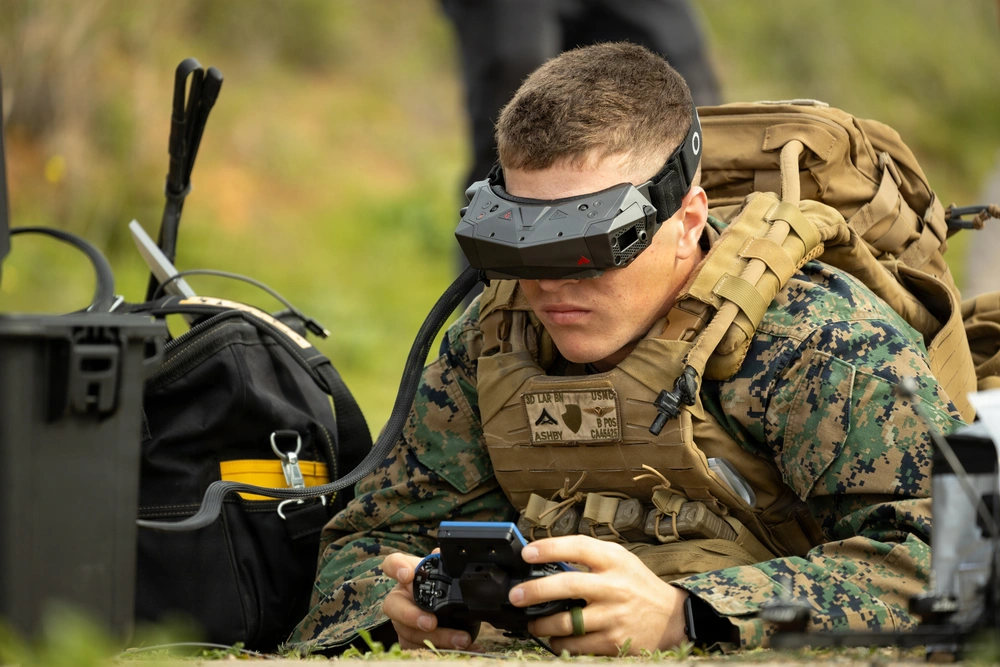
U.S. Marines developing FPV drone tactics
Share on FacebookShare On Reddit

“A paratrooper in this formation today is just as likely to kill an enemy by flying an explosive drone into their position than by shooting them with a rifle. The U.S. Army must and will transform to dominate this battlefield.” — Lt. Col. Austin Commons, upon the January activation of the 3-504 PIR Drone Mission

The Rise and Fall of the Army’s Drone Testbed

In January, under the direction of then-Army Chief of Staff Gen. Randy George, the Army inactivated the 1st Squadron of the 91st Cavalry Regiment and reflagged it as the 3-504 PIR. While scaling back cavalry scouts is part of a broader conventional transformation, placing a dedicated experimental drone mission on top of this reflagging made the 3-504 unique.

The mandate was clear: embed with Ukrainians, study their dedicated unmanned formations, and test these capabilities in a battalion-wide setting during European training exercises.

However, the mission did not survive a sudden shift in Pentagon leadership. After Defense Secretary Pete Hegseth removed Gen. George in April, Acting Army Chief of Staff Gen. Christopher LaNeve took the reins. Shortly after, the Army announced the 3-504 would conduct two final exercises in Germany, turn over its findings, and revert to its core warfighting tasks.
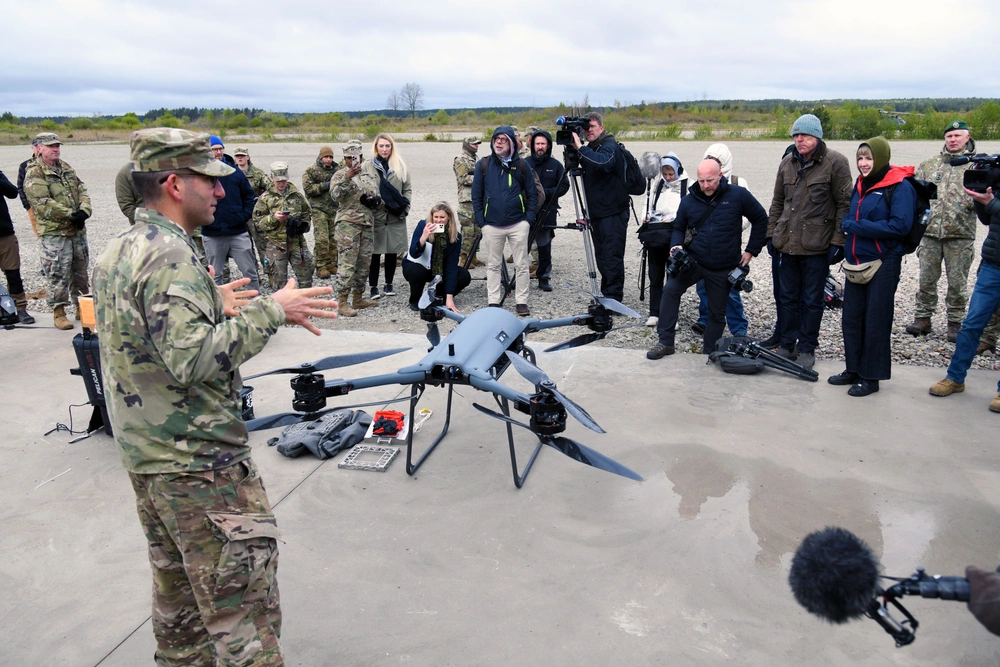
173rd Airborne Brigade conducting drone operations.
173rd Airborne Brigade conducting drone operations. Source: DVIDS

Army vs. Marine Corps: A Contrast in Experimentation

The Army’s short-lived battalion testbed approach mirrors a strategy the Marine Corps has utilized successfully for years. Back in 2021, the Marines launched the Infantry Battalion Experiment 2030 (IBX-30) as part of Force Design 2030, utilizing the 1st, 2nd, and 3rd Battalions of the 1st Marine Regiment.

Unlike the Army’s rapid pivot, the Marines allowed the experiment to run for two years, generating critical—and sometimes harsh—lessons.

When the Marines reduced a battalion from roughly 900 personnel to 735 under the assumption that drones would bridge the capability gap, it failed. Lt. Gen. Karsten Heckl noted, “We essentially broke the battalion.” The Marines adjusted, scaling back up to 811 personnel and restoring heavy weapons, while successfully validating the organic integration of ISR and FPV attack drones at the squad level.
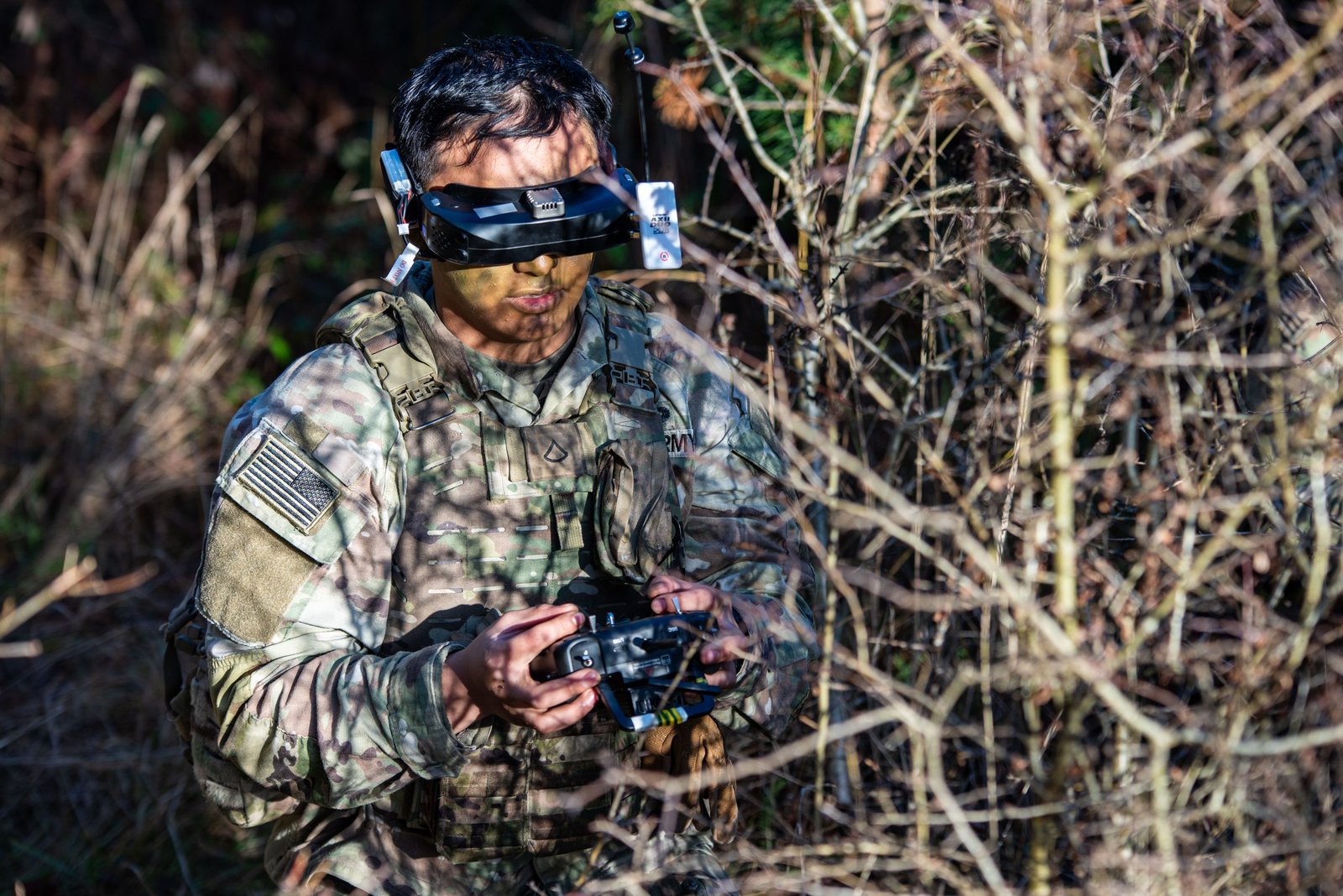
U.S. Marines developing FPV drone tactics

The “New Guy” Bureaucracy and Missing Data

Officially, the Army argues that the 173rd Airborne—a forward-deployed brigade—cannot afford to sacrifice a third of its conventional infantry strength indefinitely. Furthermore, drone expertise is actively being distributed through “Transforming in Contact” brigades, tactical UAS platoons, and experimental forces like the 1st Battalion, 29th Infantry.

But the timing is highly suspect. The old military adage of “old guy out, new guy in” seems at play here, where incoming leaders discard previous initiatives to launch their own. Until the Army releases an After Action Report (AAR) detailing what the 3-504 PIR actually learned and what tactics are being adopted force-wide, it is impossible to view this as the natural conclusion of a successful test.

BranchExperimental Unit / InitiativeFocus AreaStatus / Outcome
U.S. Army3-504 PIR (173rd Airborne)Battalion-level unmanned assault and drone warfareAbruptly reverted to conventional infantry
U.S. Army1st Battalion, 29th InfantryExperimental force / tactical UAS platoonsActive testing in “Transforming in Contact” brigades
U.S. Marine CorpsIBX-30 (1st Marine Regiment)Force Design 2030 troop reductions and drone integrationAdjusted from 735 to 811 Marines; validated squad-level FPV
U.S. Marine CorpsAttack Drone Team (Quantico)Attack drone tactics developmentActive development and standardization

Strategic Verdict

The U.S. Army has not entirely abandoned drone modernization, but by prematurely dismantling a dedicated infantry battalion tasked with figuring out how these systems change warfare, it has lost an invaluable laboratory. Furthermore, it has lost a formidable, modern Opposing Force (OPFOR) to train its conventional units against. While the Marine Corps has proven that sustained, dedicated experimentation yields tangible tactical shifts, the Army risks letting bureaucratic reshuffling hamstring its ability to aggressively adapt to the realities of the modern battlefield.


Tags: marinesuav

Related Posts

An Antonov An-124 Ruslan aircraft at Leipzig/Halle Airport. Photo credits: JOHN MACDOUGALL/AFP
Europe

Russian Hybrid Strike on Leipzig Airport: Sabotage, Drones & NATO Paralysis

September 6, 2026
A Russian Tu-95 strategic bomber in flight, showcasing its swept wings and four turboprop engines.
Air & Aerospace

Irreplaceable Russian Tu-95 Bomber Destroyed by $48K Ukrainian “MICH 2000”

September 4, 2026
HIMARS_-_missile_launched image
USA & Americas

Canada’s Secret CDPSC Program: The Pivot to Cheap Deep Strike Mass

September 2, 2026
Next Post
The Royal Australian Navy has increased its operational tempo in the Pacific as Canberra works to secure bilateral defense treaties that shut out foreign military basing.

Australia’s Pacific Power Play: The Treaty Web Blocking China's Military Expansion

Leave a Reply Cancel reply

Your email address will not be published. Required fields are marked *

I agree to the Terms & Conditions and Privacy Policy.

Latest Intelligence

NATO’s 3-Stage Baltic Defense Plan: Countering Russia’s Geran-5 Drone Escalation

Critical Fuel Shortages Paralyze Ukrainian Combat Operations on the Southern Front

IRGC Captures Navy Dive-LD Drone: Technical & Intel Analysis

Operation Red Dawn: The Human Intel Strategy That Captured Saddam Hussein

WWII Tank Production Costs: Panzer IV to T-34 Analyzed

USS John F. Kennedy (CVN-79) Sea Trials: Tech Specs, Cost & Fleet Impact

Domain Of Warfare

F-16 fighter jet performing combat air patrol over NATO's eastern flank.
Europe

NATO’s 3-Stage Baltic Defense Plan: Countering Russia’s Geran-5 Drone Escalation

Critical Fuel Shortages Paralyze Ukrainian Combat Operations on the Southern Front
Europe

Critical Fuel Shortages Paralyze Ukrainian Combat Operations on the Southern Front

Frontline Defense is an independent, objective analysis platform. The content provided on this website, including but not limited to technical breakdowns, military hardware comparisons, defense budget reports, and open-source intelligence (OSINT) analyses, is strictly for educational, historical, and informational purposes. Frontline Defense is not affiliated with, endorsed by, or acting on behalf of any government agency, department of defense, armed forces branch, or defense contractor. All content on this site represents independent research based strictly on unclassified, publicly available data and open-source records at the time of writing. Nothing published on this website should be construed as official military guidance, defense strategy consulting, or government policy.

Follow Us

Domain Of Warfare

  • Naval & Maritime
  • Air & Aerospace
  • Ground Forces & Armor
  • Strategic Weapons
  • Unmanned & Autonomous Systems

Regions

  • USA & Americas
  • Europe
  • Middle East
  • Asia & Pacific
  • About Us
  • Privacy Policy
  • Terms Of Use

© 2026 | Fronline Defense Journal. All Rights Reserved

No Result
View All Result
  • Home
  • Latest Intelligence
  • Domain Of Warfare
    • Naval & Maritime
    • Air & Aerospace
    • Ground Forces & Armor
    • Unmanned & Autonomous Systems
    • Strategic Weapons
  • Regions
    • USA & Americas
    • Europe
    • Middle East
    • Asia & Pacific
  • Defense Archives
  • About Us
    • Who We Are
    • Privacy Policy
    • Terms Of Use

© 2026 | Fronline Defense Journal. All Rights Reserved