Key Intelligence:
- Targeting Pivot: U.S. forces shifted target priority from high-profile political figures to the Hamaya—Saddam’s innermost tier of elite bodyguards, primarily sourced from the Al-Muslit family.
- Bounty Incentivization: The rapid $30 million payout for intelligence leading to the deaths of Uday and Qusay Hussein in Mosul validated the coalition’s reward system, spurring critical HUMINT gathering for the $25 million bounty on Saddam.
- Link Analysis Exploitation: Staff Sgt. Eric Maddox utilized network interrogation, connecting Tikrit insurgency leader Muhammad Ibrahim Omar Al-Muslit through a six-node human chain: nephew, business associates, driver, son, fisherman, and finally a Baghdad safehouse.
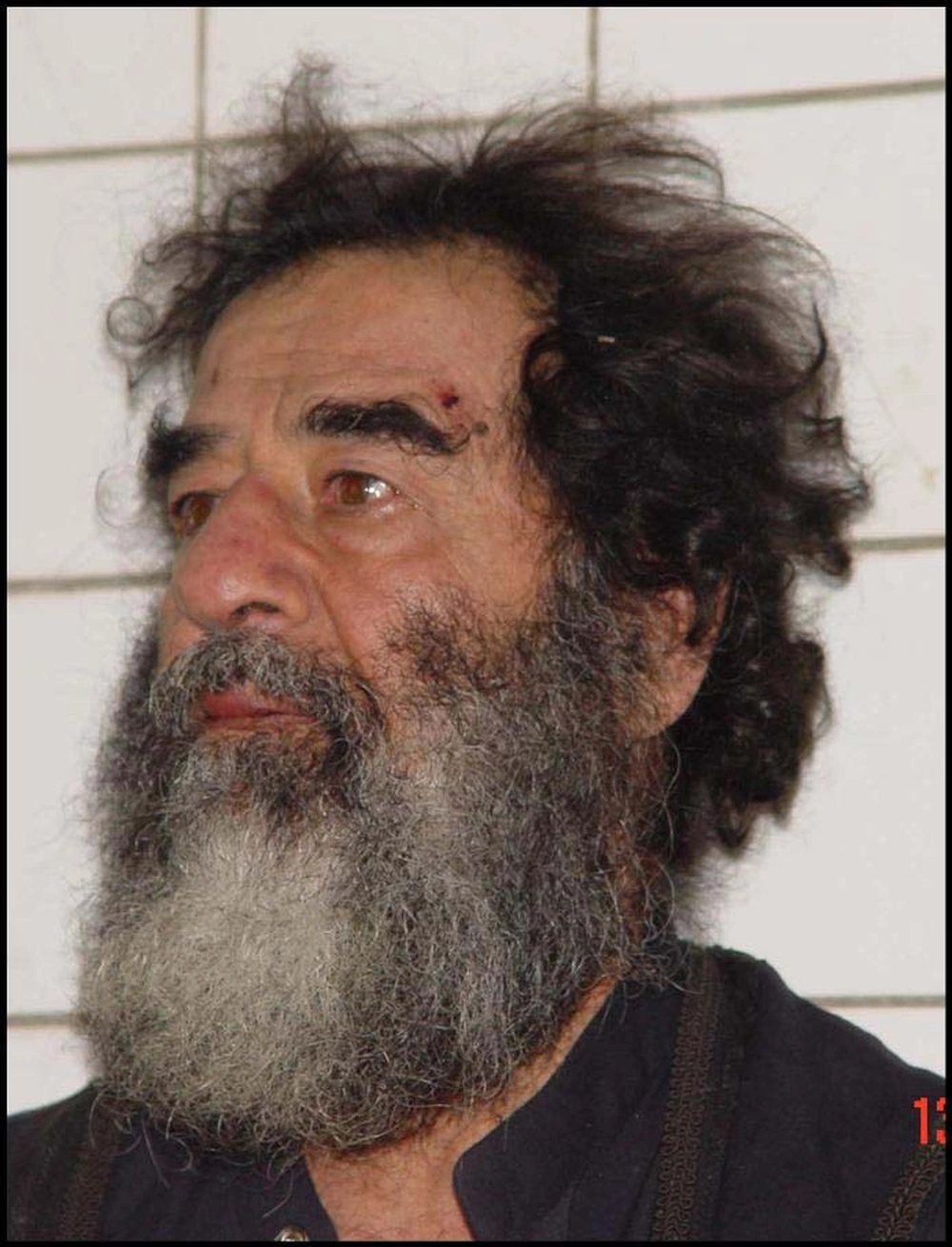
- Information Operations (IO): The deliberate global broadcast of Saddam’s subterranean capture and subsequent medical exam was a calculated psychological operation designed to instantly neutralize his multi-decade cult of personality and degrade insurgent morale.
The Failure of the “Deck of Cards”
Following the fall of Baghdad, the primary U.S. military strategy relied on tracking the 52 most wanted Iraqi officials, gamified via a deck of playing cards where Saddam Hussein was the Ace of Spades. While this netted several high-ranking political captures, these individuals proved useless for actionable intelligence. Their power had been derived entirely from Saddam’s nepotism, and once the regime fell, they were cut out of his survival network.
A critical break occurred four months into the invasion when a local informant in Mosul revealed the location of Saddam’s sons, Uday and Qusay. A massive kinetic raid involving U.S. troops and missile strikes leveled the safehouse, resulting in the brothers’ deaths. While tactically successful, the operation yielded no intelligence on Saddam’s location. The U.S. immediately paid out the $30 million combined bounty and relocated the informant, aiming to prove to the Iraqi populace that coalition rewards were legitimate.
Shifting Focus to the Hamaya Guard Tier
While Task Force 20 continued running dry raids based on the deck of cards, interrogator Staff Sgt. Eric Maddox executed a critical pivot. He hypothesized that Saddam was being protected not by politicians, but by his Hamaya—the innermost, elite third tier of a security apparatus that previously included fixed-location palace guards and advance-travel teams.
Maddox focused his HUMINT operations in Tikrit, Saddam’s hometown, specifically targeting the Al-Muslit family. This tribal group historically supplied the majority of the Hamaya. Interrogations quickly surfaced a central node: Muhammad Ibrahim Omar Al-Muslit, a former trusted bodyguard who was now coordinating funding and guerilla attacks against coalition forces. Maddox knew that if Muhammad Ibrahim was running the insurgency on Saddam’s behalf, he knew exactly where the Ace of Spades was hiding.
Link Analysis and Operation Red Dawn
To locate Muhammad Ibrahim, Maddox utilized rapid link analysis. Interrogating Muhammad’s nephew revealed two business associates and a driver (Basim Latif). This led to Muhammad’s son (Muslit), who revealed his father frequently visited a fish farm in Samarra. Raiding the farm yielded a fisherman who pointed to an uncle’s apartment in Baghdad. Against the odds of this fragile intelligence chain, Task Force 20 raided the Baghdad apartment and successfully captured Muhammad Ibrahim.
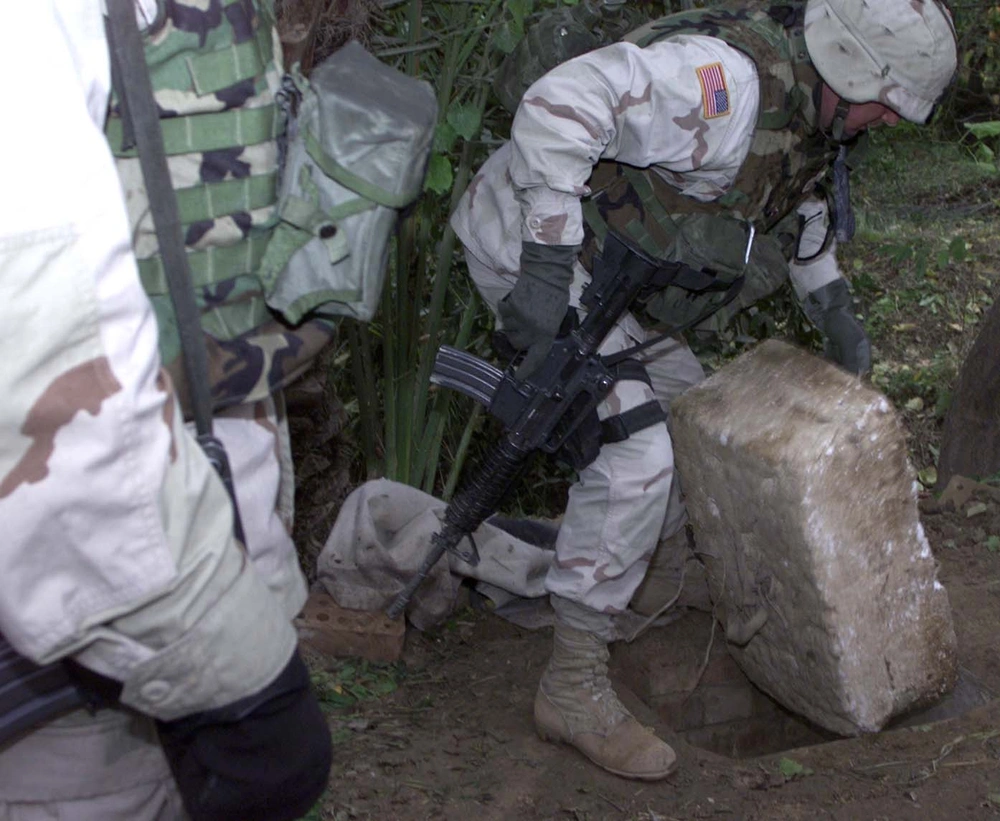
Following intense interrogation and guarantees of family protection, Muhammad Ibrahim broke. On the night of December 13, 2003, he guided U.S. forces to a small farming village in Ad-Dawr. After initial sweeps of two farmhouses turned up nothing, Muhammad kicked at a piece of rope half-buried near a small shack. The rope revealed a styrofoam-covered trapdoor leading to a 6-foot-deep “spider hole” equipped with an air vent and fan, where Saddam Hussein surrendered without firing a shot.
Capturing the deposed leader was only the first tactical objective; destroying his lingering psychological grip on the insurgency was the second. For decades, Saddam Hussein had utilized state-controlled media to build a larger-than-life cult of personality. To counter this, the U.S. military immediately launched an Information Operations (IO) campaign.
Journalists were embedded to tour the miserable, dirt-walled “spider hole,” heavily contrasting it with his former ostentatious palaces. The military deliberately released footage of a disheveled, defeated Saddam undergoing a routine medical and dental examination. This was not a privacy oversight, but a calculated operational decision to broadcast his extreme vulnerability, thereby eroding the mythical status that was actively fueling the localized resistance.
Final Assessment: Operation Red Dawn underscores the absolute primacy of targeted Human Intelligence (HUMINT) and operational link analysis over kinetic sweeps in counter-insurgency (COIN) environments. Task Force 20’s ultimate success materialized only after abandoning politically oriented target lists in favor of dissecting the operational security network (the Hamaya). Furthermore, the immediate weaponization of Hussein’s capture imagery demonstrated a masterful application of Information Operations (IO) to dismantle a cult of personality. However, the subsequent years of the Iraq War proved a hard strategic lesson: tactical decapitation strikes, without a comprehensive stabilization apparatus, cannot permanently neutralize a decentralized insurgency.