Bottom Line Up Front
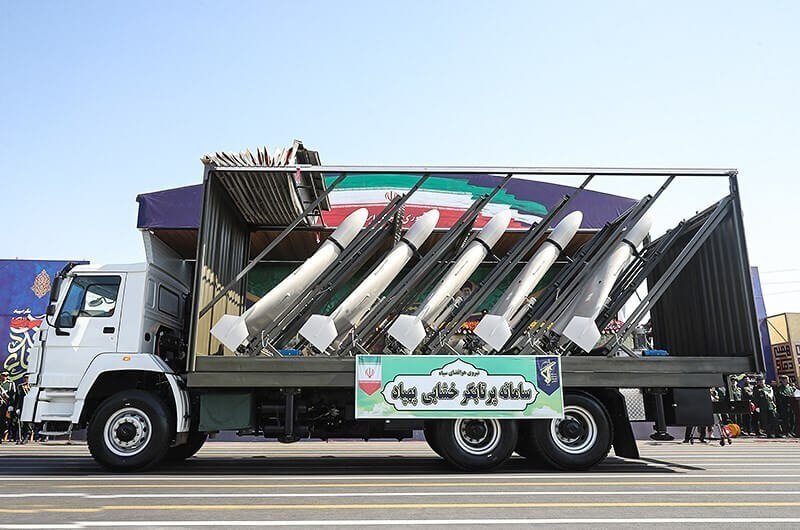
- The Economic Pivot: The traditional Western defense model relies on low-volume, high-cost precision munitions. The proliferation of the Iranian Shahed-136 doctrine and Ukraine’s long-range drone program proved that mass and low unit cost are critical for strategic depth.
- The HIMARS Gap: Canada is acquiring 26 HIMARS launchers and ATACMS missiles. While devastating against high-value targets, these premium munitions won’t arrive until 2029, and their cost prohibits their use against dispersed, lower-tier logistics nodes.
- CDPSC Requirements: Canada is demanding a weapon with >500 km range, >100 kg payload, and non-GPS dependent navigation (to survive heavy electronic warfare). Crucially, the system must be manufactured domestically at scale.
- The Timeline: Ottawa is targeting an Initial Operating Capability (IOC) by June 2027—a staggeringly fast timeline that heavily implies licensing a mature, combat-tested platform like Ukraine’s FP-1, rather than developing a clean-sheet design.
The Asymmetric Math Problem
For decades, Western procurement rewarded prime contractors for producing exquisite, expensive platforms. But the economics of deep strike have fundamentally changed.
If a military uses a multi-million-dollar ballistic or cruise missile to destroy a warehouse of spare truck tires 200 kilometers behind the front line, the attacker loses the financial exchange. Ukraine adapted to this reality in real-time. While Western-supplied HIMARS severely damaged Russian logistics in 2022, Russia adapted through dispersal and aggressive GPS jamming. To regain reach and preserve expensive rockets, Ukraine shifted to producing thousands of cheap, long-range attack drones. Canada has clearly absorbed this lesson.
The Premium Tier: HIMARS and ATACMS
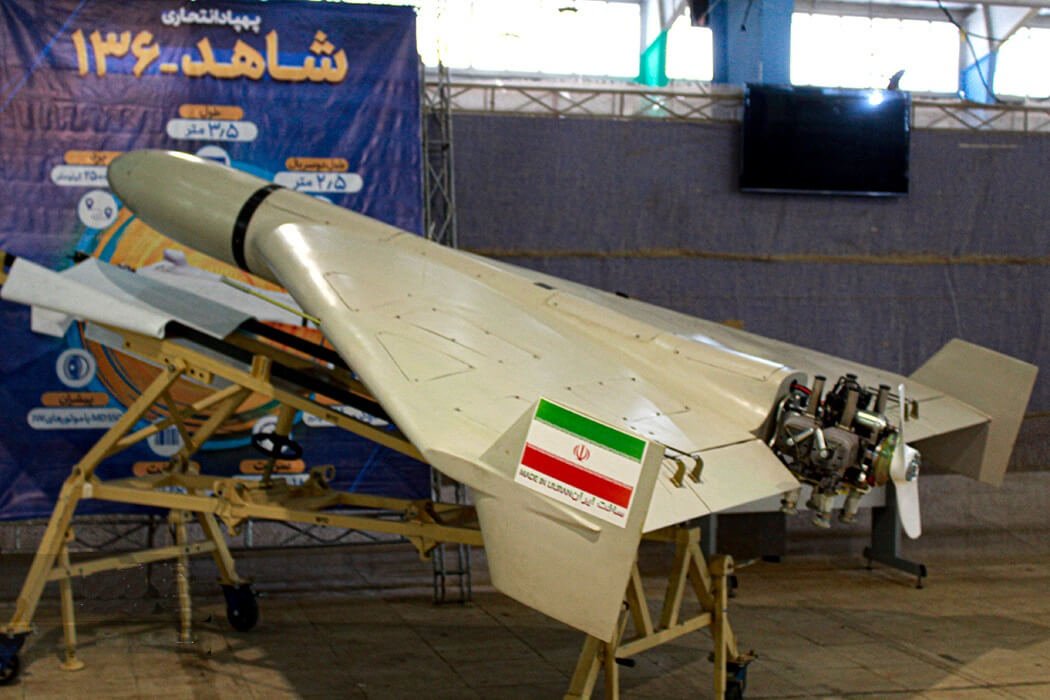
Canada’s conventional ground-launched deep strike cupboard has been practically bare. The planned $2.6 billion CAD acquisition of 26 HIMARS launchers—equipped with ATACMS, unitary GMLRS, and extended-range GMLRS—gives the Canadian Army a serious precision fires package.
However, these systems are restricted by the traditional defense procurement clock. Requested in 2024 and finalized in 2026, the first launchers won’t arrive until 2029. By the time the Canadian military fields the system, the battlefield lessons of 2023 will be six years out of date. Furthermore, a commander must carefully ration ATACMS for hardened headquarters, air defense batteries, or critical missile complexes. Canada realized it needed a secondary, high-volume tier.
The CDPSC: Canada’s Ukrainian Blueprint
On August 7, 2026, the Canadian Joint Forces Command held a closed-door industry Q&A at Area XO in Ottawa. The requested capabilities read like a requisition report directly from the Ukrainian front lines:
- Range: >500 km (capable of threatening deep logistics and airfields).
- Payload: >100 kg (powerful enough to destroy buildings and industrial facilities, ruling out smaller loitering munitions like the U.S. LUCAS system).
- Alternative PNT: The ability to navigate via terrain matching, computer vision, or inertial guidance when GPS is denied by electronic warfare.
- Sovereign Production: The weapon must be built, sustained, and upgraded inside Canada to ensure supply chain security.
Given the extremely aggressive goal of a June 2027 IOC, Canada is almost certainly looking to license a combat-proven system rather than invent one. Following a May 2026 drone production agreement between Ottawa and Kyiv, Ukrainian systems like the FP-1 are prime candidates. By licensing a Ukrainian or European (e.g., Destinus/Ruag or MBDA) design, Canada can establish final assembly lines domestically, substitute local components, and own the intellectual property required to modify the weapon without foreign interference.
The “Canadianization” Challenge
Copying the Ukrainian model is only the first step; the weapon must survive the Canadian operating environment.
A sovereign Canadian weapon must function in the high Arctic, where temperatures plunge to -40°C or even -60°C. Extreme cold systematically degrades machinery: batteries lose voltage, lubricants thicken, composite materials turn brittle, and actuators freeze. An expendable strike drone that fails to launch after a 72-hour cold soak in Nunavut is operationally worthless to Ottawa. Solving this thermal management challenge will be the primary engineering hurdle in adapting a foreign design for the Canadian Armed Forces.
Final Assessment
Canada is quietly building a layered strike architecture rather than relying on a single silver bullet. HIMARS, future PRSM, and F-35-launched Joint Strike Missiles will handle the exquisite, high-value targets. Meanwhile, the CDPSC will provide the mass necessary to overwhelm enemy air defenses and prosecute lower-tier logistics hubs continuously. If Ottawa successfully navigates its notorious procurement bureaucracy and establishes high-volume domestic production, it will emerge with one of the most resilient and economically viable deep strike capabilities in NATO.