KEY INTELLIGENCE
- Regime Crisis & Domestic Crackdown: Iran’s currency has collapsed to 2.1M Rial/USD amidst 3-4 hour gasoline lines and 350% inflation; unable to counter U.S. carrier strike groups, the IRGC has turned to lethal force against civilian factory workers.
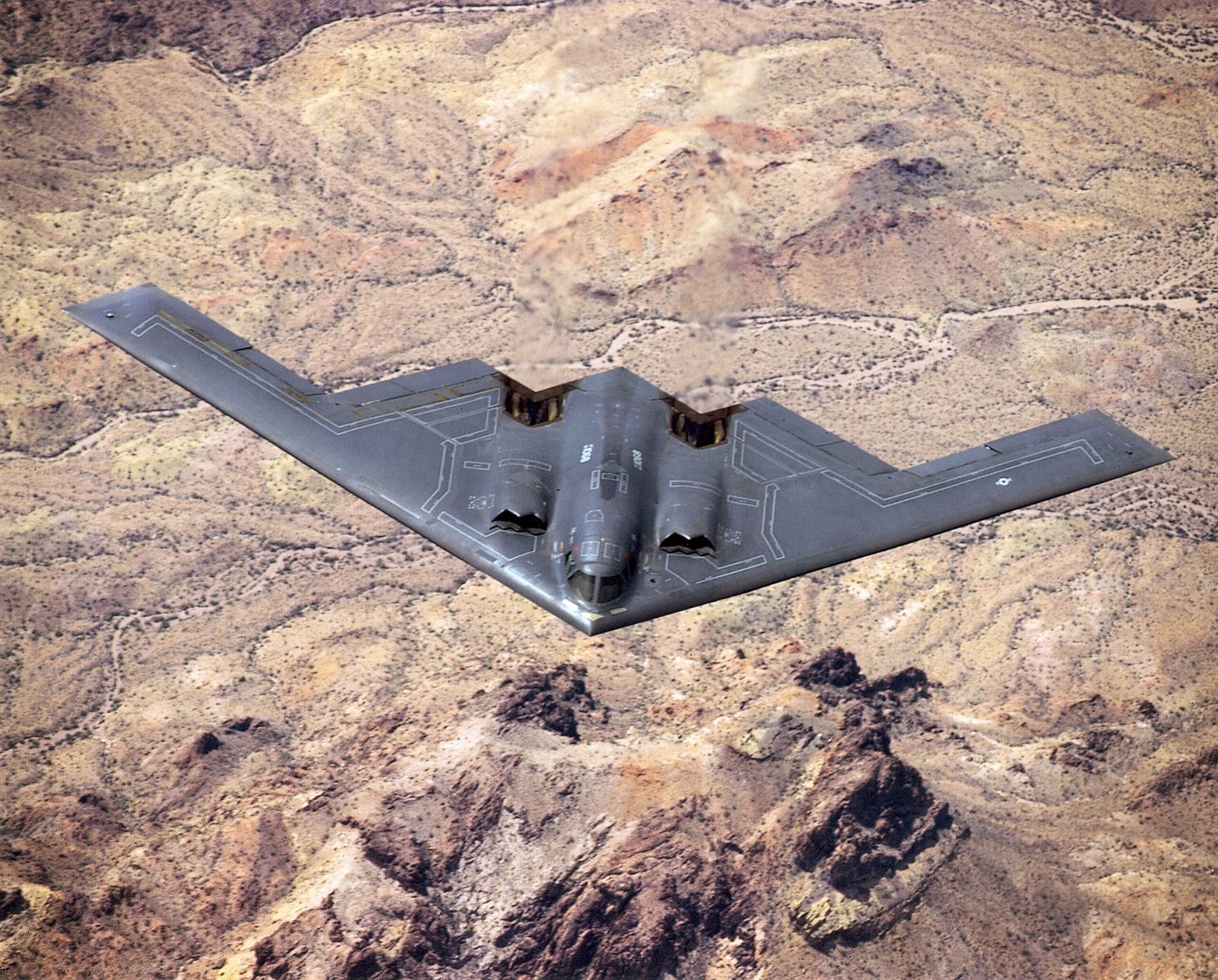
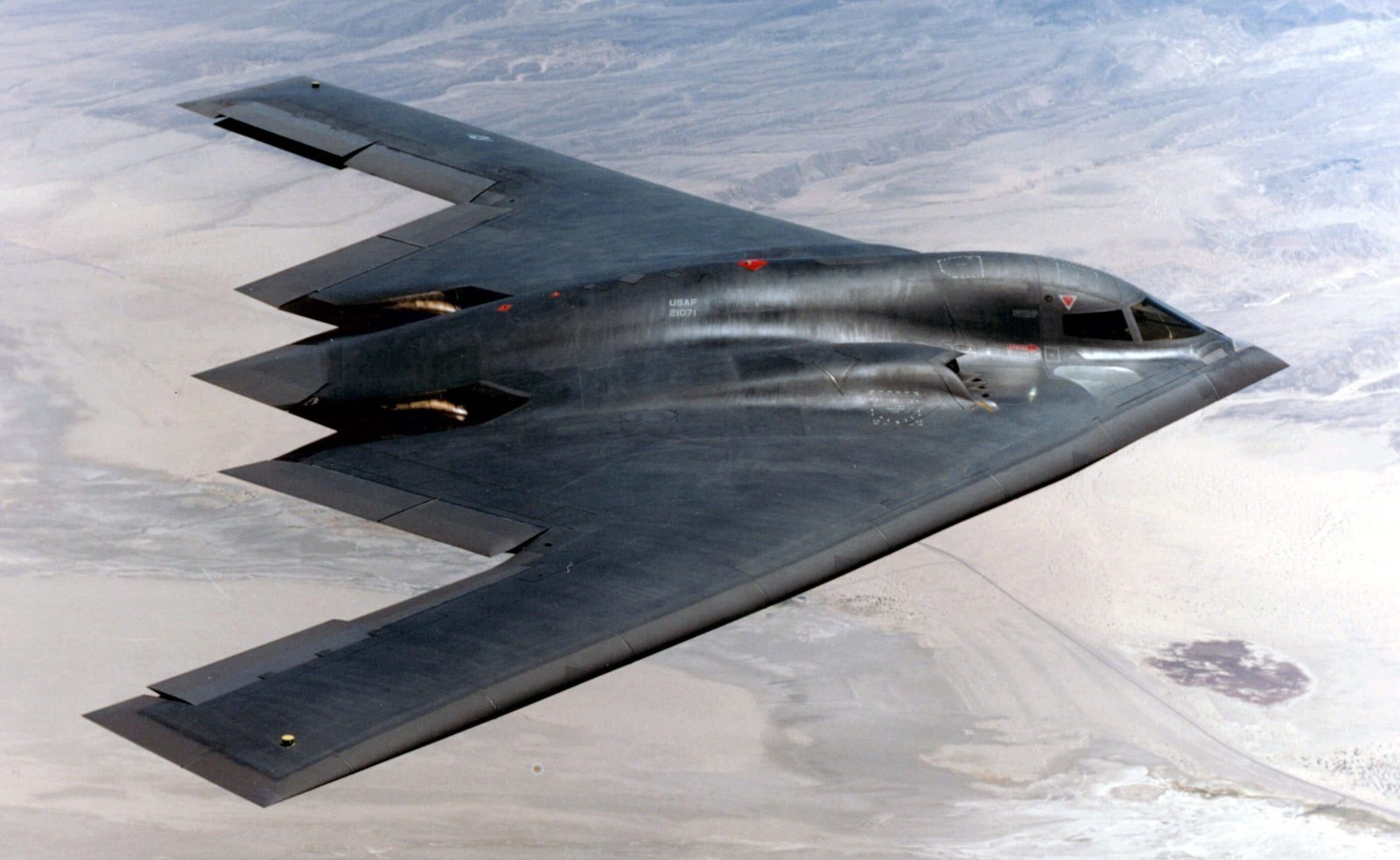
- The Strike Package: U.S. Air Force tests demonstrate B-2 Spirit stealth bombers performing mass JDAM carpet-bombing runs, paired with F-35 “door kicker” SEAD/DEAD support to neutralize surface-to-air missile threats.
- Hardened Target Capability: Non-stop B-2 sorties operating from Whiteman AFB, Missouri, remain the sole operational delivery vehicle for the GBU-57 Massive Ordnance Penetrator (MOP), targeting subterranean installations like Pickaxe Mountain, Fordow, and Natanz.
- Naval & Economic Containment: The U.S. Navy and EU allies (Operation Economic Outcast) are enforcing a tight blockade in the Strait of Hormuz, maintaining global oil stability while halting Iranian crude exports and financial laundering.
- Homeland Defense Upgrade: The U.S. Air Force is actively deploying the MH-139A Greywolf helicopter to replace aging UH-1N Hueys, protecting nuclear ICBM silo fields across North Dakota, Montana, and Wyoming at speeds up to 310 mph.
Domestic Collapse Meets Asymmetric Desperation
Seven months into the present conflict, internal stability inside Iran has disintegrated. With the Rial hitting an unprecedented low of 2.1 million to the dollar, basic supply chains have fractured, resulting in multi-hour queues for gasoline in a nation holding some of the world’s largest petroleum reserves.
In capability terms, the IRGC’s inability to threaten U.S. Carrier Strike Groups or surface combatants has translated into domestic suppression. Recent reports indicate IRGC units opening fire on unarmed civilian sugar factory workers awaiting wage payouts.
Simultaneously, Iranian defense officials have claimed the acquisition of undisclosed strategic capabilities—likely tied to Chinese and Russian intelligence, surveillance, and reconnaissance (ISR) drone swarms. However, U.S. Central Command (CENTCOM) maintains active real-time surveillance over IRGC coastal assets, systematically neutralizing fast-attack craft and coastal rocket launchers capable of minelaying operations out to 70 nautical miles.
The Strike Option: B-2 Spirit and F-35 Joint Integration
Recent weapons evaluations out of the Nevada Test and Evaluation Range demonstrate the exact kinetic options available to the U.S. National Command Authority. Footage shows B-2 Spirit stealth bombers executing mass release profiles of dozens of Joint Direct Attack Munitions (JDAMs), capable of completely neutralizing broad target sets across IRGC command infrastructure or choke points along the Strait of Hormuz.
Should targeted strikes against fortified command nodes or underground nuclear infrastructure be authorized, the primary asset remains the B-2 Spirit carrying the GBU-57 Massive Ordnance Penetrator (MOP).
Operating non-stop from Whiteman Air Force Base in Missouri with aerial refueling support, B-2 packages are structured to integrate directly with 5th-generation F-35 Lightning II aircraft. In this operational concept, the F-35 acts as the initial “door kicker,” using its advanced sensor suite and electronic warfare capabilities to suppress integrated air defense systems (IADS) before the heavy stealth bombers enter the target envelope.
Maritime Blockade & Operation Economic Outcast
On the economic front, U.S. and allied forces have implemented a comprehensive maritime enforcement strategy. U.S. naval assets in the Gulf are currently averaging approximately 30 ship interceptions per night to stop illicit oil transport and prevent regime revenue generation.
Key insight: By maintaining strict control over illicit maritime traffic while ensuring legitimate commercial oil flows out of the Gulf Arab states, the U.S. and its partners have successfully contained Iranian export revenue without triggering a global oil spike.
This effort has been bolstered by the European Union’s formal backing of Operation Economic Outcast, aimed at severing secondary financial laundering channels through foreign intermediaries. With top political leadership missing from public view and supreme command structures fractured, the regime’s revenue streams are drying up faster than their kinetic stockpiles can be replenished.
Homeland Defense: Upgrading Nuclear Silo Protection
While forward-deployed assets maintain pressure in the Middle East, the U.S. Air Force is simultaneously modernizing its domestic nuclear security posture. Base defense at strategic missile wings—including F.E. Warren, Minot, and Malmstrom Air Force Bases—is transitioning from legacy UH-1N Huey helicopters to the new MH-139A Greywolf.
Featuring advanced electro-optical/infrared (EO/IR) sensor turrets, integrated weapon hardpoints, and top speeds reaching 310 mph, the Greywolf significantly decreases response times across vast ICBM silo fields in North Dakota, Montana, and Wyoming, ensuring nuclear deterrence assets remain secure against asymmetric or airborne threats.
| Platform / Operation | Key Specifications & Capabilities | Operational / Strategic Role |
| B-2 Spirit Bomber | Internal bay capacity for GBU-57 MOP / 80x 500lb JDAMs; intercontinental range from Whiteman AFB. | High-value hardened bunker destruction; mass precision carpet-bombing. |
| F-35 Lightning II | 5th-Gen stealth, advanced sensor fusion, high-threat SEAD/DEAD loadout. | Initial air defense suppression; escort and target designation for heavy bombers. |
| MH-139A Greywolf | ~310 mph max speed, military-grade EO/IR sensors, weapon hardpoints. | Modernized tactical security and rapid response for U.S. ICBM nuclear silo fields. |
| Operation Economic Outcast | Multilateral U.S.-EU naval blockade; 30+ ship seizures nightly. | Complete financial and commodity isolation of the IRGC regime; crude export prevention. |
| IRGC Coastal Rocket Systems | 65-70 nautical mile range; aerial/sea-mine deployment capability. | Asymmetric threat to Hormuz shipping; primary target for CENTCOM preemptive strikes. |
Final Assessment
Tactical Verdict: The integration of F-35 suppression fighters with mass-JDAM B-2 Spirit strike packages offers an immediate, unanswerable kinetic counter to any IRGC escalation. Coupled with CENTCOM’s continuous surveillance and target track over coastal minelaying systems, Iranian tactical options in the Strait of Hormuz are effectively neutralised.
Strategic Verdict: The IRGC regime is operating from a position of terminal weakness. As domestic economic collapse fuels widespread internal unrest, turning military weapons on factory workers betrays severe regime panic. Combined with the U.S. Navy’s 30-ship-per-night maritime interdiction and EU support via Operation Economic Outcast, Washington is executing a complete strategic encirclement—strangling Tehran’s economy while maintaining absolute military deterrence.