KEY INTELLIGENCE
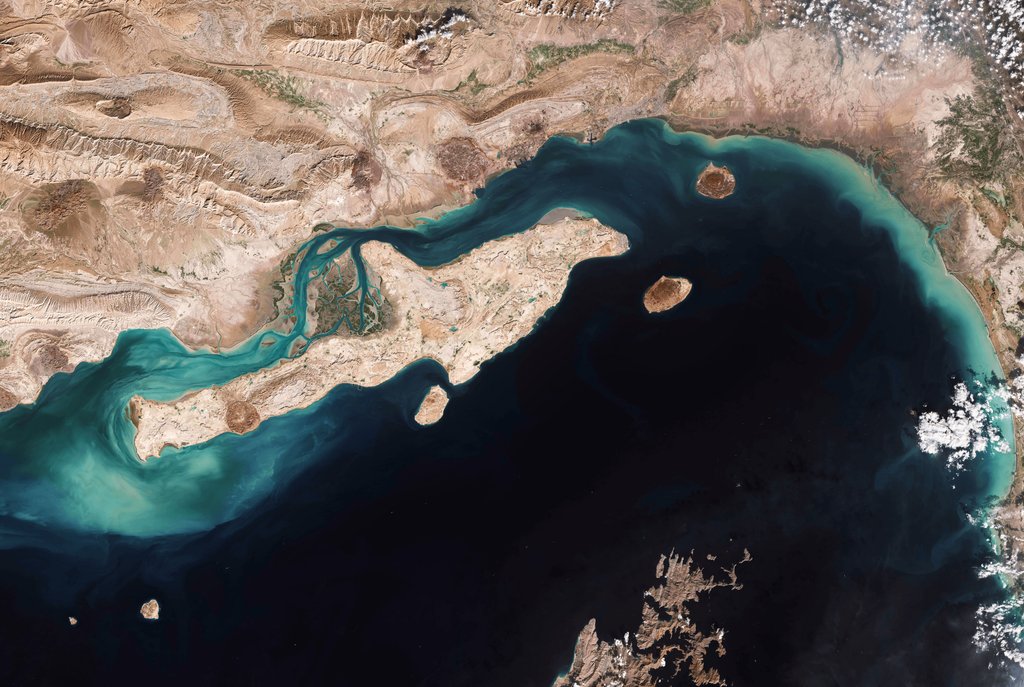
- Imminent Threat Neutralized: U.S. preemptive strikes destroyed IRGC Fajar-5 (333mm) rocket launchers on Larak Island, preventing the deployment of modified sea mines across a 65-nautical-mile operational radius.
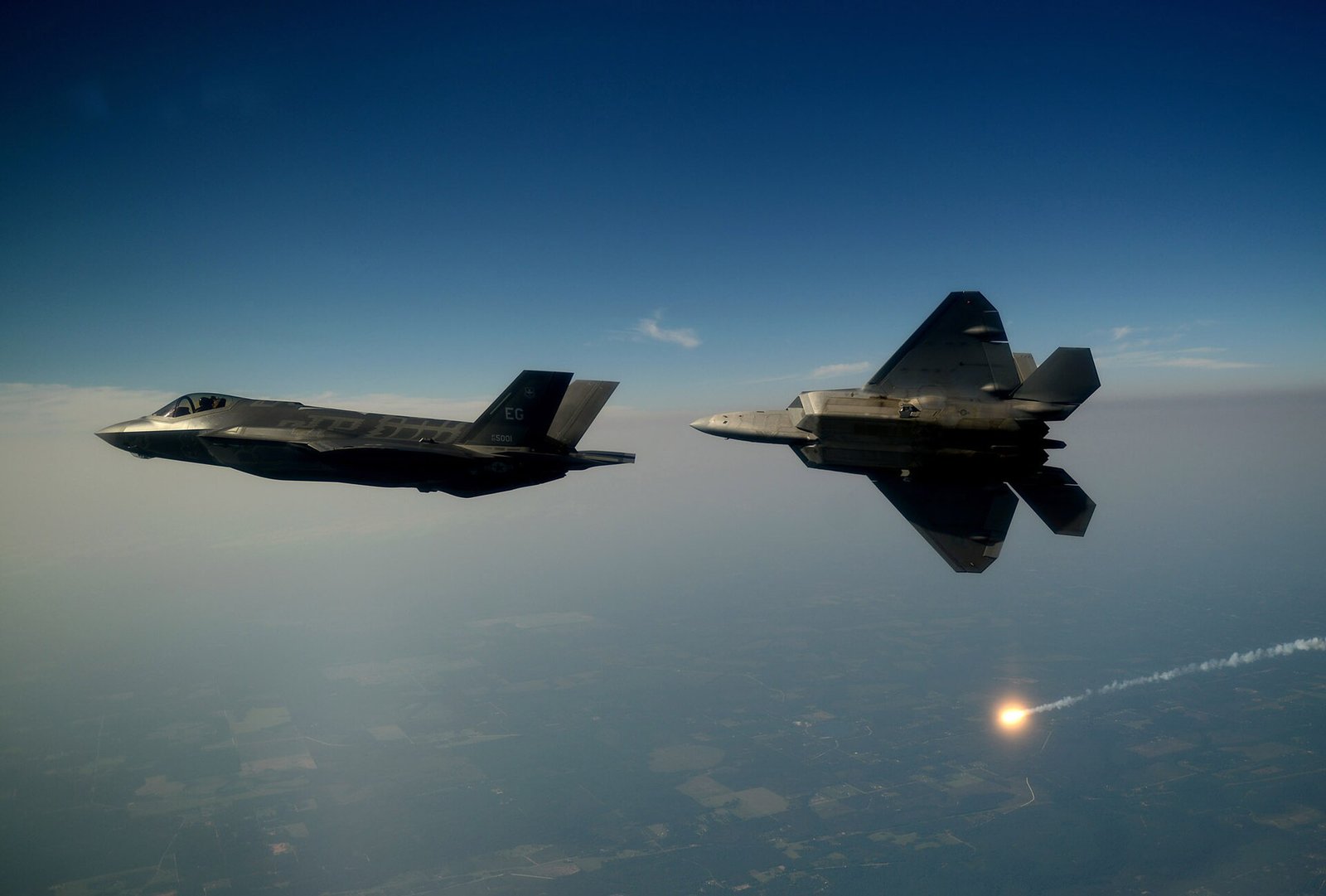
- Stealth Strike Package: F-35 Lightning II variants, cued by U.S. Space Force ISR and unmanned platforms (RQ-4 Global Hawk, MQ-9 Reaper), utilized precision-guided 500-lb munitions (GBU-12/GBU-38) to execute the kinetic operation.
- Failed Retaliation: Iran launched 8 retaliatory ballistic missiles toward U.S. and allied positions in Jordan; all but one were successfully intercepted by air defense networks, yielding zero operational impact.
- Economic Stranglehold: Iran’s currency collapsed to a historic low of 2.1 million Rial per USD as the U.S. naval blockade secures the uninterrupted transit of up to 115 commercial vessels daily.
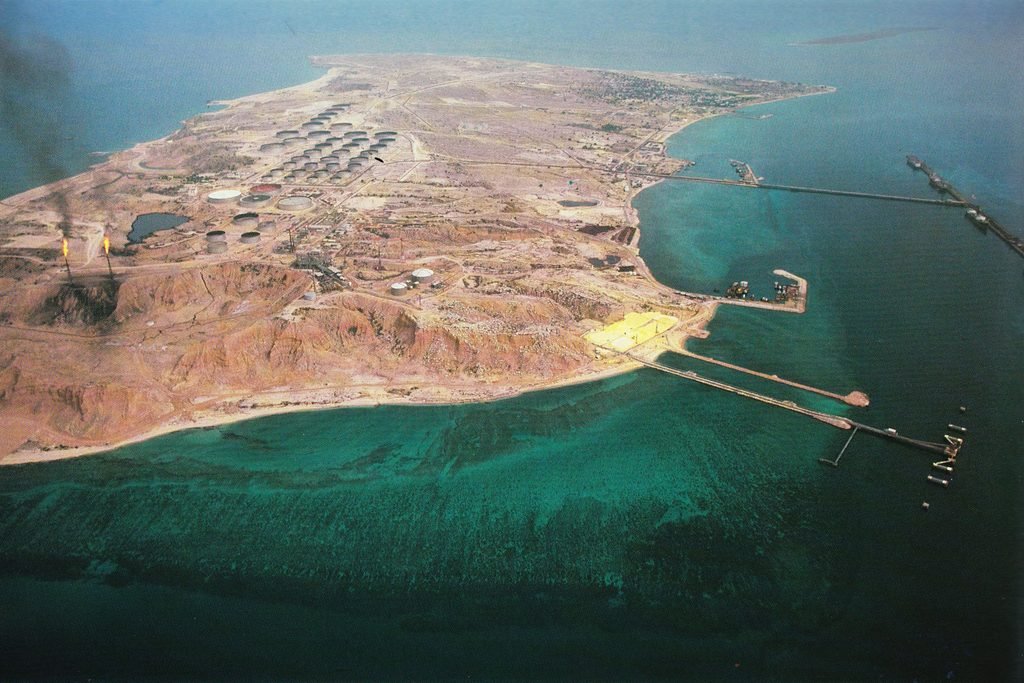
- Kharg Island Escalation Risk: Kharg Island, which facilitates 90% of Iranian crude oil exports, remains a highly vulnerable strategic pressure point should Tehran persist with asymmetric maritime sabotage.
Operation Bend of America: Securing the Strait
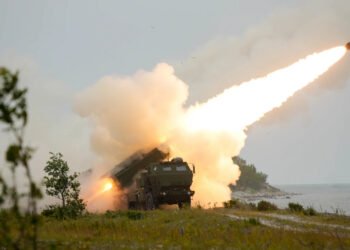
The Strait of Hormuz remains the world’s most critical maritime chokepoint, and the IRGC has increasingly relied on asymmetrical tactics to threaten the transit of global crude oil. Operating from austere outposts on Larak Island, Iranian forces attempted to weaponize their coastal geography by staging rockets equipped with maritime mines.
U.S. Naval forces currently oversee a highly coordinated southern transit corridor, safely routing dozens of tankers daily away from Iran’s northern maritime borders. The IRGC’s deployment of Fajar-5 rockets, capable of reaching out to 65 nautical miles, was designed to blindly seed this southern corridor with contact or magnetic mines. CENTCOM’s preemptive strike eliminated this launch capability before a single mine could touch the water.
5th-Gen Dominance: F-35s and the ISR Kill Web
The neutralization of the Larak Island rocket sites was a textbook execution of modern multidomain operations. This kinetic strike relied heavily on an uninterrupted intelligence, surveillance, and reconnaissance (ISR) umbrella provided by the U.S. Space Force and high-altitude drones like the RQ-4 Global Hawk and MQ-9 Reaper.
By feeding real-time targeting data directly into the tactical network, ISR assets enabled F-35A Lightning II fighters (and potentially F-35B STOVL variants from amphibious assault ships) to penetrate undetected. The F-35s bypassed rebuilt Iranian coastal radar arrays, relying on their low-observable stealth profiles and advanced sensor fusion.
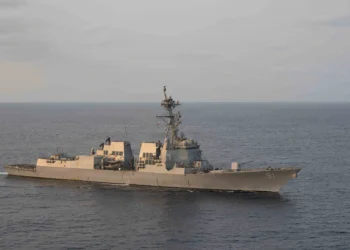
Pilots utilized 500-lb precision-guided munitions, specifically the laser-guided GBU-12 Paveway II and GPS-guided GBU-38 JDAM, to obliterate the hardened rocket sites and subterranean munitions bunkers. Supporting operations were simultaneously conducted by the USS George Washington (CVN-73) carrier strike group, maintaining a formidable combat air patrol over regional waters.
Asymmetric Retaliation: Ballistic Missiles and Proxy Deficits
Stripped of a modernized air force and conventional naval power, Tehran’s retaliation predictable defaulted to its strategic crutch: ballistic missiles and one-way attack (OWA) drones. Iran fired a volley of 8 ballistic missiles toward U.S. outposts in Jordan, while simultaneously launching a suicide drone toward the United Arab Emirates.
The barrage was systematically dismantled by integrated air and missile defense (IAMD) systems, primarily MIM-104 Patriot batteries, with the UAE confirming the interception of the incoming drone. Only a single ballistic missile evaded interception, striking an empty expanse of desert and causing zero casualties or structural damage.
The Kharg Island Ultimatum and Economic Collapse
The inability of the IRGC to project conventional force is magnified by a cascading domestic economic crisis. The Iranian Rial has shattered historical floors, trading at 2.1 million to the U.S. dollar, driven by crippling sanctions and U.S. maritime blockades.
Kharg Island—the nerve center for 90% of Iran’s oil exports—is now the ultimate strategic hostage. While recent strikes have targeted military infrastructure on the island, the massive crude oil terminals remain intact. Should the U.S. authorize the destruction of Kharg’s export infrastructure, it would effectively sever the regime’s primary revenue stream, crippling its ability to fund the IRGC and regional proxies.
Northern Viking: NATO’s Strategic Messaging
In a parallel demonstration of expeditionary readiness, U.S. and NATO forces executed Operation Northern Viking in Europe. The 37th Airlift Squadron landed C-130J Super Hercules aircraft on austere Icelandic beaches and Danish grass strips without traditional runways.
While geographically distant, this Agile Combat Employment (ACE) serves as a direct strategic signal to adversaries like Russia and Iran. It proves that U.S. logistics and tactical airlift can operate from unpredictable, decentralized locations, nullifying the threat of preemptive ballistic missile strikes against static airbases.
| Platform / Weapon System | Operator | Primary Role | Key Specification / Payload | Strategic Impact |
| F-35A/B Lightning II | U.S. Air Force / Marines | 5th-Gen Multirole Strike | GBU-12 / GBU-38 JDAM (500 lb) | Evades coastal IADS; executes decapitation strikes on fortified launch sites. |
| Fajar-5 (Fars-5) Rocket | IRGC (Iran) | Coastal Artillery / Mine-Laying | 333mm rocket / 65 NM Range | Modified to deploy maritime mines into commercial transit corridors. |
| MIM-104 Patriot | U.S. / Allied Forces | Air & Missile Defense | PAC-3 Hit-to-Kill Interceptor | Neutralized 87.5% of the Iranian ballistic missile retaliation. |
| MQ-9 Reaper / RQ-4 | U.S. Air Force | High-Altitude ISR / Strike | AGM-114 Hellfire / Synthetic Aperture Radar | Provides persistent loiter and real-time kill-chain targeting data. |
| Kharg Island Terminal | NIOC (Iran) | Crude Oil Export Hub | 30M barrel storage capacity | Single point of failure for 90% of Iranian state oil revenue. |
FINAL ASSESSMENT
Force Multiplier & Structural Vulnerability The CENTCOM preemptive strike highlights a fatal structural vulnerability in Iran’s anti-access/area denial (A2/AD) strategy. By aggressively dismantling IRGC coastal mine-laying elements with stealth assets, the U.S. has proven it can guarantee the flow of global commerce through the Strait of Hormuz at will. Iran’s anemic eight-missile response—easily defeated by Patriot interceptors—demonstrates that its ballistic missile deterrent is heavily degraded. The operational readiness of U.S. and allied forces to immediately shut down IRGC maritime aggression indicates that Tehran has run out of viable escalatory options that do not risk the catastrophic kinetic destruction of its Kharg Island oil lifeline.