Frontline Defense Journal | Objective OSINT & Military Analysis
  • Home
  • Latest Intelligence
  • Domain Of Warfare
    • Naval & Maritime
    • Air & Aerospace
    • Ground Forces & Armor
    • Space & Cyber
    • Unmanned & Autonomous Systems
    • Strategic Weapons
  • Regions
    • USA & Americas
    • Europe
    • Middle East
    • Asia & Pacific
  • About Us
    • Who We Are
    • Privacy Policy
    • Terms Of Use
No Result
View All Result
  • Home
  • Latest Intelligence
  • Domain Of Warfare
    • Naval & Maritime
    • Air & Aerospace
    • Ground Forces & Armor
    • Space & Cyber
    • Unmanned & Autonomous Systems
    • Strategic Weapons
  • Regions
    • USA & Americas
    • Europe
    • Middle East
    • Asia & Pacific
  • About Us
    • Who We Are
    • Privacy Policy
    • Terms Of Use
Frontline Defense Journal | Objective OSINT & Military Analysis
No Result
View All Result
Frontline Defense Journal | Objective OSINT & Military Analysis
No Result
View All Result
Home Domain Of Warfare Air & Aerospace

S-400 vs F-35: The Truth About Russia’s Stealth Killer

Russia’s S-400 Triumph is aggressively marketed as the world’s preeminent counter-stealth air defense system, supposedly capable of neutralizing American fifth-generation air dominance. However, technical analysis and recent combat data reveal significant operational limitations. While highly capable within a fully integrated air defense system (IADS), the S-400 suffers from severe line-of-sight constraints, radar targeting envelope restrictions against low-RCS aircraft, and acute vulnerability to low-altitude cruise missile saturation strikes.

August 30, 2026
in Air & Aerospace, Domain Of Warfare, Latest Intelligence, USA & Americas
Reading Time: 7 mins read
A A
0
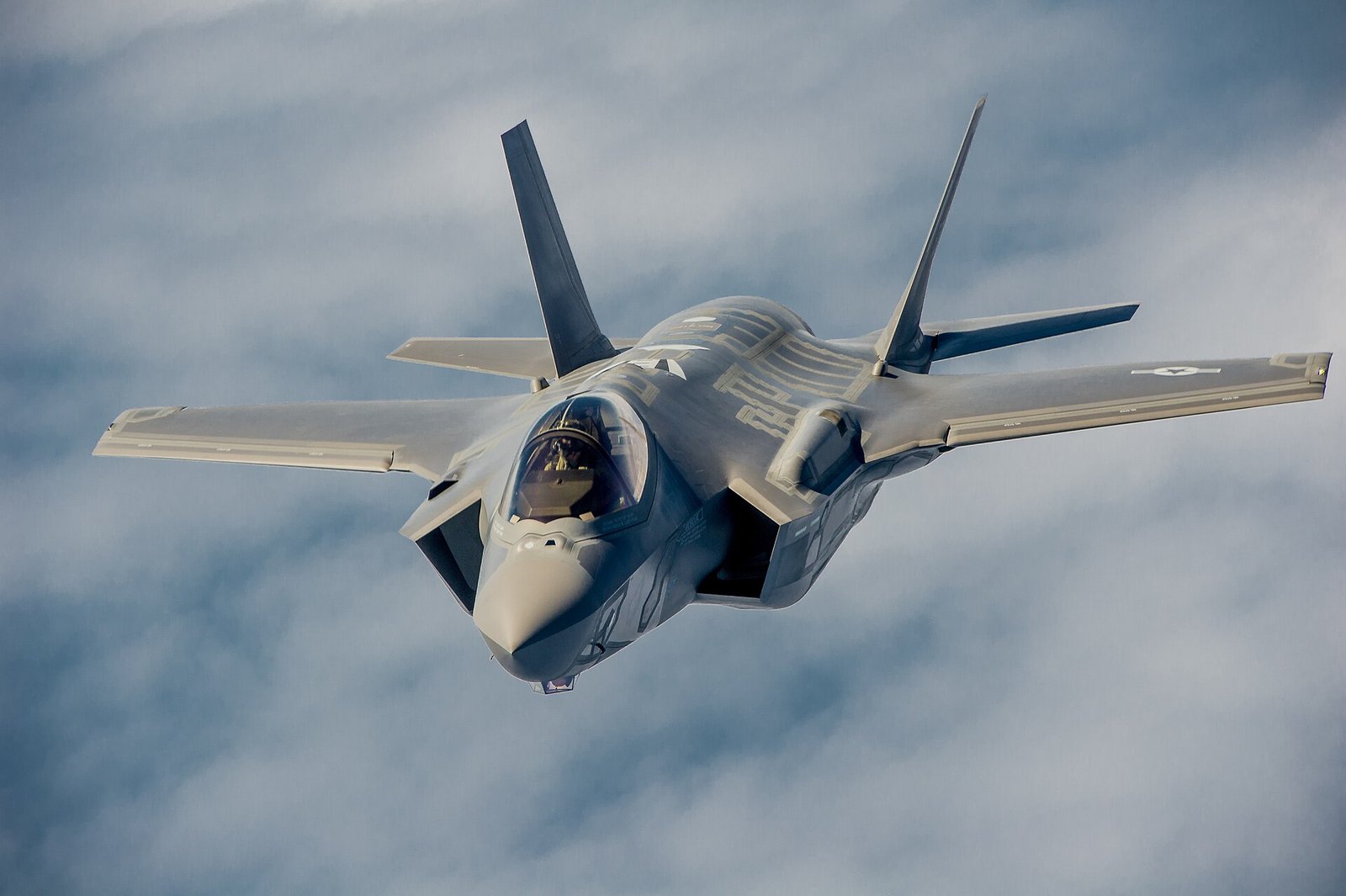
A_U.S._Air_Force_pilot_navigates_an_F-35A_Lightning_II_aircraft_assigned_to_the_58th_Fighter_Squadron,_33rd_Fighter_Wing_into_position_to_refuel_with_a_KC-135_Stratotanker_assigned_to_the_336th_
Share on FacebookShare On Reddit

Key Intelligence: S-400 Operational Capabilities & Limitations

  • Legacy Hardware Foundation: Despite its modern reputation, 70-80% of the S-400’s hardware architecture is directly inherited from the Cold War-era S-300 system.
  • Targeting vs. Detection Gap: The Nebo-M radar can detect stealth aircraft at range using low-frequency bands, but cannot establish a “weapons-grade lock” on an F-35 until the fighter breaches a 20-mile proximity envelope.
  • Saturation Vulnerability: A standard S-400 battalion possesses only 32 ready-to-fire interceptors (8 launchers x 4 missiles), making it mathematically susceptible to swarm tactics like the US Rapid Dragon cruise missile deployment.
  • Line-of-Sight Blind Spots: Lacking robust airborne early warning (AWACS) integration, isolated S-400 batteries are fundamentally blind to low-altitude standoff weapons masked by terrain curvature, reducing effective interception ranges from hundreds of kilometers down to mere tens of kilometers.

The Nebo-M Radar Architecture: Detection Is Not Targeting

The cornerstone of the S-400’s counter-stealth claim is its integration of the Nebo-M radar system. This complex pairs three distinct arrays broadcasting across multiple frequency bands to mitigate the low-observable characteristics of Western stealth fighters. Modern stealth design is optimized to defeat high-frequency S, C, X, and Ku bands—the exact frequencies required to guide a surface-to-air missile to a target.
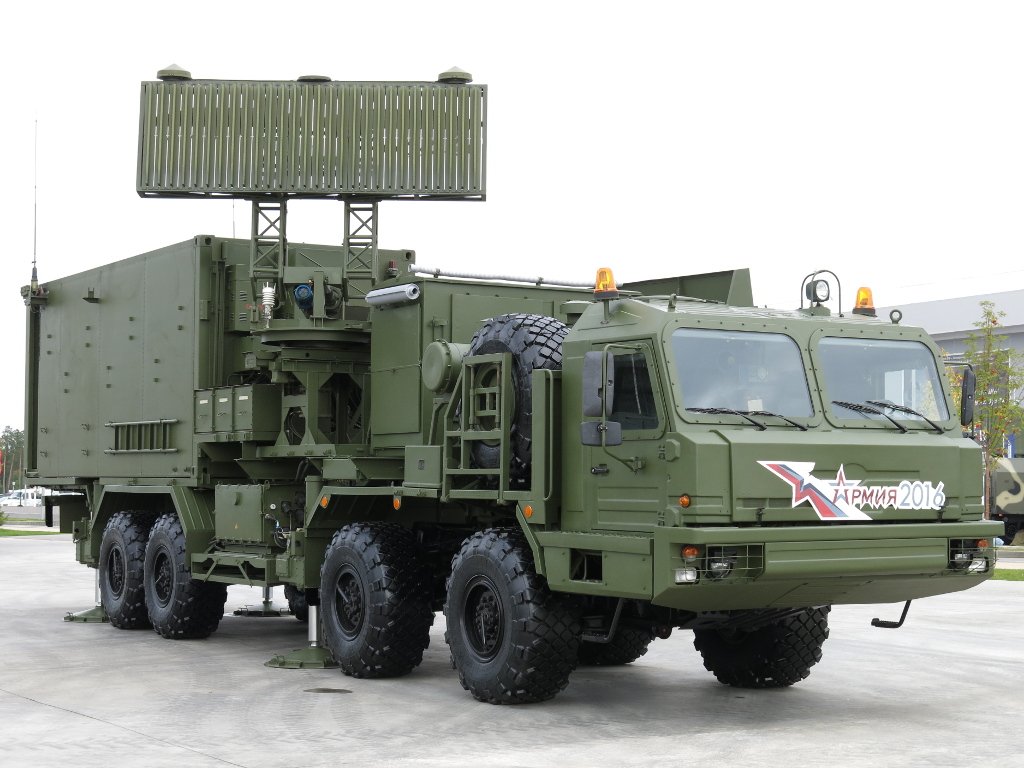
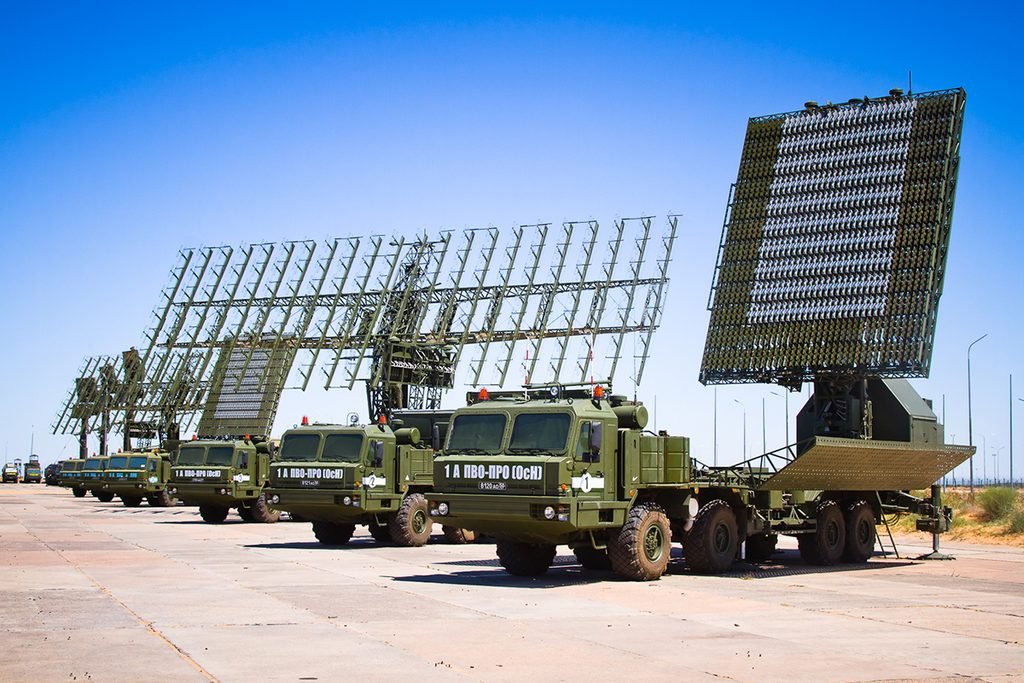
Nebo M based on BAZ-6909 chassis at exhibition Army 2016
The Nebo-M radar system attempts to bridge the gap between low-frequency detection and high-frequency targeting. Source: Wikipedia By Boevaya mashina
55Zh6M Nebo-M at Air Frontiers 2018.
55Zh6M Nebo-M at Air Frontiers 2018. Source: Ministry of Defence of the Russian Federation

To bypass this, Nebo-M utilizes the Nebo SVU (VHF band) and Protivnik G (L band) to detect the general presence of a stealth aircraft. However, these low-frequency arrays cannot provide a targeting solution. The system must track the aircraft until it comes close enough for the Gamma S1 (S and X band) array to lock on. In modern air combat, knowing a stealth fighter is in the airspace is tactically useless if your fire control radar cannot guide an interceptor to its coordinates.

The F-35 vs. S-400: Radar Cross Section (RCS) Realities

When evaluating stealth survivability, Radar Cross Section (RCS) is the decisive metric. Much of the S-400’s touted counter-stealth data is modeled against America’s first-generation stealth aircraft, the F-117 Nighthawk, which possessed an RCS of approximately 0.003 square meters. Against the F-117, Russian low-frequency arrays boast a detection range of 217 miles (350 km) in clean environments.
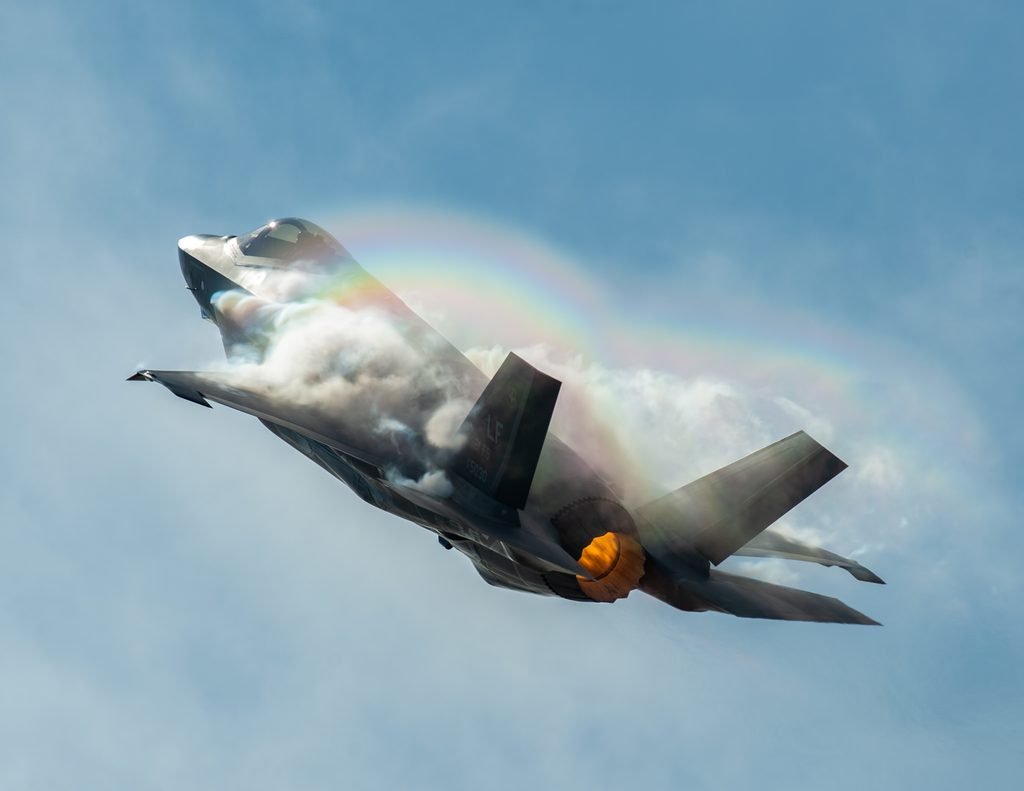
Capt. Andrew “Dojo” Olson, F-35 Heritage Flight Team pilot and commander performs a vertical climb in an F-35A Lightning II during the Bell Fort Worth Alliance Air Show Oct. 14, 2018, in Fort Worth, Texas. The F-35A Lightning II’s F-135 single-engine contains 43,000 pounds of thrust. (U.S. Air Force photo by Senior Airman Alexander Cook)
The F-35’s microscopic radar cross-section drastically shrinks the S-400’s engagement envelope..

Modern fifth-generation fighters render these legacy metrics obsolete. The F-35 Lightning II features an RCS of approximately 0.0015 square meters (the size of a golf ball), while the F-22 Raptor sits at 0.0001 square meters (a marble). Due to this exponential reduction in signature, the S-400 cannot achieve a weapons-grade targeting lock on an F-35 until the aircraft is within 20 miles. Armed with the upcoming AARGM-ER anti-radiation missile (range >60 miles), an F-35 can easily destroy an S-400 battery long before the Russian system can fire back.

Operational Vulnerabilities: Line-of-Sight and Saturation Attacks

The physical limitations of the earth’s curvature represent the S-400’s most exploitable vulnerability. Like all ground-based systems, its radar is restricted by the horizon. Because Russian combat doctrine does not prioritize total air dominance, they lack the persistent AWACS (Airborne Warning and Control System) networking required to see over the horizon.
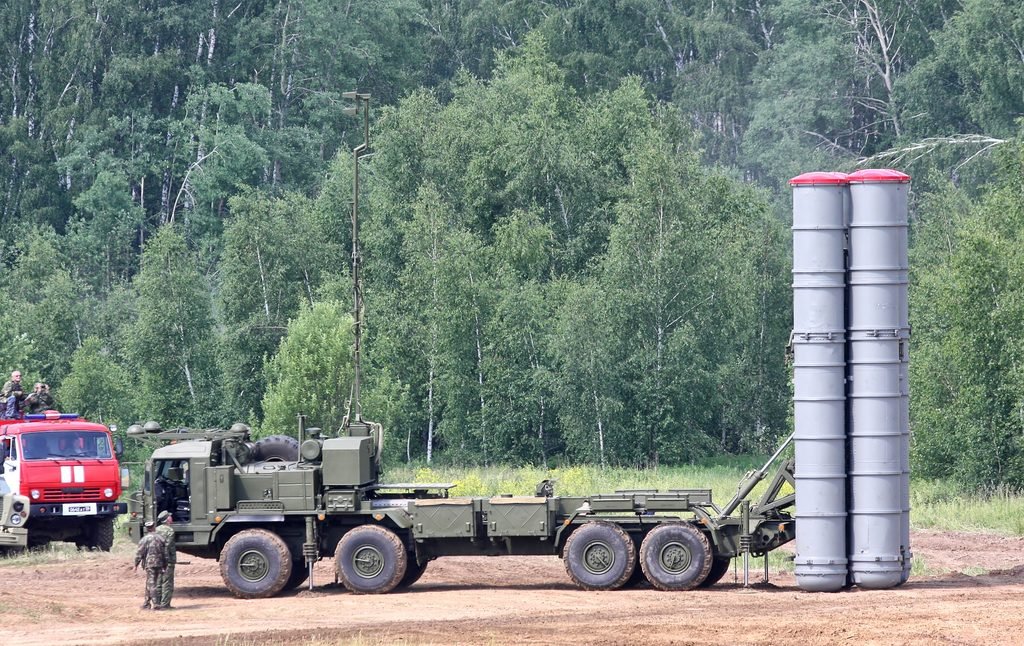
An isolated S-400 battery is highly vulnerable to low-altitude cruise missile saturation.
An isolated S-400 battery is highly vulnerable to low-altitude cruise missile saturation.. Photo by Vitaly V. Kuzmin

Without over-the-horizon sensor integration, an S-400 battery is effectively blind to low-altitude cruise missiles. Combat data from Syria in April 2017 proved this: active S-400 systems failed to intercept American cruise missiles striking targets just 108 miles (175 km) away. Furthermore, with a strict limit of 32 interceptors per battalion, the system is highly vulnerable to saturation attacks. Cargo aircraft deploying massive swarms of low-observable cruise missiles from beyond 600 miles (via systems like Rapid Dragon) would quickly deplete the S-400’s magazine, leaving the battery defenseless.

5. INFORMATION-DENSE MARKDOWN TABLE

Stealth Aircraft RCS vs. Estimated S-400 Engagement Metrics

Aircraft PlatformEst. Radar Cross Section (RCS)Physical EquivalentS-400 Max Detection Range (VHF/L Band)S-400 Lethal Targeting Envelope (S/X Band)
F-117 Nighthawk (Legacy)~0.003 m²Large Bird217 miles (350 km)~70-100 miles
F-35 Lightning II~0.0015 m²Golf BallSeverely degraded< 20 miles
F-22 Raptor~0.0001 m²MarbleSeverely degraded< 10 miles
Low-Altitude Cruise MissileVaries (Terrain Masked)N/ADefeated by HorizonTens of kilometers
Note: Detection ranges assume environments free of advanced electronic warfare (EW) jamming, which further degrades Russian radar performance.

Strategic Assessment

The S-400 Triumph is not the impenetrable anti-access/area-denial (A2/AD) shield Russian state media projects. While highly lethal against legacy 4th-generation fighters and commercial-sized aircraft at high altitudes, its counter-stealth capabilities are heavily overstated due to the fundamental physics separating low-frequency detection from high-frequency targeting. Most critically, its reliance on ground-based radar without robust airborne integration leaves isolated batteries acutely vulnerable to low-altitude cruise missile saturation. Against a modernized force deploying F-35s equipped with standoff anti-radiation munitions, the S-400 will consistently find itself outranged and outmaneuvered.

Tags: f35s400

Related Posts

No Content Available
Next Post
Zelenskyy’s Winter 2026 Strategy to End the Ukraine War Frontline Defense Journal

Zelenskyy’s Winter 2026 Strategy to End the Ukraine War

Leave a Reply Cancel reply

Your email address will not be published. Required fields are marked *

I agree to the Terms & Conditions and Privacy Policy.

Latest Intelligence

Irreplaceable Russian Tu-95 Bomber Destroyed by $48K Ukrainian “MICH 2000”

Kinburn Spit Death Trap: Ukraine Traps 2,500 Russian Troops in Logistical Siege

US SEAD Strikes Dismantle IRGC Network in Strait of Hormuz

CIA Director Warns FSB: Putin’s Fabricated Intel Risks Total Russian Collapse

USS Abraham Lincoln Docks in Thailand After 286-Day Combat Deployment Amid “Rust” Disinformation

Canada’s Secret CDPSC Program: The Pivot to Cheap Deep Strike Mass

USA & Americas

HIMARS_-_missile_launched image
USA & Americas

Canada’s Secret CDPSC Program: The Pivot to Cheap Deep Strike Mass

F/A-18E Super Hornet carrying four AIM-424 rounds during a test flight in April 2026.
Naval & Maritime

The AIM-424 Malice: Inside the U.S. Navy’s 250-Mile Stealth Killer

Frontline Defense is an independent, objective analysis platform. The content provided on this website, including but not limited to technical breakdowns, military hardware comparisons, defense budget reports, and open-source intelligence (OSINT) analyses, is strictly for educational, historical, and informational purposes. Frontline Defense is not affiliated with, endorsed by, or acting on behalf of any government agency, department of defense, armed forces branch, or defense contractor. All content on this site represents independent research based strictly on unclassified, publicly available data and open-source records at the time of writing. Nothing published on this website should be construed as official military guidance, defense strategy consulting, or government policy.

Follow Us

Domain Of Warfare

  • Naval & Maritime
  • Air & Aerospace
  • Ground Forces & Armor
  • Space & Cyber
  • Strategic Weapons
  • Unmanned & Autonomous Systems

Regions

  • USA & Americas
  • Europe
  • Middle East
  • Asia & Pacific
  • About Us
  • Privacy Policy
  • Terms Of Use

© 2026 | Fronline Defense Journal. All Rights Reserved

No Result
View All Result
  • Home
  • Latest Intelligence
  • Domain Of Warfare
    • Naval & Maritime
    • Air & Aerospace
    • Ground Forces & Armor
    • Space & Cyber
    • Unmanned & Autonomous Systems
    • Strategic Weapons
  • Regions
    • USA & Americas
    • Europe
    • Middle East
    • Asia & Pacific
  • About Us
    • Who We Are
    • Privacy Policy
    • Terms Of Use

© 2026 | Fronline Defense Journal. All Rights Reserved