KEY INTELLIGENCE
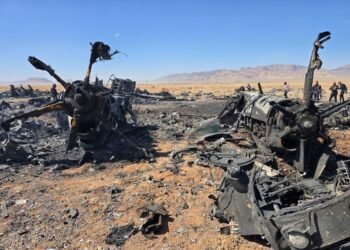
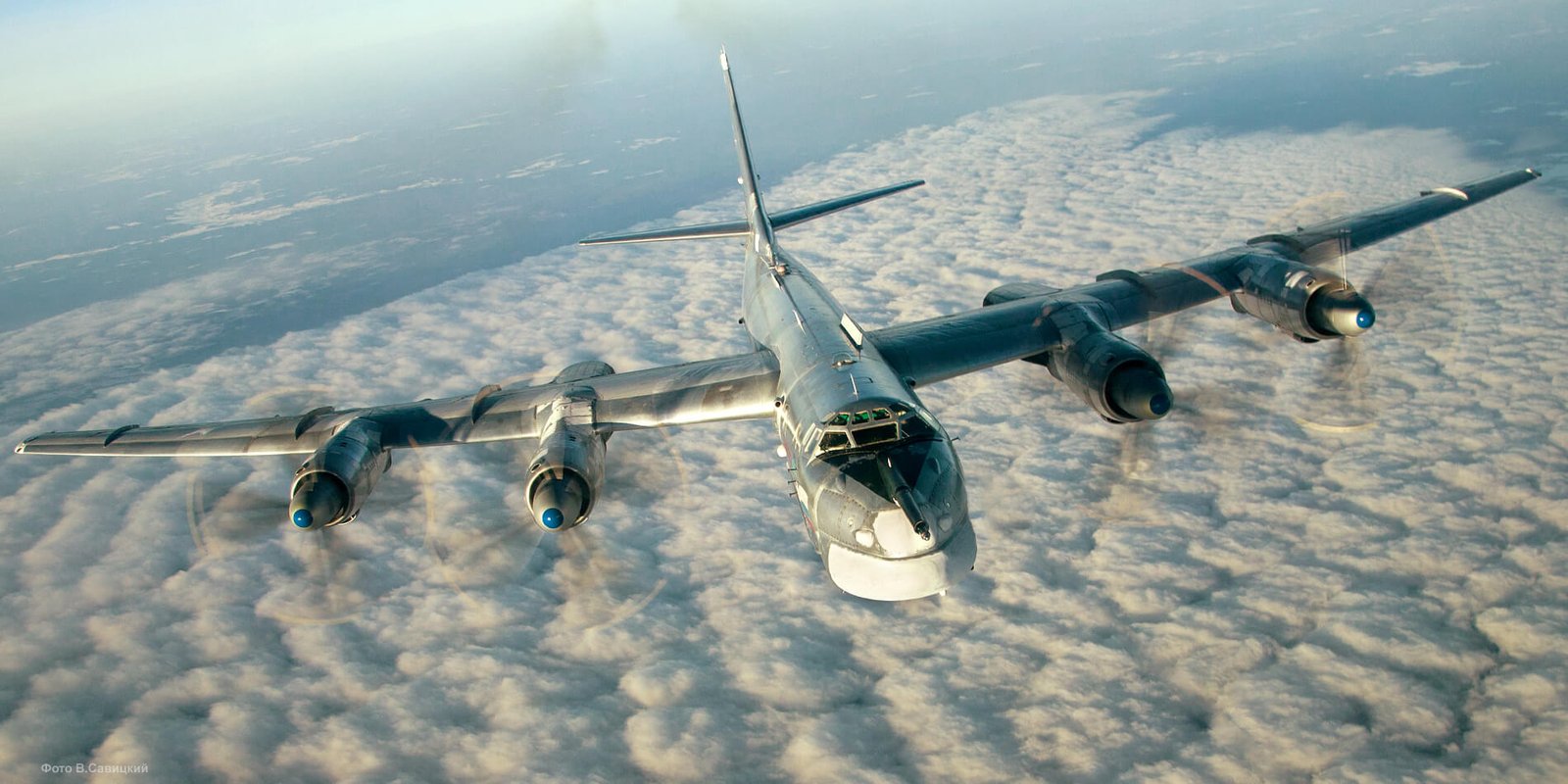
- Irreplaceable Asset Lost: A Russian Tu-95MS strategic bomber parked at Engels-2 air base (~800 km from Ukraine) suffered catastrophic structural damage to its tail section and is officially beyond repair. Tu-95 production ceased in 1992.
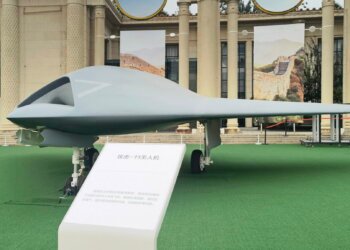
- The MICH 2000 Drone: The weapon utilized was the MICH 2000, a Ukrainian deep-strike drone capable of traveling up to 2,000 km with a 25 to 60 kg warhead.
- Reverse-Engineered Origin: The platform is a heavily modified clone of the Chinese ZTK-150 / Mugin-5 PRO. After a Chinese factory near Hong Kong refused to sell the underlying technology, Ukrainian engineers photographed the assembly lines, acquired eight samples, and reverse-engineered the airframe.
- Industrial Scale: Exclusively operated by the SBU’s Center “A” (Alpha unit), the MICH 2000 is currently being produced at a rate of 6,000 units annually, with targets to scale to 10,000.
- MICH+ Development: Ukraine is already iterating a shorter-range “middle strike” variant (MICH+) boasting a heavier 70 kg warhead, terminal guidance, and a $40,000 unit cost for targets within 600 km.
Asymmetric Attrition: Trading $48,000 for a Strategic Bomber
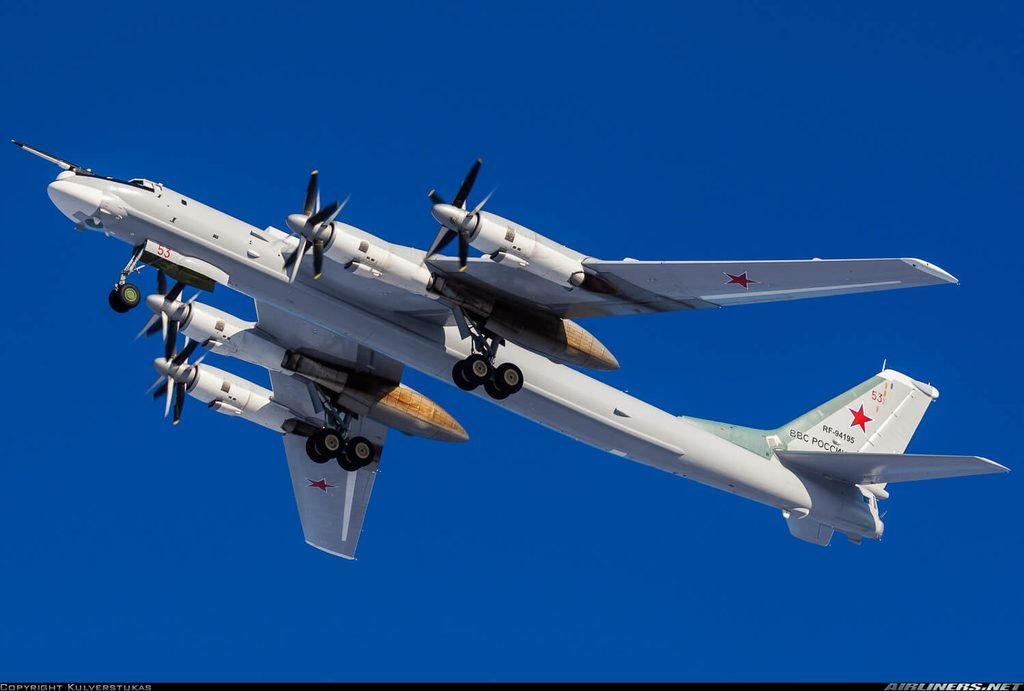
The mid-summer strike on the Engels-2 strategic aviation facility, located deep inside the Saratov region, achieved a highly disproportionate exchange ratio. Commercial satellite imagery analyzed by independent open-source groups confirmed that a Russian Tu-95MS strategic bomber had its entire tail section severed by a direct drone strike. Because the Soviet Union halted production of the Tu-95 family over three decades ago, Russia mathematically cannot replace this airframe.
The Tu-95 remains the primary “missile truck” of the Russian Aerospace Forces, routinely launching Kh-101 cruise missiles at Ukrainian infrastructure from the safety of Russian airspace. For years, Moscow relied on the sheer distance of bases like Engels-2 to protect its fleet. However, the emergence of the Ukrainian MICH 2000 drone has entirely eroded this geographic sanctuary, forcing Russia into reactive, resource-intensive defense measures—such as constructing hardened concrete aircraft shelters and draping bombers in car tires to break their thermal signatures.
Reverse-Engineering the MICH 2000: From Hong Kong to Kyiv
The origin story of the MICH 2000 is a masterclass in wartime industrial espionage and rapid prototyping. In 2023, Ukrainian military engineers traveled to a civilian drone factory near Hong Kong, seeking to purchase Chinese ZTK-150 airframes (Mugin-5 PRO derivatives) in bulk. When Beijing tightened export controls on civilian drones and the factory ultimately refused to sell the production technology outright, the Ukrainian delegation pivoted. Under the guise of accepting pilot training, the team secretly photographed the manufacturing processes, purchased eight physical drones, and returned to Ukraine to reverse-engineer the system.
The initial domestic prototypes were catastrophic failures. Test flights resulted in crashes caused by incorrect centers of gravity, engine vibrations shearing propeller bolts, and severe vulnerability to Russian electronic warfare (EW). However, operating under a wartime mandate for SBU’s Alpha special operations center, engineers rapidly iterated. By testing unrefined models in actual combat scenarios, the developers identified critical flaws and pushed fixes directly into the production line. Today, the MICH 2000 retains almost none of its Chinese DNA beyond the basic aerodynamic outline.
The Consumable Strike Doctrine
Unlike exquisite, multi-million-dollar Western cruise missiles, the MICH 2000 is designed as a consumable asset. The airframes cost approximately $48,000 in their basic configuration, allowing SBU Alpha to launch them in saturation swarms. The current production line generates roughly 6,000 drones annually, backed by a $1 million monthly reinvestment into R&D.
This massive industrial capacity enables Ukraine to shift its targeting calculus. The manufacturer is already developing the “MICH+”, a variant that trades maximum range (reduced to 600 km) for a heavier 70 kg warhead and terminal guidance, driving the per-unit cost down to roughly $40,000. By producing specialized tools for different target profiles, Ukraine is ensuring that Russian defenders can never settle into a predictable interception pattern.
MICH 2000 vs. Tu-95MS: Asymmetric Warfare Metrics
| Metric | Ukrainian MICH 2000 | Russian Tu-95MS “Bear” | Strategic Context |
| Platform Cost | ~$48,000 USD | Irreplaceable (Legacy Asset) | Ukraine trades the cost of a pickup truck for a strategic nuclear-capable bomber. |
| Production Rate | ~6,000 / Year | Zero (Halted in 1992) | Ukraine achieves mass scalability; Russia faces mathematically irreversible attrition. |
| Range / Reach | Up to 2,000 km | Intercontinental | The MICH 2000 places nearly all of European Russia’s aviation infrastructure at risk. |
| Payload Capacity | 25 – 60 kg Warhead | 8x Kh-101 Cruise Missiles | A 60 kg precision strike is sufficient to trigger catastrophic secondary explosions on unarmored aircraft. |
| Primary Operator | SBU Center “A” (Alpha Unit) | Russian Aerospace Forces (VKS) | The SBU leverages exclusive supply lines to run continuous, high-tempo deep-strike ops. |
TACTICAL VERDICT
INDUSTRIAL ESPIONAGE MEETS SCALED LETHALITY. The destruction of the Tu-95MS at Engels-2 is a symptom of a much larger strategic shift: Ukraine has successfully indigenized a long-range strike industry from scratch. By reverse-engineering denied Chinese technology and accepting a high failure rate in early prototyping, Ukraine transitioned from a consumer of civilian drones to a mass-producer of deep-strike weapons. The MICH 2000’s $48,000 price point and 6,000-unit annual production rate mean that Russia’s strategic bomber fleet—a finite resource inherited from the Soviet Union—is being hunted by a rapidly multiplying, low-cost threat. By refusing to sell Ukraine the technology, China inadvertently forced Kyiv to build a sovereign industrial base that is now systematically dismantling Russia’s rear-echelon sanctuaries.