Tactical Takeaways
- Kinetic Range: “In excess of” 250 nautical miles (287 miles / 463 km), vastly out-ranging the AIM-120 AMRAAM.
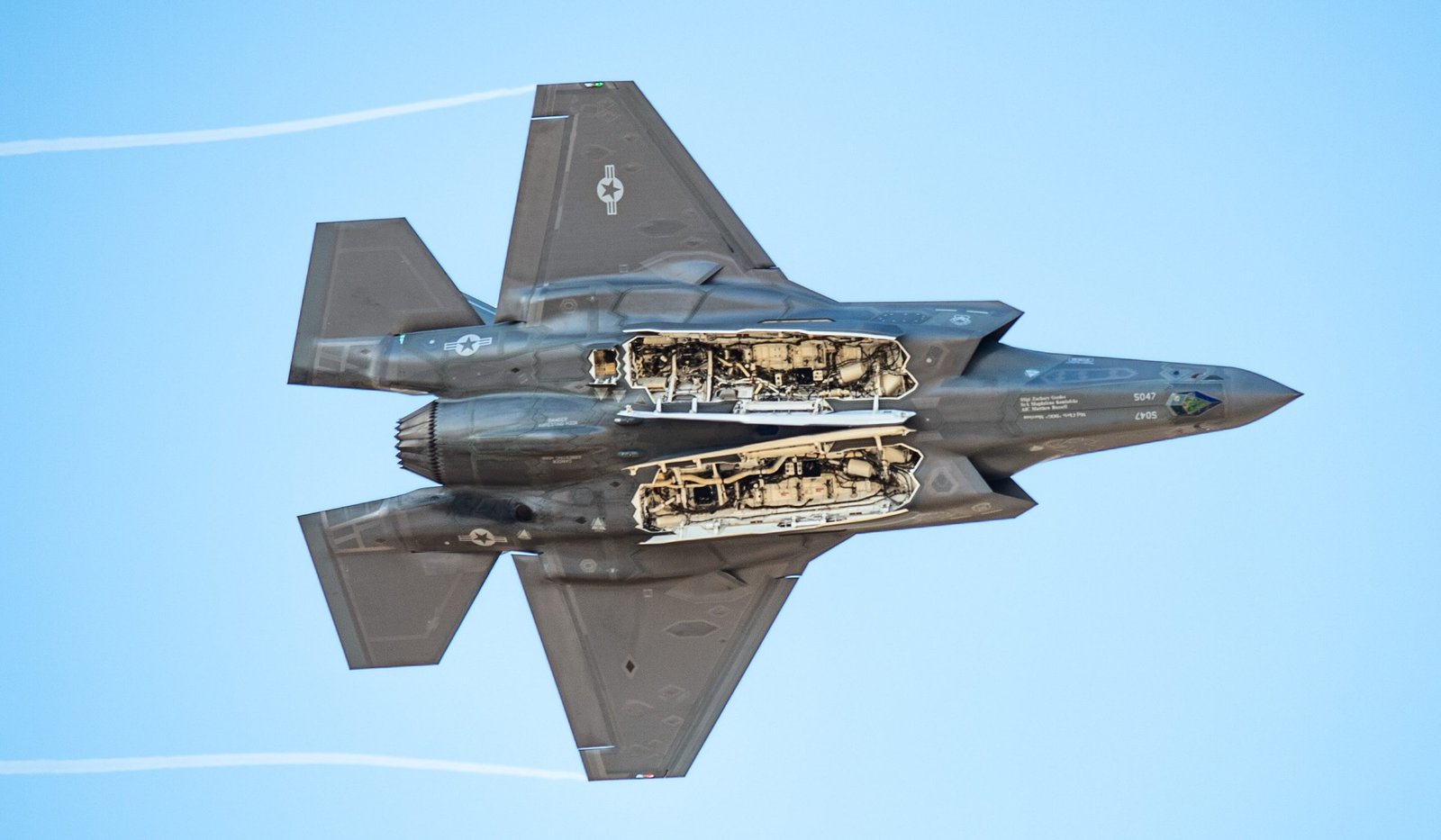
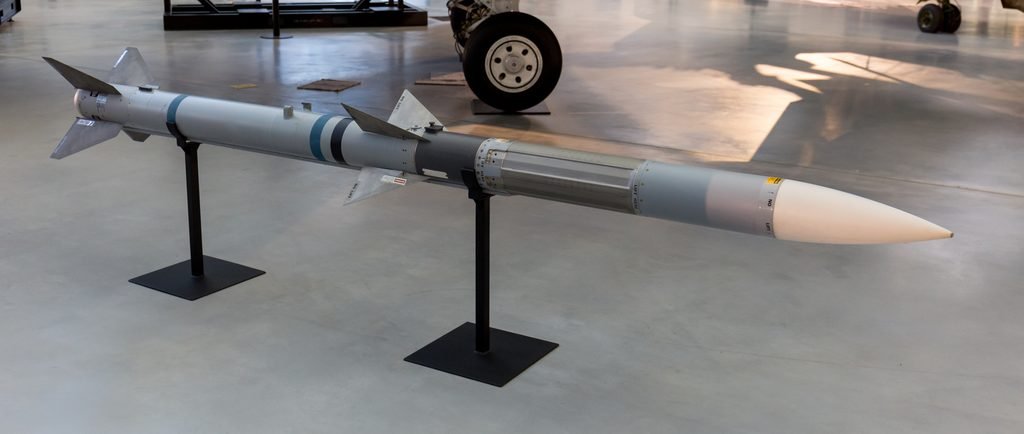
- Internal Carriage: The 13.5-foot length and 26.2-inch wingspan allow for internal carriage in the F-35C, preserving low-observable radar cross-sections.
- Two-Stage Propulsion: A separable booster and kill-vehicle design enables ballistic coasting and secondary ignition for high-energy terminal maneuvering.
- Closing Speed: Exceeds Mach 3.5, arriving faster than the much larger AIM-174B Gunslinger.
The Geometry of Stealth: Packaging Extreme Range
For modern air combat, extending range typically means increasing mass. Up until now, the Navy’s longest-reaching beyond-visual-range (BVR) weapon was the recently unveiled AIM-174B Gunslinger, an air-launched variant of the SM-6 interceptor. While highly capable, the Gunslinger is simply too massive to fit inside a 5th-generation stealth fighter.
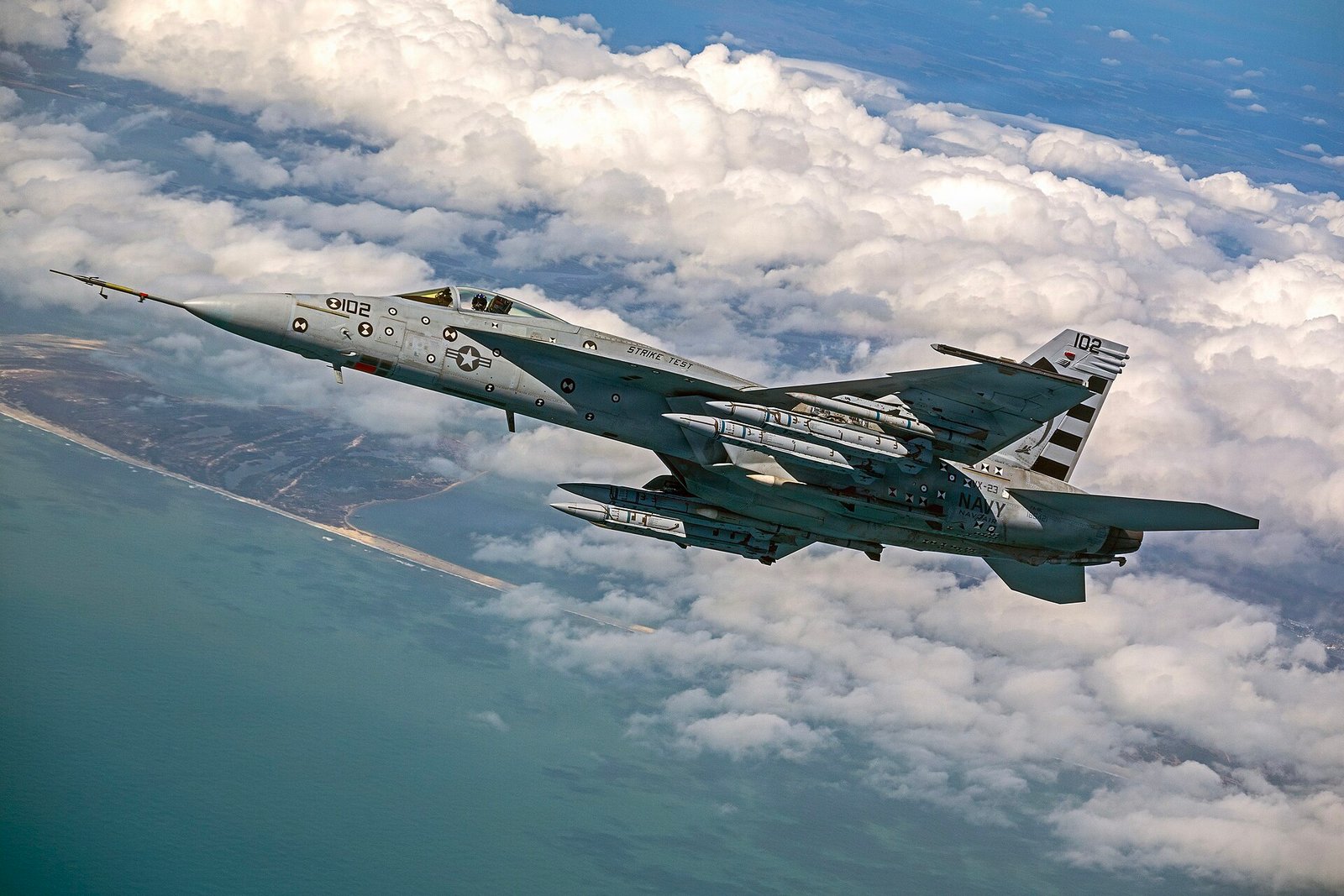
The AIM-424 Malice was engineered specifically to solve this physical limitation. Emerging from what was likely the Long-Range Engagement Weapon (LREW) program initiated around 2017, the missile measures 13.5 feet long with a 13.5-inch diameter and a wingspan of 26.2 inches. Weighing approximately 1,500 lbs, it is nearly a foot and a half longer and twice as wide as the legacy AIM-120 AMRAAM.
Crucially, these dimensions allow the Malice to fit perfectly inside the internal weapons bay of a carrier-based F-35C. This allows the aircraft to penetrate contested airspace without compromising its stealth signature. This capability is expected to be integrated into the Air Force’s F-35As and the Navy’s future F/A-XX 6th-generation fighter down the line. However, the weapon is likely too long for the internal bays of the Marine Corps’ F-35B (constrained to roughly 13 feet to accommodate its lift-fan drive shaft) and the Air Force’s F-22 Raptor.
Two-Stage Propulsion and Terminal Physics
Most traditional air-to-air missiles rely on a single-stage solid propellant rocket motor. They burn their fuel rapidly to achieve altitude and speed, then glide unpowered toward their target. Any course corrections during this terminal glide bleed kinetic energy (speed) or potential energy (altitude)—the very currencies needed to reach extreme ranges.
The Malice circumvents this by employing a two-stage missile design. It functions similarly to an orbital launch vehicle:
- First Stage (Booster): Propels the weapon from the launch platform, achieving high altitude and extreme velocity before burning out and detaching.
- Coasting Phase: The lighter, aerodynamically optimized kill vehicle coasts toward the target area, heavily minimizing drag.
- Second Stage Ignition: The kill vehicle’s internal motor ignites during terminal guidance, violently accelerating the missile to speeds exceeding Mach 3.5.
This secondary ignition ensures the missile retains the kinetic energy necessary for hard maneuvering against nimble, fighter-sized targets, rather than being restricted to sluggish, high-value airborne assets like AWACS or tankers. Upon intercept, the Malice detonates a proximity-fused annular blast fragmentation warhead, expanding in a lethal ring to maximize hit probability.
Arsenal Integration: The New High-Low Mix
With the introduction of the AIM-424, the United States has fundamentally restructured its air-to-air portfolio to counter near-peer anti-access/area denial (A2/AD) networks.
| Weapon System | Target Range | Guidance / Profile | Platform Carriage | Primary Role |
| AGR-20 APKWS II | ~7 miles (11 km) | Laser / IR | External | Low-cost C-UAS (Group 3 Drones) |
| AIM-9X Block II | ~20+ miles (32+ km) | Imaging Infrared (IIR) | External / Internal | High-off-boresight WVR dogfighting |
| AIM-120D3 AMRAAM | ~100 miles (160 km) | Active Radar | External / Internal | Standard BVR engagement |
| AIM-260 JATM | ~125-170 miles | Active Radar | External / Internal | High-end AMRAAM successor |
| AIM-424 Malice | >287 miles (463 km) | Classified (Radar likely) | External / Internal | Extreme BVR stealth interdiction |
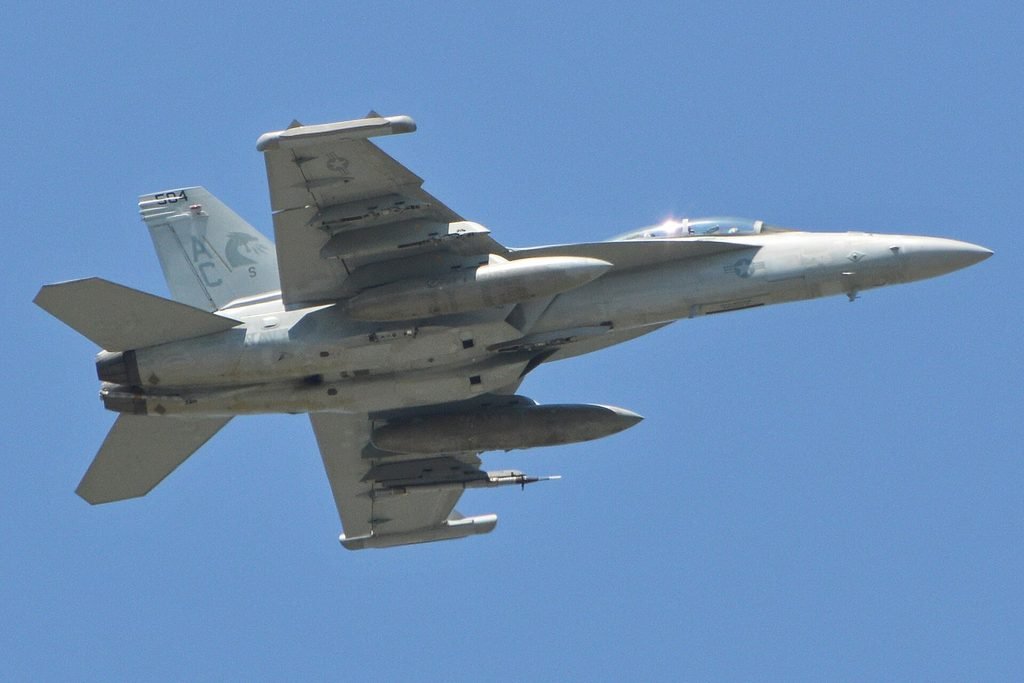
| AIM-174B Gunslinger | >300 miles | Active Radar | External (F/A-18E |
Why Field Malice Alongside the Gunslinger?
The Navy’s acquisition of the Malice, despite already fielding the massive AIM-174B Gunslinger, comes down to scale, geometry, and supply chains.
The SM-6/AIM-174B is arguably the most broadly capable interceptor in existence—capable of downing fighters, cruise missiles, and even hypersonic glide vehicles. However, it is expensive and slow to produce. Raytheon historically maxed out at 125 SM-6 units annually, only recently pushing for a 500-unit ceiling to supply Navy destroyers, the Army’s Typhon system, and allied nations.
By contrast, AMRAAM-class production lines consistently deliver over 1,200 units per year. The Malice offers a scalable, internal-carriage alternative to the Gunslinger, ensuring the Navy has the volume required for a protracted Pacific conflict without stripping its Arleigh Burke-class destroyers of their primary air defense interceptors.
Off-Board Targeting and Sensor Fusion
At ranges exceeding 250 nautical miles, the AIM-424 outpaces the detection capabilities of the F-35’s onboard AN/APG-81 (and future APG-85) radar. The Malice will strictly rely on Cooperative Engagement Capability (CEC) and Naval Integrated Fire Control-Counter Air (NIFC-CA) networks.
Target telemetry will be relayed from forward-operating drones, Aegis-equipped warships, E-2D Advanced Hawkeyes, or other stealth fighters. The launching F-35 will effectively function as an invisible, forward-deployed magazine, firing blindly into contested space while the wider combat network guides the Malice into its terminal phase.
Tactical Verdict
The introduction of the AIM-424 Malice fundamentally alters the geometry of a potential Pacific air war. By mating a 250-nautical-mile kinetic reach with a 5th-generation low-observable launch platform, the US Navy has forced adversary airborne early warning, electronic warfare, and tanker assets to push their orbits hundreds of miles further back. The Malice transforms the F-35C from a tactical striker into a strategic theater-sanitization asset, reclaiming the extreme beyond-visual-range advantage and severely complicating any adversary’s A2/AD umbrella.