Key Intelligence
- 90% Shorter Kill Chain: Real-time satellite imagery and drone feeds enabled Ukrainian Territorial Defense (TRO) forces to detect Russian staging grounds in Tyotkino, Kursk, initiating a standoff airstrike before assault groups crossed into Sumy Oblast.
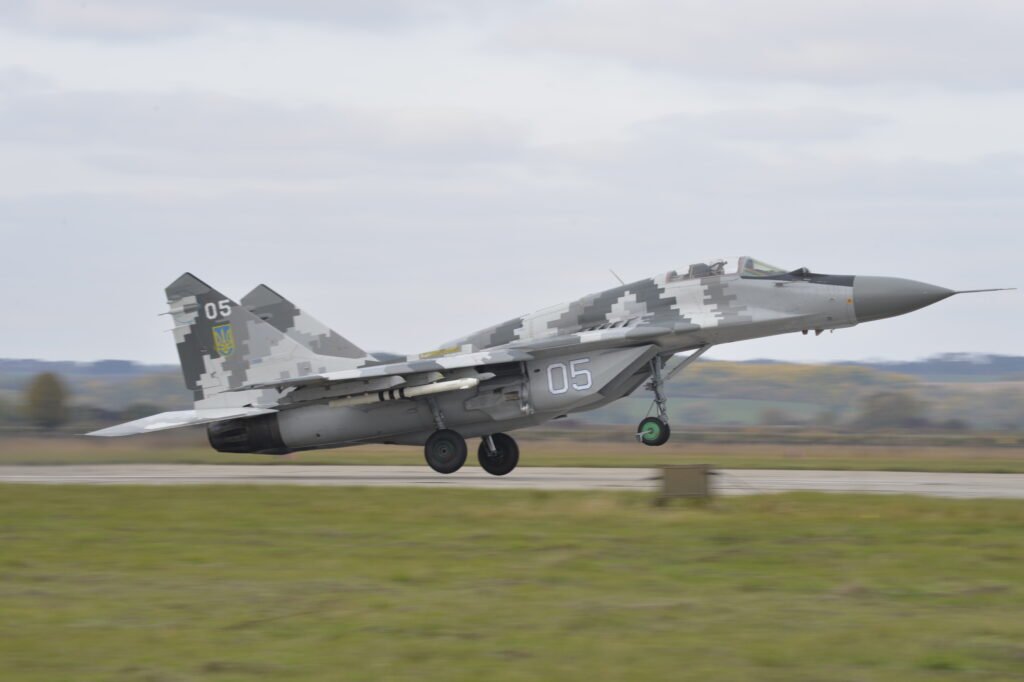
- Franken-Jet Integration: The Ukrainian Air Force successfully modified Soviet-era MiG-29 platforms with Western electronics, allowing them to deploy US GBU-39 Small Diameter Bombs (SDB) and French AASM Hammer precision-guided glide bombs.
- Air Defense Defeat: Russian air defense batteries launched four interceptor missiles to neutralize the incoming Western munitions; all four failed to intercept their targets.
- Cost-Effective Standoff Power: The $40,000 GBU-39 provides a 74 km standoff range, while France’s AASM Hammer delivers rocket-boosted precision (10-meter CEP) over 70 kilometers.
- Domestic Scaling: To offset aid fluctuations, Ukraine is scaling production of its indigenous Vyrivnyuvach (“Equalizer”) glide kit—built at one-third the cost of a US JDAM-ER.
Standoff Precision: How Ukraine Revived the Soviet MiG-29
Ukrainian Air Force operations near the Sumy border have demonstrated a major tactical evolution: turning legacy Soviet airframes into long-range precision strike platforms. When Russia’s 1,427th Motorized Rifle Regiment assembled assault infantry, reconnaissance elements, and UAV launch teams in Tyotkino (Kursk Oblast) for an attack on the Ukrainian village of Ryzhivka, real-time intelligence disrupted the operation before it began.
Integrated satellite feeds and front-line UAV observation compressed Ukraine’s kill chain by 90%. Rather than risking short-range tactical drones or committing ground troops, Ukrainian commanders scrambled a modernized MiG-29 operating entirely within safe standoff distance.

The 1,427th Motorized Rifle Regiment Neutralized
The target of the strike, Russia’s 1,427th Motorized Rifle Regiment, has suffered repeated operational failures along the northern border. Days prior to the Ryzhivka staging effort, unit operators misdirected a Molniya-2 strike drone into a civilian vehicle within their own staging area in Glushkovo, Kursk.
The subsequent standoff airstrike annihilated the regiment’s assembly area in Tyotkino. The strike destroyed UAV launch infrastructure and troop concentrations, completely halting the planned invasion of Ryzhivka and freezing Russia’s attempts to establish a border buffer zone in Sumy Oblast.
Western Munitions Breakdown: GBU-39 SDB vs. AASM Hammer
The weapon loadout carried by the Ukrainian MiG-29 combined two distinct Western precision-guided munitions: the US-supplied GBU-39 Small Diameter Bomb (SDB) and the French AASM Hammer (Armement Air-Sol Modulaire).
During the engagement, Russian air defense units identified the incoming strike and launched four surface-to-air missiles at a single Western munition. Every interceptor missed, allowing the warheads to detonate directly on target.
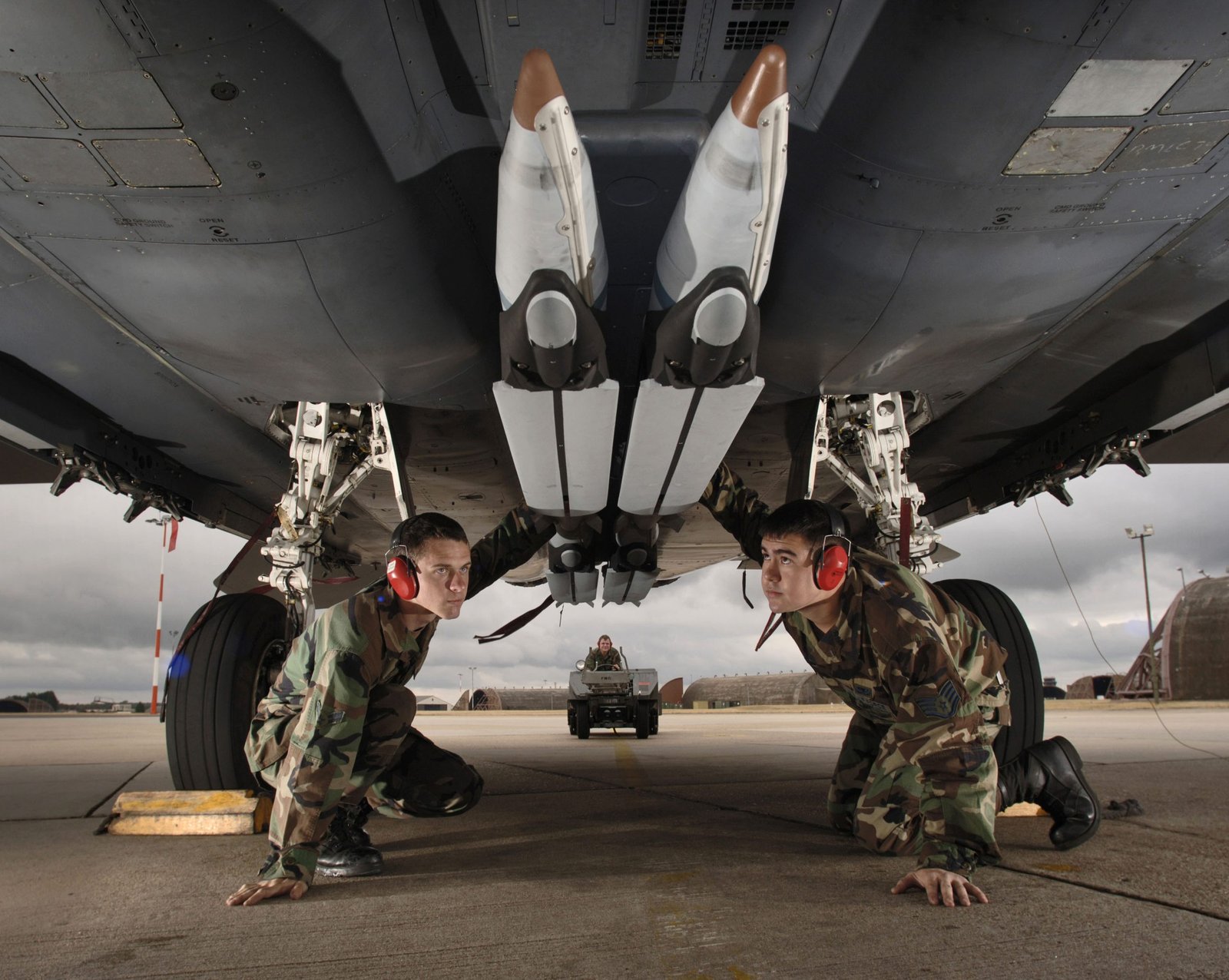
Tactical Specifications of the Standoff Arsenal
- GBU-39 SDB: A 113 kg (250 lb) precision-guided glide bomb with an operational standoff range of 74 kilometers. Utilizing GPS-assisted navigation, the weapon costs approximately $40,000 per unit. Smart carrier racks allow a single aircraft hardpoint to carry up to four units, enabling multi-target engagements per sortie.
- AASM Hammer: A modular kit that converts unguided bombs (250 kg and 1,000 kg variants) into rocket-boosted stand-off munitions. Featuring solid rocket motors and guidance winglets, the Hammer achieves a range exceeding 70 kilometers with a Circular Error Probable (CEP) of 10 meters. France delivers 50 to 60 units monthly, alongside licensing agreements for local Ukrainian assembly.
Domestic Resilience: Scaling the “Equalizer” Glide Kit
To address potential bottlenecks in foreign procurement programs like the NATO PURL initiative, Ukraine’s defense industry has operationalized an indigenous standoff capability: the Vyrivnyuvach (“Equalizer”).
First field-tested in June 2026 against fortified Russian trench positions, the Equalizer is a field-attachable glide kit that mounts to standard 250 kg warheads in under 30 minutes. Manufactured at one-third the cost of an American JDAM-ER, the system incorporates electronic counter-countermeasure (ECCM) flight logic to bypass dense Russian jammer networks.
Extending the Soviet Airframe Envelope to 2030
Prior to 2022, the Russian Defense Ministry considered the MiG-29 largely obsolete, leaving nearly 200 of its 291 airframes unserviceable due to structural rot. Conversely, Ukraine reinforced its fleet using retired airframes supplied by Poland, Slovakia, and Azerbaijan.
Through Western avionics integration, Ukrainian MiG-29s, Su-24s, and Su-27s have been rewired to launch JDAM-ER, Paveway IV, AASM Hammer, and GBU-39 munitions. With ongoing integration of long-range ERAM missiles, Ukraine has extended the operational combat life of its MiG-29 fleet through at least 2030.
| System Name | Origin | Unit Cost (Est.) | Max Range | Warhead / Mass | Guidance Mechanism | Monthly Availability |
| GBU-39 SDB | United States | ~$40,000 | 74 km | 113 kg (250 lb) | GPS / INS (Anti-Jam) | Variable (PURL / Defense Aid) |
| AASM Hammer | France / Ukraine | ~$210,000 | 70+ km | 250 kg / 1,000 kg | GPS / INS / IR | 50-60/mo + Domestic Licensing |
| JDAM-ER | United States | ~$30,000 | 72 km | 230 kg (500 lb) | GPS / INS | Restricted / Stockpile Dependent |
| Vyrivnyuvach (“Equalizer”) | Ukraine | ~$10,000 | 50+ km | 250 kg | Modular Guidance / ECCM | Domestic Mass Production |
SECTOR OUTLOOK: Strong Demand for Western Avionics Adapters & Modular Guidance Kits.
The successful conversion of legacy Soviet aircraft into modern standoff platforms validates the software-and-adapter approach to air fleet modernization.
- TACTICAL ADVANTAGE: Ukraine’s ability to conduct air-launched standoff strikes without crossing into Russian SAM envelopes neutralizes Russia’s border staging tactics in Sumy and Kharkiv.
- INDUSTRIAL IMPACT: Companies specializing in modular kit conversions and weapons integration systems (Safran for AASM, Boeing for SDB/JDAM) see expanded market potential across non-NATO allies holding legacy Soviet inventory.
- SUPPLY CHAIN OUTLOOK: The arrival of locally produced AASM Hammer kits and the domestic Vyrivnyuvach kit insulates Ukraine’s Air Force from Western legislative delays, guaranteeing consistent standoff strike volume into 2027.