Frontline Defense Journal | Objective OSINT & Military Analysis
  • Home
  • Latest Intelligence
  • Domain Of Warfare
    • Naval & Maritime
    • Air & Aerospace
    • Ground Forces & Armor
    • Space & Cyber
    • Unmanned & Autonomous Systems
    • Strategic Weapons
  • Regions
    • USA & Americas
    • Europe
    • Middle East
    • Asia & Pacific
  • About Us
    • Who We Are
    • Privacy Policy
    • Terms Of Use
No Result
View All Result
  • Home
  • Latest Intelligence
  • Domain Of Warfare
    • Naval & Maritime
    • Air & Aerospace
    • Ground Forces & Armor
    • Space & Cyber
    • Unmanned & Autonomous Systems
    • Strategic Weapons
  • Regions
    • USA & Americas
    • Europe
    • Middle East
    • Asia & Pacific
  • About Us
    • Who We Are
    • Privacy Policy
    • Terms Of Use
Frontline Defense Journal | Objective OSINT & Military Analysis
No Result
View All Result
Frontline Defense Journal | Objective OSINT & Military Analysis
No Result
View All Result
Home Asia & Pacific

Putin’s Pacific Gambit: How the Kuril Islands Provocation Realigns the Russia-China-Japan Axis

Russian President Vladimir Putin’s calculated visit to the disputed Iturup Island (Etorofu) on August 13 reignited a decades-old border dispute with Japan. Far from a standard domestic tour, this deployment to the Southern Kurils serves dual strategic purposes: securing Russia’s Pacific nuclear deterrent footprint while signaling subservience to Beijing’s broader geopolitical ambitions. In response, an increasingly militarized Japan is shifting its defense posture, signaling potential changes to its lethal aid policies for Ukraine and accelerating its unmanned defense capabilities.

August 31, 2026
in Asia & Pacific, Latest Intelligence
Reading Time: 5 mins read
A A
0
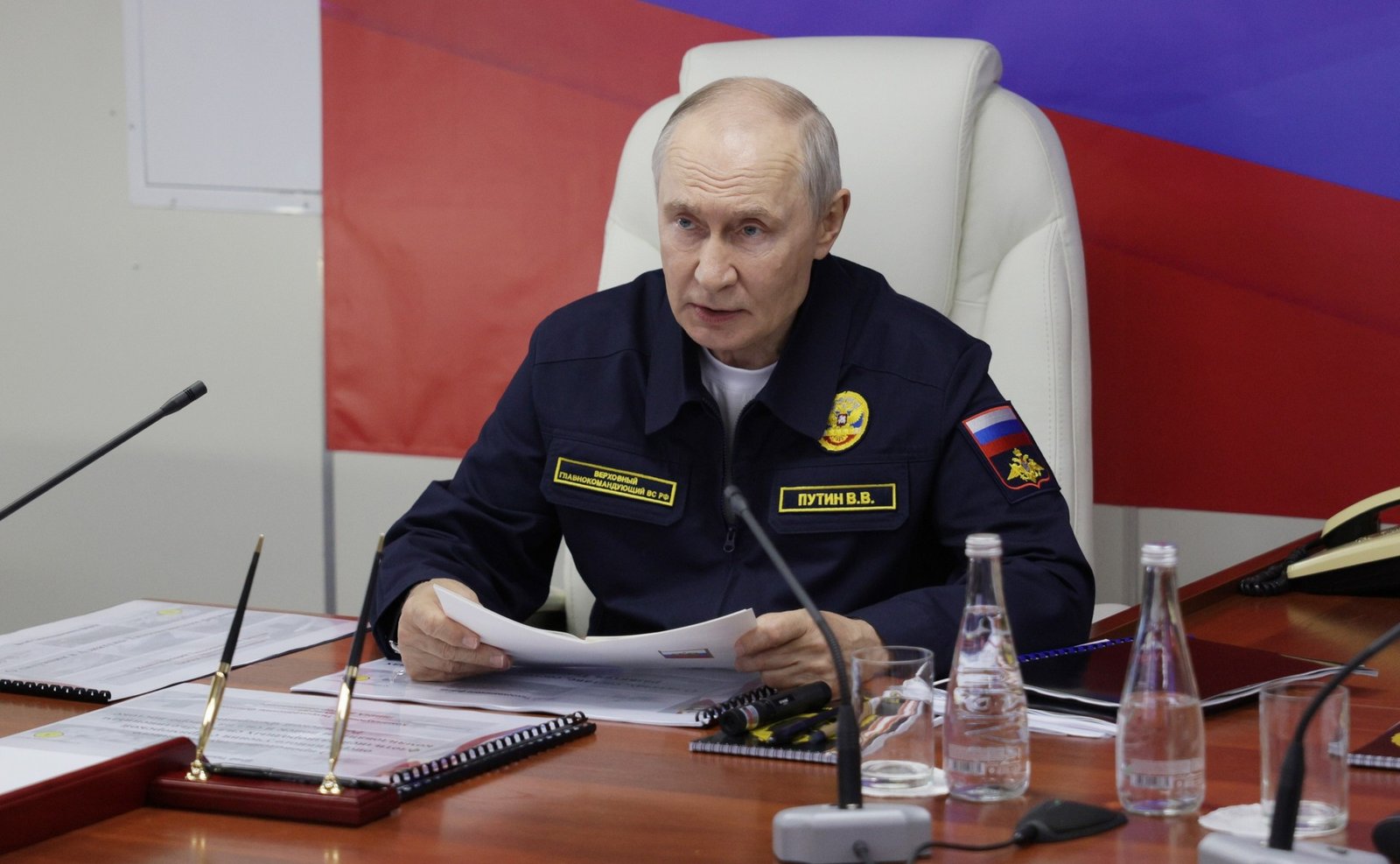
Russian President Vladimir Putin On board the Guards missile cruiser Varyag.
Share on FacebookShare On Reddit

Bottom Line Up Front

  • Strategic Provocation: Putin’s visit to Iturup Island directly challenges Japan’s sovereignty claims over the Northern Territories, deliberately escalating Pacific tensions.
  • Sino-Russian Energy Dependency: Russia’s reliance on China to purchase approximately 1.25 million barrels of seaborne crude oil daily forces Moscow to align its Pacific strategy with Beijing’s interests.
  • Japanese Defense Overhaul: Tokyo’s2026 Defense White Paperaccelerates the SHIELD coastal defense program, allocating $1.75 billion for unmanned multi-domain architectures.
  • Lethal Aid Pivot: Japan’s recent easing of export rules opens back-door channels for transferring lethal weaponry—such as Patriot interceptors—to Ukraine, countering Russian aggression symmetrically.

STRATEGIC CONTEXT: REIGNITING A DORMANT FRONTIER

The Kuril Island chain functions as a 1,200-kilometer natural barrier between the Pacific Ocean and the Sea of Okhotsk, serving as a heavily fortified bastion for Russia’s Pacific Fleet and its second-strike nuclear deterrent. The southernmost islands, situated just 4 kilometers off the coast of Hokkaido, were seized by Soviet forces at the end of World War II. Japan has consistently disputed this occupation, referring to the islands as the Northern Territories.

Putin’s August 13 visit was met with swift condemnation. Japanese Prime Minister Sanae Takaichi officially labeled the incursion “absolutely unacceptable,” while Tokyo summoned the Russian ambassador to deliver a formal diplomatic rebuke. Moscow immediately retaliated, with Foreign Minister Sergey Lavrov summoning Japan’s envoy and asserting that Russia’s jurisdiction over the islands is absolute.
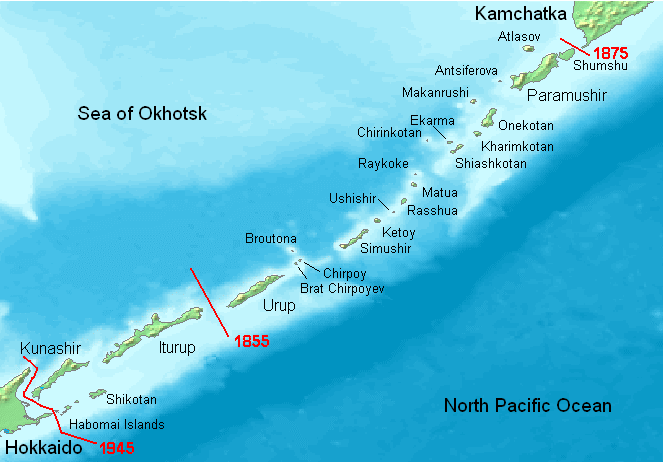
A geopolitical map of the Kuril Island chain stretching between Japan's Hokkaido and Russia's Kamchatka Peninsula. Three distinct red lines cross the island arc labeled with historical breakthrough dates—1855, 1875, and 1945—marking shifting territorial borders between the Sea of Okhotsk and the North Pacific Ocean.
A map detailing the historical border shifting of the Kuril Islands dispute between Japan and Russia, featuring key treaty and occupation lines from 1855, 1875, and 1945.
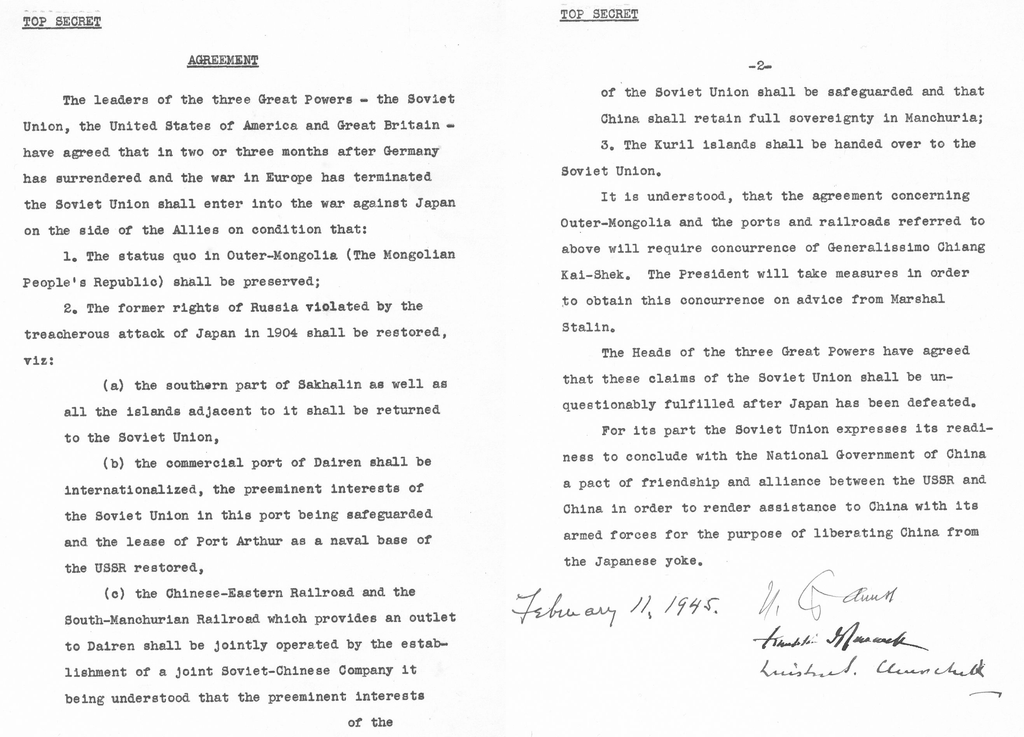
an image shows the Agreement Regarding Entry of the Soviet Union Into the War Against Japan
Agreement Regarding Entry of the Soviet Union Into the War Against Japan

GEOPOLITICAL OUTLOOK: BEIJING’S PACIFIC LEVERAGE

While the immediate friction is between Moscow and Tokyo, the strategic beneficiary of this standoff is China. Driven by the economic attrition of the Ukraine conflict, Russia has become increasingly dependent on Chinese energy markets. The stalled Power of Siberia 2 pipeline negotiations demonstrate Beijing’s leverage; China is systematically forcing Russian concessions before committing to joint infrastructure.

For Beijing, a Russia-controlled Kuril chain acts as a vital Pacific release valve. It guarantees unfettered maritime access and prevents potential naval blockades from choking Chinese shipping routes. By antagonizing Japan and entrenching its military presence in the Kurils, Putin proves Russia’s utility to its primary financial benefactor, ensuring the continued flow of oil revenue required to sustain operations in Ukraine.

TECHNICAL & PLATFORM BREAKDOWN: JAPAN’S MILITARY AWAKENING

Japan is no longer maintaining a passive defense posture. Recognizing the rapid evolution of drone warfare in Ukraine, the Japanese Ministry of Defense released its 2026 Defense White Paper, identifying Russia as an acute threat alongside China and North Korea.

To counter potential incursions, Japan is heavily investing in SHIELD (Synchronized, Hybrid, Integrated and Enhanced Littoral Defense). This multi-domain architecture networks low-cost aerial, surface, and underwater drones to detect and neutralize hostile approaches. Tokyo has surged its budget for unmanned capabilities to ¥277 billion ($1.75 billion), integrating civilian AI innovation with military applications. Furthermore, Japan’s recent relaxation of arms export rules allows for the transfer of lethal weapons to 17 allied nations under strict vetting, establishing a framework that could eventually supply Ukraine with Japanese-manufactured munitions and Patriot missile interceptors.

STRATEGIC METRICS & TELEMETRY

Strategic MetricData PointGeopolitical Implication
Proximity to Japan4.0 km (Hokkaido)Enables line-of-sight electronic warfare and rapid amphibious threats.
Japan Unmanned Budget¥277B ($1.75B)Massive scale-up of the SHIELD coastal drone defense network.
Chinese Oil Procurement1.25M BPDSustains the Russian war economy, granting Beijing immense leverage.
Japan Aid to Ukraine$20B+ pledgedFinancial attrition against Russia; potential pivot to lethal aid.

STRATEGIC VERDICT

Putin’s decision to antagonize Japan is a profound strategic miscalculation born of economic desperation. By attempting to project strength in the Pacific to appease Chinese geopolitical interests, Moscow has accelerated the awakening of the Japanese military-industrial complex. Tokyo is now rapidly integrating advanced autonomous defense networks and rewriting its arms export frameworks. Ultimately, the Kremlin’s Kuril provocation practically guarantees deeper, and potentially lethal, Japanese integration into the defense of Ukraine, opening a second strategic front that an overextended Russian military cannot afford to manage.

Tags: Indo-Pacific Securityputin

Related Posts

No Content Available
Next Post
USAF F-35 Lightning II Middle East Operations CENTCOM. 5th-generation stealth fighters like the F-35 provide unmatched sensor fusion and precision-strike capabilities against hardened IRGC coastal defenses

U.S. F-35s Decimate IRGC Mine-Laying Hub in Strait of Hormuz

Leave a Reply Cancel reply

Your email address will not be published. Required fields are marked *

I agree to the Terms & Conditions and Privacy Policy.

Latest Intelligence

Irreplaceable Russian Tu-95 Bomber Destroyed by $48K Ukrainian “MICH 2000”

Kinburn Spit Death Trap: Ukraine Traps 2,500 Russian Troops in Logistical Siege

US SEAD Strikes Dismantle IRGC Network in Strait of Hormuz

CIA Director Warns FSB: Putin’s Fabricated Intel Risks Total Russian Collapse

USS Abraham Lincoln Docks in Thailand After 286-Day Combat Deployment Amid “Rust” Disinformation

Canada’s Secret CDPSC Program: The Pivot to Cheap Deep Strike Mass

Asia & Pacific

The U.S. Navy aircraft carrier USS Abraham Lincoln (CVN-72) underway in the Atlantic Ocean during a strait transit exercise
Naval & Maritime

USS Abraham Lincoln Docks in Thailand After 286-Day Combat Deployment Amid “Rust” Disinformation

Frontline Defense is an independent, objective analysis platform. The content provided on this website, including but not limited to technical breakdowns, military hardware comparisons, defense budget reports, and open-source intelligence (OSINT) analyses, is strictly for educational, historical, and informational purposes. Frontline Defense is not affiliated with, endorsed by, or acting on behalf of any government agency, department of defense, armed forces branch, or defense contractor. All content on this site represents independent research based strictly on unclassified, publicly available data and open-source records at the time of writing. Nothing published on this website should be construed as official military guidance, defense strategy consulting, or government policy.

Follow Us

Domain Of Warfare

  • Naval & Maritime
  • Air & Aerospace
  • Ground Forces & Armor
  • Space & Cyber
  • Strategic Weapons
  • Unmanned & Autonomous Systems

Regions

  • USA & Americas
  • Europe
  • Middle East
  • Asia & Pacific
  • About Us
  • Privacy Policy
  • Terms Of Use

© 2026 | Fronline Defense Journal. All Rights Reserved

No Result
View All Result
  • Home
  • Latest Intelligence
  • Domain Of Warfare
    • Naval & Maritime
    • Air & Aerospace
    • Ground Forces & Armor
    • Space & Cyber
    • Unmanned & Autonomous Systems
    • Strategic Weapons
  • Regions
    • USA & Americas
    • Europe
    • Middle East
    • Asia & Pacific
  • About Us
    • Who We Are
    • Privacy Policy
    • Terms Of Use

© 2026 | Fronline Defense Journal. All Rights Reserved